The short answer
A useful contract identifies the exact project, documents and significant materials, then assigns responsibility for the work around the repair: access, protection, permits, inspections, utilities, cleanup and restoration. It also states pricing, payment stages, approximate dates and how changes are approved. In California, covered home improvement agreements have specific statutory requirements. A vague promise to “fix the foundation” leaves too many decisions unresolved, even when the total price is clear.
US general project planning; California statutory requirements and named local examples identified separately.
Define the project so someone else can understand it
Imagine handing the agreement to a supervisor who did not attend the estimate visit. Could that person identify the affected walls, rooms or exterior areas and explain what the homeowner expects to receive? If the answer depends on remembering the sales conversation, the scope needs more detail.
Describe the work areas using a plan, marked photograph or schedule of locations, with an agreed method of identifying them. State the intended scope without guaranteeing a technical outcome that the design does not support. For example, a project to complete specified structural work and restore finishes should not quietly become an unconditional promise that every old floor will be perfectly level or every future crack prevented.
Identify the documents that control
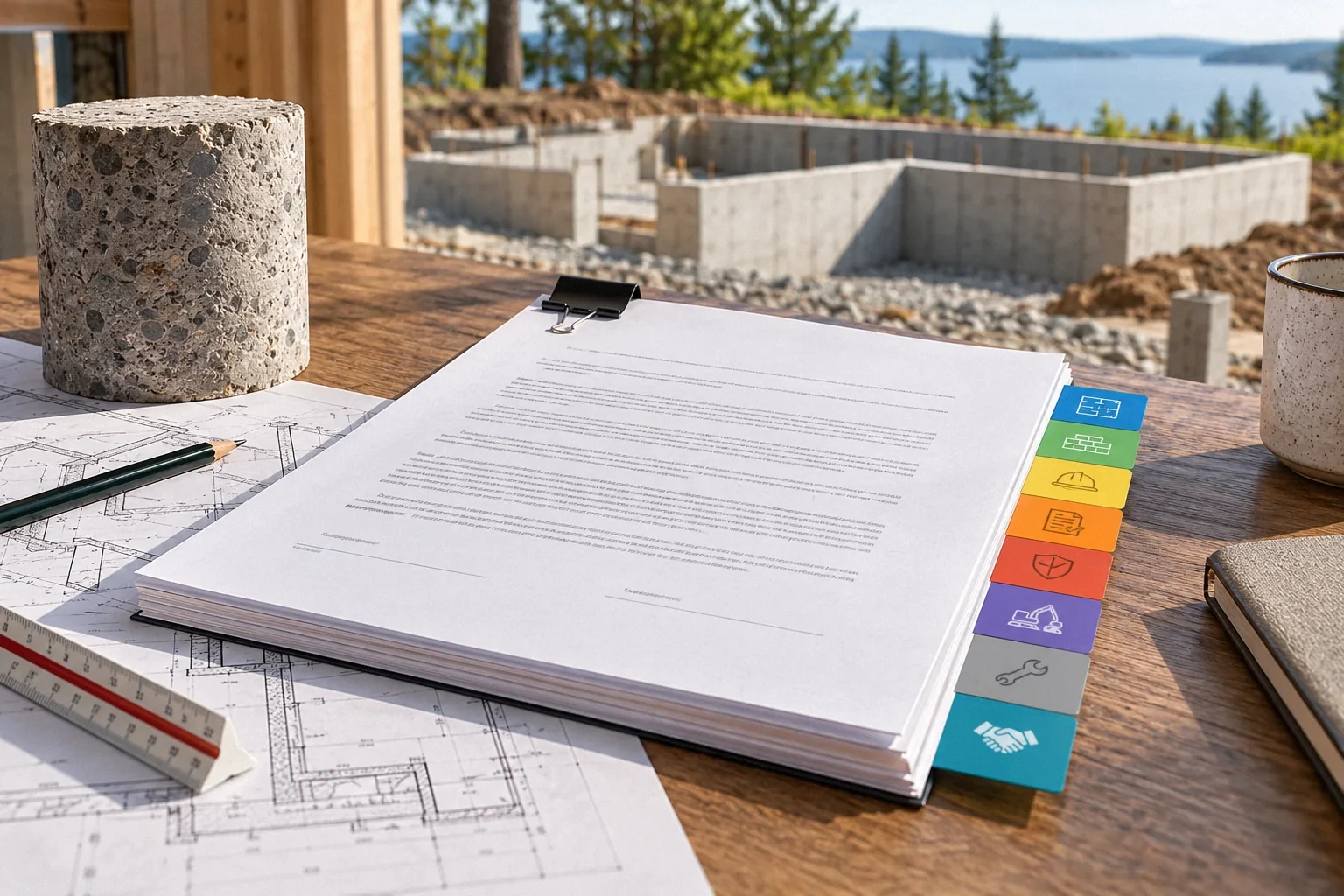
List engineering drawings, reports, specifications and proposal attachments by title, date and revision. Confirm whether each document is incorporated into the contract or merely supplied as background information. A report recommending further investigation is different from a construction drawing authorizing a defined installation.
The current California home improvement contract statute, reviewed October 3, 2026, addresses significant materials, project descriptions and incorporated documents among other requirements. It also contains applicability rules and exceptions. A homeowner's checklist helps identify omissions; it is not a substitute for a complete compliant contract or legal review where unusual terms materially shift risk.
Describe materials and substitutions meaningfully
Use the level of identification appropriate to the product and design: manufacturer, product designation, performance requirement, finish or another specification that makes the selection verifiable. Avoid adding arbitrary technical requirements merely because they appeared in an unrelated online example. The project designer and applicable approval documents should establish technical suitability.
State how a proposed substitution will be reviewed, who approves it and whether a price or schedule change follows. “Equivalent material” can cause disagreement when one party means similar appearance and another means equal performance or compatibility. Keep the approval with the project documents. A supplier's stock shortage does not itself establish that the replacement satisfies the plans, warranty conditions or permit.
Allocate the work that surrounds the repair
Scroll horizontally to read every column.
| Boundary | Contract question |
|---|---|
| Access | Who clears belongings and creates or restores necessary openings? |
| Utilities | Who coordinates interruptions, relocations and reconnection? |
| Protection | Which occupied areas and existing surfaces will be protected? |
| Testing | Who arranges and pays for specified professional observations? |
| Finishes | What patching, painting, flooring or landscaping is included? |
| Waste | Who removes excavated material, debris and unused supplies? |
For each excluded item, identify who will perform it and when. An exclusion that prevents the next trade from proceeding remains a project responsibility, even though it is outside this contractor's price.
Make permit and inspection duties workable
Name the party responsible for obtaining the necessary permits and coordinating inspections. Confirm who supplies drawings, responds to plan-check questions, schedules specialty inspections and collects final records. “Permit included” may otherwise mean only that someone allowed for a fee, while nobody owns the follow-through.
Inspection timing can affect whether work may be covered. The City of San Mateo's inspection guidance, for example, describes foundation inspection before concrete and underfloor inspection before covering. Those are local examples, not a complete schedule for every project. The contract should require coordination with the actual approved plans and local department rather than inventing a universal list of inspections.
Explain price, dates and decisions together
A price should say what is fixed, what is an allowance and what remains to be determined. Connect progress payments to described work and delivered materials. State approximate start and completion dates, with the assumptions needed to make those dates realistic. An owner selection, access restriction or awaited engineering response may affect the sequence and should have a named decision-maker.
The CSLB's contract explanation emphasizes written payment schedules, permit responsibility, completion dates and written changes. Ask how an approved change updates both the remaining price and the schedule. Keep a cumulative record so an added amount does not reappear later as an unexplained invoice item.
Use a hypothetical scope gap to test the agreement
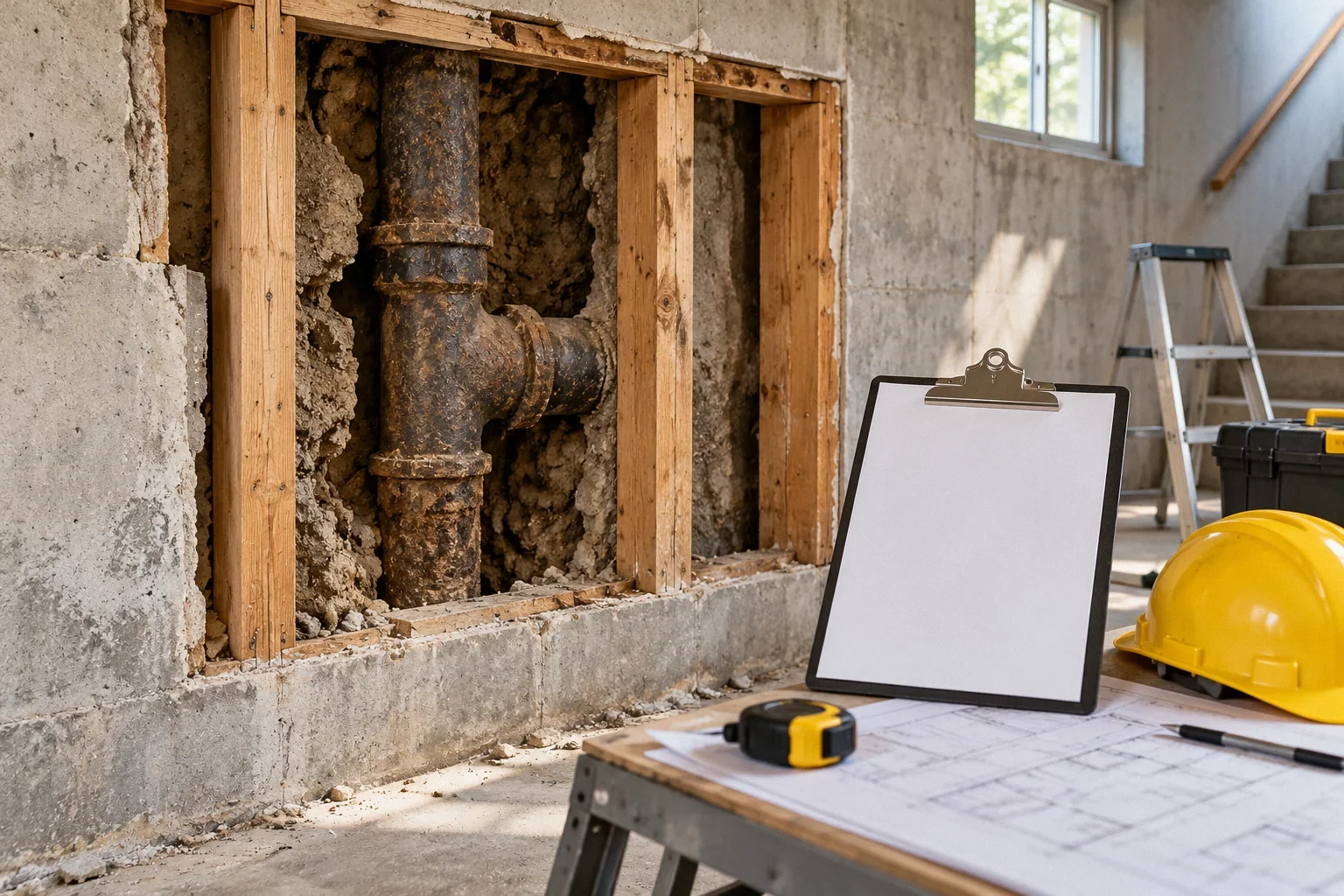
Suppose a basement repair requires opening a finished wall. The contractor's proposal says “complete repair,” and the homeowner assumes the room will be returned to its prior appearance. The contractor assumed only its structural scope and basic debris removal. Neither assumption has been documented. The disagreement will be much harder to resolve once the wall is open.
Before signing, the parties can specify removal limits, protection, disposal, whether insulation and finishes are replaced, and how an unknown condition behind the wall is handled. They can also establish what matching an existing finish reasonably means. This turns an ambiguous promise into reviewable work without requiring the homeowner to dictate the engineering method.
Record the starting condition of adjoining areas
A project can create disagreement about surfaces it was never intended to replace. Before mobilization, walk the access route and nearby rooms together. Record existing damage, areas to remain in place, stored possessions and any finish the owner particularly wants preserved. Dated contextual photographs help distinguish the initial condition from later concerns without pretending that a photo inventory resolves every causation question.
State which party moves and stores belongings, where equipment may stand and which rooms remain accessible. If the household needs a particular route or service, discuss it before the contractor commits to a work sequence. A promise that the home can remain occupied should be consistent with the actual access and interruption plan, rather than a casual statement made during bidding.
Where matching an old surface is part of the work, define the expected boundary. A local patch and a full-room repaint are materially different obligations. If an exact match cannot be promised, identify the sample, method of selection or other acceptance reference. The same discipline applies to exterior pavers, planting and soil disturbed for access: say what will be restored and what preparation or future maintenance remains with the owner.
State what arrives at handover
List the closeout documents relevant to the project: final permit status, approved revisions, required observation or test letters, product information, warranty terms and records identifying completed work. Decide whether final photographs should document particular concealed stages while they are still visible. Do not wait until the crew has left to request evidence that could only have been captured earlier.
Read the entire signed version, including exclusions and attachments, after negotiations are complete. Confirm that verbal promises now appear in writing and that blank fields are resolved. Keep a complete copy. If important obligations remain contradictory, resolve them before construction begins rather than relying on goodwill to bridge a gap neither side has priced.
Before your next decision
- Identify affected areas and incorporated drawing revisions.
- Specify significant materials and substitution approval.
- Assign permit, inspection and professional-service duties.
- Write exclusions and the party responsible for each.
- List final records, warranties and restoration obligations.
Related questions
Can a signed estimate serve as the contract?
Possibly, depending on its content and applicable law. The title of the document does not establish that it contains required notices, scope, payment terms and other provisions. Review the actual agreement.
Should every potential hidden condition have a fixed price?
Not necessarily. Some uncertainty needs a defined investigation or change process. The agreement should explain how the condition is documented, evaluated, priced and approved instead of pretending it is known.
Is cleanup the same as restoring the basement?
No. Removing debris does not necessarily include replacing walls, matching paint, reinstalling flooring or repairing landscaping. Describe the restoration work separately.
Sources & further reading
- CSLBLearn About Home Improvement Contracts
California home improvement contracts
- California LegislatureBusiness and Professions Code section 7159
California statutory home improvement contracts; amended by Stats. 2025 ch.585, effective January 1, 2026
- City of San MateoBuilding Inspection Frequently Asked Questions
City of San Mateo inspection stages; not countywide
Homeowner questions behind this article
These discussions informed the questions, not the technical answers. Some were available through indexed excerpts; votes and comments are not an engineering assessment.
- Renovation contract dispute… right after job is done
- How do people handle materials in regards to billing
- Paid electrician to install an EV charger and pull a permit. Months go by without contact, now electrician says we should do the permitting ourselves.