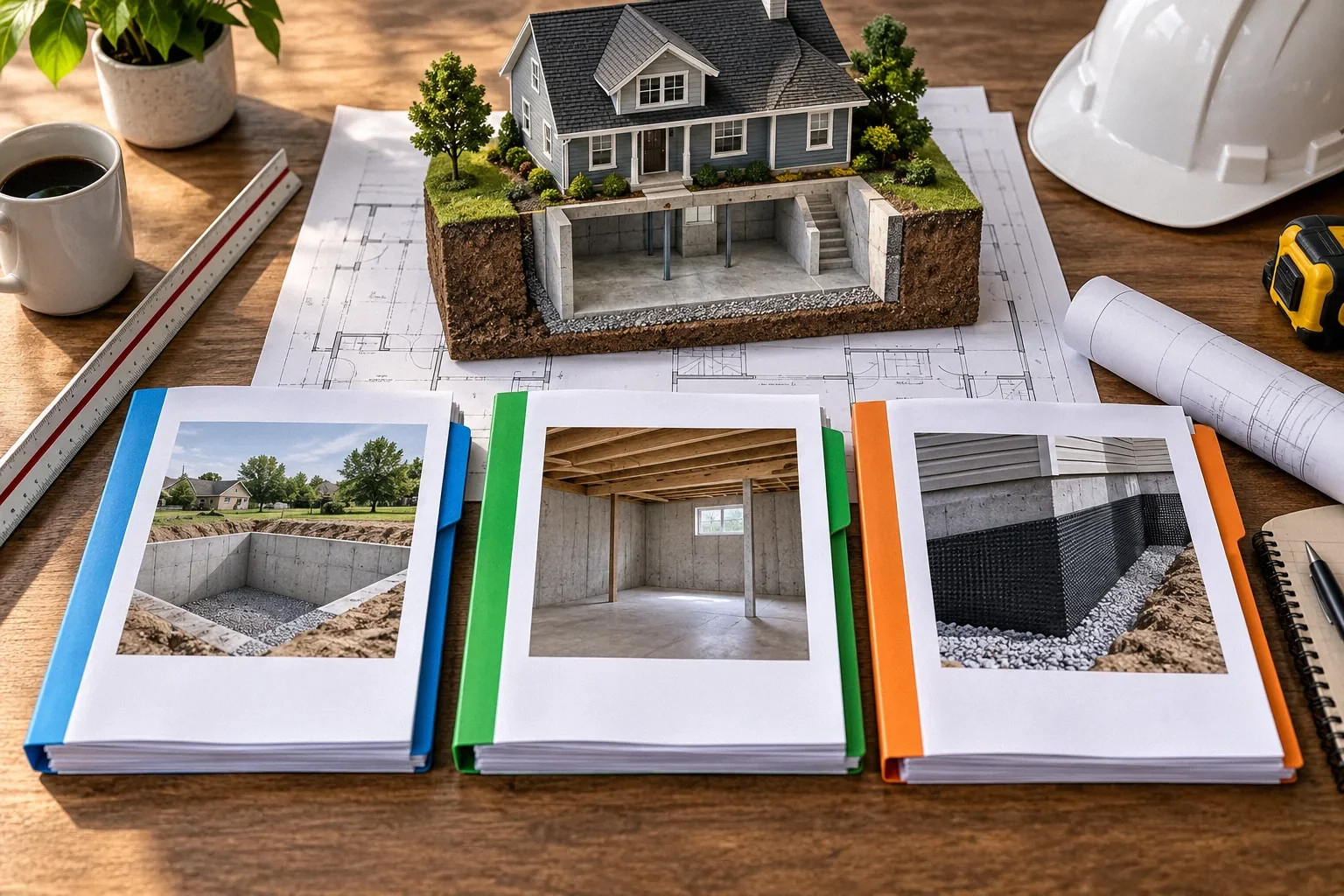
The short answer
Conflicting foundation reports may address different questions, dates, locations or levels of investigation. Compare those elements before deciding that one professional is wrong. Ask each author to explain the evidence supporting the disputed conclusion and the limits of the assignment. If uncertainty remains material, commission an independent, clearly defined evaluation that addresses the missing question rather than simply collecting another repair price.
US general project planning; California requirements and named local examples labeled in the text.
State the disagreement in one precise sentence
“The reports disagree” is often too broad to guide a useful response. Identify the actual point: whether movement is ongoing, whether a proposed alteration needs additional investigation, whether a particular repair is justified, or whether the available records support a conclusion. Quote or accurately summarize each report's relevant statement with its page and date.
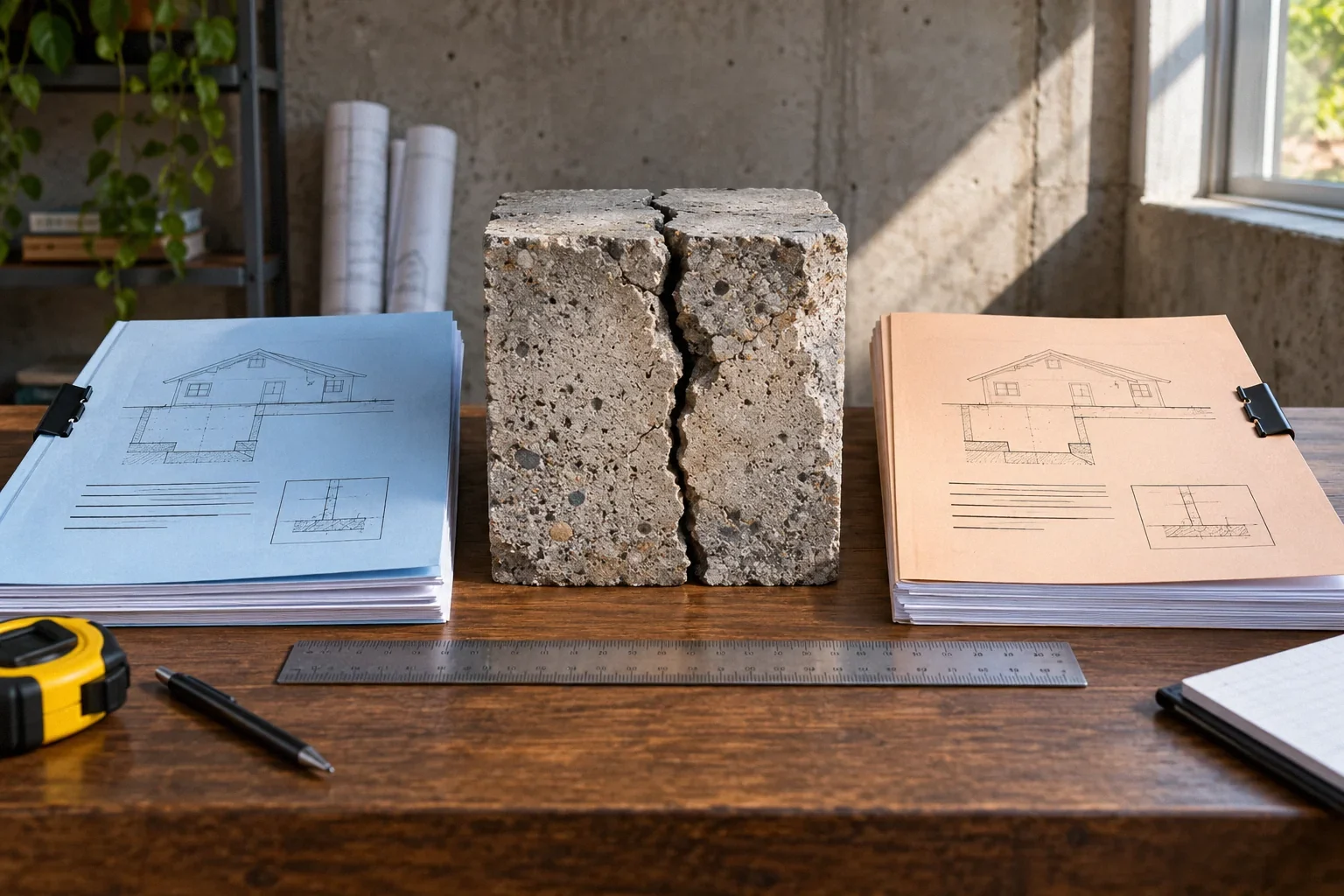
Separate a technical conclusion from a recommendation or sales proposal. One document may identify a possible concern and recommend evaluation, while another offers a repair if the owner elects to proceed. Those documents may not directly contradict each other. A precise statement of the disputed question prevents the owner from paying for a third service that still does not answer it.
Compare assignments before comparing conclusions
Read the engagement or scope section of each report. Was the author asked to perform a general inspection, evaluate a specific structural condition, review prior records or price construction? Did the assignment include a written analysis, measurements, calculations, site access or follow-up? Different scopes can legitimately produce different levels of certainty.
The California board's consumer guide to geological and geophysical services emphasizes defining the question and expected service. Apply that principle to a disagreement: identify what each professional was commissioned to do before evaluating whether the deliverable answered it. A limited report should not be judged as if it promised a comprehensive investigation, but its limits must remain visible to the decision-maker.
Build an evidence comparison table
Scroll horizontally to read every column.
| Element | Report A | Report B |
|---|---|---|
| Date and site conditions | Record inspection date and relevant circumstances | Identify later events or changes |
| Areas examined | List accessible locations | Identify additional or excluded locations |
| Documents reviewed | List plans, repairs and prior studies | Note missing or different source material |
| Measurements and methods | Record what was actually obtained | Check whether results are comparable |
| Conclusion and confidence | Separate findings from hypotheses | Identify qualifications and further work |
Do not fill a blank with an assumption. If a report does not identify a method or reference, ask the author. An apparent numerical difference may be uninterpretable when locations or reference systems differ.
Check identity, qualifications and relevant experience
For California engineering or geological services, confirm the responsible individual's license type and status using the board's license lookup guidance. Match the report signature to the professional you believe performed or supervised the work. A company's marketing name does not establish the license of the individual responsible for the opinion.
The board's building design authority guidance helps distinguish permitted professional roles. Do not assume a title alone settles the dispute or that every residential question requires the same credential. Ask about experience with the relevant condition, the basis of the opinion and any financial interest in the recommended construction. Independence is useful context, not automatic proof of correctness.
Ask authors to respond to the specific conflicting evidence
Provide the relevant material, subject to appropriate permission and confidentiality considerations, and ask a focused question. For example: does the earlier repair record change the stated assumption, or do the later observations affect the recommendation? Request a written response that identifies whether the conclusion changes and why.
A Reddit discussion contrasting a repair company's proposal with an engineer's view illustrates why owners want an independent answer. The discussion does not establish which opinion is correct for another property. A useful comparison examines evidence and assignment, rather than presuming the higher price is a scam or the more reassuring opinion is necessarily reliable.
Ask whether the professional reviewed the complete contrary report or only a quoted conclusion. A response to a short excerpt may miss qualifications elsewhere in the document. Send an organized file and identify the pages relevant to the disagreement, while preserving the full context. This makes the clarification more efficient without steering the reviewer toward a predetermined result.
Distinguish new information from an error
A later report may reach a different conclusion because it had access to records, areas or events unavailable to the first author. That is different from identifying an incorrect measurement or a mistaken address. Ask each author to distinguish a factual correction from a revised opinion based on additional evidence.
Preserve original and amended versions with clear dates. If the author corrects a factual error, retain the explanation and confirm whether it affects the recommendation. Do not silently edit a professional report yourself. If the difference remains unresolved, document the exact issue and the practical decision it prevents. This gives a new evaluator a defined assignment and avoids an endless exchange of broad objections.
Hypothetical example: different access produces different confidence
Suppose a home inspector observes a basement condition from an accessible room and recommends structural review. A repair contractor later visits a wider area and proposes work. An engineer reviews photographs only and says the available images do not establish the need for that work. These statements are not three equivalent assessments of the same evidence.
The owner arranges authorized access and provides the engineer with the contractor's scope, inspection report and relevant history. The engineer then defines the evaluation needed to answer the disputed question. The resulting opinion may support, narrow or challenge the proposal, but its value comes from the clarified evidence and scope rather than merely being the third opinion.
Commission the missing evaluation, not a vote
Before hiring another professional, write a brief identifying the disagreement, documents available, access limitations and required deliverable. Ask for an independent evaluation of the specific question and an explanation of any remaining uncertainty. Clarify whether the fee includes review of prior reports, a site visit, further investigation or design work.
Do not count opinions as votes. Two limited visual observations do not necessarily outweigh one well-supported investigation, and one confident report does not erase contrary evidence. The appropriate professional should explain what can be concluded now and which additional information would materially change the decision. Where a safety concern is identified, follow qualified direction promptly while the broader disagreement is resolved.
Connect the resolved question to the actual decision
During a purchase, the California Department of Real Estate's homebuyer guidance provides context for investigation and transaction decisions. Use the actual contract to manage deadlines; ordering another report does not automatically extend them. During construction, coordinate any accepted technical change with the designer, contract process and building department as required.
Summarize the outcome as confirmed findings, revised recommendations and remaining questions. If no definitive answer is possible without further investigation, state that plainly and evaluate the next step with appropriate advisers. Keep the report comparison in the property file. It explains why a decision was made and prevents an earlier limited conclusion from being repeated later as an unconditional assurance.
Before your next decision
- Write the exact disputed conclusion with dates and references.
- Compare assignment, access, methods and source documents.
- Verify responsible professionals and relevant qualifications.
- Request written clarification of conflicting evidence.
- Commission a defined evaluation of the remaining question.
Related questions
Should I automatically trust an engineer over a repair company?
Consider professional qualifications, assignment, independence and supporting evidence. A defined independent evaluation can help, but a title alone does not resolve every factual disagreement.
Do different floor measurements prove one report is wrong?
Not necessarily. Dates, locations, reference systems and methods must be comparable before the difference can be interpreted.
When is a third opinion useful?
When a material question remains unresolved and the new assignment specifically addresses missing evidence or analysis. Another vague visit or price may add little.
Sources & further reading
- California Board for Professional Engineers, Land Surveyors, and GeologistsLicense Lookup for California Professional Engineers, Land Surveyors, Geologists and Geophysicists
California individual professional licenses
- BPELSGBuilding Design Authority
California building-design authority
- BPELSGConsumer Guide to Geological and Geophysical Services
California geology/geophysics services and hiring
- California Department of Real EstateFirst Home California
California homebuyer education and disclosures
Homeowner questions behind this article
These discussions informed the questions, not the technical answers. Some were available through indexed excerpts; votes and comments are not an engineering assessment.
- Foundation company’s report vs. Structural engineering report
- Hiring Structural Engineer for home foundation evaluation?
- Foundation repair quotes over 100k!