The short answer
An old geotechnical report may remain useful, but its age alone does not establish whether it supports a new project. The engineer must consider the investigated location, original design assumptions, current site conditions and proposed work. The building department may have additional acceptance requirements. Obtain a written scope explaining what can be reused, what needs updating and why before comparing proposals or relying on the report.
US general project planning; California requirements and named local examples labeled in the text.
Retrieve the complete report before debating its age
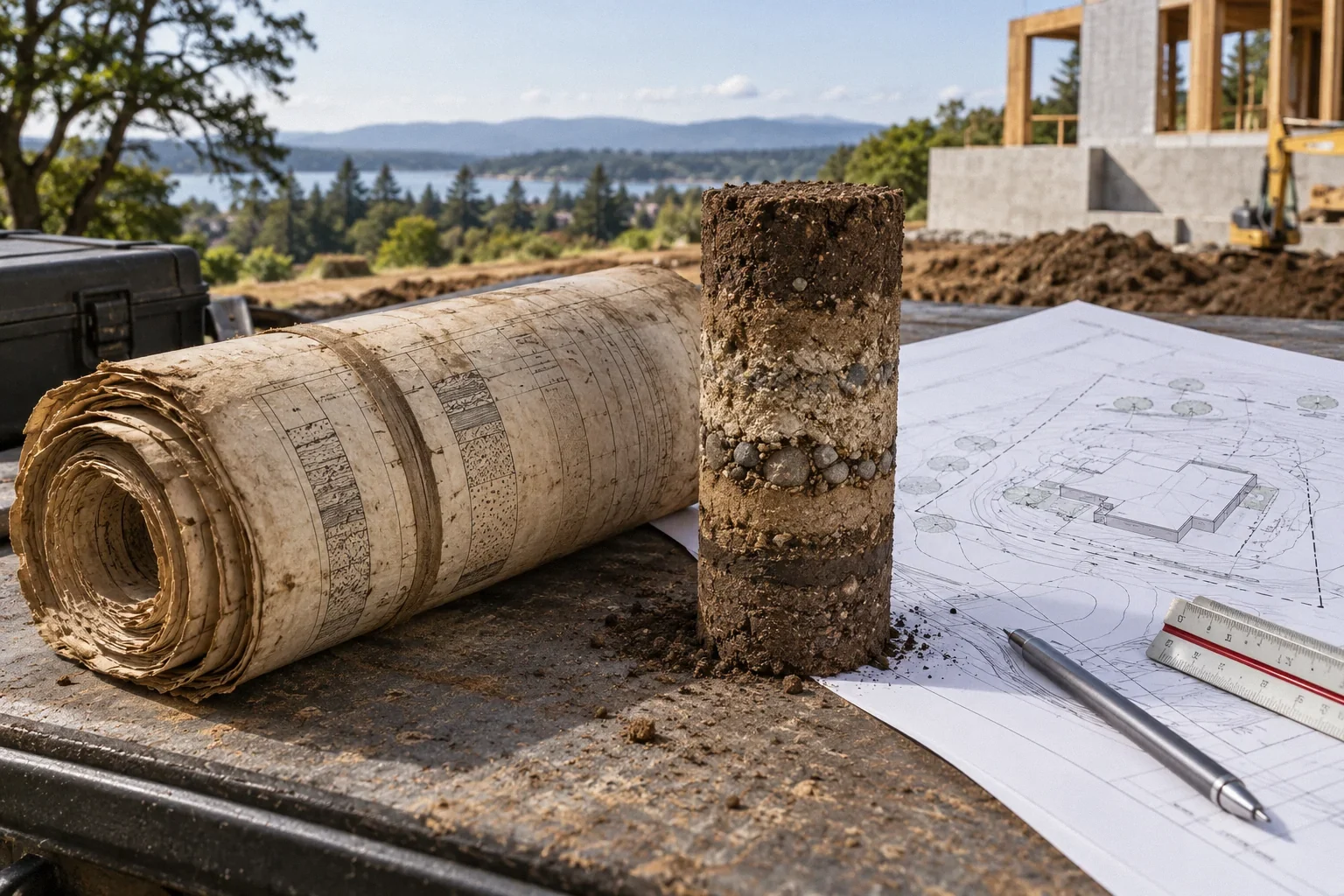
A previous owner's reference to “the soil report” may mean a cover letter, a preliminary study or one appendix from a larger investigation. Request the complete report, including figures, exploration information, laboratory results, recommendations and stated limitations. Look for later addenda, response letters and construction observation records. A missing supplement can change the meaning of an otherwise complete-looking file.
Record the author, date, property identifier and project described. Keep the original files intact and distinguish originals from summaries prepared for a sale. If the report refers to drawings or a proposed building footprint, obtain those documents where available. A consultant can evaluate reuse more efficiently when the relevant history is assembled instead of arriving as scattered screenshots.
Compare the old question with the new project
A report written for one proposed structure does not automatically cover a different footprint, excavation or loading condition. Make a comparison sheet with the earlier project and the current proposal. Identify locations, planned use, structural concept, depth of proposed work and nearby improvements that may affect the professional's assessment. These are inputs for review, not instructions for the owner to calculate soil capacity.
Ask the geotechnical professional which original findings remain applicable and which recommendations depend on assumptions that have changed. A report can contain valuable site information while still requiring a new design analysis. Reuse is therefore not a simple choice between accepting every page unchanged and throwing the entire investigation away.
Identify changes at the site and in the available information
Describe known grading, fills, drainage alterations, excavation, slope work, retaining structures or nearby construction since the original investigation. Include reported movement or unusual events as dated observations, not established causes. The professional may need to determine whether these changes affect the report's applicability or require further investigation.
The California Board for Professional Engineers, Land Surveyors, and Geologists' guide to hiring geological and geophysical services emphasizes defining the service and its deliverables. Use that approach here: ask what information is missing, how the proposed work will answer the missing question and what limitations will remain. A vague request to “update the date” is not an adequate technical scope.
Distinguish four possible services
Scroll horizontally to read every column.
| Service | Possible purpose | Question for the proposal |
|---|---|---|
| Records review | Assess the existing material and identify gaps | Will the result be an opinion, recommendations or a next-phase scope? |
| Project-specific addendum | Address changed plans or requirements using suitable existing information | Which earlier findings and recommendations are adopted or revised? |
| Additional field or laboratory work | Resolve missing site information | What uncertainty does each proposed investigation address? |
| Replacement report | Provide an integrated basis for the current project | What prior work is incorporated and what is superseded? |
These labels are not standardized promises. Compare the actual deliverables and assumptions. A low price for a limited review cannot be compared directly with a proposal that includes fieldwork, analysis and responses to plan-review comments.
Use local policies without turning them into statewide rules
Napa County's building division policy on geotechnical reports is a useful example for projects in its applicable unincorporated jurisdiction. It addresses current conditions, project applicability and updates, and includes a ten-year policy framework subject to the consultant's shorter period and other conditions. That does not create a ten-year expiration rule for every California property.
Ask your actual building department which policy applies, what documentation it expects and whether the old report must accompany the update. A city within a county may have a different process from the county's unincorporated area. Even a report inside a stated age window can be unsuitable if the project or conditions have materially changed.
Define the engagement and confirm qualifications
Verify the individual professional through the board's California license lookup guidance. Match the person, license type and status to the proposed service. A company's name is not a substitute for identifying who will take professional responsibility for the report. Ask whether specialists or laboratories will contribute and who coordinates their work.
The proposal should identify the project, existing material to be reviewed, site work if any, written deliverable, assumptions, exclusions and anticipated review responses. Clarify access, scheduling and what happens if the initial review reveals a need for more work. Establish how the geotechnical and structural professionals will exchange information so a revised recommendation is actually incorporated into the design.
Hypothetical example: an older hillside report
Suppose a buyer obtains a report prepared for a small addition several years earlier and now proposes a larger lower-level alteration in a different part of the site. The buyer reasonably wants to avoid paying twice for information already available. The consultant reviews the old report and identifies useful explorations, but also identifies questions the earlier project did not require answering.
A staged proposal could begin with records and plan review, then describe further work only if needed. The department confirms its submission expectations. This does not guarantee that a limited update will suffice, but it makes the decision reviewable. The owner can compare why each proposed task is needed instead of arguing about the calendar alone.
Evaluate a fee disagreement through scope
A Reddit discussion about updating a Sonoma-area soil report reflects this concern: why does an existing report still lead to a substantial new proposal? The thread is evidence of the homeowner's question, not evidence of a fair price or required scope for another property. Ask for a task-level explanation before deciding that the fee is redundant.
If obtaining another proposal, give each consultant the same complete documents and project description. Ask whether the consultant can rely on another firm's work and what additional review is necessary. Do not assume a new firm can simply reissue the old firm's conclusions. Compare response obligations, fieldwork assumptions and agency coordination as well as the quoted total.
Keep the current design basis unambiguous
When the update arrives, ask which portions of earlier reports remain applicable and which are replaced. Preserve the complete chain of documents and distribute the current version to the structural designer, contractor and department as appropriate. The construction team should not be choosing between conflicting recommendations from different dates.
Track any observation or testing required during construction separately from the preconstruction report. A report accepted during plan review may still call for field confirmation. Closeout letters should reference the actual project and work observed. These records allow later owners to understand the report's role without assuming that a geotechnical study is a permanent guarantee of every condition below the property.
Give every recipient the same document index, including dates and superseded items, so later correspondence can refer to a specific report rather than an ambiguous “soil letter.”
Before your next decision
- Collect the original report, appendices and all later letters.
- Compare the investigated project with the current proposal.
- Document known changes in site conditions and improvements.
- Ask the department which acceptance policy applies.
- Require a proposal that explains reuse, new work and deliverables.
Related questions
Do soil reports expire after a fixed period everywhere in California?
No single period should be assumed statewide. Local policy, the report's limitations, changed conditions and the proposed project all affect whether an update is needed.
Can another engineer use the original firm's report?
Possibly, but the new professional must decide what information can be relied upon and what additional work is necessary. Obtain that scope in writing.
Does an accepted report eliminate construction observation?
No. The report, approved plans or permit may require field observation or testing during the work. Identify those services before construction begins.
Sources & further reading
- Napa CountyNapa County Building Division Policy for Geotechnical Reports
Unincorporated Napa County geotechnical reports
- BPELSGConsumer Guide to Geological and Geophysical Services
California geology/geophysics services and hiring
- California Board for Professional Engineers, Land Surveyors, and GeologistsLicense Lookup for California Professional Engineers, Land Surveyors, Geologists and Geophysicists
California individual professional licenses
Homeowner questions behind this article
These discussions informed the questions, not the technical answers. Some were available through indexed excerpts; votes and comments are not an engineering assessment.
Research method