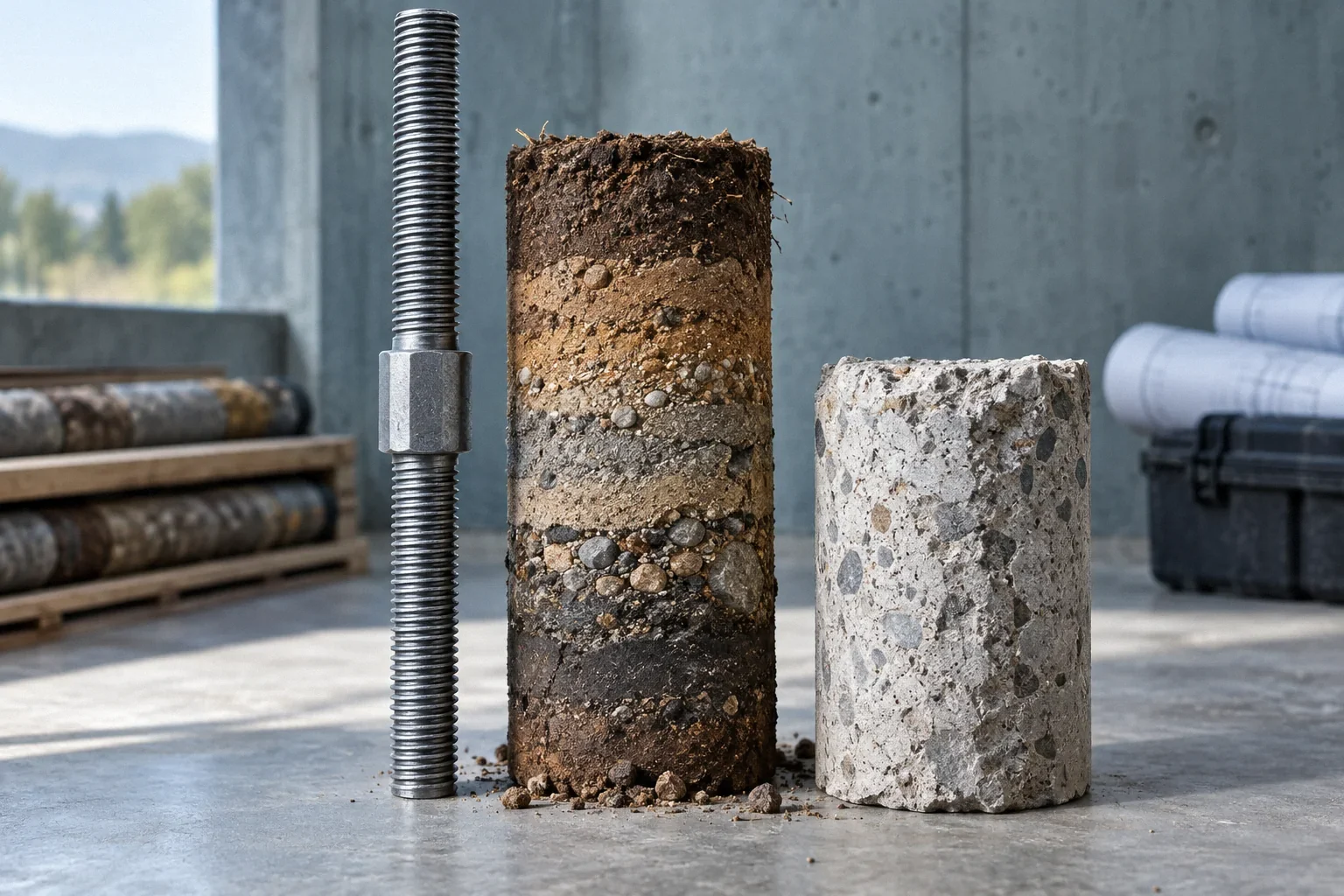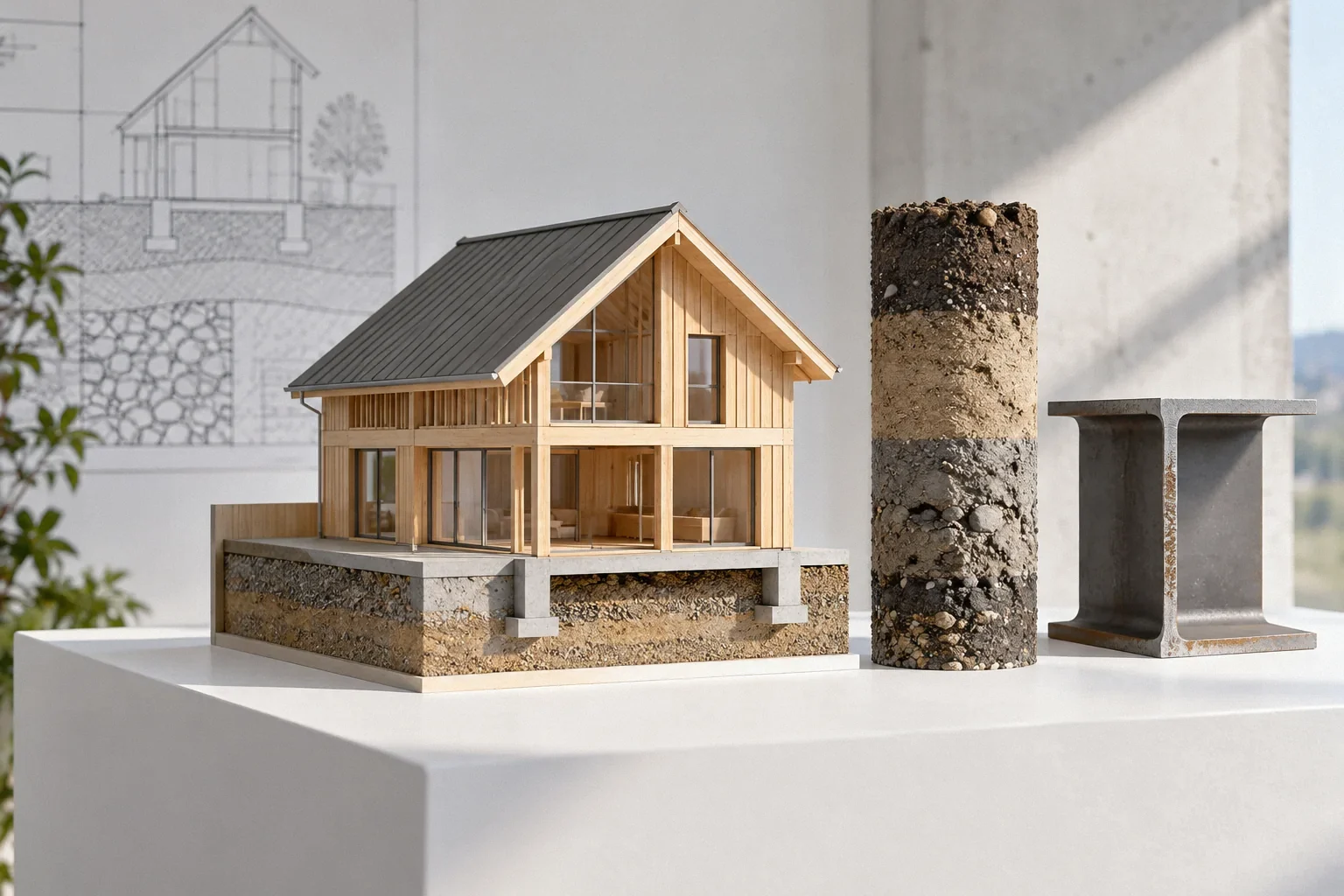
The short answer
A structural engineer evaluates how the building carries loads and how observed defects affect it. A geotechnical engineer evaluates the ground conditions and their interaction with foundations. Some problems require coordinated input from both. The right investigation starts with the unresolved question, not with a preferred repair product: determine what is known, what remains uncertain and which evidence could change the decision.
US general planning; California details labeled where relevant
Begin with the unresolved question
A homeowner who receives conflicting foundation explanations often asks which professional is right. First ask whether they were answering the same question. One visit may have considered immediate structural distress, another potential soil movement and a third the feasibility of a particular repair system. Different scopes can produce apparently conflicting statements without addressing the same evidence.
Write the question plainly. Examples include whether a wall has lost support, whether seasonal ground movement explains repeated cracking, or whether a proposed pier can transfer loads through an old footing. This article concerns investigation roles and technical deliverables. Selecting a provider and negotiating a service agreement are separate tasks. Defining the technical question makes those later choices more useful.
The structural investigation follows the building
A structural assessment considers the arrangement and condition of load-bearing elements and their connections. Depending on the scope and access, that may include foundation walls, beams, posts, floor framing and evidence of deformation. The engineer connects visible symptoms to the way the building is supported rather than interpreting a crack in isolation.
The historical HUD inspection guide discusses structural evaluation and the possible need for soils expertise in Residential Rehabilitation Inspection Guide. It remains useful for that distinction, though its old references are not current design rules. Ask what was inspected and what was concealed. A visual review can be valuable without exposing every footing, but its conclusions should be bounded by what could reasonably be observed and established.
The geotechnical investigation follows the ground
A geotechnical question may concern soil layers, groundwater, fill, strength, compressibility, swelling potential or slope behavior. The investigation needed to answer it depends on the property and proposed work. A regional soil description is not equivalent to sampling the ground where a foundation will transfer its loads.
USDA explains the planning uses of soil surveys in Soil Surveys Can Help You. Those maps help identify possible limitations and useful questions, but their scale and purpose differ from a site investigation. A geotechnical report should connect its observations and tests to the decision at hand. Ask where information came from, which conditions were directly sampled and what assumptions were necessary between or beyond the explored locations.
Loads and ground recommendations have to meet
A foundation is the interface between the building and the ground. The structural design needs appropriate ground information, while the ground assessment needs an understanding of loads and the proposed foundation arrangement. If those assumptions are exchanged poorly, a seemingly detailed report may still leave the central problem unresolved.
FHWA emphasizes site characterization, uncertainty and documentation in Acceptance Procedures for Structural Foundations of Transportation Structures, GEC 15. Its examples concern transportation structures, but they show why foundation decisions require coordinated information. For a house, ask which professional is responsible for integrating the findings. The useful output is not two unrelated documents; it is a coherent explanation of the problem and, when needed, an approach whose structural and geotechnical assumptions agree.
Distinguish a finding, an inference and a recommendation
A finding is an observation such as a measured elevation difference or a visible displaced joint. An inference explains what may have caused it. A recommendation proposes a next action. Good reports keep those layers distinguishable, especially when evidence is incomplete. A confident recommendation without a clear chain of reasoning is difficult for another professional to review.
Ask the report to explain alternatives that remain plausible and what would separate them. For example, a floor map may support investigating a support line without proving that all perimeter footings are settling. Additional testing should have a purpose: identify the result that would change the repair decision. More pages and more tests are not automatically better if they do not address that question.
A hypothetical disagreement that can be resolved
Imagine an engineer finds no visible signs of current distress in an accessible foundation and recommends documenting change. A later repair proposal attributes a sloped floor to poor soil and recommends piers. Before treating this as a contest, compare the observations, dates and scope. Did either party inspect the framing? Did the later visit discover new displacement or use a different reference for levels?
If the disagreement turns on soil behavior, targeted geotechnical input may be useful. If it turns on a beam or footing connection, further structural work may be the missing piece. The hypothetical does not imply one role always overrides another. It shows how to identify the evidence gap instead of merely collecting additional unsupported opinions.
Specify useful deliverables for the next phase
For an assessment, useful documents may include a location plan, photographs, measured observations, limitations and a clear explanation of recommended follow-up. If repair design is needed, the scope becomes more detailed and should identify the intended performance and how installation will be evaluated. A short condition opinion and a complete repair design are different products.
Ask which unresolved issues are prerequisites to design. Buried utilities, unknown footing geometry or inconsistent soil information may affect feasibility. Also ask who reviews unexpected conditions during work. A plan that relies on a particular soil layer or connection should have a process for addressing evidence that the assumption was wrong, rather than leaving the installer to improvise a substitute.
Resolve disagreement by identifying the missing handoff
When two reports appear to conflict, compare the question each author answered. A structural report may describe distress and recommend a support concept while reserving soil parameters for further investigation. A geotechnical report may provide ground recommendations without evaluating the existing framing or footing connections. Those reports can be incomplete as a pair without being contradictory.
Ask for the assumptions that cross the boundary between the disciplines. Which loads and foundation locations did the geotechnical recommendations assume? Which ground conditions did the structural concept rely on? Who will reconcile a field condition that differs from those assumptions? The owner should not have to choose between incompatible technical statements without that coordination.
A concise written clarification can be more useful than commissioning an unrelated third visit. It should identify the point of disagreement, the evidence each conclusion uses and the additional information, if any, needed to resolve it. If the disagreement persists, an independent technical review can focus on the actual disputed issue. This article’s decision is about investigation roles and their interface, rather than how to shop for or contract with an engineer. The outcome sought is one coordinated basis for the proposed work, with responsibility for unresolved questions made explicit.
Leave with a decision that has boundaries
The best next step may be monitoring, a specific repair, an additional inspection opening or a targeted subsurface investigation. Each should have a reason tied to the evidence. Ask what the assessment establishes now, what it does not establish and what would trigger reconsideration. Avoid converting a limited finding into a blanket statement that the entire house is safe under every future condition.
Keep the reports together with earlier observations and relevant construction records. That continuity helps the next professional evaluate change without restarting the investigation. The aim is not to assemble the largest team. It is to involve the expertise required by the actual question and ensure the resulting recommendations fit together.
Before your next decision
- Write the unresolved structural or ground question in plain language.
- Compare the scope and dates of apparently conflicting opinions.
- Identify who integrates building loads with soil recommendations.
- Ask what each proposed test could change.
- Retain findings, assumptions, limitations and follow-up decisions together.
Related questions
Can a structural engineer determine whether soil is still moving?
The engineer may identify evidence consistent with movement, but the answer depends on history, measurements and ground information. Monitoring or geotechnical investigation may be needed to resolve the cause and progression.
Do all foundation cracks require soil borings?
No. Investigation should be proportionate to the unresolved issue and consequences. Ask what a proposed boring or test would establish and how its result would change the decision.
Is a nearby soil report enough?
It may provide background, but its location, depth, date and purpose must be reviewed before applying its findings to another structure or repair.
Sources & further reading
- U.S. Department of Housing and Urban Development / National Institute of Building SciencesResidential Rehabilitation Inspection Guide
February 2000 guide; condition-assessment concepts only, not current code or a DIY repair specification.
- Federal Highway AdministrationAcceptance Procedures for Structural Foundations of Transportation Structures, GEC 15
April 2022 transportation-foundation guide. Transferable concepts only; not residential prescriptive requirements.
- USDA Natural Resources Conservation ServiceSoil Surveys Can Help You
Planning-level soils information; not a substitute for parcel-specific subsurface investigation.
Homeowner questions behind this article
These discussions informed the questions, not the technical answers. Some were available through indexed excerpts; votes and comments are not an engineering assessment.
- Micropile cost in Colorado?
- Was quoted 100k for foundation repair (30+ helical piers) by a foundation repair company. Should I run this by a structural engineer first?
- Utilities in the way of proposed piers
- Foundation and drywall cracks - need advice