The short answer
Agree how the household and contractor will communicate before mobilization. Name the decision-makers, walk the actual work and access areas, and define notice for interruptions. Use short written updates showing completed work, the next activities, decisions needed and inspection dependencies. Keep urgent safety communication separate from routine questions. The right frequency depends on the project; the essential requirement is that important decisions and changed expectations do not disappear into scattered conversations.
US general project planning; California requirements and named local examples labeled in the text.
Begin with the household's actual routine
A basement can be a work zone while still containing the laundry, storage, utility equipment or the route to a garage. Ask which functions the household relies on every day. Identify work calls, sleeping schedules, pets, children and mobility needs that affect access. The contractor cannot plan around a restriction that appears only after the crew arrives.
The discussion should produce specific arrangements, not a broad promise to “minimize inconvenience.” If a room will be unavailable, say when and how the household will manage. If interruption timing remains uncertain, identify when it can be confirmed. This gives the owner a useful planning window without turning an approximate construction sequence into an unrealistic guarantee.
Walk the work zone and route together
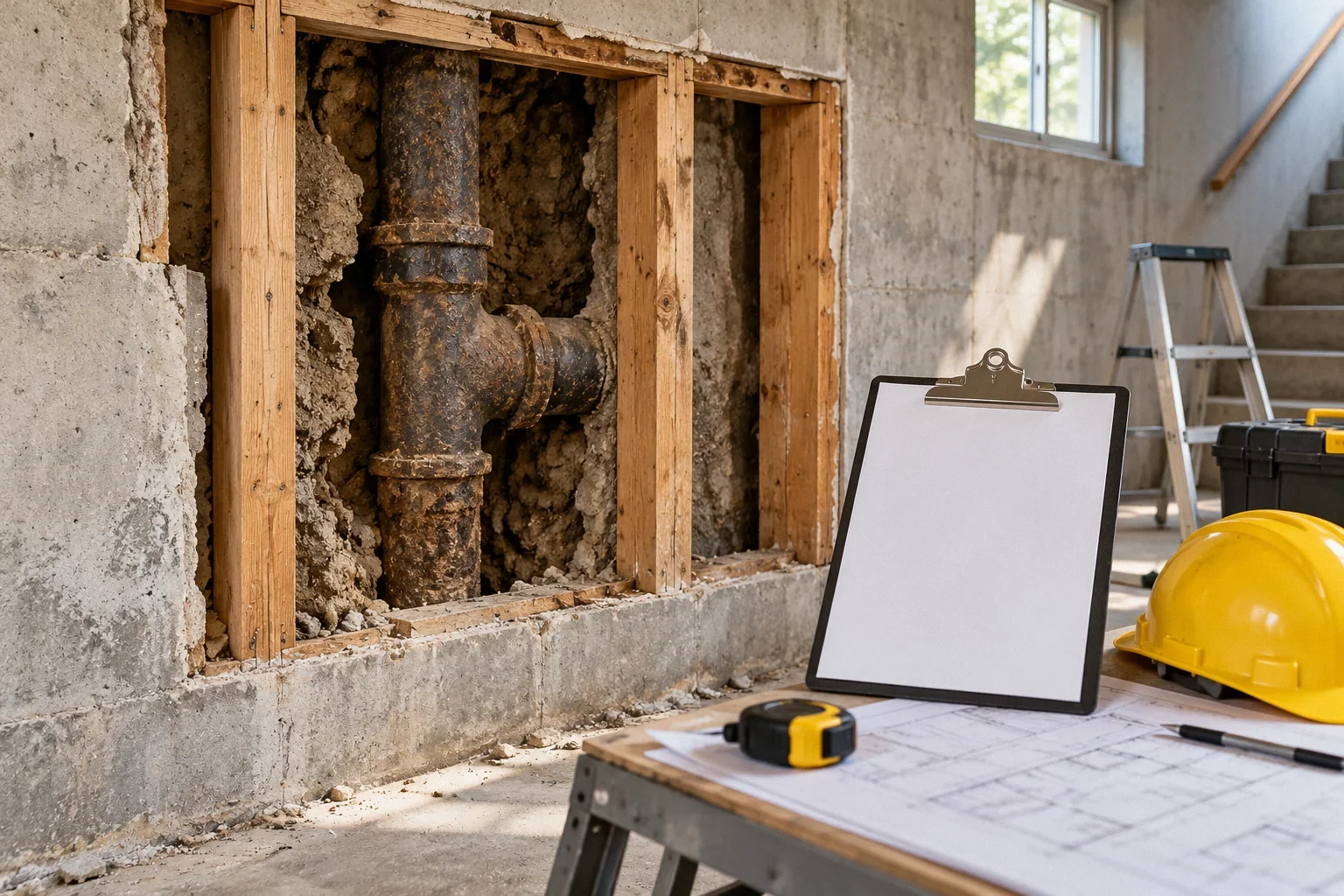
Show where workers enter, where tools and deliveries go, and which surfaces require protection. Identify the belongings the owner must move, the deadline for doing so and the agreed response if the area is not ready. Discuss bathroom access and parking if they matter to the job. Keep a marked sketch or a few annotated photographs.
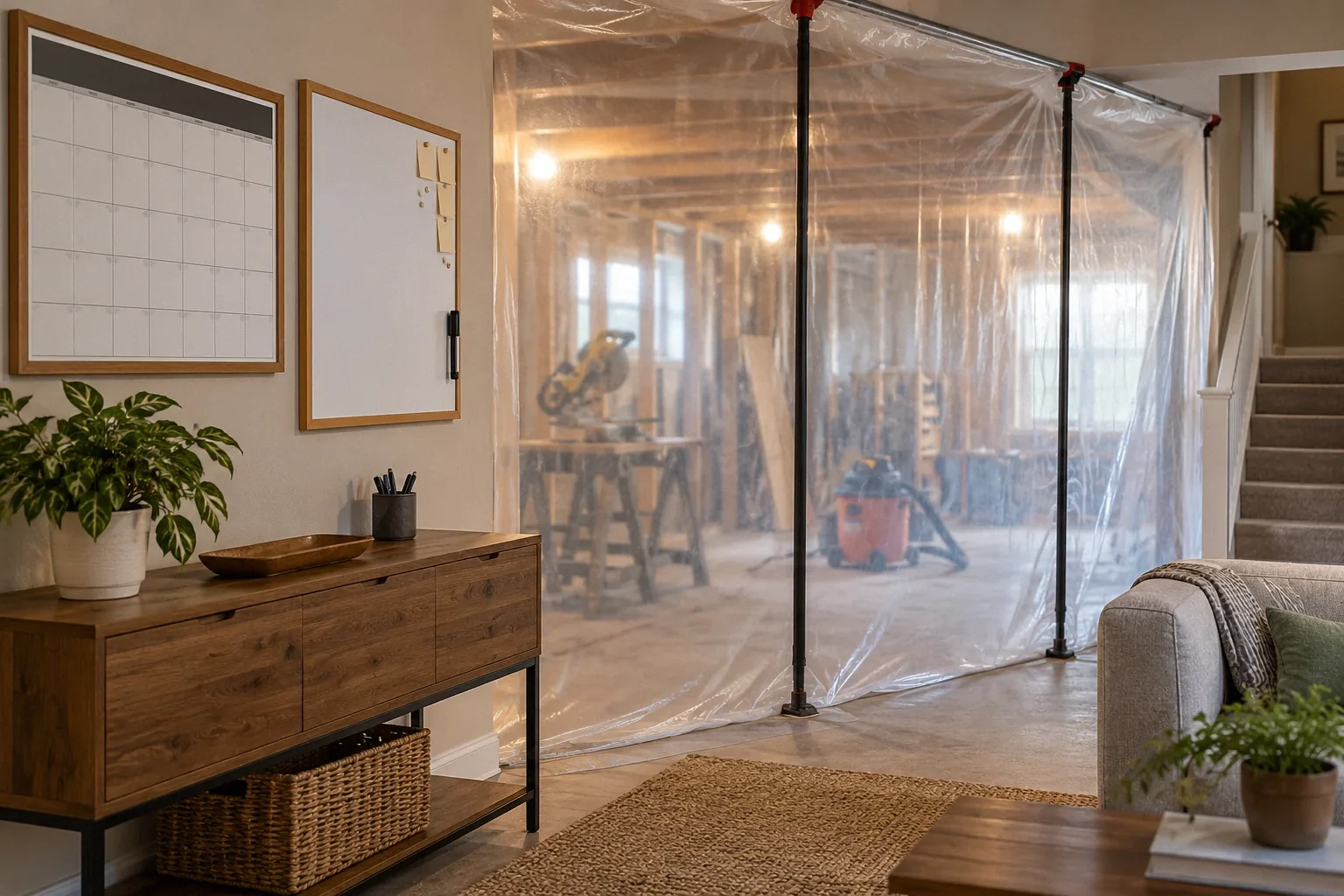
A contractor discussion about occupied-home expectations illustrates a recurring mismatch: clients may read the price but not visualize the space, noise and interruptions. A walkthrough makes the arrangement concrete. It also gives the owner an opportunity to explain a constraint that cannot be solved by a generic paragraph in a contract.
Name who can make which decisions
Identify one owner contact for routine approvals and a backup when that person is unavailable. On the contractor's side, distinguish the supervisor who coordinates daily work from the person authorized to price or sign changes. Tell the crew where to direct requests that alter scope.
A family member answering a worker's question about an outlet location may not intend to authorize a broader electrical upgrade. Record which decisions need a formal approval and which ordinary coordination matters can be handled onsite. California's home improvement contract requirements include written changes for covered work. A convenient message channel should support that process, not quietly replace it.
Use one update with five useful fields
Scroll horizontally to read every column.
| Field | Example of useful content |
|---|---|
| Completed | Named work areas and any relevant inspection result. |
| Next | Upcoming activities and the rooms or routes affected. |
| Owner decision | The choice, supporting information and needed response date. |
| Dependency | An awaited delivery, professional response or inspection. |
| Change | A revised expectation and the reason for it. |
Choose a frequency suited to the pace. A short daily notice may be useful during disruptive stages, while a recurring weekly review can reconcile scope and timing. More messages are not necessarily better if no one can tell what requires a decision.
Give owner tasks the same clarity as contractor tasks. A selection request should include the available options, the information needed to choose and the date after which ordering or installation may move. If the owner cannot decide, record that fact and discuss the consequence. Avoid presenting an unanswered message as consent, particularly when the choice changes cost, scope or a specified product.
Give interruptions their own notice
Noise, dust-control arrangements and utility interruptions deserve explicit advance notice. Explain the affected service, expected window, uncertainty and contact for questions. Discuss whether the home remains suitable for the intended occupancy during that stage with the responsible professionals. Do not assume that a person working upstairs can tolerate every operation downstairs.
If the timing changes, send a correction through the agreed channel. The owner should similarly notify the supervisor when a previously agreed access window disappears. Record consequences that affect paid work or the schedule before they become a surprise. The aim is mutual coordination: neither side benefits from a crew arriving to a blocked route or a resident discovering a disconnected service during an essential appointment.
Keep a decision log that survives personnel changes
For important choices, record the date, question, decision, approving person and the document affected. Attach the selected product, sketch or change order where appropriate. If a conversation happens by telephone, send a short factual recap and invite correction. Avoid recording a guess about agreement as though it were an approval.
CSLB describes the written contract as a communication tool for scope, materials, timing and cost. The log extends that clarity through the project. It is especially useful when a supervisor is replaced, the owner travels or a specialist joins later. New participants should not have to rely on a chain of remembered conversations to understand a current decision.
Escalate unanswered questions proportionately
Agree how quickly the parties will acknowledge routine requests and who receives a follow-up when a response is missing. Distinguish a decision that stops the next activity from a nonurgent question about a later finish. A message should state the consequence: “This selection is needed before ordering” is more useful than repeated requests marked urgent without explanation.
For a continuing disagreement, identify the contractual obligation and request a specific response. The FTC recommends keeping records and following dispute conversations in writing. Preserve the original messages and avoid emotional accusations that make the factual issue harder to see. Immediate danger requires an appropriate emergency response, not waiting for a weekly meeting or an email acknowledgment.
A hypothetical missed notice and a better response
Suppose a household uses the basement laundry each evening. The owner knows work is starting Monday but has not been told that the equipment will be inaccessible during a defined stage. On Monday morning the contractor discovers the owner has planned to use it that night. Both parties thought they had communicated adequately.
A better pre-start arrangement lists the planned loss of access, its expected duration, the conditions that could extend it and when the supervisor will confirm reconnection readiness. If an inspection postpones the return to service, the next update explains the dependency and the revised expectation. That response addresses the practical problem without promising a date the contractor cannot control or leaving the household to infer what is happening.
End meetings with a reconciled action list
Close each review by reading back the decisions, responsible people and next dates. Keep unresolved questions visible rather than burying them in a long narrative. A photo update can show progress, but it should not imply that an unseen inspection passed or that a pending change was approved.
As work approaches completion, shift the update toward correction items, final inspections, warranties and handover records. The communication plan then becomes a bridge to closeout rather than ending when the visible construction looks finished. Retain the useful records in one project folder. Delete redundant copies only after confirming that the agreed final documents, important decisions and outstanding obligations remain clear.
Before your next decision
- Name primary and backup contacts on both sides.
- Walk access, staging and occupied areas before mobilization.
- Agree notice for noise and service interruptions.
- Record choices, authority and changed dates in one log.
- Close each review with responsible people and next actions.
Related questions
Is a weekly update enough for every project?
No. A weekly review may suit overall progress, while disruptive stages or decisions blocking work need faster communication. Agree the frequency and urgent contact method for your actual sequence.
Can I give instructions directly to subcontractors?
Coordinate scope or cost changes through the person authorized under your contract. Direct instructions can conflict with the supervisor's plan and leave uncertainty about who approved the work.
What if the contractor will only communicate verbally?
Ask for brief written confirmation of decisions affecting scope, price or schedule and preserve your factual recaps. Persistent refusal to document material changes deserves attention before you authorize further commitments.
Sources & further reading
- CSLBLearn About Home Improvement Contracts
California home improvement contracts
- California LegislatureBusiness and Professions Code section 7159
California statutory home improvement contracts; amended by Stats. 2025 ch.585, effective January 1, 2026
- Federal Trade CommissionHow To Avoid a Home Improvement Scam
United States consumer education; state contract and licensing rules vary
Homeowner questions behind this article
These discussions informed the questions, not the technical answers. Some were available through indexed excerpts; votes and comments are not an engineering assessment.
- How do you make people understand that you are doing construction in their home?
- Contractor abandoned our ADU project after being paid over contract amount, license appears expired and not his, CA advice needed