The short answer
A storm shelter price is only comparable when you know what it includes. Separate the enclosure supply from site assessment, design, foundation work, excavation, water management, access, installation, inspections and restoration. Keep unknown conditions and their decision process visible. An advertised starting price or a neighbor's invoice is not a reliable budget for a different property and completed scope.
US shelter planning. Local examples are identified; permitting, standards and emergency programs vary by jurisdiction.
Begin with the completed outcome you intend to buy
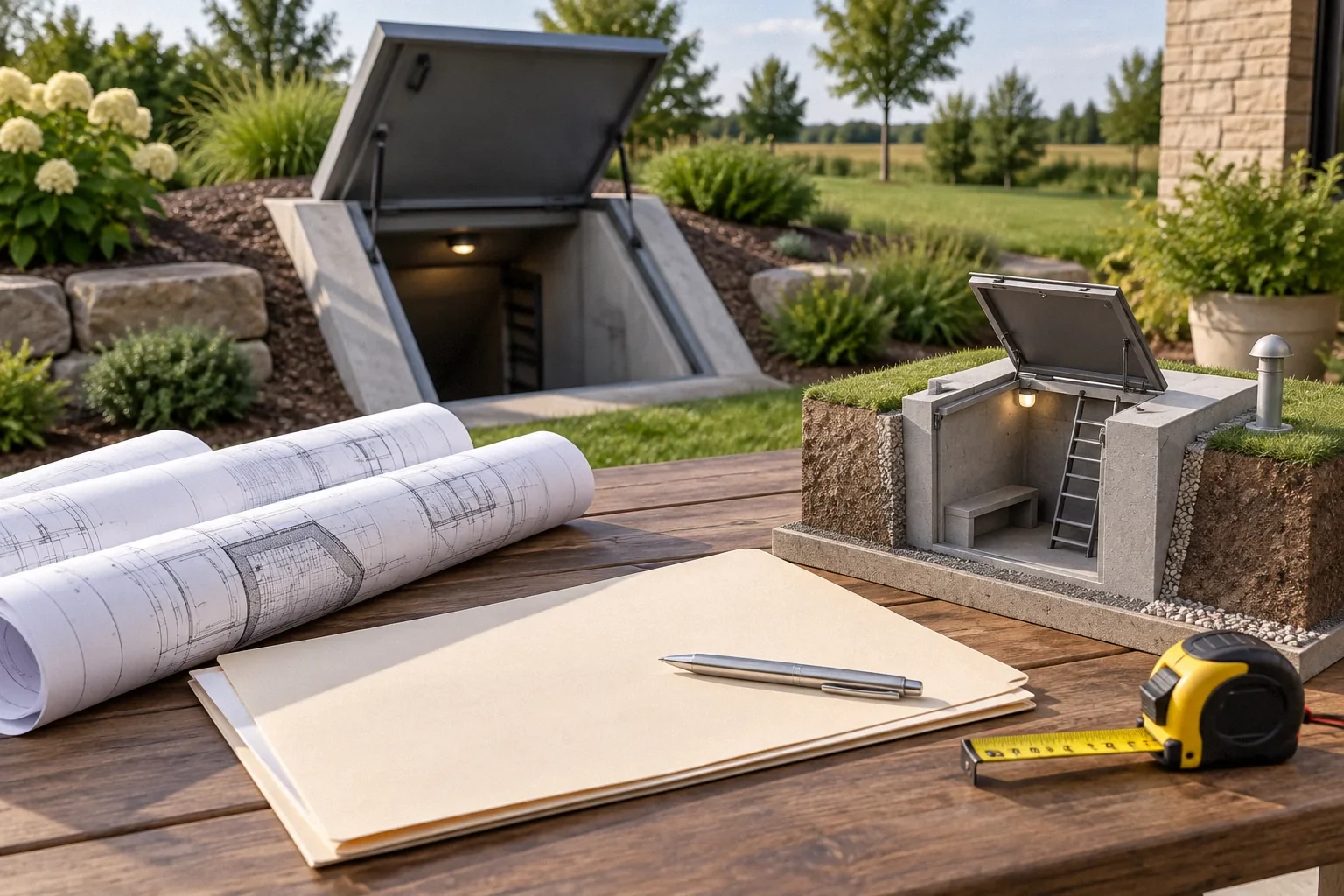
A quote for a delivered shelter and a quote for a permitted, installed and documented project can have very different totals while both use the phrase “storm shelter.” Before seeking bids, write a short brief identifying the intended hazard, occupants, location options and the records expected at completion.
Include practical constraints such as access for equipment, existing utilities, household mobility needs and any known water history. You do not need to design the project in order to define those inputs. The purpose is to give bidders the same problem. Without a common brief, one provider may price a standard product while another includes investigation and site work that the first has simply left for later.
Separate enclosure supply from site responsibility
FEMA: FEMA P-361: Safe Rooms for Tornadoes and Hurricanes (April 2025) addresses safe rooms as coordinated projects with design, construction, inspection and operational considerations. Use that framework to ask who is responsible for fitting the selected product to your site. Product documentation and local project approval have different roles.
Request the model, configuration, included door assembly and installation instructions. Then identify the professional responsible for site-specific decisions. If the provider only supplies the enclosure, ask who will design and execute the remaining work. A gap between supplier and installer can leave the homeowner coordinating technical questions they are not qualified to resolve. A clear responsibility map is a valuable part of the bid, even before the final design is complete.
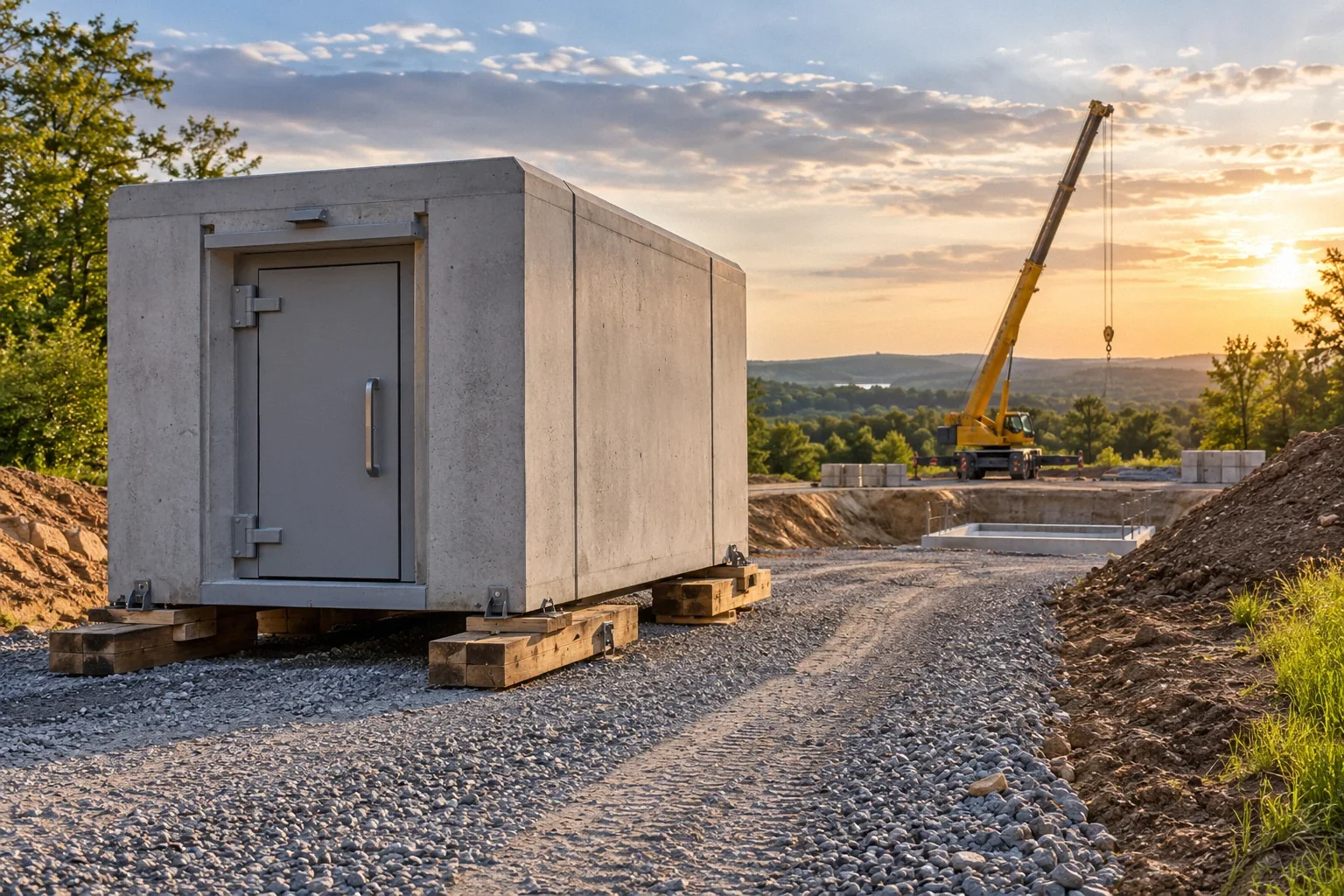
Foundation and excavation can change the real comparison
For a garage installation, FEMA: Foundation and Anchoring Criteria for Safe Rooms makes foundation and anchorage questions important before attaching a unit to an existing slab. For a below-ground project, excavation, buried conditions and installation details must also fit the design. Neither option should be priced as if the visible floor or soil is automatically suitable.
Ask what investigation is included, what information the bid assumes and how unexpected conditions will be handled. Include removal and disposal, access restoration and any temporary protection of the existing property that the project requires. A line called “installation” can hide substantial differences. Have the bidder explain its boundaries rather than assuming that every necessary task is covered by one broad word.
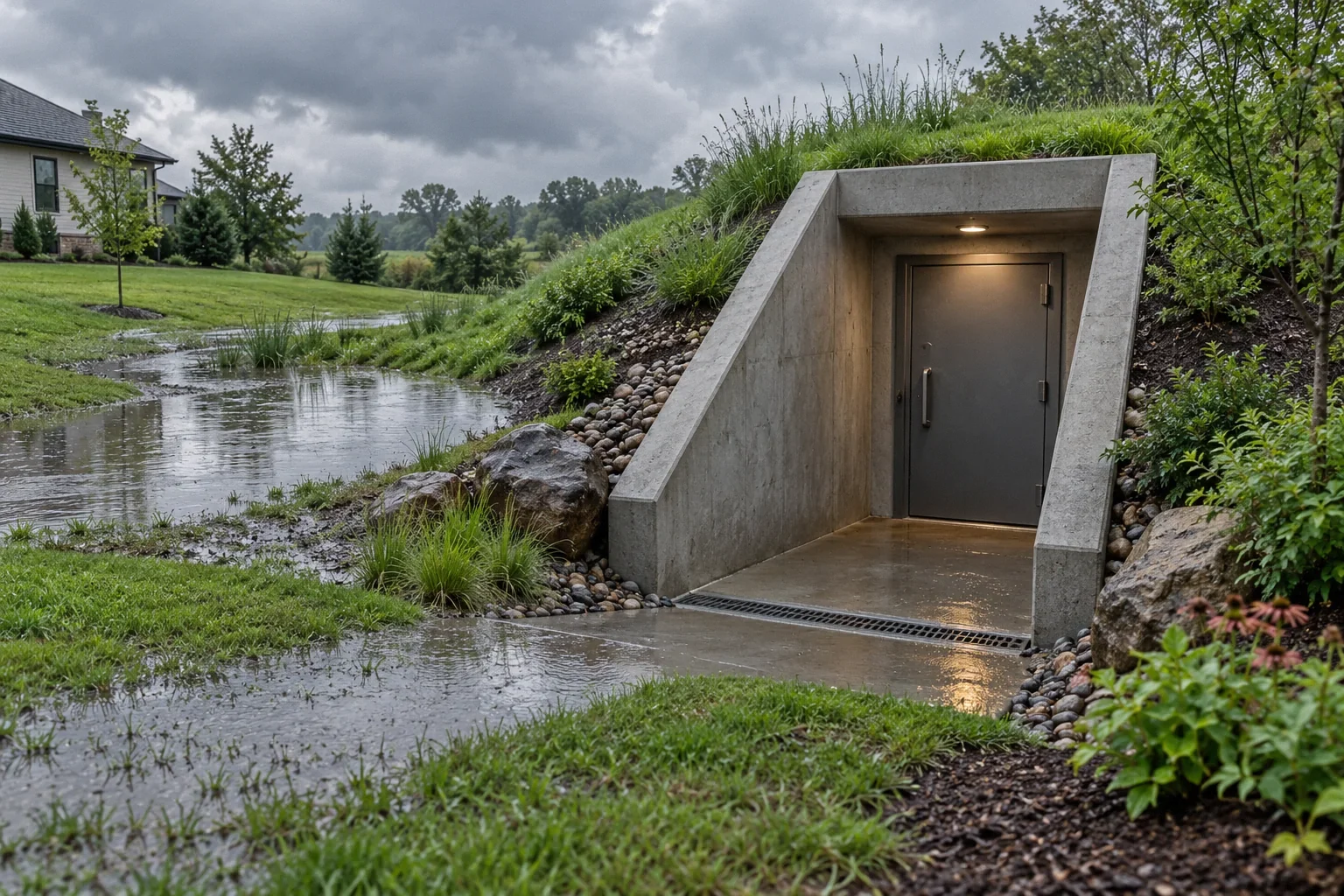
Water risk should be resolved before it becomes an expensive extra
The FEMA: Flood Hazard Siting and Elevation Criteria for Residential Safe Rooms places flood exposure within the shelter siting decision. If a location is unsuitable, a more expensive coating may not solve the central problem. Ask how the proposed site will be evaluated before committing to the enclosure.
Separate routine dampness control from conditions that can affect safe occupancy. If drainage or pumping is proposed, clarify the design responsibility, discharge arrangements, power dependencies and maintenance. Do not compare two underground bids solely on shell material while one assumes dry conditions and the other includes substantial water-management work. The scope should explain why the location is appropriate and what conditions would require changing it.
Put approvals and inspection responsibilities in writing
The City of Moore: Storm Shelter Permit Application illustrates that a city can have a dedicated storm-shelter application and registration process. It is an example for Moore, Oklahoma, not a national fee schedule or a rule for another jurisdiction. Confirm the actual process with your local department.
A bid should identify who prepares submissions, obtains required approvals, schedules inspections and provides final records. Clarify fees and specialist services without assuming that a product certificate eliminates them. Ask which work must remain visible for observation before concealment. If the seller promises to “handle everything,” translate that promise into named deliverables and responsibilities. Otherwise, the homeowner may discover at closeout that permitting or a required inspection was outside the quoted package.
Use a bid-normalization worksheet
Scroll horizontally to read every column.
| Line item | Record for each bidder |
|---|---|
| Product | Model, size, configuration, assembly documentation and delivery. |
| Site and design | Investigation, responsible professional, foundation and water assumptions. |
| Construction | Excavation, installation, approved materials, access and restoration. |
| Verification | Permits, inspection points, testing and closeout records. |
| Owner use | Operating instructions, maintenance, warranty and excluded conditions. |
Keep a separate column for unresolved items and the event that will determine their price. An allowance can make uncertainty explicit; an unexplained exclusion can hide it. Ask for the process for authorizing changes before work proceeds. A seemingly precise total is not necessarily more dependable if it rests on unverified assumptions.
A hypothetical lower bid excludes the largest unknown
A homeowner receives two bids for an underground garage shelter. Bid A includes the enclosure and a standard installation but excludes unusual water conditions, permit work and garage restoration. Bid B includes more of those tasks but requires a site assessment before confirming the final design.
The homeowner cannot conclude that Bid A is the better value from its smaller initial total. The useful comparison is a completed scope after the exclusions and assumptions have been reconciled. Investigation may change either proposal. This hypothetical deliberately uses no dollar figure: adding invented national prices would create false precision where the property, design and included work have not been established.
Evaluate the costs that begin after handover
Maintenance, replacement parts, battery care where applicable and keeping drainage or access arrangements functional can affect the ownership burden. Ask for those instructions before purchase. A low initial price may be less attractive if a critical component is difficult to service or the household cannot maintain the required arrangement.
Review warranty coverage, transfer provisions and exclusions as written. A warranty does not establish that the installation is appropriate or that every future condition is covered. Keep the final design, approved changes and inspection records with the invoice. Those documents help separate a product issue, installation issue and maintenance issue if a problem arises, and give the next owner more than a marketing description.
For an unfamiliar maintenance task, ask who can perform it, how service is arranged and whether the quoted warranty includes that visit. Record the answer separately from the purchase price. A household that needs outside assistance with access equipment or door servicing should understand that responsibility before accepting a design whose continued usability depends on it.
Before your next decision
- Give bidders the same hazard, occupancy and location brief.
- Separate product supply from site and design responsibility.
- List foundation, water and excavation assumptions.
- Name permitting, inspection and restoration deliverables.
- Compare warranty and maintenance obligations alongside installation price.
Related questions
Can I use a neighbor's shelter price as my budget?
It is a useful conversation starter only if the date, product, site conditions and included work are comparable. Obtain a project-specific completed scope.
Should every unknown be a fixed price?
Not necessarily. Genuine unknowns should have an investigation or allowance process, a responsible decision-maker and clear authorization before added work.
Does a product warranty replace inspection records?
No. Warranty terms and evidence that the installation met its requirements serve different purposes. Keep both.
Sources & further reading
- FEMAFEMA P-361: Safe Rooms for Tornadoes and Hurricanes (April 2025)
US guidance; distinguish local adoption and FEMA funding criteria
- FEMAFlood Hazard Siting and Elevation Criteria for Residential Safe Rooms
US residential guidance, November 2024
- FEMAFoundation and Anchoring Criteria for Safe Rooms
2021 guidance; confirm project standard edition
- City of MooreStorm Shelter Permit Application
Moore, Oklahoma example only; verify current fees/process
Homeowner questions behind this article
These discussions informed the questions, not the technical answers. Some were available through indexed excerpts; votes and comments are not an engineering assessment.
- Need ideas for an alternative to a basement. Specifically used only for tornado safety.
- Underground storm shelter
- Looking for recommendations for a storm shelter.