The short answer
Yes, an underground shelter can be threatened by flooding or groundwater, including through its entrance or installation details. A dry visit, a nearby well record or a sump pump does not by itself establish a safe site. Evaluate flood exposure, seasonal conditions, drainage and the complete buried installation before purchase. Follow evacuation and emergency instructions; a storm shelter is not automatically a flood refuge.
US shelter planning. Site conditions, adopted requirements and emergency directions must be confirmed locally.
The weather that sends you underground can also bring water
Tornado anxiety naturally directs attention toward wind and debris. The same storm system may produce intense rainfall, and the shelter may occupy the lowest point on the property. Water therefore belongs in the initial siting decision, not in a warranty discussion after installation.
The FEMA: Flood Hazard Siting and Elevation Criteria for Residential Safe Rooms states that safe rooms should not be placed where floodwater could endanger occupants. It also addresses the limits on use during anticipated flooding and evacuation situations. Those are siting and emergency-planning questions. A waterproofing product alone cannot answer them. Before discussing wall coatings or pump capacity, establish whether the proposed location is appropriate for an occupied shelter under the conditions that matter.
Distinguish surface water, groundwater and ordinary dampness
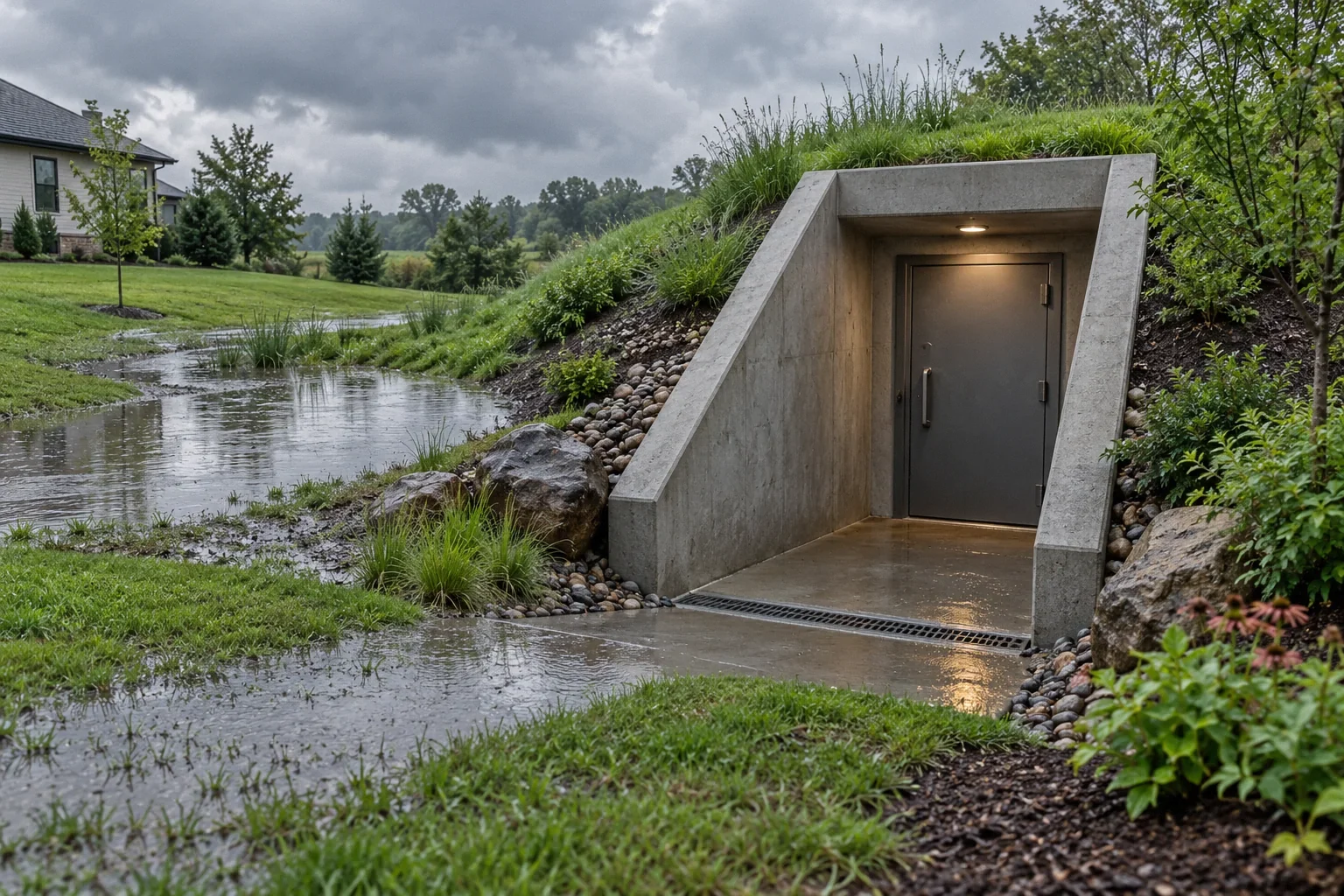
Surface water can flow toward a depressed entrance, garage opening or low area. Groundwater can act around a buried enclosure and change seasonally. Damp air and condensation can affect stored items without producing the same immediate mechanism as a rising water level. These conditions may coexist, but they require different observations.
Record where water appears first, its timing and whether it follows prolonged rain, a short intense storm or another event. Include the approach path and nearby grades. Do not enter a flooded or otherwise unsafe shelter to collect evidence. Photographs from a safe location and an installation history can help the responsible professional decide what investigation is needed. A stain on one wall does not prove that the shell itself is the sole source.
Why a dry inspection is incomplete
A sales visit on a dry afternoon establishes conditions on that afternoon. It does not reveal the seasonally high water level, a blocked drainage path or runoff during an exceptional event. Nearby well information can provide context, but it is not a complete assessment of perched water, surface concentration or conditions directly around the proposed excavation.
Ask the project team what water assumptions support the design and what evidence supports those assumptions. Useful inputs may include available flood information, site elevations, prior water history and geotechnical investigation appropriate to the project. Keep uncertainty explicit. A statement such as “we have installed these everywhere” does not identify whether your property matches the conditions used in the product's design and installation instructions.
A buried enclosure needs more than a watertight-looking shell
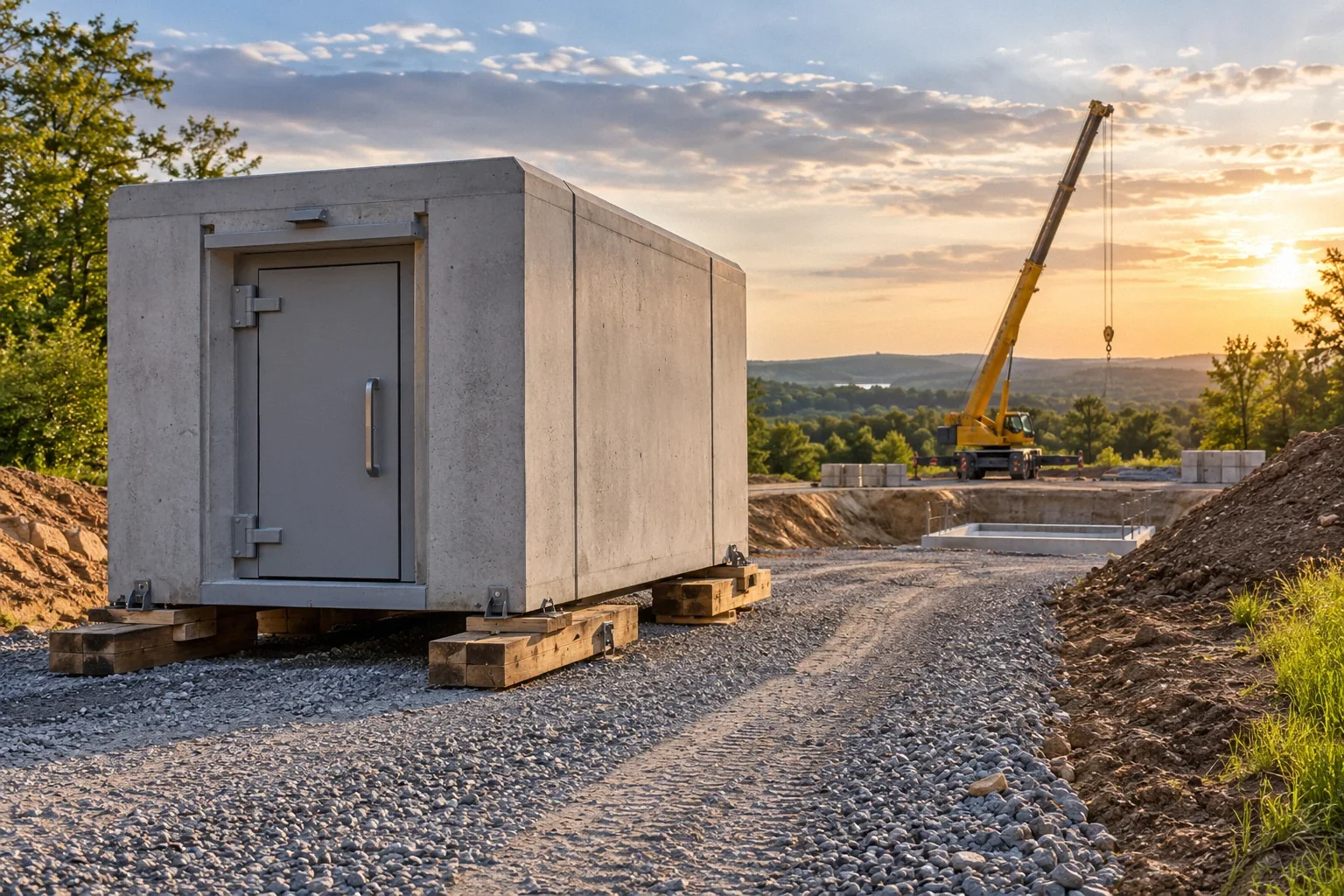
The site and installation have to be considered as a system. The enclosure, its foundation, backfill, joints, penetrations and entrance all affect performance. Groundwater can impose forces as well as create a leakage path. Do not let a quote turn engineered backfill or attachment requirements into optional economy upgrades without the responsible designer's agreement.
FEMA: Foundation and Anchoring Criteria for Safe Rooms explains why safe-room foundation and anchorage criteria matter. Its application must be coordinated with the current design and the actual shelter configuration. Homeowners should request the approved installation documents and inspection records, rather than choose a concrete-to-soil mixture from a comment thread. A materials substitution can change the assumptions on which the installation depends even if the finished surface looks identical.
Ask what happens when the pump or power fails
A sump system may be part of water management, but its existence does not make every location acceptable. The project needs an answer for loss of power, equipment failure, obstructed discharge and unusually high inflow. Ask who evaluates those conditions and how they affect the decision to occupy the shelter.
Separate routine moisture control from life-safety assumptions. A backup pump can improve reliability for some systems, yet it still has limits, maintenance needs and an energy source. An alarm only helps if someone can receive it and act in time. The useful question is “What keeps occupants safe when a dependency fails?” Avoid replacing that question with a sales promise that a battery will probably last long enough.
Include the entrance and the route in the assessment
A dry main compartment is not the only criterion. Water can make stairs slippery, prevent access or collect at the doorway. The route may also be exposed to weather while people are trying to reach an exterior shelter. Check how the planned grade, thresholds and nearby drainage fit together without improvising a modification to a tested door assembly.
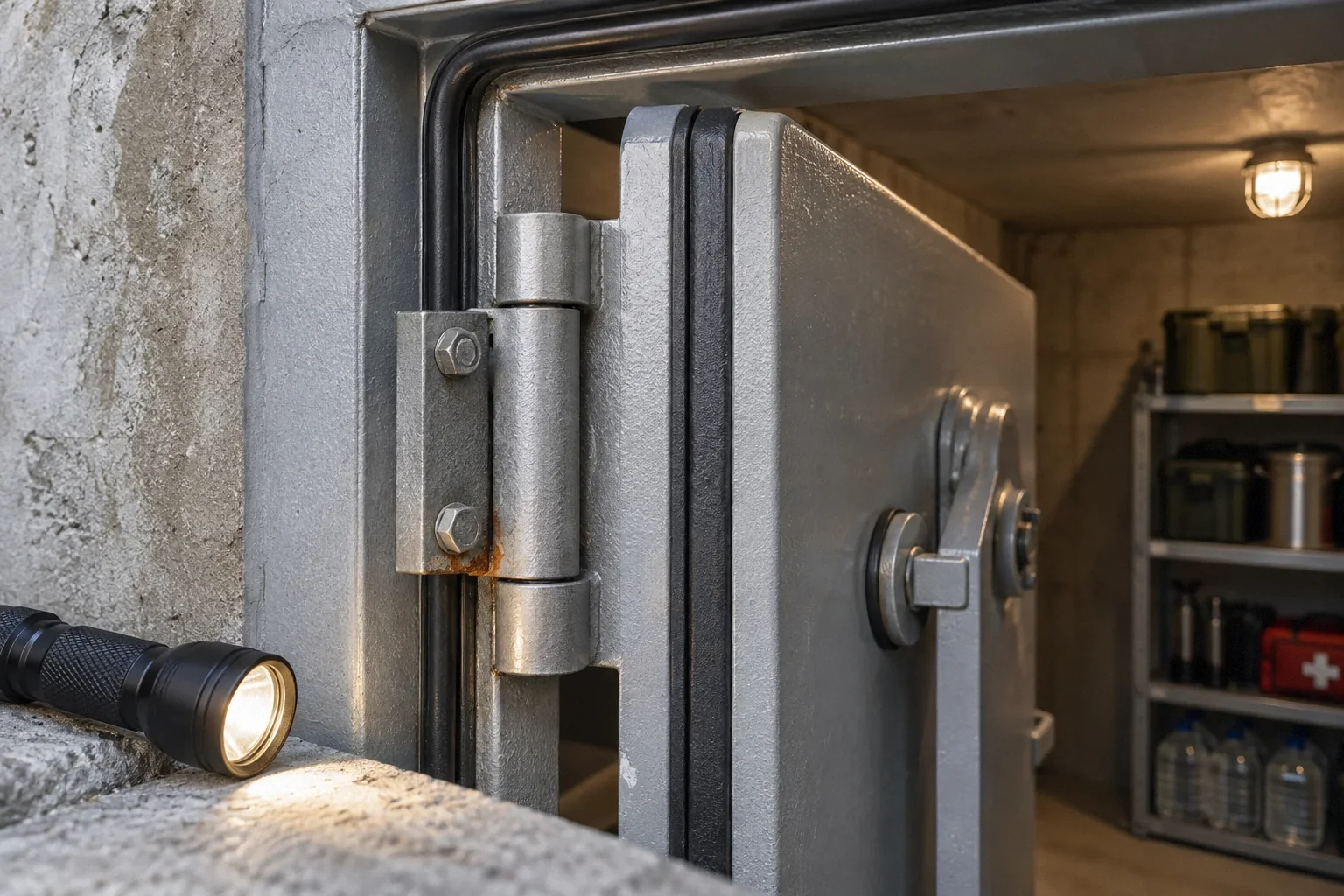
FEMA: FEMA P-361: Safe Rooms for Tornadoes and Hurricanes (April 2025) provides a broader framework for shelter design and operation. Use it to ask the team how siting and household use have been coordinated. Do not alter a door, add an unapproved opening or cut a new drain through the enclosure because a water problem appears. Such work can affect other protective features and needs review of the complete system.
A hypothetical comparison that changes the preferred option
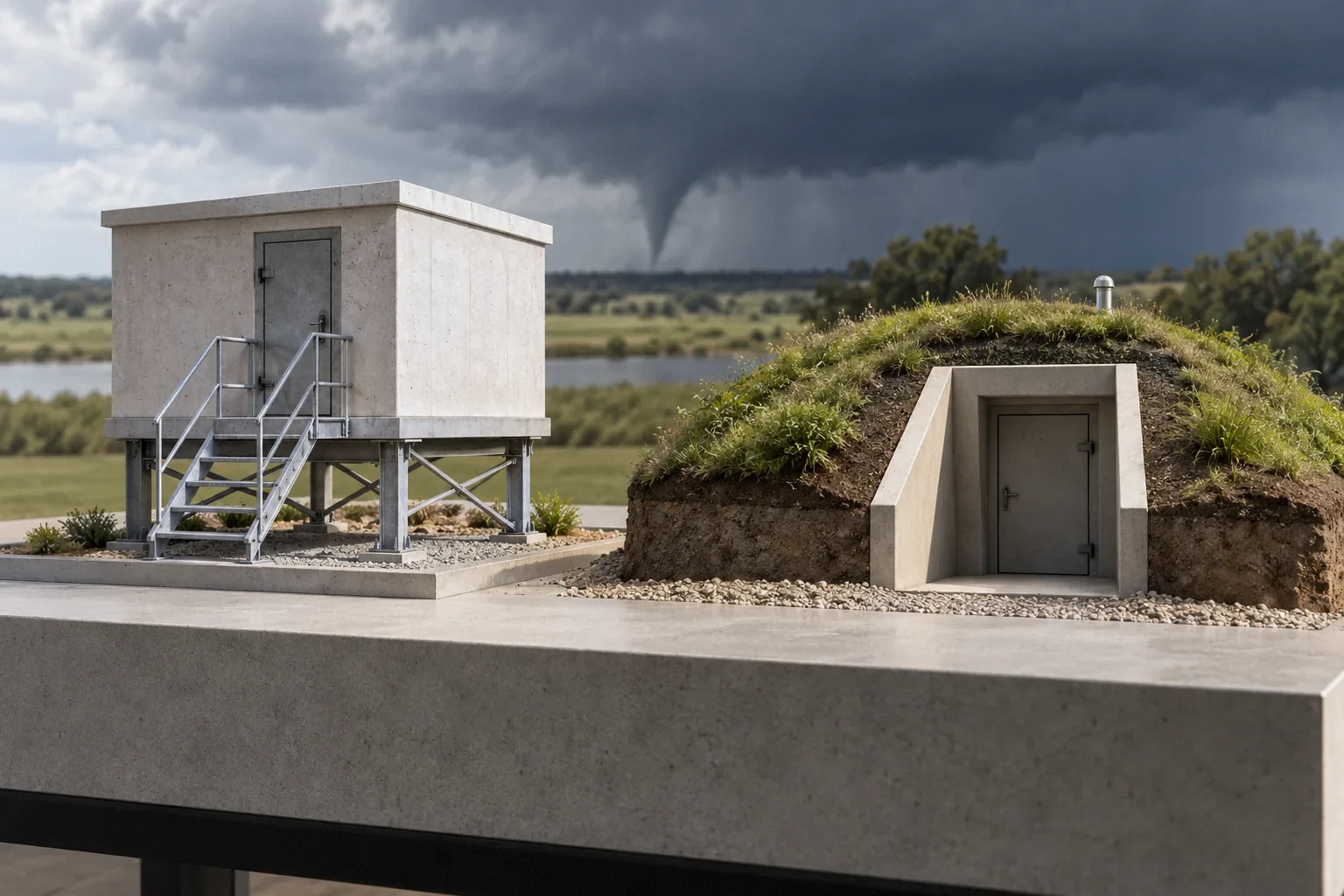
Suppose one contractor quotes an underground garage unit using a standard installation detail. The homeowner reports that water sometimes collects at the garage entrance after prolonged rain. A competing above-ground location is available, but it needs slab evaluation. Neither proposal yet contains a site water assessment.
The next purchase decision is to resolve those assumptions, not to choose the cheaper box and hope that sealing works. Investigation might support a properly designed underground installation, require a different location or favor the above-ground alternative. Record which professional reaches that conclusion and what conditions it relies on. This example deliberately leaves the outcome open because a generic article cannot establish a property's water exposure or acceptable design.
What to document if a new shelter leaks
Preserve the contract, drawings, product identification, installation photographs, inspection records and maintenance instructions. Record the dates and conditions of observed water entry from a safe location. Notify the responsible parties with specific observations and ask for a written investigation and correction plan. Distinguish a warranty response from a determination that occupancy is safe.
Do not allow cosmetic sealing to erase useful evidence before the cause has been evaluated. Equally, do not assume every leak proves intentional misconduct. The resolution should identify the mechanism, the approved repair, how performance will be checked and what limitations remain. Keep an alternative household shelter plan while suitability is unresolved, following local emergency guidance and any evacuation instructions.
Before your next decision
- Collect the site's water history before choosing a location.
- Ask what flood and groundwater assumptions govern the proposal.
- Include the entrance, approach and all penetrations.
- Confirm approved backfill, foundation and inspection requirements.
- Record pump dependencies and an alternative household plan.
Related questions
Does being outside a mapped flood area prove the shelter is safe?
No. Mapping is one input. Local runoff, groundwater, site elevations and the proposed installation still need evaluation.
Can I fix an entrance leak by drilling a drain through the shelter?
Do not modify the enclosure without the responsible designer and manufacturer. A new penetration can affect the intended protective system and create another failure path.
Should a leaking shelter still be used in a storm?
Do not assume it is safe. Obtain a qualified assessment and establish an alternative plan in advance; follow official emergency and evacuation instructions for the actual event.
Sources & further reading
- FEMAFlood Hazard Siting and Elevation Criteria for Residential Safe Rooms
US residential guidance, November 2024
- FEMAFEMA P-361: Safe Rooms for Tornadoes and Hurricanes (April 2025)
US guidance; distinguish local adoption and FEMA funding criteria
- FEMAFoundation and Anchoring Criteria for Safe Rooms
2021 guidance; confirm project standard edition
Homeowner questions behind this article
These discussions informed the questions, not the technical answers. Some were available through indexed excerpts; votes and comments are not an engineering assessment.
- Found bomb/fallout shelter in my basement in Portland update
- Any engineers or experts lingering?
- Underground storm shelter
- Looking for recommendations for a storm shelter.