The short answer
Protect people and the property first, then document the water and preserve the sale records. Obtain a qualified assessment of the current cause and extent while separately investigating what was known before closing. A leak soon after purchase does not by itself prove seller knowledge or fraud. Raise factual discrepancies promptly with appropriate professionals, and get advice about transaction-specific deadlines, insurance and possible remedies.
US general project planning; California requirements and named local examples labeled in the text.
Address the active condition safely
Water in a newly purchased basement creates two problems at once: an immediate property condition and a possible dispute about the transaction. The first may require prompt action. Avoid entering an area where water, electrical equipment, unstable materials or other hazards make access uncertain. Contact the appropriate emergency or licensed professionals for the actual condition instead of trying to document everything personally.
Do not delay necessary protection solely to preserve an untouched scene. Ask the responding professionals to document what they encounter and the work they perform. This article addresses the evidence and transaction process; it does not provide a water-removal, electrical isolation or structural repair procedure. Keep immediate mitigation distinct from permanent repair decisions that need a fuller assessment.
Create an observation record without deciding the cause
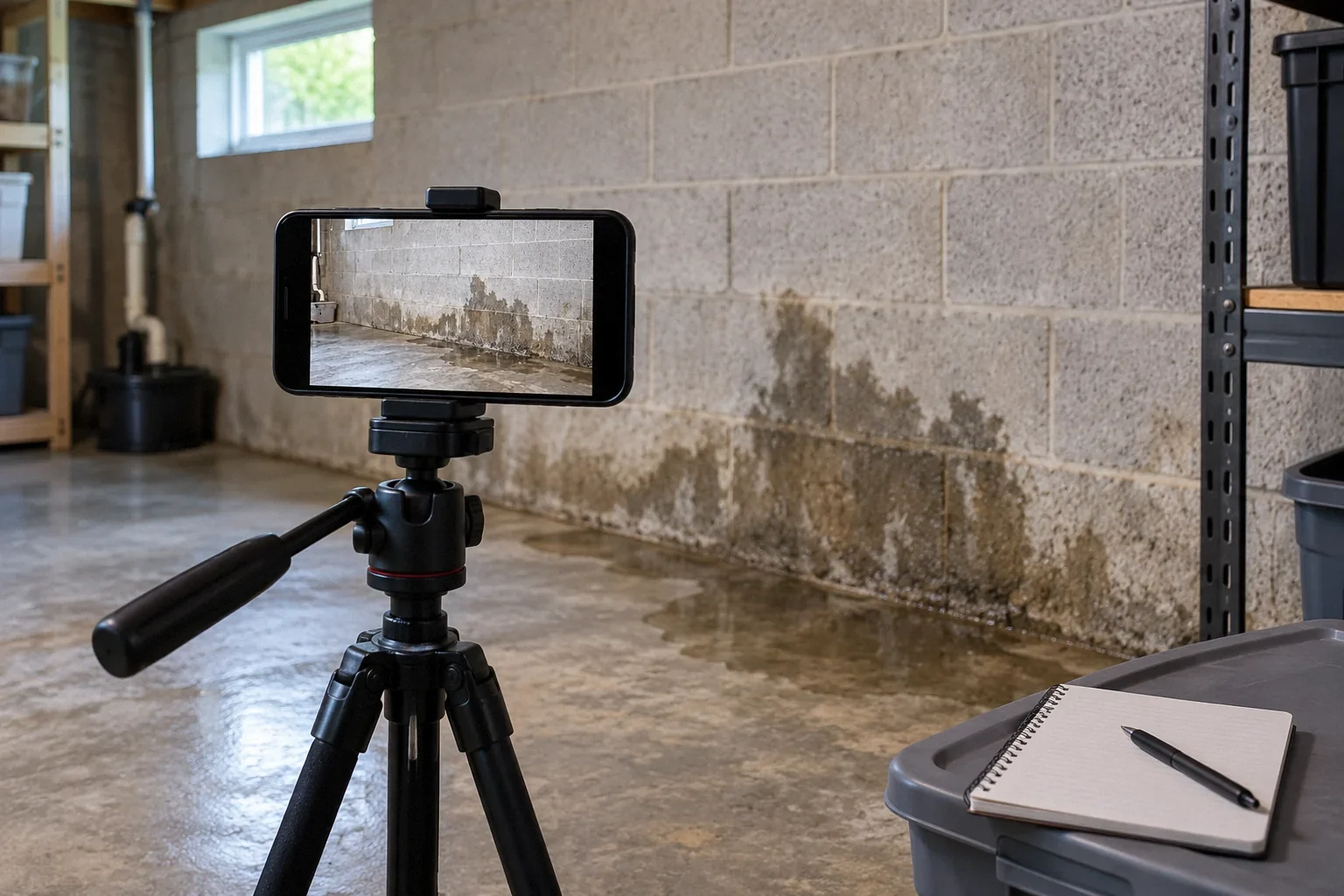
Record when you first noticed water, where it appeared, the affected areas and relevant weather or household events. Take dated photographs or video from safe positions, including context views and details. Describe what is visible: standing water, a damp surface, staining, damaged contents or a particular entry location. Do not label a photograph “seller concealed leak” when it only shows a current wet area.
Keep original files and a simple event log. Include who observed the condition and when professionals arrived. Weather records may help establish circumstances, but they do not independently prove a building defect or prior knowledge. Repeated observations can be useful; recreating a water event yourself without professional direction can damage the property and confuse the evidence.
Preserve the transaction file in its original form
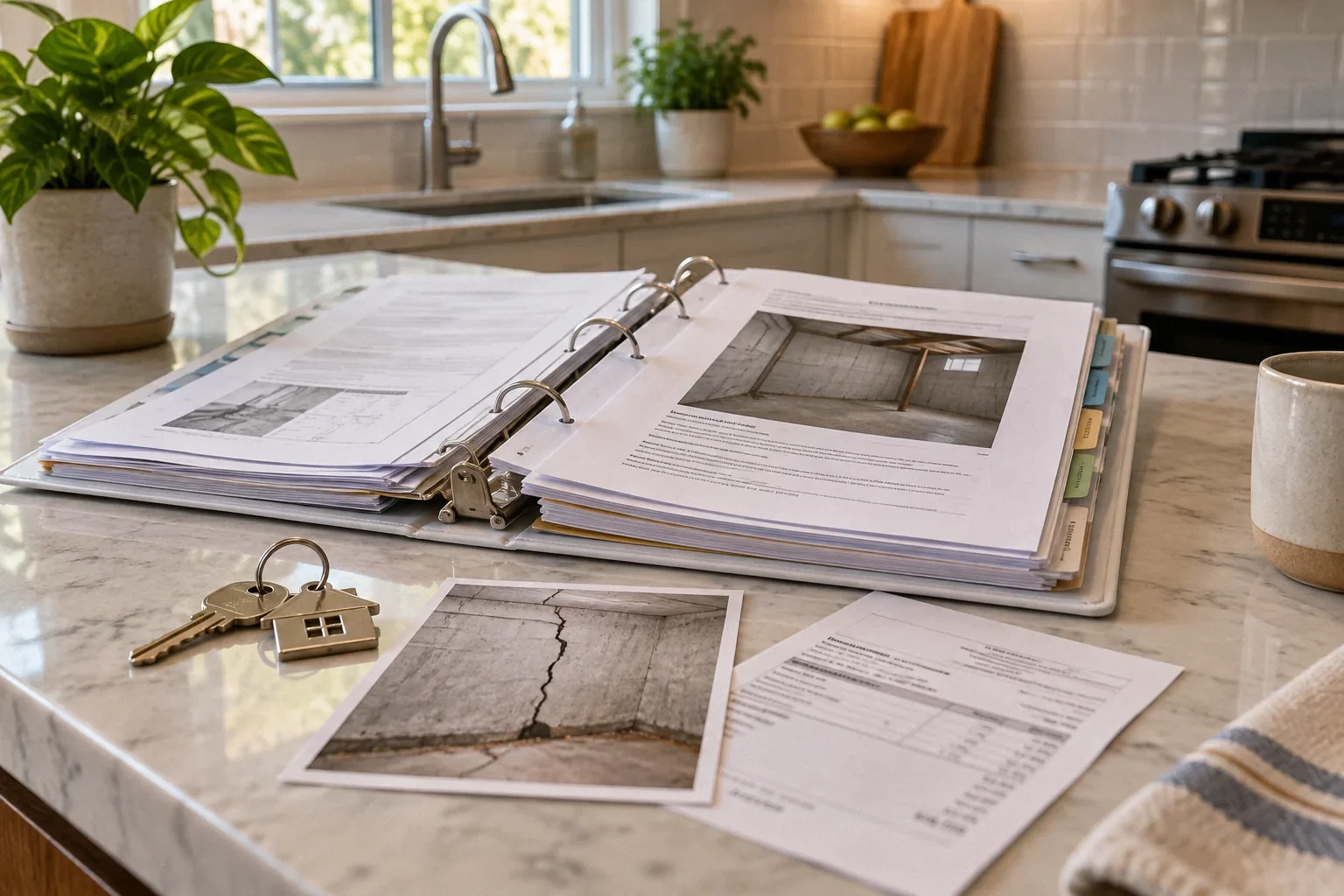
Save disclosures, the purchase agreement, amendments, inspection reports, repair requests, listing materials and correspondence. Record exactly who made any statement about prior water, when it was made and whether it was written or recalled from conversation. Preserve the actual wording rather than replacing it with a stronger paraphrase.
The California Department of Real Estate's First Home California guidance discusses disclosures and buyer investigations. Its general explanation does not decide whether a particular seller had a duty to disclose a specific fact or whether a claim succeeds. Those questions require the transaction documents, applicable exceptions and legal analysis. An organized original file is more useful than a summary built after memories have diverged.
Separate four questions that need different evidence
Scroll horizontally to read every column.
| Question | Relevant evidence |
|---|---|
| What is happening now? | Dated observations and qualified condition assessment |
| What caused the current event? | Professional investigation and relevant site information |
| Did similar conditions occur previously? | Prior reports, repair records and dated communications |
| Who knew what and what was represented? | Disclosures, statements and evidence of receipt or participation |
The answers may develop at different speeds. A professional may identify a current pathway without knowing its history. A prior invoice may establish earlier work without showing that the seller understood an ongoing problem. Keep these distinctions visible so an understandable suspicion does not become an unsupported factual assertion.
Document mitigation and removed materials
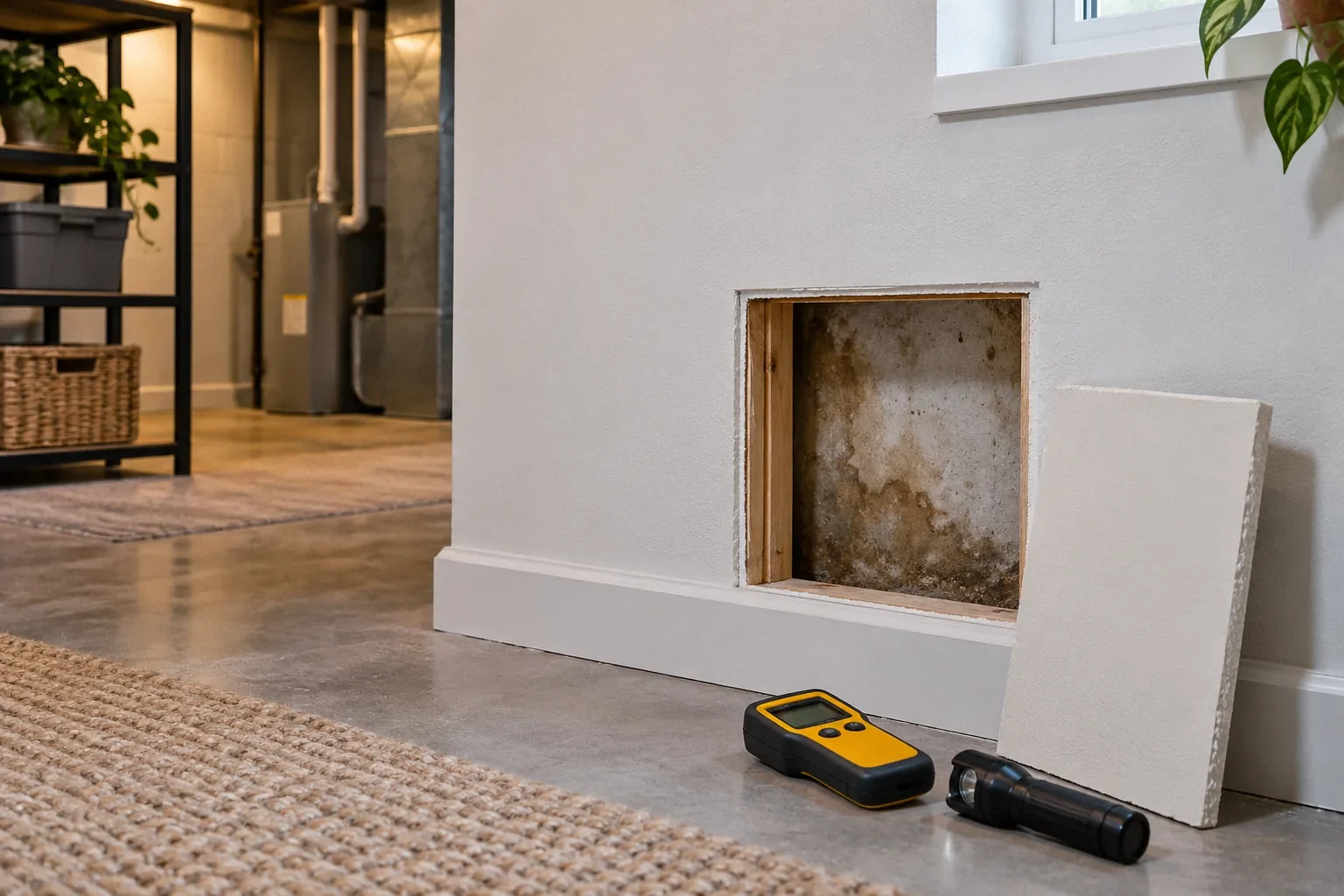
Retain invoices, scope descriptions and photographs from emergency or temporary work. Ask the contractor to distinguish observed damage, work needed immediately and recommendations requiring further evaluation. Record what materials were removed, their locations and why removal was necessary. Discuss appropriate evidence preservation with your adviser where a dispute is likely, without storing hazardous materials or obstructing safe work.
For permanent repairs, obtain a written scope and avoid pressure to authorize a large project before the cause is assessed. The FTC's home improvement scam guidance recommends checking contractors and comparing written estimates. A stressful discovery can make rushed decisions more tempting. Verify the contractor independently and keep the proposed diagnosis separate from the company's sales recommendation.
Ask the assessor to distinguish observation from inference
Give the professional the current observations and relevant history, and request a written explanation of findings, limitations and next steps. Ask which conclusions are supported directly and which remain hypotheses. If the report discusses duration, ask what evidence supports that opinion and how precise the conclusion can reasonably be.
A Reddit discussion about basement water shortly after closing reflects the emotional force of the timing. Timing is important evidence to record, but it does not answer every causation or knowledge question. A new event, a long-standing condition and an inaccurately described prior repair can require different analysis. Let the evidence distinguish them.
Hypothetical example: a dry-basement statement and a later leak
Suppose a buyer receives a written statement that the seller has not experienced basement water, then observes leakage during the first storm after closing. A contractor finds evidence of earlier localized work but cannot determine who ordered it or what condition it addressed. The buyer should preserve both the statement and the contractor's limited finding.
The next step is to request relevant records and obtain appropriate advice, not to declare that the earlier work proves fraud. The seller may supply information that changes the picture, or records may reveal a genuine discrepancy. A neutral chronology allows an adviser to evaluate the significance of each fact without having to undo exaggerated accusations.
Use the correct channel for each part of the problem
Notify your insurer or other relevant provider as appropriate to the policy and circumstances, and obtain advice about duties, coverage and deadlines. Do not assume every water event is covered or that a warranty claim and an insurance claim are interchangeable. A broker can help retrieve transaction records, while an attorney can assess potential claims and contractual procedures.
The DRE's 2025 enforcement alert discusses misrepresentation and material facts in licensed real estate activity. Its complaint guidance explains the regulator's scope. A regulatory complaint is different from a civil claim for money or contract relief. Filing one should not be assumed to preserve every other deadline.
Maintain a factual file as the investigation develops
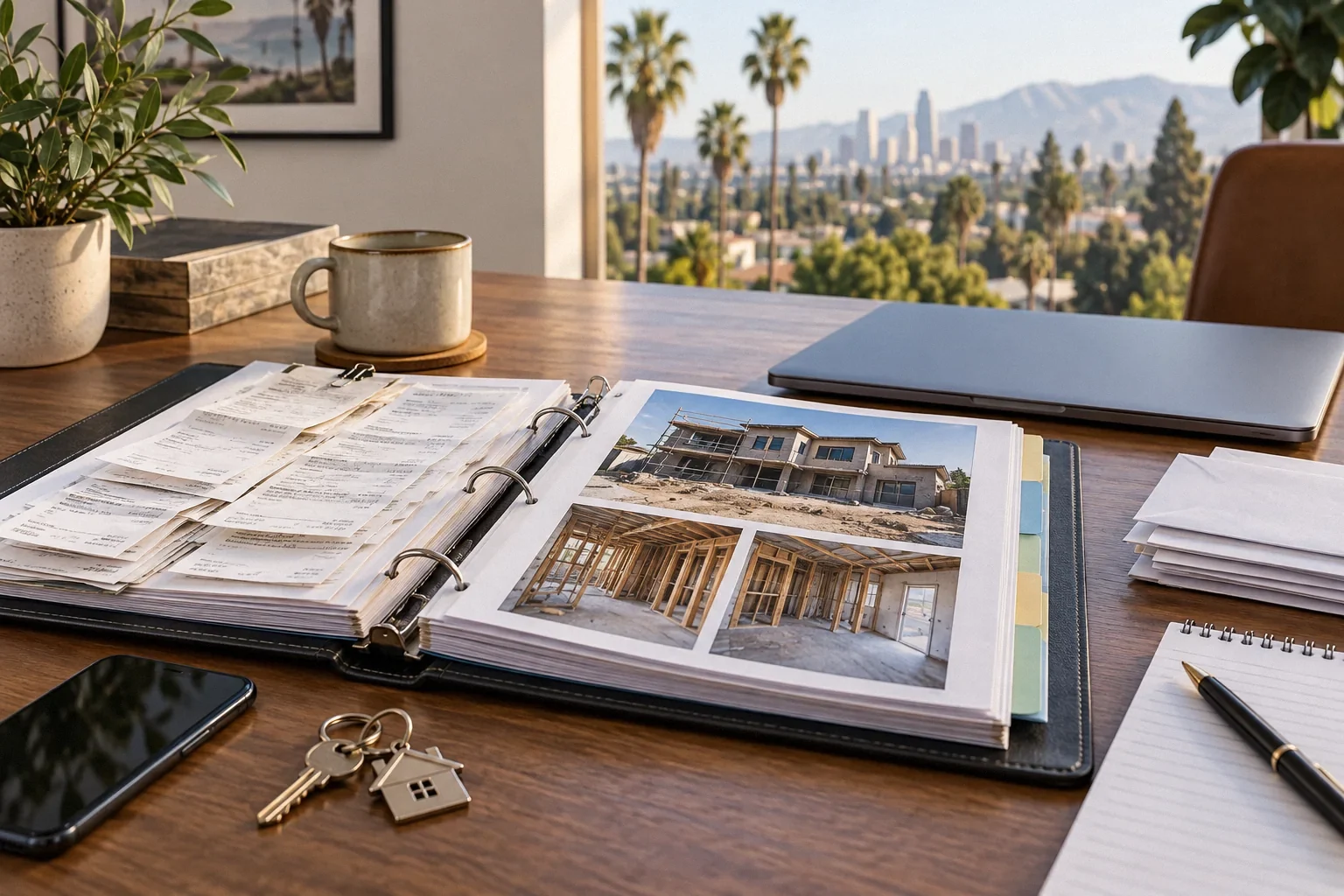
Use a chronology with dates, source documents, observations, professional opinions and unresolved questions. Keep cost records separated into emergency mitigation, investigation and permanent work. Preserve earlier versions of reports when corrections are issued, and record what changed. Ask advisers which notices or inspections should occur before nonurgent work materially changes the evidence.
When communicating, state what happened and what information you seek. For example: water was observed on a stated date in a stated location; the attached disclosure says a particular thing; please provide records of earlier work. This approach protects the accuracy of the record and makes it easier for the other party, insurer, regulator or legal adviser to respond to the actual issue.
Keep a separate list of unanswered questions and update it as reliable records arrive. This prevents an early assumption from remaining in later correspondence after better evidence has changed the understanding of the event.
Before your next decision
- Prioritize safe access and necessary mitigation.
- Preserve original dated images and an event log.
- Save disclosures, inspections and transaction correspondence.
- Obtain a written assessment separating findings from assumptions.
- Seek timely advice on notices, evidence and available procedures.
Related questions
Does water immediately after closing prove the seller lied?
No. It establishes a current event and its timing. Prior occurrence, seller knowledge, representations and legal responsibility require additional evidence and analysis.
Should I wait to repair anything until the dispute is resolved?
Do not delay necessary safety measures or property protection. Document conditions and work, and seek advice about preserving evidence before nonurgent changes.
Will a DRE complaint recover my repair costs?
DRE's regulatory process is not a court award of damages or a guarantee of reimbursement. Ask an appropriate adviser about separate remedies and deadlines.
Sources & further reading
- California Department of Real EstateFirst Home California
California homebuyer education and disclosures
- California Department of Real EstateConsumer Alert: Most Common Enforcement Violations
California real estate licensee conduct; August 2025 alert
- California Department of Real EstateFiling a Complaint
California real estate enforcement complaints
- Federal Trade CommissionHow To Avoid a Home Improvement Scam
United States consumer education; state contract and licensing rules vary
Homeowner questions behind this article
These discussions informed the questions, not the technical answers. Some were available through indexed excerpts; votes and comments are not an engineering assessment.
Research method