The short answer
Build the disclosure record around what is known, what happened and what documents exist. Describe prior basement water, foundation concerns and repairs accurately, and provide relevant reports without claiming more than they establish. California disclosure duties depend on the transaction and applicable law. Use the required forms and appropriate professional advice, update material information through the proper process, and avoid treating a discount or repair as a substitute for disclosure.
US general project planning; California requirements and named local examples labeled in the text.
Organize the history before choosing sales language
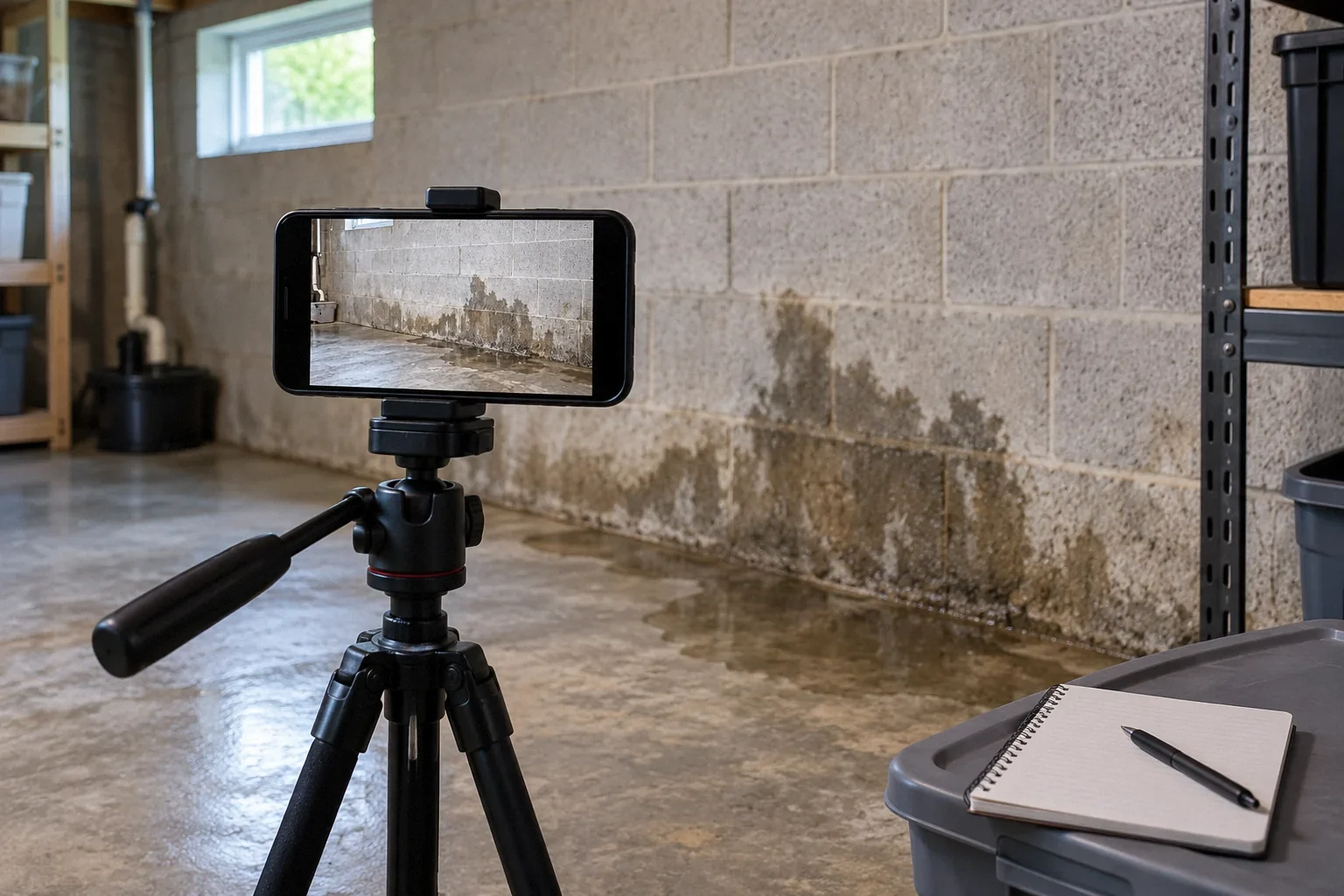
Begin with a chronology of known conditions: observations, water events, professional evaluations, repair work and later concerns. Identify dates as precisely as the available evidence allows. If a date is approximate, say so. Distinguish something you personally observed from information received from a prior owner, contractor or report.
This exercise is not about making the property sound better or worse. It helps prevent accidental omissions and broad statements that outrun the evidence. A basement that has remained dry during your occupancy may still have a documented earlier event. A foundation repair may have addressed a defined area without supporting a claim that every structural concern was permanently resolved.
Understand the California framework without assuming every sale is identical
The California Department of Real Estate's homebuyer guidance explains the role of disclosures and material property conditions. Sellers should work with their transaction professionals to identify the forms and obligations applicable to the particular sale. Exceptions, property type, transaction structure and the facts can affect the analysis.
California Civil Code section 1102.6 addresses the prescribed transfer disclosure statement form. The official online section reviewed here refers readers to the enacted form rather than displaying every field in full. Obtain the current applicable form through the proper transaction process; do not reconstruct legal form wording from a blog summary or assume one form answers every disclosure question.
Describe observations and repairs with their actual scope
Use concrete statements supported by records: water was observed in a particular area during a stated event; a named firm evaluated the condition; work was performed under the attached agreement; later observations are described in a dated report. Avoid converting “no recurrence observed” into “cannot recur.” Those statements mean different things.
If a contractor explained a possible cause, attribute that opinion accurately and provide the actual report where available. Do not present your own technical inference as a professional conclusion. If you do not know why a prior owner performed work, identify the records you have and the limits of your knowledge. Uncertainty can be described clearly without inventing an answer.
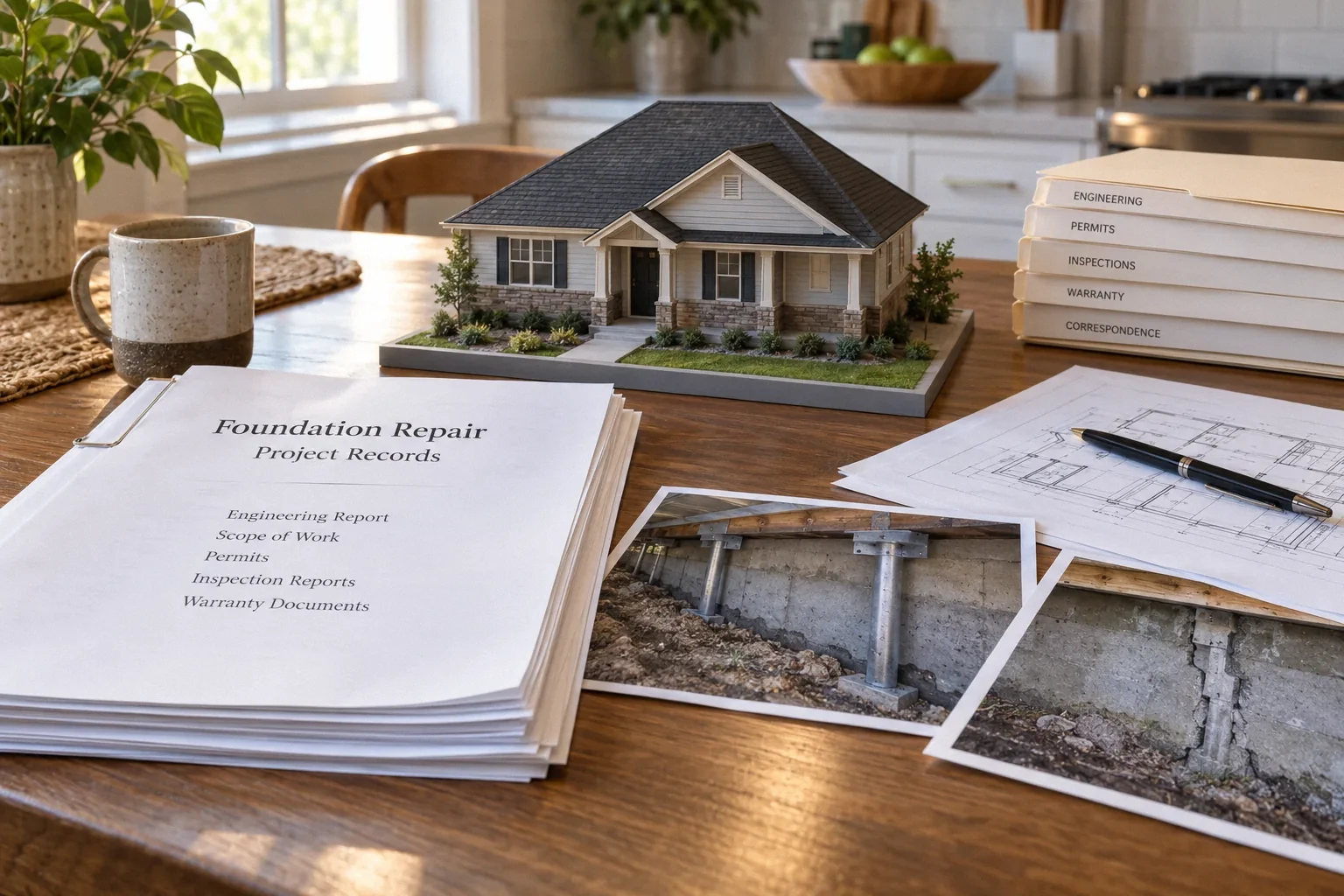
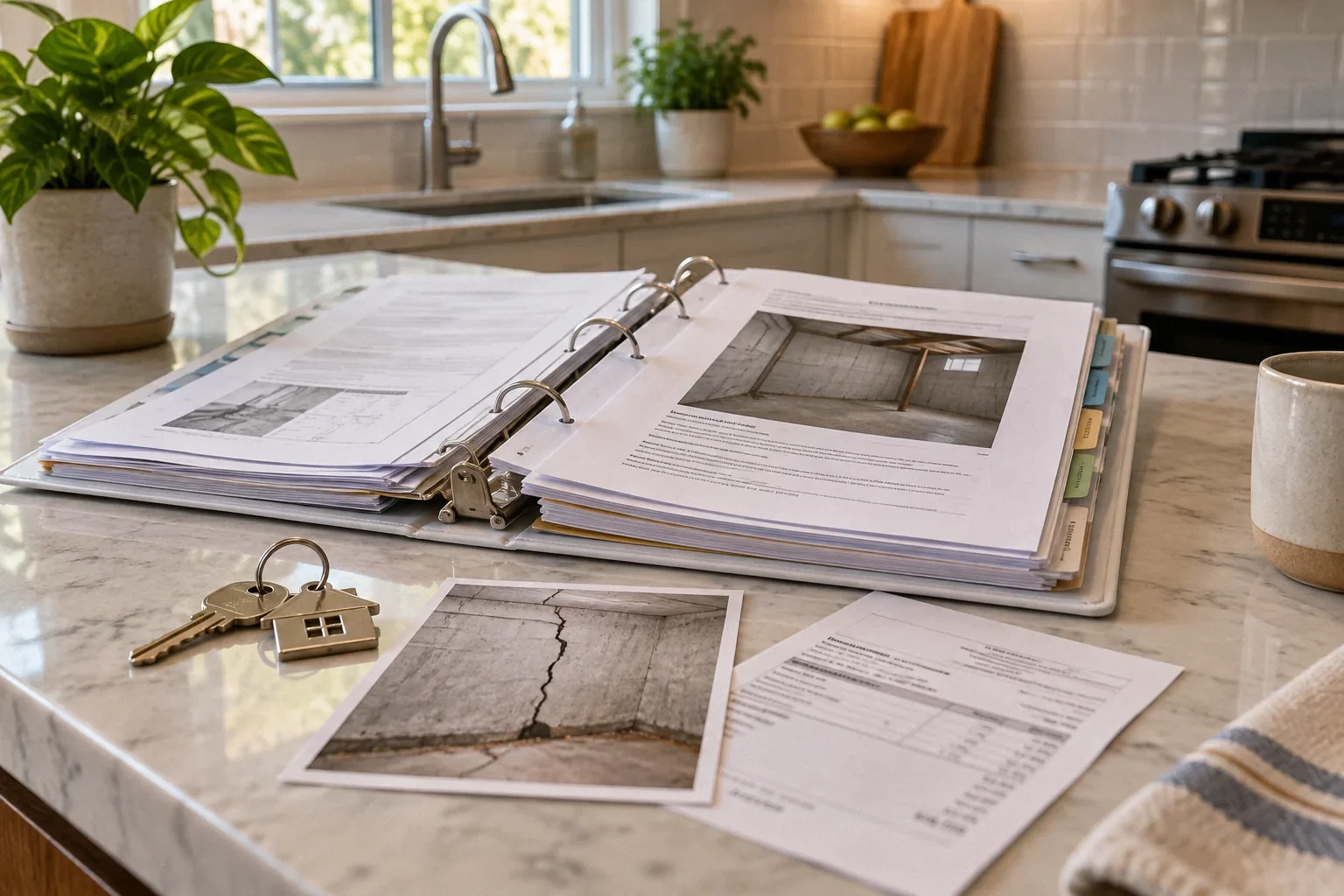
Create a document index buyers can follow
Scroll horizontally to read every column.
| Document group | What to include when available | Important distinction |
|---|---|---|
| Condition history | Dated observations, photographs and prior disclosures | Personal observation versus information from others |
| Professional evaluation | Complete reports and later supplements | Findings versus unresolved questions |
| Repair work | Contracts, change orders and installed-scope records | Proposed work versus completed work |
| Administrative record | Permits, inspections and final-status documents | Issued permit versus completed permit |
| Warranty and service | Full terms, claims and transfer instructions | Coverage language versus sales shorthand |
Provide complete relevant documents rather than selected favorable pages. Preserve personal information appropriately, and ask your adviser how to handle confidential or privileged material rather than distributing it casually.
Give each document a plain description and date, and identify attachments mentioned within reports. If an appendix is unavailable, flag the omission rather than presenting the report as complete. Buyers and their advisers can then distinguish a missing item from a conclusion that the original professional never reached.
A repair or a price reduction does not answer the disclosure question
A completed repair can be important evidence, but it does not erase the history that led to it. Explain the repair's scope and attach available records. If later symptoms occurred, include them in the chronology rather than assuming the warranty or contractor's reassurance makes them irrelevant.
A Reddit seller discussion about an intermittently leaking basement reflects a common question: can a lower asking price account for the problem? Price and disclosure are separate decisions. A buyer cannot necessarily infer a particular condition from a discount. Ask the transaction adviser how to communicate the known facts and structure any negotiated repair or credit accurately.
Coordinate listing statements with the underlying evidence
Review descriptions such as “dry basement,” “fully repaired foundation” or “legal lower-level suite” against the records. If the documents support only a narrower statement, use that narrower statement. Ask the listing professional to correct a description that conflicts with known facts. Retain the correction and the information supplied to the professional.
The DRE's 2025 enforcement alert discusses misrepresentation and material information in licensed real estate activity. It does not decide a particular seller's liability, but it reinforces why accurate communication matters. A listing's short format is not a reason to replace a qualified report with a stronger claim.
Hypothetical example: one water event and a later repair
Suppose a seller observed basement water during a storm, hired a contractor for a specific repair and has not seen water since. The records include the invoice and photographs, but no independent evaluation of every possible pathway. The seller can describe the event, the work and the absence of later observed recurrence, with the relevant dates and documents.
Calling the basement permanently waterproof would exceed that evidence. Conversely, the seller need not invent a continuing defect that has not been established. The buyer can review the accurate history and arrange an appropriate investigation. If another event occurs during the sale, the seller should promptly ask the transaction adviser how to update the information and deliver it through the required process.
Handle missing records and conflicting reports openly
If you know work occurred but cannot locate the permit or contract, identify what is known and what remains unverified. Request records from the relevant department or professional where appropriate. Do not replace an absent final inspection record with a statement that the contractor “would have handled it.” Keep a record of the search and responses.
If reports differ, provide the relevant versions and explain their dates and assignments rather than selecting one conclusion as the only history. A later report may address changed conditions or a different question. Ask the authors for clarification where necessary. Your legal adviser can help determine disclosure obligations when a dispute, claim or conflicting opinion complicates the file.
Track delivery and updates through the transaction
Maintain an index showing what was provided, to whom and when. Use the delivery process recommended for the transaction and preserve receipts or acknowledgments where available. An acknowledgment establishes receipt of identified material; it should not be treated as a universal waiver of rights or proof that every question has been resolved.
When new information arrives, discuss the required update promptly rather than assuming the original package is final. Keep the updated document together with its predecessor and explain the change. After closing, retain the transaction file according to appropriate professional advice. A clear disclosure record supports an informed sale and makes later questions easier to answer with documents instead of recollection.
Before your next decision
- Create a chronology of known events and repairs.
- Obtain the applicable current disclosure forms and advice.
- Provide complete relevant reports with a clear index.
- Check listing claims against the supporting documents.
- Record delivery and promptly address new material information.
Related questions
Do I still need to disclose a problem that was repaired?
Do not assume repair eliminates disclosure duties. Describe the relevant history and completed work, and obtain advice about the requirements for your transaction.
Can a lower price substitute for explaining a basement problem?
A discount does not necessarily communicate a specific condition. Treat pricing and accurate disclosure as separate issues with your transaction adviser.
What if I do not know the cause of an old water event?
State what you observed and provide available records. Attribute professional opinions accurately and identify uncertainty rather than inventing a cause or guarantee.
Sources & further reading
- California Department of Real EstateFirst Home California
California homebuyer education and disclosures
- California Department of Real EstateConsumer Alert: Most Common Enforcement Violations
California real estate licensee conduct; August 2025 alert
- California LegislatureCivil Code section 1102.6
California statutory Transfer Disclosure Statement
Homeowner questions behind this article
These discussions informed the questions, not the technical answers. Some were available through indexed excerpts; votes and comments are not an engineering assessment.
Research method