The short answer
Fresh paint, recent finishes or missing records can justify closer investigation, but none proves concealment by itself. Compare the visible condition with disclosures, repair history, permitted access and professional findings. Ask specific written questions, preserve the answers and investigate unresolved areas before your contractual deadlines. Keep observations separate from allegations, and use qualified advisers when records materially conflict or access prevents a reliable assessment.
US general project planning; California requirements and named local examples labeled in the text.
Treat a clue as a question to investigate
A newly painted basement can be ordinary maintenance, preparation for sale or part of a documented repair. The appearance alone does not tell you which. A buyer's task is to determine what happened, what work was performed and whether current conditions need further evaluation. Starting with an accusation can make that fact-finding harder and can overstate what the evidence supports.
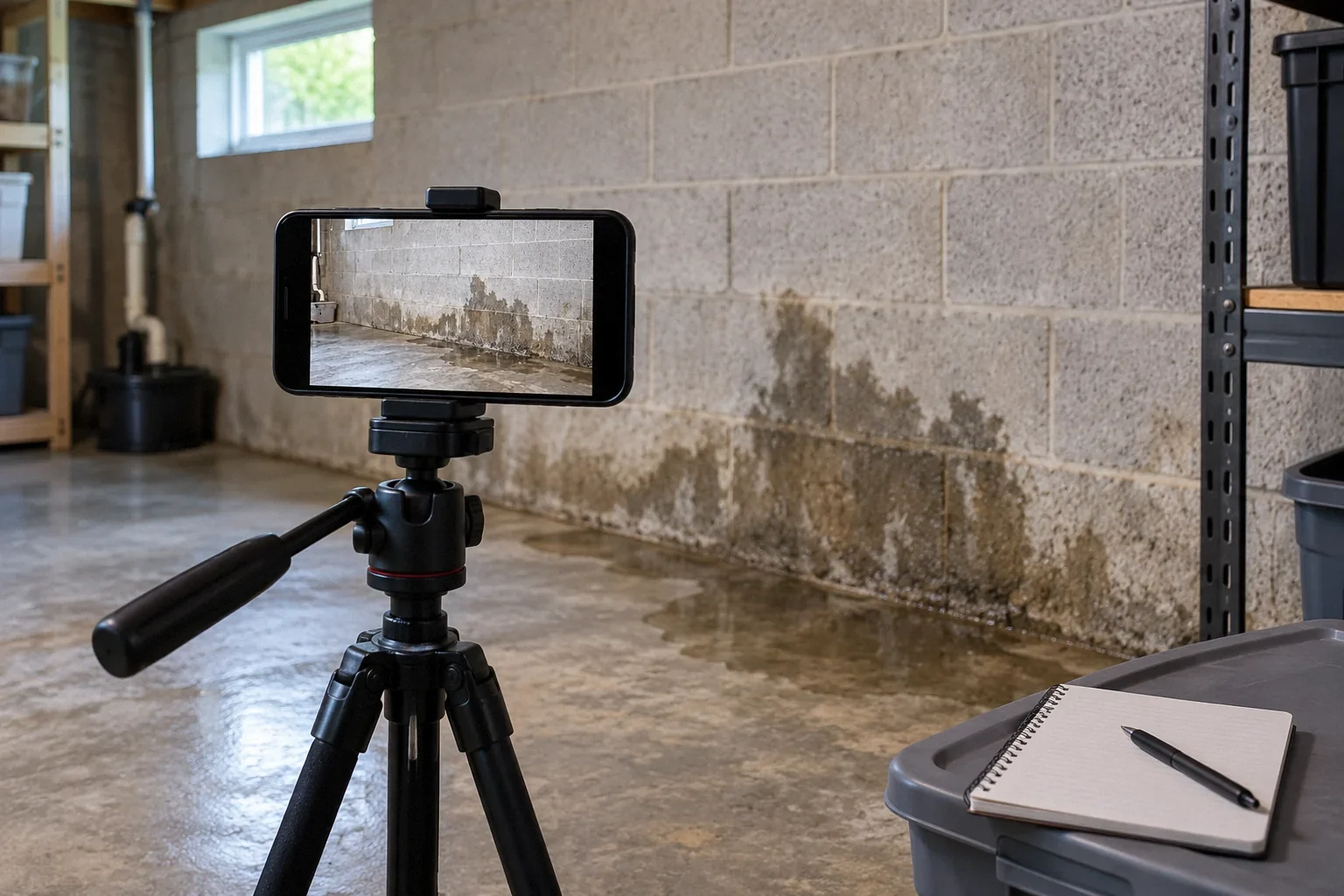
Record the location and date of the observation. Ask whether work was recently performed there, what prompted it and whether invoices, photographs or reports are available. This is a reasonable request for history, not a demand that the seller prove an impossible negative. Consider the answers together with the professional inspection and other records.
Compare statements with documents
Save the listing, disclosure documents and written answers about water, repairs and alterations. Use the exact wording. “No current leak observed” and “no history of water intrusion” are different statements, and the person making a statement may have different knowledge depending on their role and ownership period.
The California Department of Real Estate's homebuyer guidance explains the importance of disclosures and investigations. It does not make a disclosure form a substitute for examining the property. Compare dates and scope: a repair invoice may relate to one wall or event, while a broad sales statement appears to describe the whole basement. Ask about that difference before concluding the records are intentionally misleading.
Use a neutral investigation matrix
Scroll horizontally to read every column.
| Observation | Question to ask | Evidence that may help |
|---|---|---|
| Recent finish work | What prompted the work and what area did it cover? | Invoices, scope and dated project photographs |
| Repair mentioned without supporting records | Who performed it and what problem was evaluated? | Contractor or professional report and permit reference |
| An area is inaccessible | Can safe authorized access be arranged before the decision deadline? | Access agreement and follow-up inspection |
| Documents describe different conditions | Do they concern different dates, locations or assumptions? | Chronology and clarification from the document authors |
The table identifies next steps, not a scoring system for fraud. Several ordinary explanations can produce the same surface observation. The value comes from resolving the question with evidence.
Ask for access that matches the unresolved concern
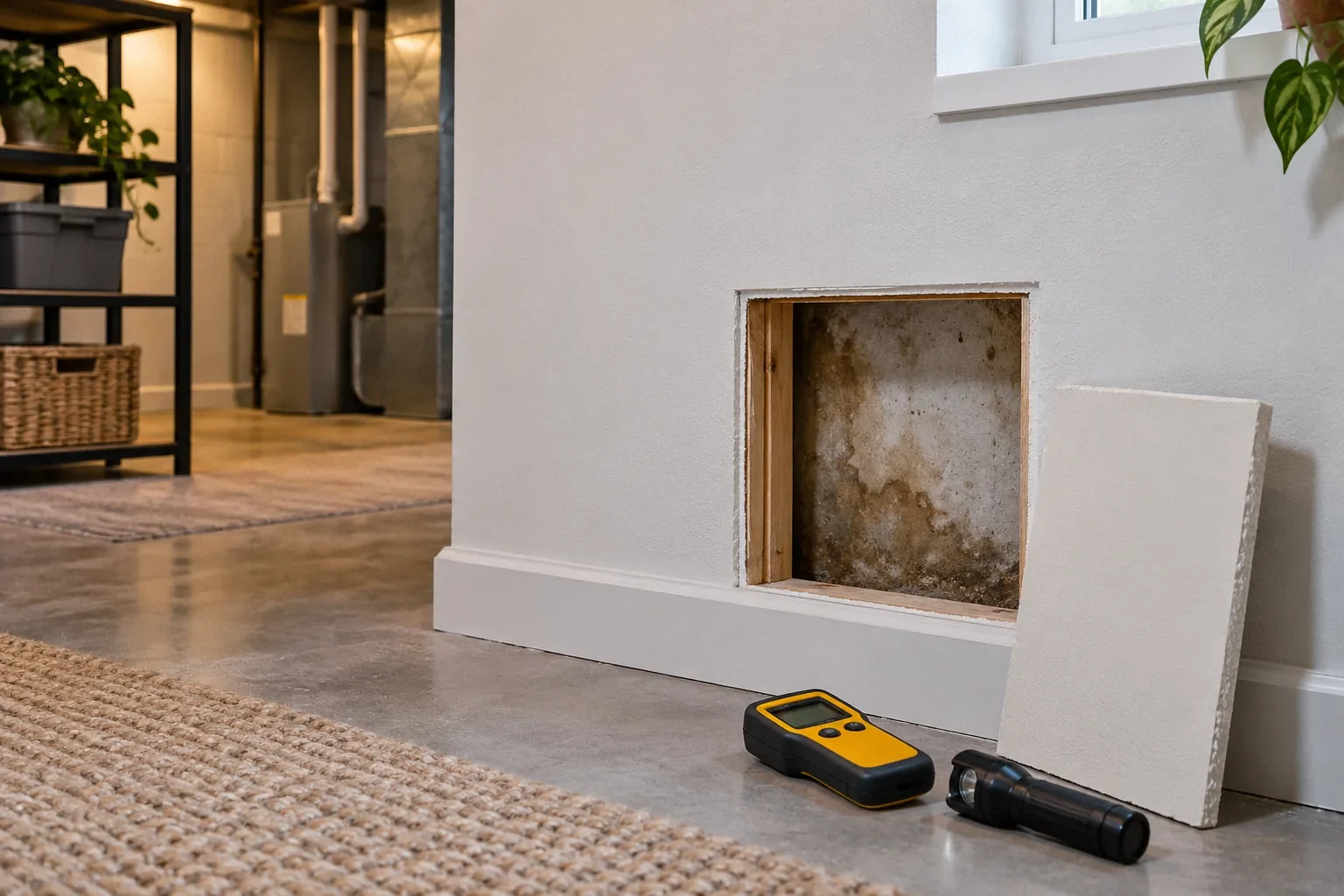
If storage, a locked room or another restriction prevents an inspection, have the inspector explain the resulting limitation in writing. Ask the seller or transaction representative whether access can be arranged safely and lawfully. Identify the area, purpose and proposed professional rather than requesting an undefined right to open everything.
A Reddit discussion about restricted access to repair progress and later damage shows why access deserves explicit attention. It does not establish that every restriction signals deception. If access remains unavailable, the buyer must evaluate the remaining uncertainty through the contract and appropriate advice. Do not treat an unexamined area as if it passed inspection.
When access is arranged, confirm what will be available before the appointment: the relevant room, access panel or storage area, as appropriate. Ask the professional whether those arrangements are sufficient for the stated task. A second visit that encounters the same restriction consumes time without reducing uncertainty. Record any remaining limitation in the final report and carry it forward into the decision list.
Request professional findings with clear limits
A general inspector may identify visible concerns and recommend specialist follow-up. A qualified specialist can define what additional evaluation is appropriate and what can reasonably be concluded from current access. Ask the professional to distinguish observed facts, possible explanations and findings that require further work.
Do not ask a professional to certify that a seller “must have known” merely because a current condition appears old. Duration, prior visibility and a particular person's knowledge are different questions. A useful report states the basis and limitations of any opinion about history. Preserve the original report and request correction if it contains an incorrect address, location or factual assumption.
Look for inconsistencies without supplying your own explanation
Compare dates on invoices, disclosures and photographs. Identify whether a permit or report addresses the same area as the present concern. If a seller refers to a contractor's assurance, ask for the actual document rather than accepting a secondhand summary. If the document is unavailable, record that fact neutrally.
The DRE's 2025 enforcement alert discusses misrepresentation and omission of material facts in licensed real estate activity. Whether a particular discrepancy amounts to a violation requires more than an uneasy impression. Keep the disputed statement, the contrary evidence and the identity of the speaker separate so an adviser can evaluate the relevant conduct.
Hypothetical example: recent work and incomplete history
Suppose a buyer notices recent basement finishes and receives an invoice described only as “interior repairs.” The disclosure reports an earlier water event but gives little detail. The buyer asks for the original assessment, scope of repair and any later evaluation. The seller supplies additional photographs and explains which areas were affected.
A specialist reviews the materials and identifies one unresolved location requiring access. The buyer requests that access and discusses timing with the transaction adviser. This process could provide reassurance or reveal a material concern. Either way, it produces a more reliable decision than assuming recent finishes prove concealment or accepting an incomplete invoice as proof that every problem was resolved.
Keep transaction decisions tied to actual deadlines
List the outstanding question, the needed document or appointment and the expected response date. Review the purchase agreement with the appropriate adviser to understand investigation and notice requirements. A seller's promise to send records later does not necessarily preserve a buyer's rights or extend a deadline.
If requesting a repair, credit or other change, define the unresolved issue and the evidence on which the request rests. Avoid presenting an unverified diagnosis as a settled defect. If information cannot be obtained in time, discuss the available contractual options rather than allowing silence to become an assumed satisfactory answer. The appropriate choice depends on the agreement, the property and the buyer's tolerance for documented uncertainty.
Escalate factual conflicts through the appropriate channel
Start by seeking clarification through the relevant transaction participants and preserve written responses. If a material conflict remains, obtain legal advice about the specific facts and possible remedies. California DRE's complaint process concerns matters within its regulatory jurisdiction; it is not a substitute for a court's determination of damages or contract rights.
A complaint or consultation file should contain a chronology, the exact representation, the evidence that conflicts with it and the information still missing. Avoid public accusations while the facts are unresolved. The purpose of careful investigation is to protect the buyer's decision and preserve an accurate record, including information that may explain the apparent discrepancy.
Before your next decision
- Record observations without labeling them as fraud.
- Preserve exact disclosure and listing statements.
- Ask for the reason, scope and records of recent work.
- Arrange authorized professional access to unresolved areas.
- Evaluate material conflicts and deadlines with appropriate advisers.
Related questions
Does fresh paint prove that damage was hidden?
No. It can have ordinary explanations. Ask what work was performed, obtain available records and have unresolved conditions evaluated within the purchase timeline.
Can I open walls during a showing to check?
Do not alter the seller's property without authorization. Define the concern with a professional and arrange any necessary investigation, access and restoration through an agreed process.
What if the seller will not provide records?
Document the request and remaining uncertainty. Discuss access, further evaluation and contractual options with your transaction adviser before relevant deadlines.
Sources & further reading
- California Department of Real EstateFirst Home California
California homebuyer education and disclosures
- California Department of Real EstateConsumer Alert: Most Common Enforcement Violations
California real estate licensee conduct; August 2025 alert
- California Department of Real EstateFiling a Complaint
California real estate enforcement complaints
Homeowner questions behind this article
These discussions informed the questions, not the technical answers. Some were available through indexed excerpts; votes and comments are not an engineering assessment.
- Bought a home in FL with a lot of undisclosed damage and purposely hidden. Damage
- Undisclosed Damage
- Undisclosed water damage