At a glance
Standing water and electrical equipment are a dangerous combination. Keep out of a flooded space until safe access has been established.
Establish safe access first
Follow local emergency instructions and the EPA's flooded-home entry guidance. Flood damage can involve structural, electrical and contamination hazards that are not obvious from a doorway. Do not enter standing water to reach a breaker or operate equipment.
Have the utility or a qualified electrician assess electrical hazards. If there is immediate danger, leave the area and contact emergency services. This page is a planning overview, not clearance to enter a damaged property.
Create a record without delaying urgent work
Once it is safe, document affected rooms and possessions. Keep dates, photographs, contractor reports and receipts together, and contact your insurer about its documentation process. Ask responders to explain what must happen immediately and what can wait for further assessment.
Keep the water source, contamination assessment and damaged materials in the written scope. Floodwater and a contained clean-water leak can require different responses.
Agree on the drying and rebuild sequence
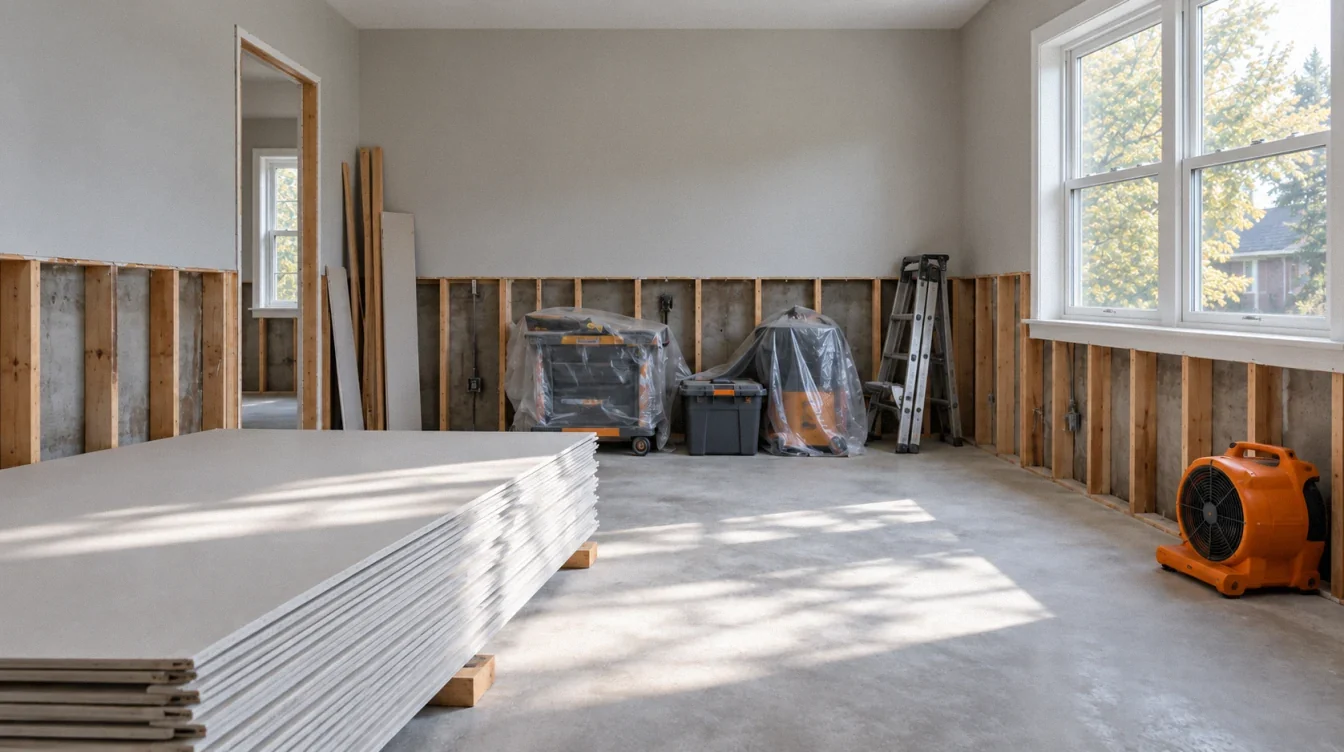
Ask who will record the drying progress, what will be removed, how concealed areas will be checked and what conditions must be met before rebuilding. Visible dryness alone should not be the project’s acceptance criterion.
EPA recommends prompt drying of water-damaged materials, generally within 24–48 hours to help prevent mold growth. That window is a reason to act promptly, not proof that a flooded space is safe or that every wet material can be retained.
Before closing walls, coordinate the restoration team, electrician and other trades. Keep the completion records with your property documents. The project-planning guide includes an outline for recording the scope, open questions and completion requirements.