The short answer
A basement can be part of official shelter-in-place guidance during a radiation emergency, but that does not make it a blast-resistant bunker. CDC advises getting inside, moving to a basement or the middle of a building and staying tuned to officials. Planned construction, extended occupancy and specialized protection claims require separate evidence. Do not improvise structural loading or sealed-room ventilation from online bunker advice.
US public guidance and homeowner planning. Follow current local emergency instructions; property-specific suitability requires qualified assessment.
Separate radiation sheltering from blast protection
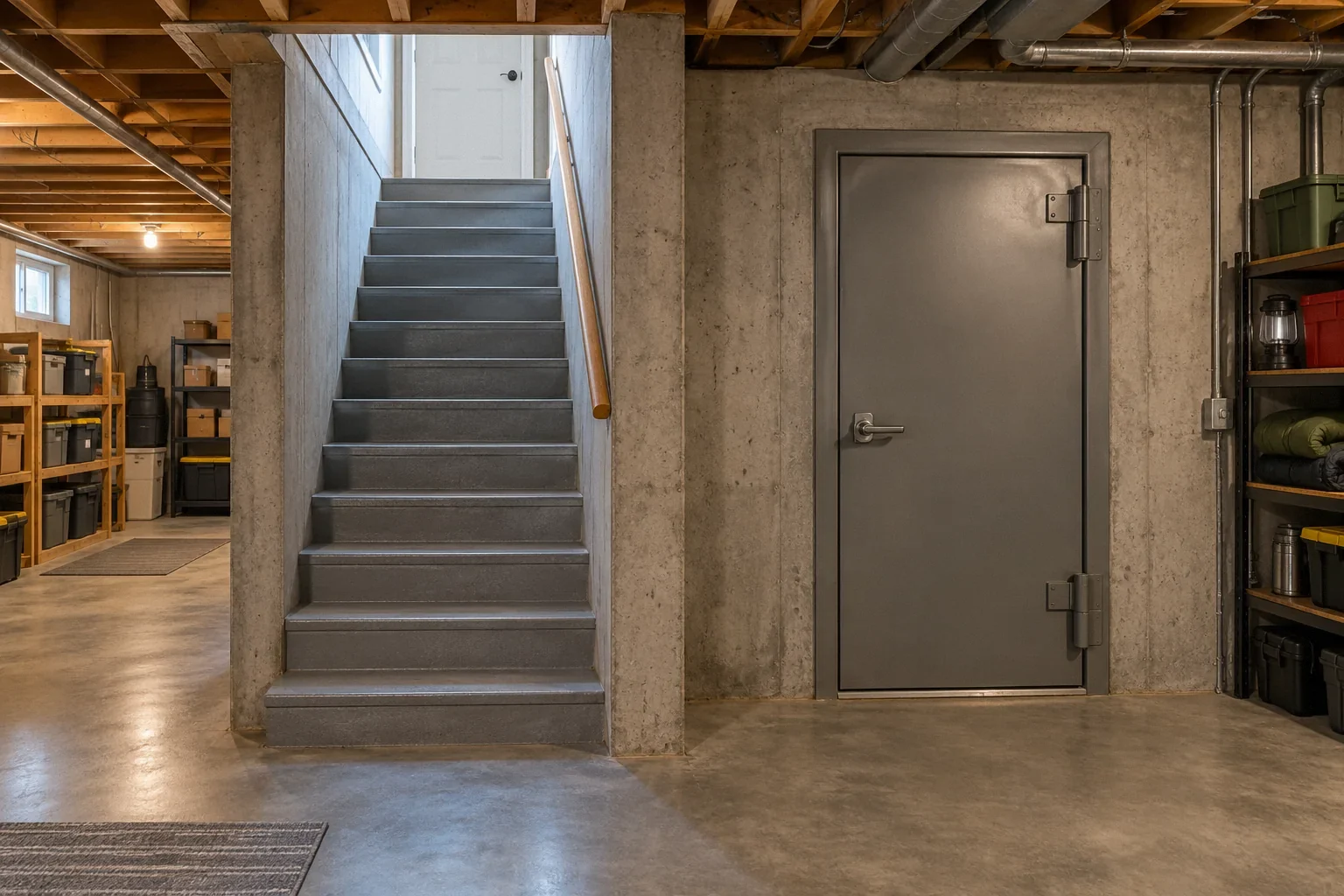
The terms “fallout shelter,” “bomb shelter” and “bunker” are often used interchangeably in listings and online discussions. They describe different concerns, and sometimes no precise design at all. A space that reduces exposure to material outside a building is not automatically designed for the structural effects of an explosion.
Begin by identifying whether you are asking about actions in an actual emergency or evaluating a construction claim. Official shelter-in-place guidance helps people act with the buildings available to them. It is not a product rating for a basement. A vendor proposing blast resistance or extended isolated occupancy must identify the separate design basis and limitations rather than borrowing the credibility of ordinary public preparedness advice.
Use the current public guidance for an actual radiation emergency
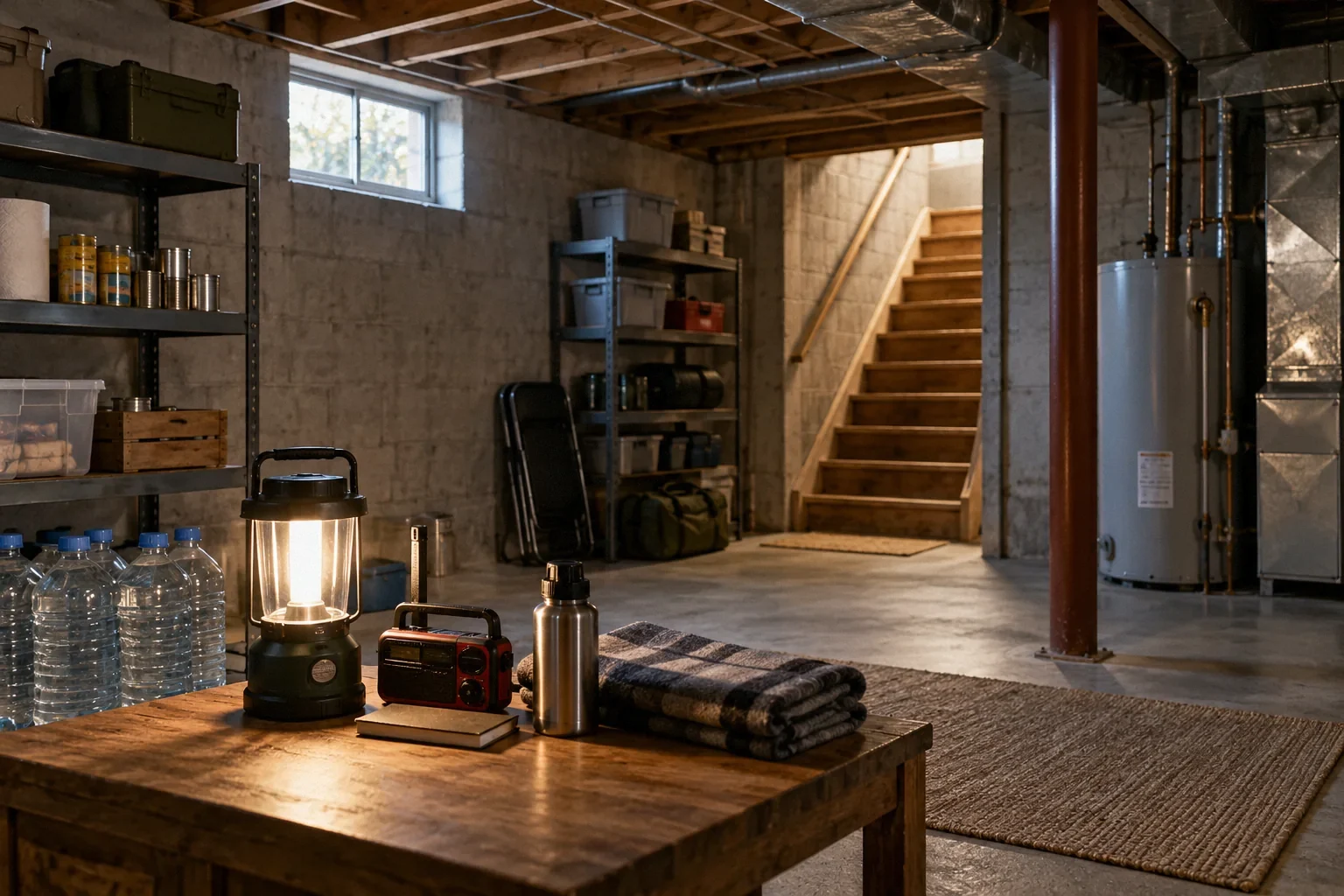
CDC: What to Do: Get Inside advises getting inside promptly and moving to a basement or the middle of a building, away from the exterior where radioactive material can settle. It also describes closing openings and, where possible, turning off systems that bring in outside air. Stay tuned to emergency officials for instructions appropriate to the event.
These are public emergency actions, not a plan for permanently sealing an occupied room or designing a bunker air system. The applicable directions can change as officials assess conditions. Do not delay taking shelter in order to build an improvised enclosure or travel in search of an ideal private bunker. Keep the guidance available in your household plan so the basic actions do not depend on an internet search during the event.
A basement's location is only one part of a construction assessment
If the goal is a planned shelter project, the designer must understand the intended hazards, site, occupancy and structure. Existing walls and overhead framing should not be assigned a protective capability solely because they are below grade. The building's condition and other hazards remain relevant.
For comparison, FEMA: FEMA P-361: Safe Rooms for Tornadoes and Hurricanes (April 2025) addresses safe rooms for tornadoes and hurricanes, not a blanket guarantee for every hazard described by the word bunker. A documented storm room may be useful for its intended purpose while leaving other claims unestablished. Ask anyone marketing multiple forms of protection to separate them in the proposal. One standard reference or dramatic photograph should not be made to carry claims it does not address.
Do not load the floor above with an improvised shielding project
Online suggestions sometimes involve placing heavy materials above or around a basement space. Such changes can affect a structure in ways the homeowner cannot assess from a generic diagram. An ordinary residential floor should not be treated as an unlimited platform for stored mass.
If a permanent construction project is being considered, bring the exact proposal to an appropriately qualified design team. They need the building and site information, intended use and applicable requirements. Avoid attempting a last-minute alteration during an emergency. The useful distinction is between moving to an available building location under official guidance and changing a building's loads or structure to create an unverified protective arrangement.
Temporary public instructions are not an extended-occupancy air design
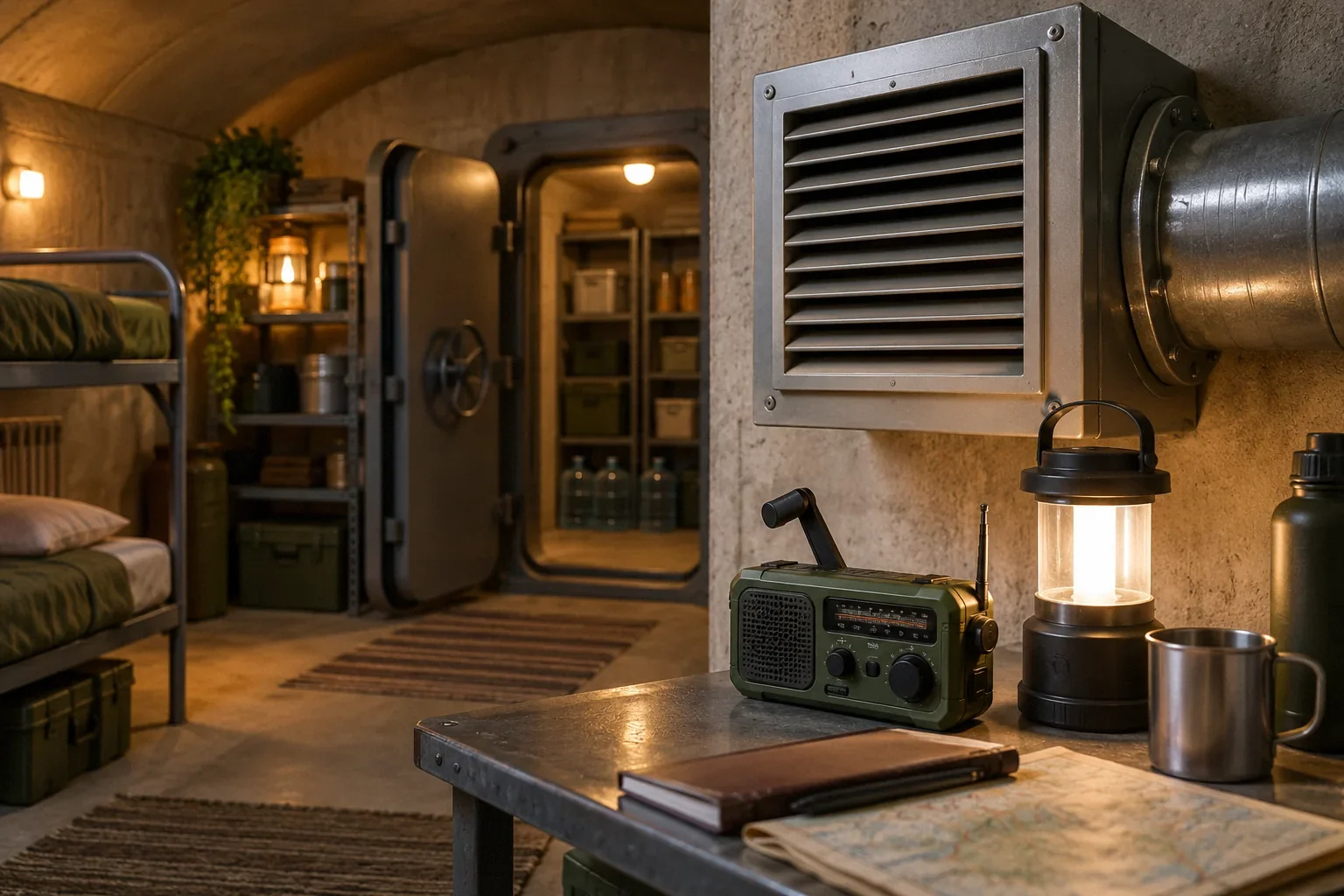
Closing windows or changing HVAC operation during a specific emergency should not be generalized into a plan to occupy an airtight underground room indefinitely. A purpose-built space needs a coordinated air system suited to the intended occupancy and hazards. Filtration, ventilation, humidity control and emergency operating modes are separate design questions.
OSHA: Confined Spaces: Overview explains the potential hazards of restricted-entry spaces in workplace contexts. Do not use an abandoned vault or unknown chamber as a substitute for an assessed occupied space because it seems more sealed. A lack of odor or a consumer detector reading does not settle its suitability. Resolve planned-use questions before an emergency, and follow the event-specific official directions when an emergency occurs.
Keep ordinary household hazards out of the plan
A power outage can tempt people to bring a generator or other combustion device closer to the occupied area. CDC: Protect Yourself During a Power Outage warns against running generators inside homes, basements or garages. An emergency sheltering situation does not make that practice safe, and an open doorway does not establish an adequate solution.
Plan essential lighting, communications and any necessary equipment using appropriate instructions and professional advice. Avoid candles or improvised burning as a way to move air. Keep supplies accessible without blocking the route or door. Readiness should reduce the number of urgent decisions, not add an untested device or unfamiliar room whose hazards have never been evaluated.
A hypothetical buyer challenges a broad bunker claim
A property advertisement describes a reinforced basement room as a “nuclear bunker.” The seller provides photographs and a receipt for a heavy door but no design record identifying the claimed protection. The buyer also finds a brochure for a storm-shelter product.
The buyer asks for the specific design basis, approvals, installation documentation and intended use. The storm product brochure cannot by itself establish the broader claim. An independent assessment may identify useful features and significant limits, or leave the claim unverified. This hypothetical is a consumer-evidence example, not an allegation against a particular seller. Accurate property descriptions should reflect what the records support rather than the most dramatic label available.
Build a household plan around reliable information
Identify available shelter locations using official guidance, organize necessary supplies and decide how you will receive instructions if normal communications are disrupted. Consider household members who are at school, work or elsewhere; public instructions may favor staying in an appropriate nearby building rather than going outside to reunite.
Keep the plan adaptable to actual conditions and official directions. Do not treat a privately prepared chart as authority to ignore an evacuation or other updated instruction. If you choose to pursue construction, evaluate that project separately with qualified professionals and verifiable design claims. A useful preparedness plan can exist before a specialized building project, and an expensive underground room does not eliminate the need to follow current emergency information.
Before your next decision
- Keep official radiation-emergency guidance in the household plan.
- Separate immediate sheltering actions from construction claims.
- Avoid improvised heavy loading or sealed-room air arrangements.
- Keep combustion equipment out of occupied underground spaces.
- Require specific evidence for any advertised bunker performance.
Related questions
Does CDC advice to use a basement mean my basement is blast-resistant?
No. Public shelter-in-place guidance and a documented structural blast-protection claim are different things.
Should I permanently seal a basement room for emergency use?
Do not turn temporary event-specific instructions into an unassessed extended-occupancy plan. A planned occupied space needs appropriate design and systems.
Can a storm-shelter certificate prove fallout or blast protection?
Not by itself. Verify the particular hazard and performance the documentation actually addresses, and require separate evidence for additional claims.
Sources & further reading
- CDCWhat to Do: Get Inside
US radiation emergency guidance
- CDCProtect Yourself During a Power Outage
US public health guidance
- OSHAConfined Spaces: Overview
US workplace rules/hazard recognition; not homeowner occupancy permission
- FEMAFEMA P-361: Safe Rooms for Tornadoes and Hurricanes (April 2025)
US guidance; distinguish local adoption and FEMA funding criteria
Homeowner questions behind this article
These discussions informed the questions, not the technical answers. Some were available through indexed excerpts; votes and comments are not an engineering assessment.
- Could a basement be a fallout shelter?
- Ventilation for basement renovation
- Safe room in your house
- New house - some questions about including and underground safe room/fallout shelter.