The short answer
Distinguish a window leak from a flooding window well by documenting where water first appears and whether the well fills before interior leakage begins. Water ponding outside requires investigation of runoff, well drainage and its destination; leakage without ponding may involve the window or surrounding assembly. Evaluate both where evidence overlaps, and preserve any required emergency escape function when changing wells, covers or drainage.
US general planning; local code examples and manufacturer-specific requirements are identified where used.
Record the sequence rather than only the wet spot
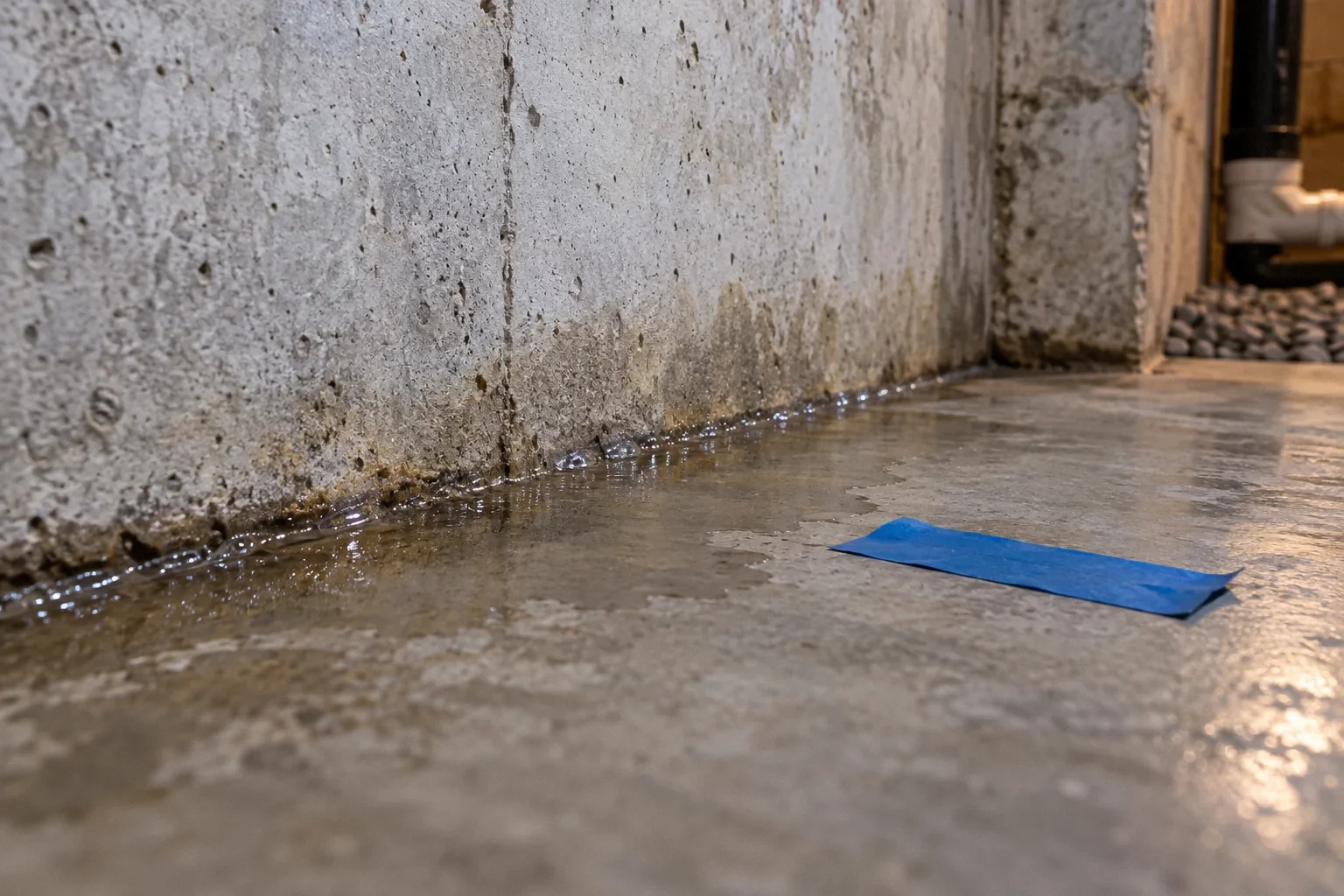
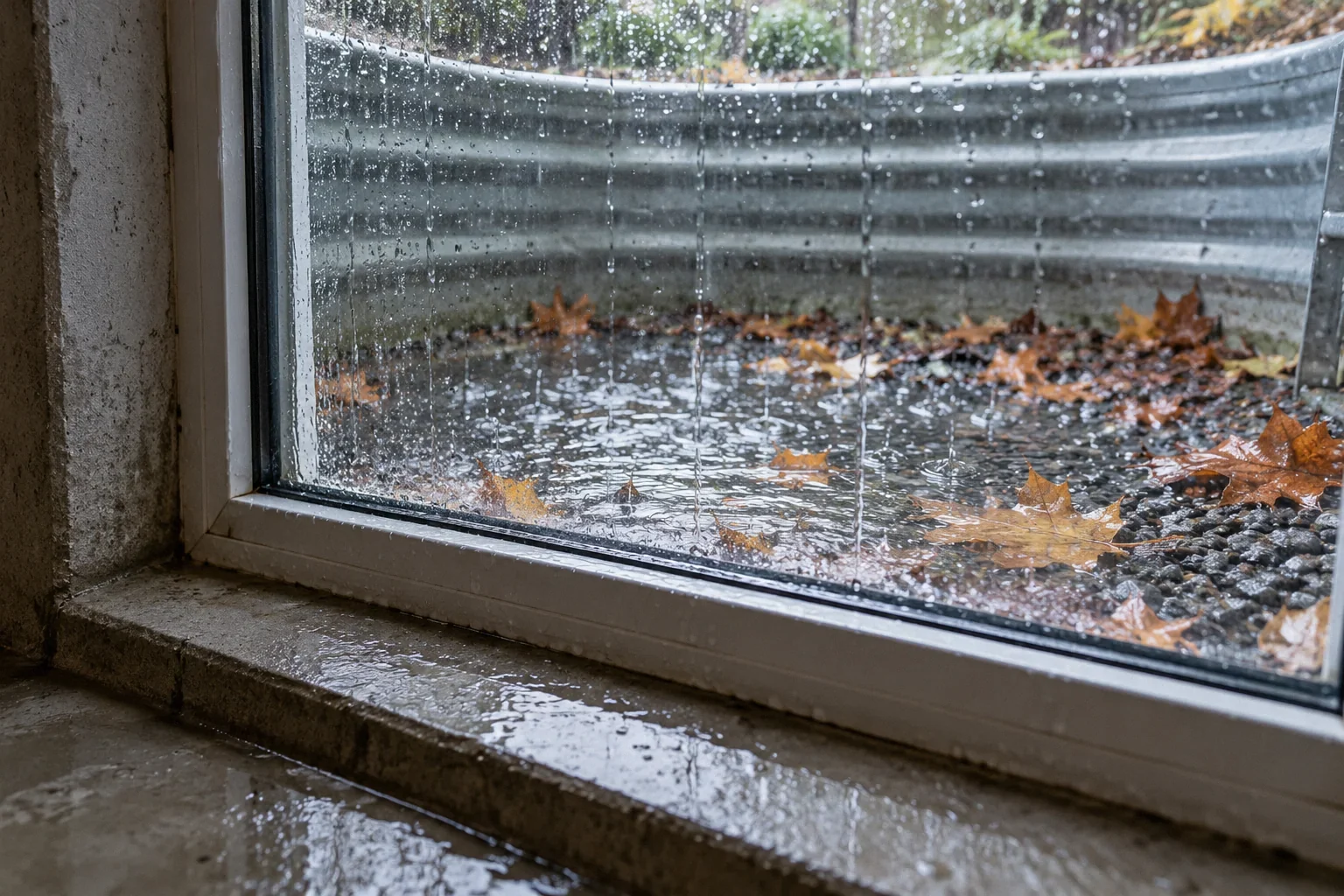
A puddle beneath a basement window shows where water became visible indoors, not necessarily the first failure in the system. If the well fills to the frame during rain, the window may be exposed to conditions different from ordinary wind-driven rain. If the well stays free of standing water while the frame leaks, another path may be more relevant.
From a safe location, photograph the exterior condition, interior entry point and timing relative to rainfall. Note whether leakage starts immediately, after prolonged rain or after snowmelt. Avoid reaching into a flooded well or opening a window against accumulated water. The sequence gives the evaluator a useful starting point and reduces the chance of replacing a window when the larger problem is water collecting outside it.
Trace the water that reaches the well
Look for roof discharge, overflowing gutters, surface runoff, hardscape changes and landscaping that directs water toward the low area. Review recent changes as well as long-standing conditions: a new patio or downspout arrangement can alter the path even when the window itself has not changed. These observations should be made without disturbing soil beside the foundation.
The DOE guidance on managing water around existing crawl space floors describes the broader principle of controlling bulk water before relying on interior measures. The same source-control question is relevant to a basement well: how much water is being delivered, and can that delivery be reduced through an appropriate exterior plan? A cover may reduce direct rainfall or debris, but it does not automatically correct runoff entering from the surrounding ground or water arriving through other routes.
Find out where the well drain actually goes
A pipe opening or bed of gravel does not demonstrate a functioning drainage route. The line may be obstructed, disconnected or linked to a system whose capacity and destination are unknown. Soil and groundwater conditions also affect whether an apparent infiltration area will work during the event that causes the leak.
The Maple Grove emergency escape window guidance includes local provisions for well drainage and alternatives. Use it as an example of why the destination and site conditions matter, while confirming your own jurisdiction's requirements. Ask a qualified provider to identify the existing arrangement and document any proposed changes. Do not improvise an excavation beside the footing or connect the well to an unverified pipe. The scope should explain collection, discharge and maintenance, not merely promise to add more gravel beneath the window.
Investigate the window assembly when ponding is absent
If observations show no well flooding, investigate the window, its perimeter connection and the wall above. Water may arrive at joints, through a defective installation detail or from another exterior component and appear at the window opening. The inspection should follow the plausible path rather than assume every visible joint needs caulk.
Ask the provider to distinguish a maintenance issue, a window defect and a connection problem that requires more extensive work. Some openings incorporate drainage features that should not be sealed indiscriminately. Follow the exact product instructions and the evaluated assembly detail. A controlled investigation may be needed, but unsupervised hose flooding can introduce water into concealed areas and does not reproduce every storm condition reliably. The homeowner's best contribution is accurate event evidence and access for a qualified assessment.
Preserve escape when changing covers and enclosures
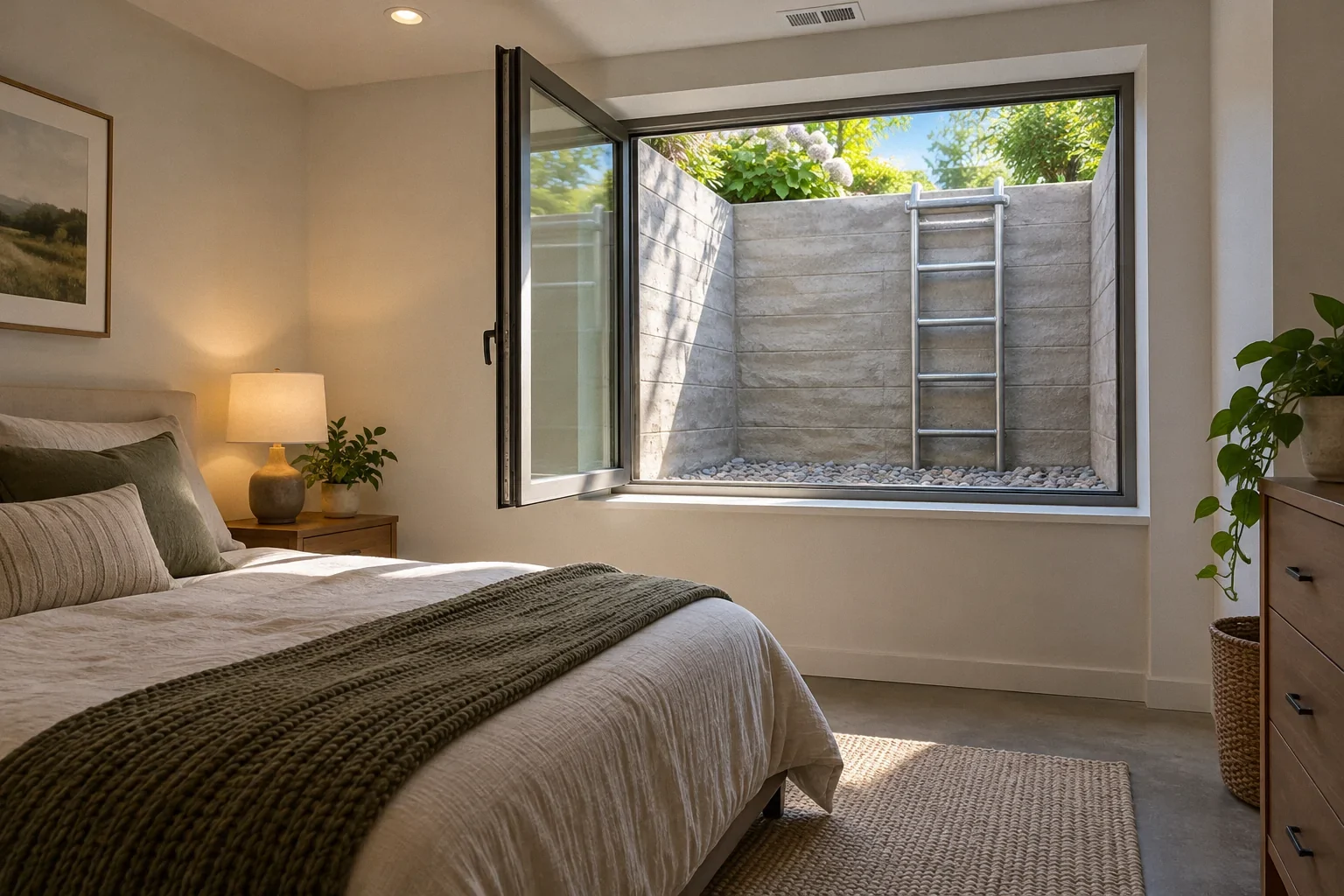
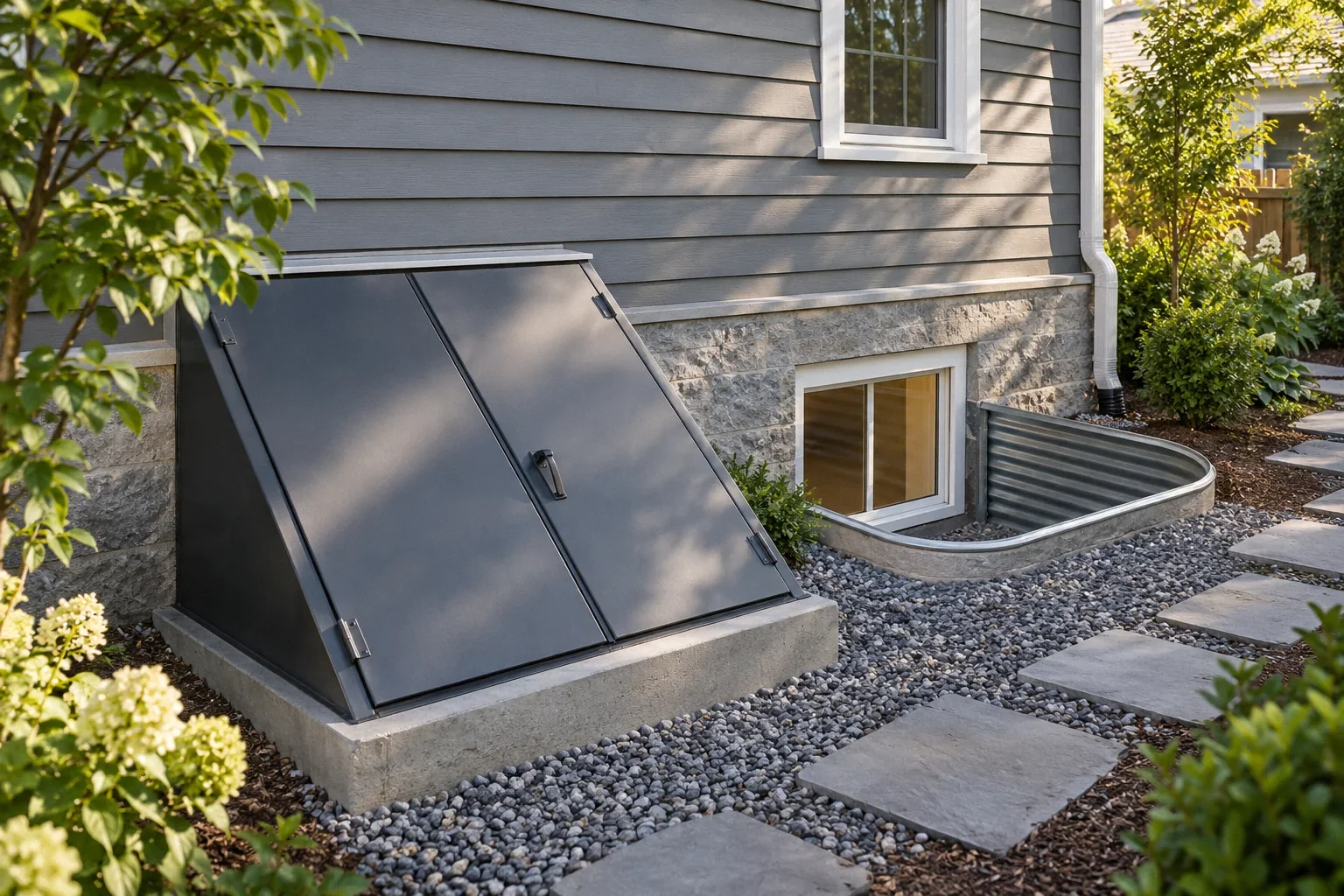
A basement window may serve an emergency escape function. Changes to the well, ladder, cover, landscaping or deck can affect that route even when the purpose of the work is stopping water. Review the complete arrangement before ordering a cover based only on its ability to shed rain.
The Portland emergency escape and rescue opening guidance illustrates requirements involving opening operation and the surrounding route in that jurisdiction. Confirm the applicable local provisions and exact product details for your home. A heavy, locked or awkward cover can create a conflict that should be resolved during design. The same applies to narrowing a well, raising its bottom or placing a drain component where it interferes with movement. Water management and escape access must be checked together rather than traded against one another informally.
A hypothetical replacement window that still leaks
Suppose a homeowner replaces an old basement window after two storm leaks. The new unit leaks during the next prolonged rain, and photographs show water standing high in the well before indoor entry begins. The repeated event suggests that the replacement did not address the outside accumulation, although the installation may still require assessment.
The evaluator traces roof and surface runoff, establishes the well drain's destination and checks the escape arrangement. A revised scope addresses the verified water route and any window connection defects found. This hypothetical example does not mean replacement windows are never necessary. It shows why a component-only repair can fail when the event originates in the surrounding system. Capturing the sequence before the next quote helps the owner compare proposals that address the observed conditions.
Verify the repair under relevant conditions
Keep the diagnostic findings, photographs, product information and drainage description with the repair record. At completion, check that covers and windows operate as required and that service access is preserved. If work involved an escape opening, confirm the final arrangement against the approved local requirements.
Monitor during the type of weather that previously caused the problem, from a safe location. Record whether the well accumulates water and whether the interior remains dry. A brief dry-weather inspection can confirm workmanship details but cannot demonstrate performance during an extended storm. Maintain gutters, surface drainage and the well according to the applicable instructions, without entering unsafe conditions or blocking intended pathways. If leakage recurs, the documented sequence and repair scope make the next investigation more focused than starting again with the label leaky window.
Before your next decision
- Record whether the well fills before indoor leakage.
- Photograph roof and surface-water routes safely.
- Establish the actual well drain destination.
- Separate window defects from outside accumulation.
- Review covers and wells for escape compatibility.
- Monitor the repair during relevant weather.
Related questions
Will a window-well cover stop all leaks?
No. It may reduce direct rainfall and debris, but runoff, groundwater, drain problems or window connections can still cause leakage. It must also preserve required escape operation.
Is gravel at the bottom enough drainage?
Not necessarily. The site conditions and approved drainage arrangement determine how water leaves the well. Visible gravel alone does not establish that function.
Should I seal every opening around the frame?
Follow the evaluated repair detail and product instructions. Indiscriminate sealing can block intended drainage features without correcting the actual entry path.
Sources & further reading
- City of Maple Grove, MinnesotaWindows: Emergency Escape and Rescue Openings
2021 local handout; use for measurement/drainage principles, verify current local adoption before specifying dimensions.
- City of Portland, Permitting & DevelopmentEmergency Escape and Rescue Openings
Oregon/Portland example; not a statement of all US adopted codes.
- U.S. Department of Energy / Pacific Northwest National LaboratoryWater Management of Existing Crawlspace Floor
Existing crawlspace moisture retrofit; not excavation instructions for homeowners.
Homeowner questions behind this article
These discussions informed the questions, not the technical answers. Some were available through indexed excerpts; votes and comments are not an engineering assessment.
Research method