The short answer
A blocked shelter exit is a planning problem to address before an event. Keep the approved door arrangement intact, document the shelter location, use an appropriate local registry where available and plan more than one way to receive alerts or communicate. Do not assume a phone will work underground or that an improvised jack will safely clear debris. Rescue availability and timing cannot be guaranteed.
US shelter planning. Local examples are identified; permitting, standards and emergency programs vary by jurisdiction.
Separate a door that will not operate from debris outside it
A jammed latch, distorted assembly and an obstruction beyond the door are different problems. They may lead to the same immediate concern, but their prevention and response are not identical. Routine operating checks can reveal some hardware issues; they cannot promise that an exit will remain clear after a damaging event.
During design, ask how the door is intended to operate and what the manufacturer instructs occupants to do if operation is impaired. Keep those instructions with the shelter plan. Do not invent a universal escape procedure for every enclosure. The shape of the opening, the door arrangement, damage and surrounding debris can make a technique seen in a video inappropriate or dangerous at another property.
Choose the documented door configuration before installation
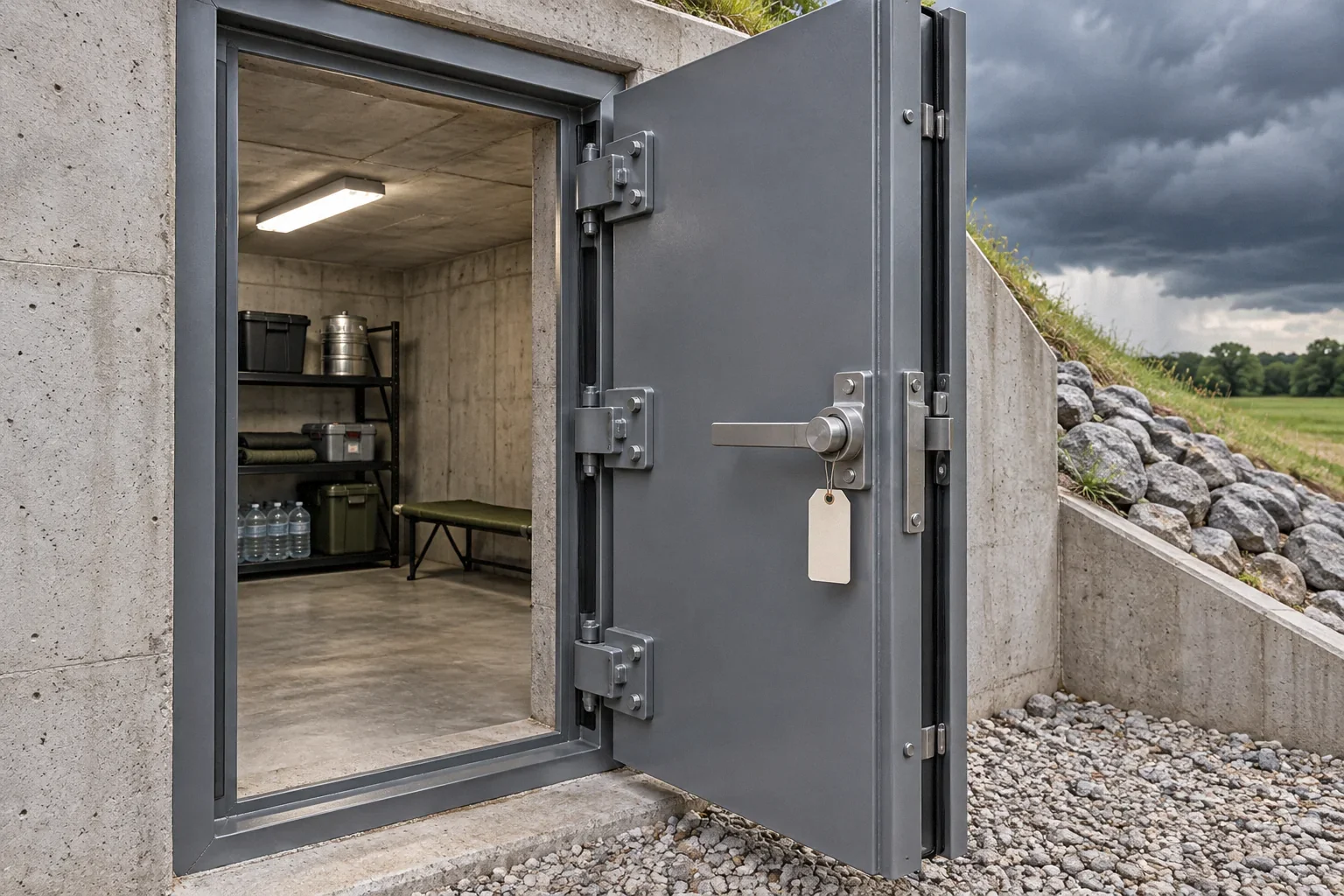
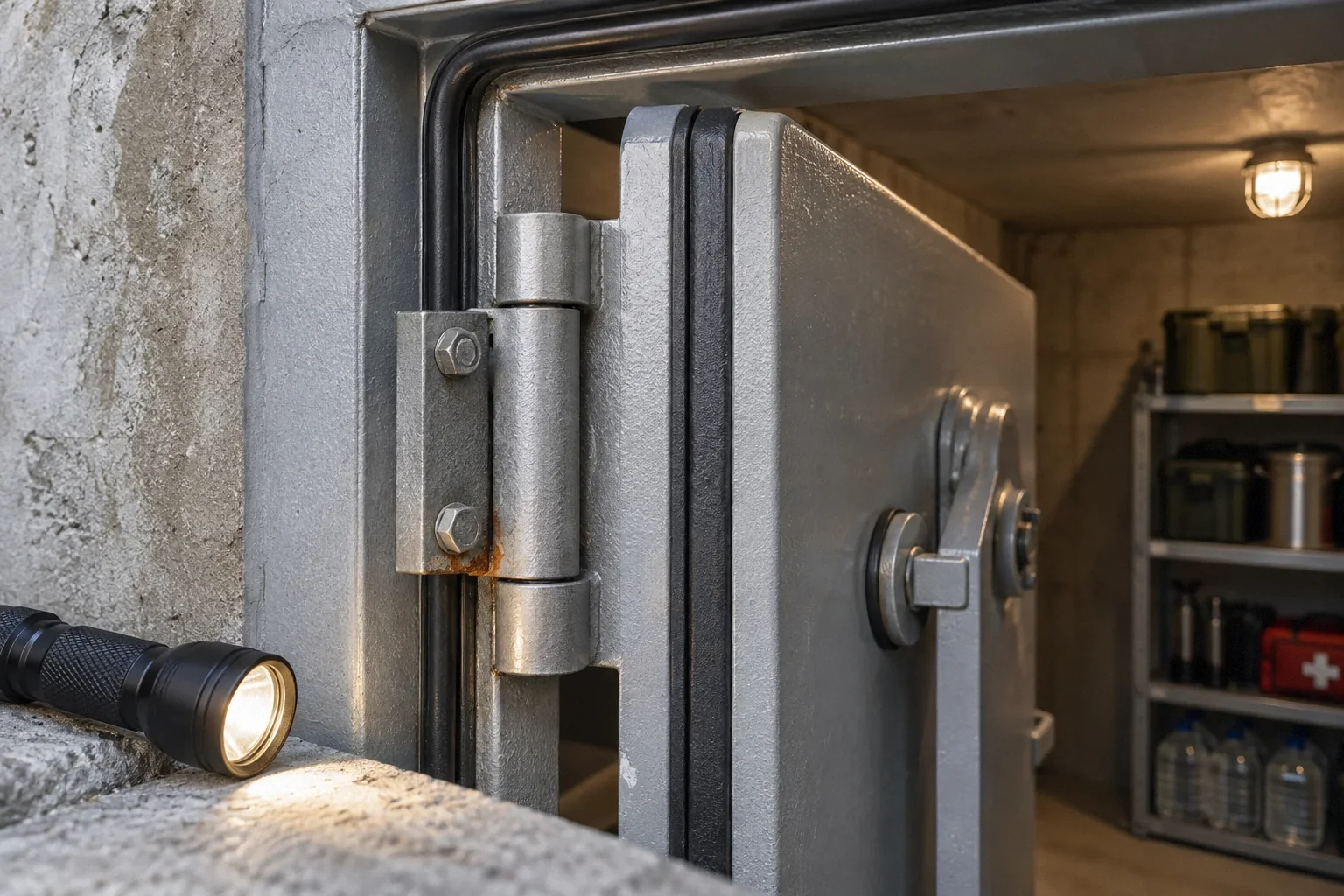
The FEMA: Residential Tornado Safe Room Doors describes tested and labeled door assemblies and the importance of matching hardware and installation conditions. The assembly must remain consistent with its documentation. Changing swing, latches or hinges to address a feared obstruction can affect the protective system.
Discuss the concern with the designer and manufacturer while selecting the shelter. Ask what configurations are available and how they relate to household access and operation. A clear answer should identify the intended arrangement and its limitations rather than offer a blanket statement that one door direction eliminates trapping. If the proposed change is not documented, have it resolved before purchase instead of leaving the installer to improvise.
Make the location understandable to someone outside the household
The Oklahoma City: Storm Shelter Registry is an example of a local program intended to help first responders locate shelters. Such programs are jurisdiction-specific. Check with the relevant emergency-management or public-safety office rather than assuming that a vendor's customer list serves the same purpose.
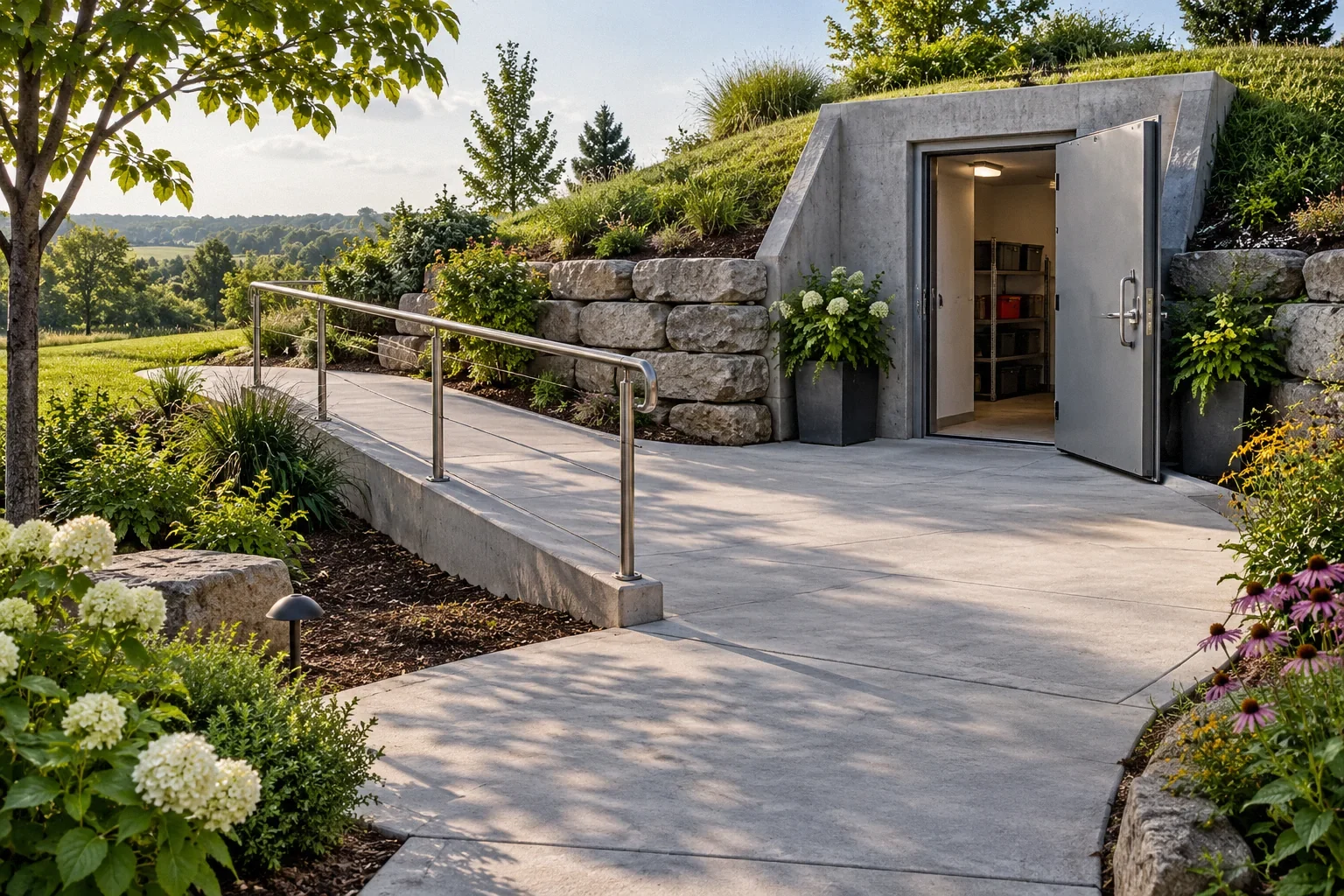
Keep the shelter's exact location, access arrangement and household contact information in the appropriate record. Update it if the installation changes. Share necessary location information with trusted contacts as part of the household plan, while making reasonable choices about privacy. Registration is not a guarantee that a rescue team will arrive immediately, and it does not certify construction. Its role is to help make the location known when that information is needed.
Test communication in the real location
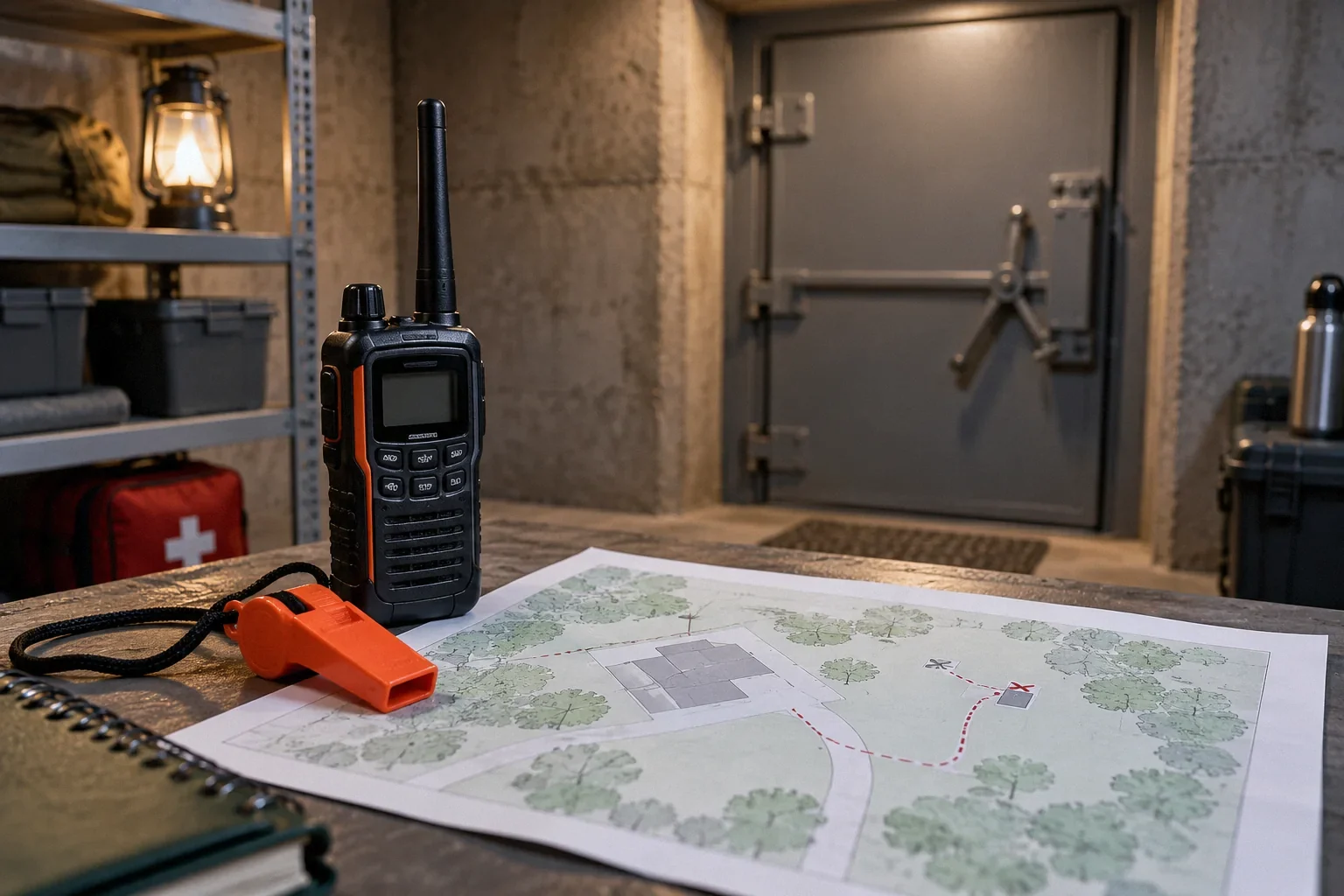
A phone that works at the kitchen table may perform differently inside a below-grade room or metal enclosure. Test the communication arrangements in ordinary safe conditions with the door in its normal operating position. Evaluate both receiving warnings and communicating outward; one successful function does not establish the other.
Consider more than one appropriate channel and a way to keep necessary equipment powered. Follow equipment instructions and local emergency guidance. Do not treat a signal booster or radio as automatically compatible with the enclosure or electrical design. If an antenna or cable needs a new penetration, coordinate it with the designer. A communication improvement should not quietly introduce an unreviewed opening into the protective boundary.
Know when to enter without waiting for a visual confirmation
National Weather Service: What to do During a Tornado provides public instructions for taking shelter during a tornado. A household should understand alerts and its predetermined route before a warning occurs. Delaying entry to watch the sky or collect scattered items can undermine an otherwise thoughtful shelter plan.
Keep essential supplies organized and the approach clear. Identify who assists children, pets or a person with limited mobility. If the route includes an exterior trip, discuss timing and alternatives with local emergency resources during planning. A blocked-exit plan starts with orderly entry, reliable alerts and occupants who know how to use the space. It should not depend on someone improvising every decision after the event has already begun.
Include rescue coordination in the operating plan
FEMA: FEMA P-361: Safe Rooms for Tornadoes and Hurricanes (April 2025) discusses operations and the importance of information that supports rescue when debris blocks a safe-room entrance. For a household, a practical plan should identify location records, communication methods and the instructions supplied for the particular shelter.
Write down emergency contact procedures and keep them accessible without internet service. Follow official directions and do not assume silence outside means conditions are safe. If the door is blocked, avoid actions that could disturb unstable debris or damage the enclosure without appropriate guidance. This article does not prescribe a rescue technique. Its purpose is to ensure that the household and relevant local services have useful information before an event, when preparation is still possible.
A hypothetical phone test reveals a missing dependency
A family installs a shelter in the garage floor and stores a charged phone inside. During a calm practice session, they discover that calls are unreliable with the door closed. The seller had demonstrated reception beside the open hatch, which did not reproduce the intended use.
The family asks the appropriate providers about communication options and checks the local shelter registry. Any proposed hardware or penetration is reviewed for compatibility with the installation. They also keep a written plan and appropriate supplies. This hypothetical does not imply that all underground shelters block phone signals. It shows why testing the actual arrangement can reveal a dependency that a sales demonstration missed.
Review the plan after changes, not only after storms
A new fence, locked gate, landscaping or garage storage can change how a shelter is reached and located. Household contact details and mobility needs also change. Keep the location record and route current, and check equipment according to its instructions rather than assuming batteries and stored electronics remain ready indefinitely.
Document any event that affects the door or enclosure and obtain appropriate assessment before relying on it again. Keep manufacturer contacts and maintenance information with the household records. A shelter plan should remain usable by someone who was not present at installation. Clear instructions, a known location and realistic communication arrangements are more dependable than a collection of improvised tools with no agreed purpose.
Before your next decision
- Keep the approved door arrangement and instructions.
- Document the location in the appropriate local program if available.
- Test receiving alerts and outward communication inside the shelter.
- Coordinate any cable or antenna penetration.
- Update route, contacts and equipment readiness after changes.
Related questions
Does registering a shelter guarantee rescue?
No. A registry helps responders identify a location; it does not guarantee timing or certify the shelter's construction.
Should I reverse the door so debris cannot block it?
Do not change a documented assembly without approved design and manufacturer guidance. Door configuration and obstruction planning must be coordinated.
Can I rely only on a mobile phone?
Test the actual location and plan appropriate alternatives. Reception and power can fail, and a test outside an open shelter does not reproduce occupied conditions.
Sources & further reading
- FEMAFEMA P-361: Safe Rooms for Tornadoes and Hurricanes (April 2025)
US guidance; distinguish local adoption and FEMA funding criteria
- FEMAResidential Tornado Safe Room Doors
US residential storm shelter door guidance
- Oklahoma CityStorm Shelter Registry
City-specific program example
- National Weather ServiceWhat to do During a Tornado
US public emergency guidance
Homeowner questions behind this article
These discussions informed the questions, not the technical answers. Some were available through indexed excerpts; votes and comments are not an engineering assessment.
- How Do We Feel About This Shelter?
- Would you buy this shelter if you live in the Midwest or southeast?? I’ve been on a storm shelter obsession as of recent and wondered what your opinion on this shelter would be.. it’s approved by the Nssa and has been tested at Texas tech.. New day I think it’s called 🤔 it’s also above ground
- First time homeowner
- How safe are large open basements in a powerful tornado?