The short answer
Verify a storm shelter door as an assembly, not merely a slab of steel. Match the permanent third-party label and listing to the supplied door, frame, hardware and installation conditions. Confirm compatibility with the surrounding enclosure and the project's requirements. FEMA publishes guidance but does not certify a vendor's door. Substituting a latch or modifying the frame can leave the documented assembly behind.
US project planning. Local approval, site investigation and the adopted standard determine the actual requirements.
The door is a boundary in the protective enclosure
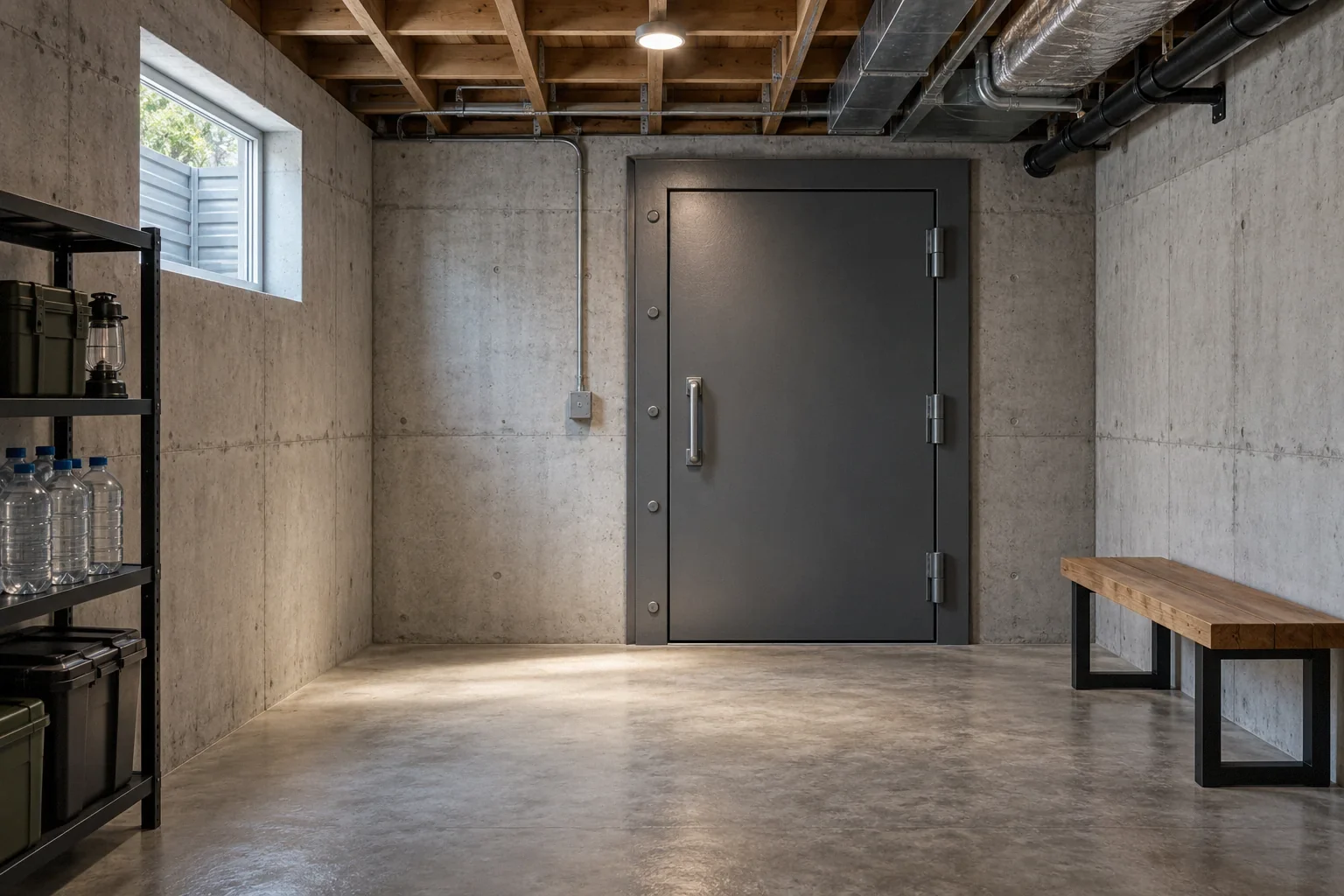
A safe-room wall can look substantial while the opening through it remains poorly documented. The door is also the part occupants must operate under pressure, often in a space used for other purposes. Its structural role and practical operation therefore have to be considered together.
Begin with the project's intended hazard and design criteria. A burglary-resistant door, fire-rated door and storm-shelter door address different performance questions. One product may have more than one documented role, but the roles should be demonstrated separately. Ask exactly what the proposed assembly has been evaluated for. “Commercial grade,” “security steel” and “extra heavy” are descriptions, not a substitute for the relevant evidence.
Read the label together with the listing
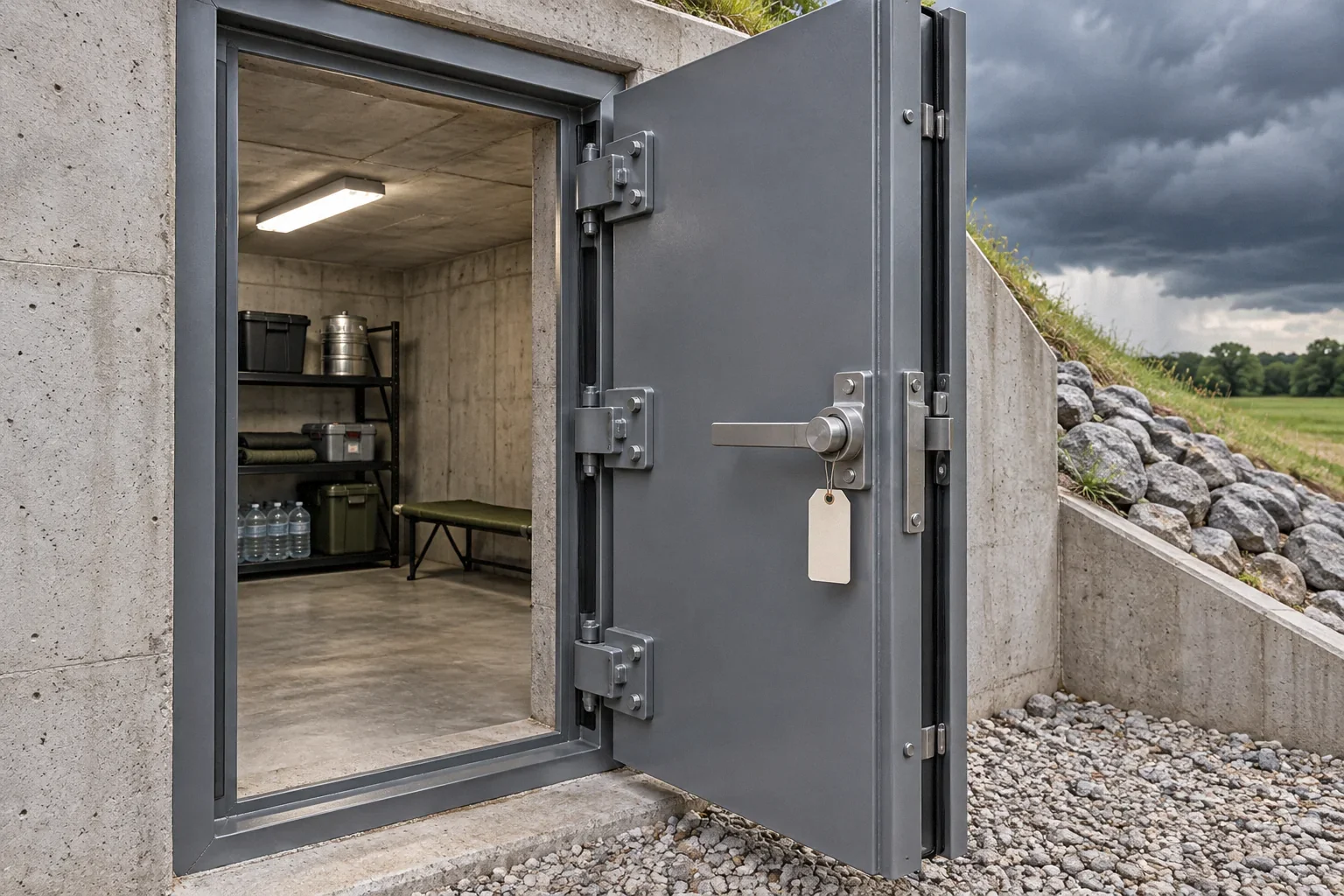
The FEMA: Residential Tornado Safe Room Doors directs purchasers toward permanently attached third-party certification labeling and matching hardware. It distinguishes tested and labeled assemblies from ordinary doors readily available for general residential use. The identifier should connect the physical product to the documentation supplied for the project.
Photograph the label and request the corresponding listing or certification record from the responsible supplier. Compare model, configuration and stated conditions rather than collecting an unrelated sample certificate. If the documentation refers to an earlier standard edition, have the designer and building department determine whether it meets the project requirements. Do not personally declare a product acceptable or unacceptable solely from a date without that context.
A door assembly includes parts that are easy to overlook
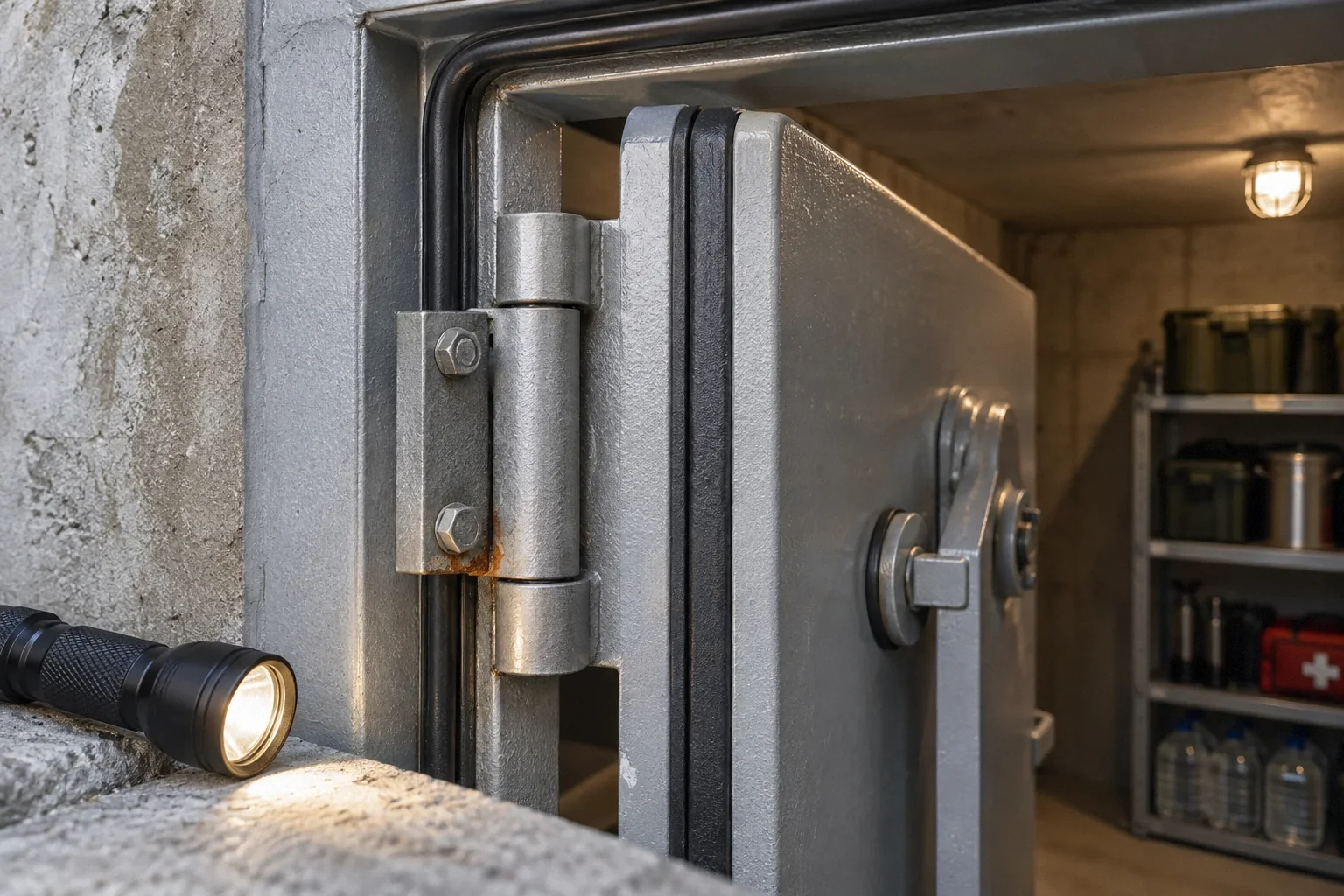
The frame, hinges, latches, locks, attachment details and receiving construction can affect the assembly's performance. A replacement handle that feels easier to use may not be part of the documented configuration. Likewise, a correctly identified door fitted into an incompatible opening leaves a gap between product evidence and installed performance.
Ask the supplier for the full bill of components and installation instructions. Have the contractor identify any proposed substitutions before ordering. If something arrives differently, preserve the product markings and resolve the difference before installation is concealed. A delivery receipt proves that a shipment arrived; it does not establish that every supplied part matches the listing or the approved design.
The surrounding wall and frame connection still matter
FEMA: FEMA P-361: Safe Rooms for Tornadoes and Hurricanes (April 2025) places openings within the complete safe-room design. The door cannot be evaluated in isolation from the wall and supporting structure. Installation details need to establish how the frame is attached and what substrate is assumed.
This is especially important in a retrofit with existing masonry or concrete whose condition is uncertain. Ask who verifies the opening and what evidence is required before the frame is secured. The answer may involve design review and inspections appropriate to the project. Do not accept a field improvisation merely because the installer has used it on ordinary exterior doors. Ordinary door installation experience does not document the connection required for a particular shelter assembly.
Door swing is not a reason to improvise
Homeowners often worry that debris could prevent a door from opening after a storm. That concern is legitimate, but changing swing, hinges or operating hardware is not a casual design choice. The installed arrangement must remain within its documented configuration and satisfy the project's requirements.
Discuss entry, closure, occupant operation and possible blocked access before purchase. Ask how the household will communicate if it cannot exit and whether local shelter registration is available. Do not assume a reversed door or an improvised jack solves every obstruction. The door design and the rescue plan address related but different problems, and both deserve specific answers rather than a universal rule copied from a forum.
Use a document-to-installation check
Scroll horizontally to read every column.
| Evidence | Match it to | Question if it differs |
|---|---|---|
| Permanent label | Actual door assembly and identifier. | Is this the documented product? |
| Listing and instructions | Frame, hardware, configuration and receiving construction. | Is the proposed variation covered? |
| Approved project details | Location and attachment in the enclosure. | Who approves a field change? |
| Inspection and handover record | Completed installation and operation. | What remains unverified or unresolved? |
A homeowner can organize this comparison without becoming the approving professional. Its purpose is to expose missing documentation early. Ask for written resolution from the party responsible for the design or product, rather than relying on a chain of verbal assurances between the distributor and installer.
A hypothetical substitution that deserves a pause
Imagine that a listed door arrives with its specified operating hardware, but the contractor replaces one latch because the household finds it awkward. The replacement seems stronger and works smoothly during a demonstration. Neither observation establishes that the revised assembly remains within its documented configuration.
The next step is to ask the manufacturer and responsible designer for an approved solution. They may identify suitable hardware, an adjustment or another documented arrangement. The homeowner should not be left with an unexplained deviation recorded only in a text message. This scenario illustrates why ease of operation should be evaluated before purchase and why a well-intended change can still require review. It is not evidence that any named product is defective.
Maintenance must preserve the documented system
FEMA: Community Tornado Safe Room Doors: Installation and Maintenance explains maintenance and replacement considerations, with identified relevance to residential door assemblies. Keep the manufacturer's instructions and the installed component record. Check condition and operation on the appropriate schedule and after an event or change that raises concern.
Record sticking, corrosion, damaged seals or hardware and obtain the right correction. Repainting over a label or replacing components with a visually similar item can make future verification harder. A routine household practice session is useful for operation, but it does not replace an inspection of damage or a technical evaluation after impact. Closeout should leave the owner knowing whom to contact, which parts were installed and what maintenance is expected.
Before your next decision
- Photograph the actual certification label.
- Match door, frame and hardware to the listing.
- Confirm receiving construction and attachment details.
- Resolve substitutions before installation is accepted.
- Keep operating and maintenance instructions with closeout records.
Related questions
Does FEMA sell or certify safe-room doors?
FEMA provides guidance rather than product certification. Verify the third-party documentation and its relationship to the actual project.
Can an ordinary steel door be upgraded with extra deadbolts?
Extra hardware does not establish a tested shelter assembly. Ask for an appropriate documented assembly rather than trying to create a rating through additions.
What if the supplied certificate covers a different model?
Keep the discrepancy visible and obtain matching documentation or a corrected supply before accepting the installation. Do not assume similar appearance establishes equivalence.
Sources & further reading
- FEMAResidential Tornado Safe Room Doors
US residential storm shelter door guidance
- FEMACommunity Tornado Safe Room Doors: Installation and Maintenance
Community rooms; explicitly identifies residential maintenance applicability
- FEMAFEMA P-361: Safe Rooms for Tornadoes and Hurricanes (April 2025)
US guidance; distinguish local adoption and FEMA funding criteria
Homeowner questions behind this article
These discussions informed the questions, not the technical answers. Some were available through indexed excerpts; votes and comments are not an engineering assessment.
- Does anyone know of any good evidence/proof/statistics for above ground shelters?
- Would you buy this shelter if you live in the Midwest or southeast?? I’ve been on a storm shelter obsession as of recent and wondered what your opinion on this shelter would be.. it’s approved by the Nssa and has been tested at Texas tech.. New day I think it’s called 🤔 it’s also above ground
- Advice on converting unused basement room into a shelter