The short answer
Maintain the shelter as a complete system: door assembly, enclosure, water-management features, access and essential equipment. Follow the manufacturer's instructions and applicable project requirements, and obtain assessment after damage or a significant change. Keep a dated condition log. Repainting, generic replacement hardware or a running pump does not by itself establish that the shelter remains suitable for its intended use.
US public guidance and homeowner planning. Follow current local emergency instructions; property-specific suitability requires qualified assessment.
Start with the installed shelter's own record
Maintenance is easier when you know what was built. Collect the model identification, approved design, door documentation, installation records and operating instructions. If the property changed owners, do not assume a folder labeled “shelter warranty” contains all of that information.
Identify who can answer product questions and who can assess site or structural concerns. A manufacturer may address a door component while a designer evaluates a foundation or enclosure change. Keep these responsibilities distinct. If records are missing, establish what can be verified before adopting a generic maintenance checklist. A checklist for a different model may overlook a dependency in your installation or recommend a change that does not belong to it.
Check door operation without modifying the assembly
FEMA: Community Tornado Safe Room Doors: Installation and Maintenance discusses inspection and maintenance of safe-room doors and identifies information applicable to residential owners. It notes that one or two checks a year are generally sufficient for in-home assemblies in the context described, while use and conditions differ from busy community spaces. Follow the actual manufacturer's schedule and project requirements, including event-triggered assessment.
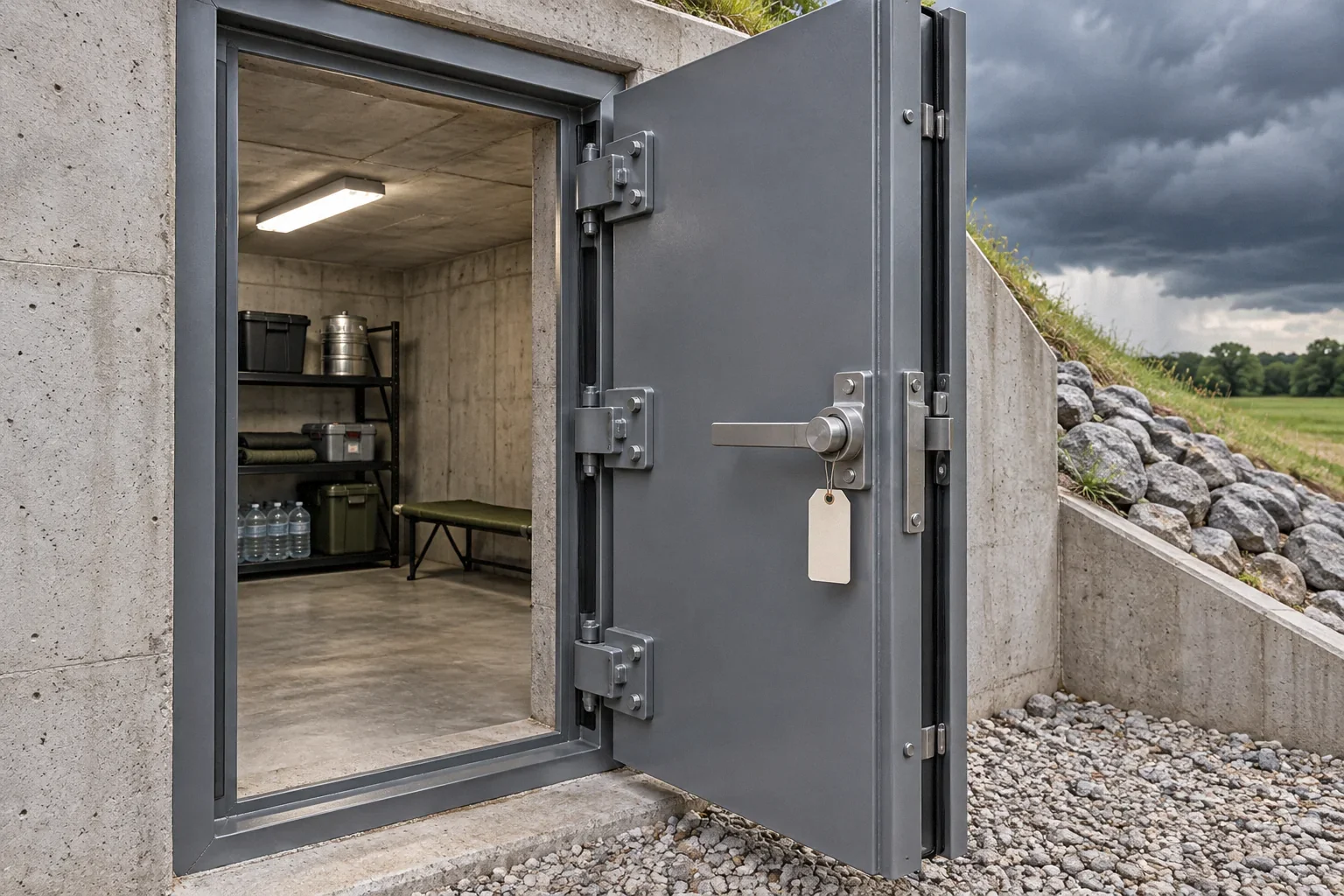
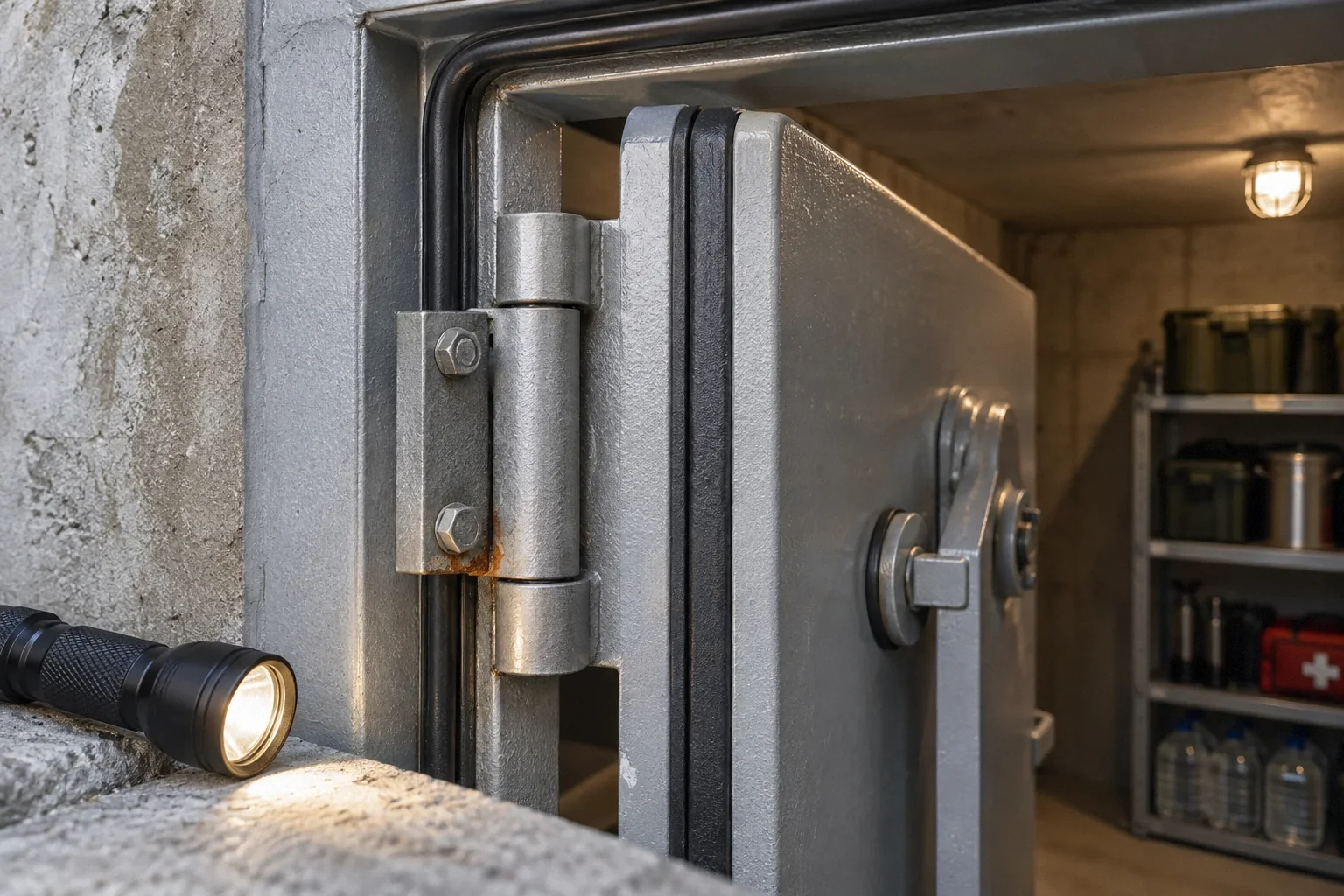
Observe operation, condition and any new difficulty rather than forcing or altering the hardware. Keep labels readable and document damage or corrosion. FEMA: Residential Tornado Safe Room Doors explains why supplied hardware must match the documented assembly. Replacing a latch with something that looks stronger or painting over identifying information can create a new verification problem. Ask for an approved correction and record the exact replacement parts.
Treat a new leak as information about a system
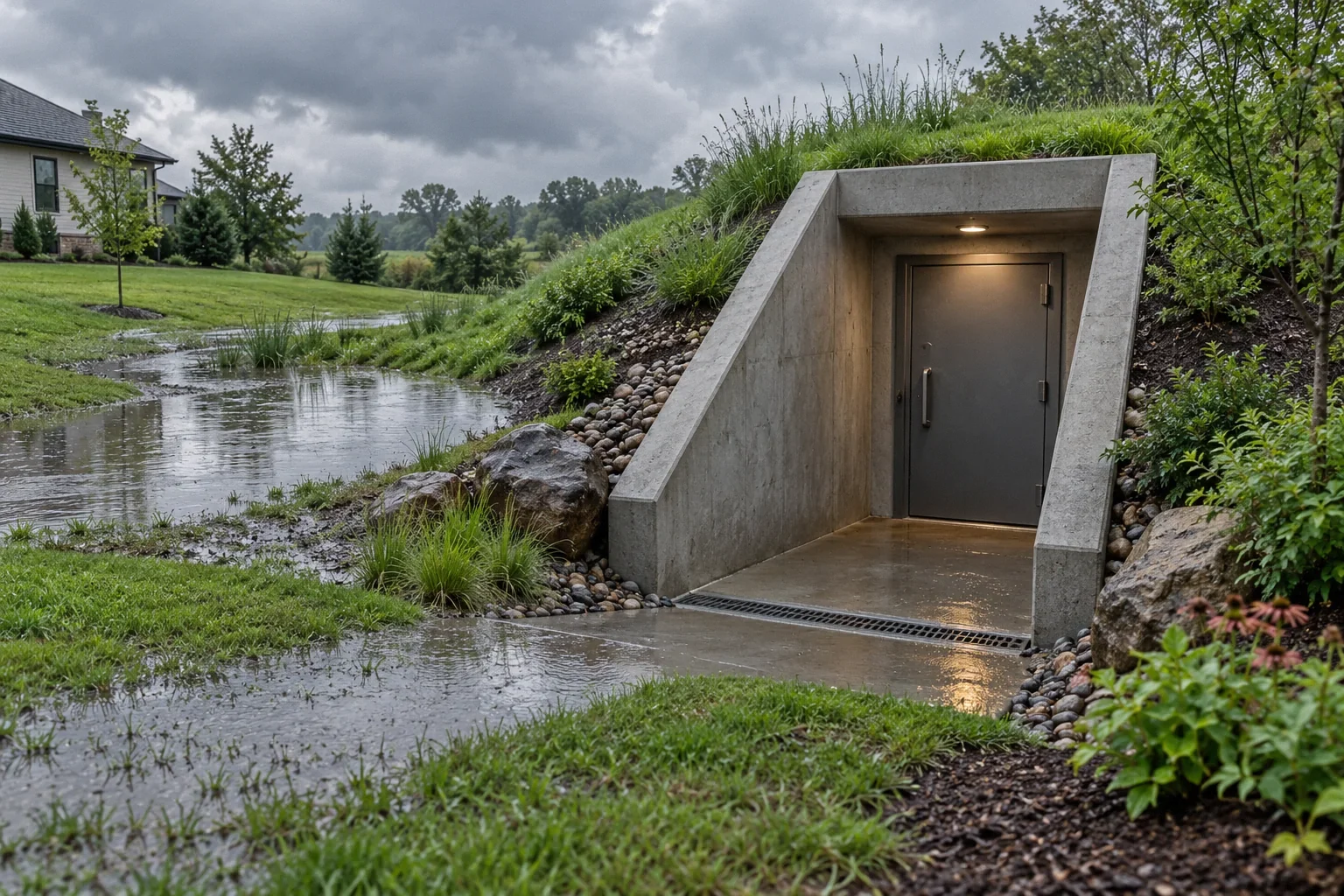
Record where water appears, when it begins and the weather or other conditions around the event. Include the entrance and nearby grade in safe observations. A wet floor after heavy rain may have more than one possible pathway, and repeated cosmetic sealing can obscure the useful pattern.
The FEMA: Flood Hazard Siting and Elevation Criteria for Residential Safe Rooms makes water exposure relevant to siting and occupancy, not just surface upkeep. A shelter that develops water problems may need assessment of its continued suitability, particularly if the conditions differ from the original assumptions. Keep an alternative household plan while that question is unresolved. Do not enter standing water or an unsafe enclosure to photograph a leak, and do not assume a pump's operation establishes that occupants are protected.
Distinguish surface care from a condition assessment
Rust, spalling, damaged finishes and changing gaps deserve documentation in context. A small area of surface deterioration does not automatically establish structural failure, but covering it immediately can make evaluation harder. Follow the product's care instructions and seek appropriate assessment when the nature or extent is unclear.
Keep photographs with dates and a consistent viewpoint. Include the location on a simple sketch so a future reviewer can distinguish separate observations. Avoid testing an unfamiliar material with aggressive cleaning, drilling or grinding before understanding the assembly. Maintenance should preserve the intended system. If repair changes a connection, opening or component, it may require review rather than ordinary touch-up work.
Keep access and essential equipment part of the same check
The FEMA: Residential Safe Rooms emphasizes clear access and the needs of occupants. Garage storage, furniture and supplies can gradually consume the route or interior space. Check whether today's layout still allows the household to enter and operate the door as planned.
Review lighting, alerts, communication and any specified power-dependent equipment according to their instructions. Check stored supplies for condition and access without blocking occupants. If a device has been added since installation, ask whether it affects the room's power, heat, space or penetration arrangements. A shelter can remain visually intact while its household operating plan becomes less usable through ordinary accumulation of equipment and belongings.
Use a condition log that leads to action
Scroll horizontally to read every column.
| Observation | Record | Follow-up |
|---|---|---|
| Door operation changes | Date, symptoms and relevant component identification. | Manufacturer or qualified assembly assessment. |
| Water appears | Location, timing and safely observed conditions. | Investigate source and occupancy implications. |
| Material damage | Context photographs and changes over time. | Appropriate condition evaluation before covering. |
| Route or household changes | New obstacles, equipment or assistance needs. | Revise the usable arrangement and plan. |
Add the person responsible and the date the issue was resolved. A log should not become a list of observations that nobody acts on. Keep unresolved suitability questions visible rather than marking the shelter “checked” because most items passed.
A hypothetical sticking door needs more than lubrication
After a wet season, an owner notices that the shelter door requires more force and sees corrosion near part of the assembly. A neighbor suggests lubricating the hardware and replacing the difficult latch with an ordinary store-bought part. The owner instead records the condition and contacts the appropriate provider.
The assessment determines whether adjustment, compatible component replacement or a broader review is needed. The important step is preserving the documented system while resolving the cause. This hypothetical does not imply that every sticking door indicates severe damage. It illustrates why an apparently small operating change deserves a specific diagnosis and approved repair rather than an unrecorded substitution.
Review after an event, alteration or change of ownership
Routine maintenance intervals do not cover every circumstance. Impact, flooding, nearby construction, relocation, new penetrations or a change in the way the space is used can require additional review. Follow the instructions for the actual event and installation instead of relying on the date of the last ordinary check.
At a sale, transfer the design and maintenance records with the product information and accurately describe unresolved conditions. A buyer should know what the shelter was designed for and what work has occurred. The objective is a continuing record of condition and function. Keeping the room clean is helpful, but it is not equivalent to verifying that changes and repairs have preserved the original design assumptions.
Keep an unresolved-item list beside the maintenance log, naming who will assess each issue and what documentation is still missing. Do not mark a condition closed merely because a service visit occurred. Record the finding, any approved repair and the follow-up information needed to understand whether the original concern was addressed.
Before your next decision
- Locate model, design and operating records.
- Record door condition and operation on the required schedule.
- Investigate new water rather than repeatedly covering the evidence.
- Preserve listed components when repairs are needed.
- Review access and suitability after damage or changes.
Related questions
Should I replace rusty door hardware with stainless hardware?
Not without confirming that the replacement is specified or approved for the documented assembly. Material appearance alone does not establish compatibility.
How often should I inspect the shelter?
Follow the manufacturer and applicable project requirements. FEMA's door guidance discusses residential checks, but use, environment and damage can require more frequent or additional assessment.
Does a recently painted shelter need no further review?
Paint records only a finish change. Review the underlying condition, operating behavior, water history and documentation as appropriate.
Sources & further reading
- FEMACommunity Tornado Safe Room Doors: Installation and Maintenance
Community rooms; explicitly identifies residential maintenance applicability
- FEMAResidential Tornado Safe Room Doors
US residential storm shelter door guidance
- FEMAFlood Hazard Siting and Elevation Criteria for Residential Safe Rooms
US residential guidance, November 2024
- FEMAResidential Safe Rooms
US homeowner planning background
Homeowner questions behind this article
These discussions informed the questions, not the technical answers. Some were available through indexed excerpts; votes and comments are not an engineering assessment.
- Any engineers or experts lingering?
- Found bomb/fallout shelter in my basement in Portland update
- Underground storm shelter