The short answer
A shipping container is not a ready-made underground shelter. Its original purpose and visible strength do not establish performance under the soil, water and other loads at a buried site. Treat a proposed conversion as a building project requiring professional design and approval, not a container purchase followed by excavation. Compare the complete engineered project with purpose-designed alternatives before committing money.
US project planning. Local approval, site investigation and the adopted standard determine the actual requirements.
The attractive price usually belongs to the container alone
The container is the most visible part of the idea: a transportable steel box with doors already attached. A low purchase price can make an underground room seem nearly finished before any design work begins. Yet the cost that matters is a usable, approved and maintainable installation at a particular site.
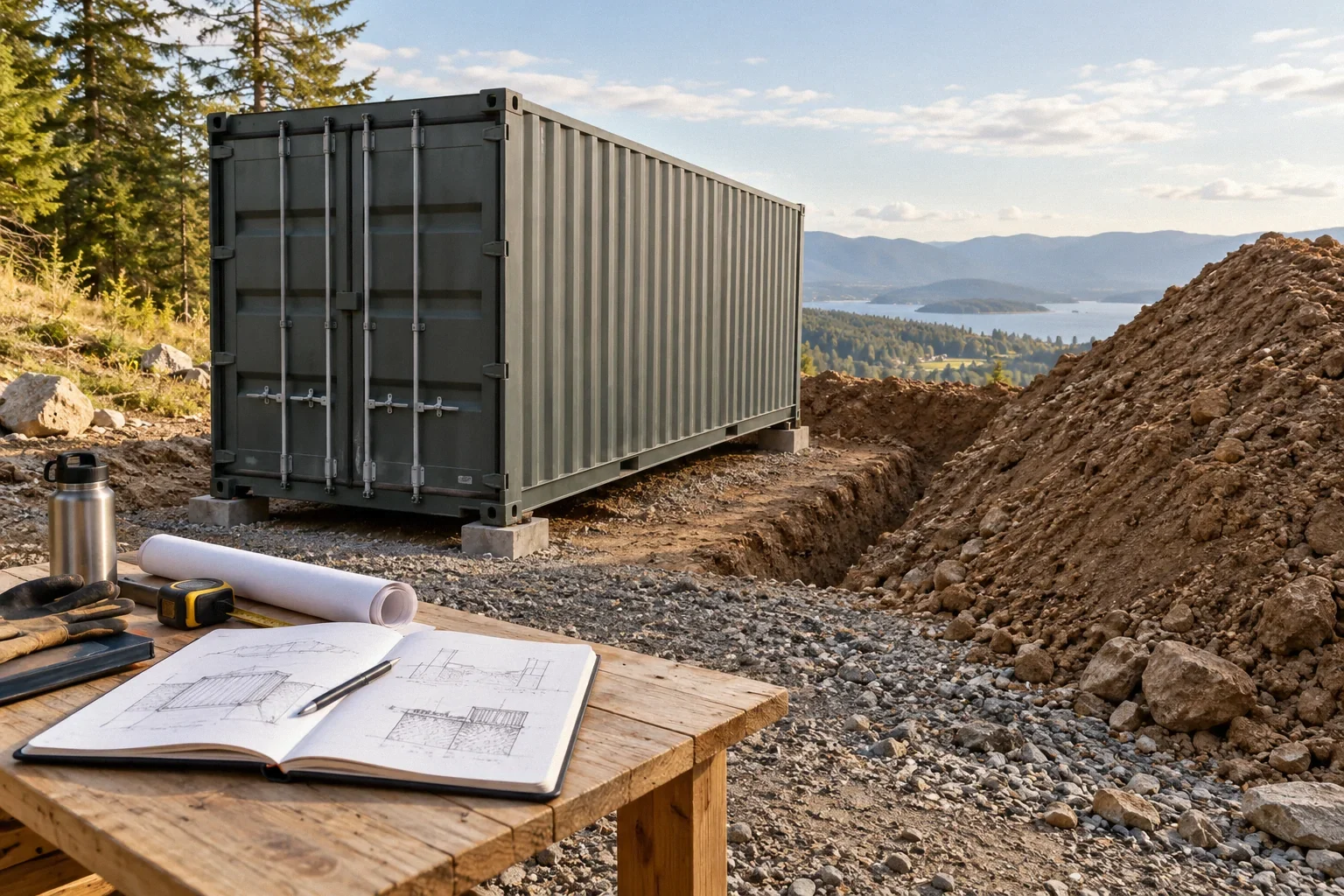
List the other decisions before purchasing the shell: investigation, design, excavation access, support of nearby structures, foundation, any required strengthening, water management, penetrations, ventilation, access and inspections. Some may be straightforward; others can change the concept entirely. If those tasks are still unspecified, you do not yet have a price for a shelter. You have a price for one possible material within a project.
Shipping strength is not a burial design
The International Code Council: Guideline for safe use of repurposed shipping containers describes a framework for designing, reviewing and approving repurposed shipping containers as building elements. Its existence should not be read as blanket approval to bury an arbitrary container. Repurposing requires assessment of the proposed use and configuration.
Ask the engineer which loads the final structure must carry and which components carry them. Soil against walls, material above the roof, groundwater and the effects of alterations belong in that assessment. A stacking demonstration or claim about corner strength does not answer all those questions. The container's condition, previous damage and openings added during conversion also matter. Homeowners should not try to turn those unknowns into a generic reinforcement recipe from online comments.
Burial can make defects harder to see and correct
Before burial, many surfaces are accessible. Afterwards, inspection and repair may require substantial work. That changes the value of documenting the shell's condition and of deciding how corrosion, joints, coatings and service access will be addressed. A freshly painted exterior is not a condition report.
Request a pre-installation record identifying the specific unit and any repairs or alterations. Ask which details will be inspected before they become concealed and who approves them. If a vendor cannot explain how a critical buried surface will be maintained or assessed later, include that uncertainty in the comparison. The ability to move a container on delivery day does not make a buried installation easy to retrieve or correct.
Water is a site question before it becomes a coating question
A waterproofing claim addresses only part of a buried-room project. The entrance, penetrations, installation joints and surrounding drainage can matter as much as the broad steel surface. The proposed location must also be appropriate for occupied shelter use.
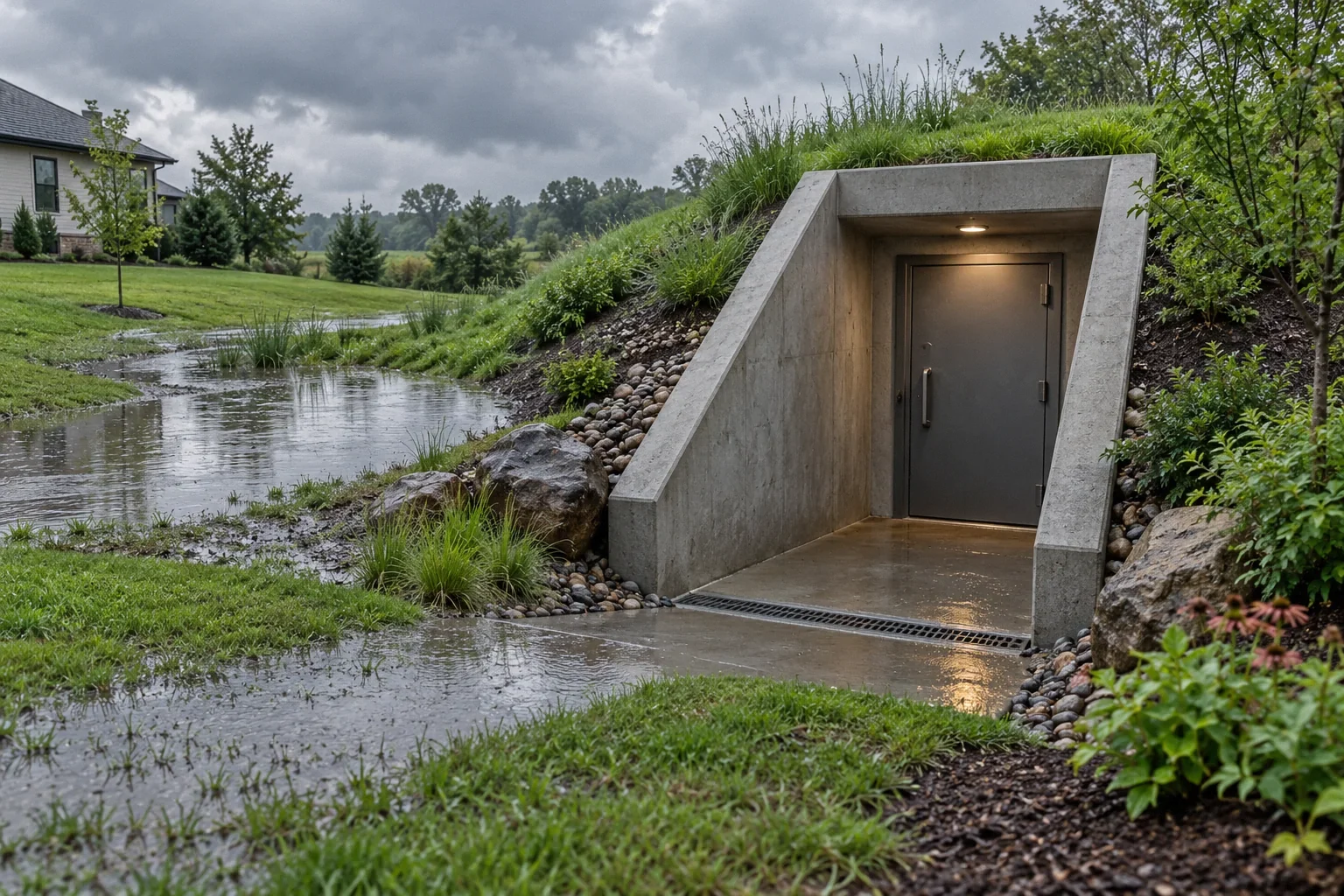
FEMA: Flood Hazard Siting and Elevation Criteria for Residential Safe Rooms explains why flood exposure affects safe-room siting and use. Start with that decision before selecting a sealant or adding a pump. Ask what happens if the power is unavailable during the event. A lower purchase price loses meaning if making the site suitable requires a substantially different structure or location. Keep flood risk, routine dampness and condensation distinct so that a solution to one is not sold as an answer to all three.
Define the protection the finished space is supposed to provide
A root cellar, equipment vault, storage room and occupied storm shelter have different purposes. A room advertised as a “bunker” may combine these labels without documenting any particular performance. State the hazard and intended occupancy in the design brief so the team can evaluate the right project.
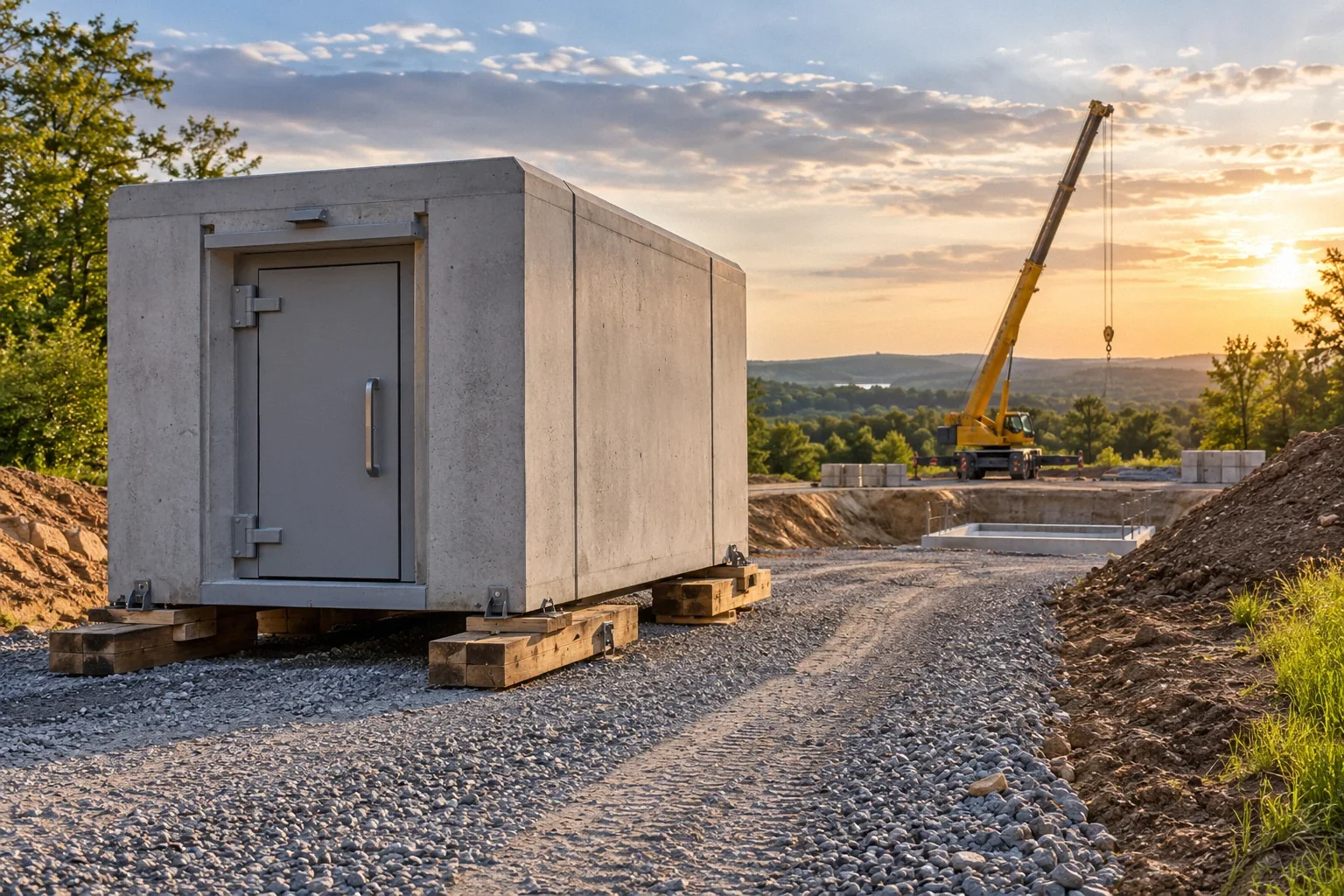
For a storm safe room, FEMA: FEMA P-361: Safe Rooms for Tornadoes and Hurricanes (April 2025) addresses a complete protective system. The enclosure, openings, connections and supporting structure need coordinated treatment. A shipping-container origin does not exempt the project from that work. If the proposed design relies on a separate engineered structure around the container, ask what useful role the container still performs and whether that arrangement is more practical than building the designed enclosure directly.
Compare alternatives with the same deliverables
Scroll horizontally to read every column.
| Item | Container conversion | Purpose-designed option |
|---|---|---|
| Design responsibility | Who accepts the modified unit and buried configuration? | Who confirms the selected system fits the site? |
| Water and access | How are doors, joints and penetrations resolved? | What site work and access details are required? |
| Verification | Which altered and concealed elements need evidence? | Which product and installation records are supplied? |
| Future care | How can buried deterioration be assessed? | What inspection and maintenance access remains? |
Put design exclusions beside the price. A bidder that excludes engineering, water conditions and permits is not offering the same completed scope as one that includes them. Avoid negotiating away a required element simply because it was not anticipated when the container was purchased.
A hypothetical project that stops before excavation
A homeowner buys a used container intending to cover it with soil and use it during storms. A contractor offers excavation but excludes design. An engineer then asks for the intended occupancy, site conditions and a structural scheme; the original container paperwork does not answer those questions.
The homeowner pauses and compares a designed shelter at another location. That decision may feel frustrating because the container is already owned, but the purchase should not dictate a life-safety project. The useful lesson is to complete feasibility before committing to the shell. This scenario does not establish that every container-based design is impossible. It shows why the engineer's final system, rather than the cheap box, determines feasibility.
Keep construction entry and finished occupancy separate
An unfinished buried enclosure can present restricted-entry and atmospheric hazards as well as construction risks. OSHA: Confined Spaces in Construction describes confined-space hazards in construction. Its workplace framework is not a permission slip for a homeowner to enter an unknown enclosure after a fan has been placed nearby.
Ask the contractor how workers will assess and control entry hazards and how the completed occupied space will be commissioned for its intended use. Do not use candles, improvised air tests or an unverified consumer monitor to decide whether entry is safe. Keep others away from an unresolved space and obtain appropriate professional assessment. A project that has not reached verified completion should not quietly become the family's emergency destination.
Before your next decision
- Write the intended use and hazard before selecting a shell.
- Obtain feasibility and design responsibility in writing.
- Compare completed projects with the same exclusions.
- Identify inspection points before buried surfaces disappear.
- Keep unfinished or unassessed underground spaces out of the household shelter plan.
Related questions
Is covering only the roof with soil a safe compromise?
That is still a changed loading condition. Have the entire proposed configuration designed rather than assuming a smaller amount of burial is automatically acceptable.
Does an ICC publication approve my container bunker?
No. A guideline describes design and approval considerations; it does not approve a particular unit, alteration or site.
Could a professionally designed container project work?
Potentially, but the design must establish the complete system and its limits. Compare its total cost and maintenance needs with alternatives before buying the container.
Sources & further reading
- International Code CouncilGuideline for safe use of repurposed shipping containers
Model-code background; not burial approval
- FEMAFEMA P-361: Safe Rooms for Tornadoes and Hurricanes (April 2025)
US guidance; distinguish local adoption and FEMA funding criteria
- FEMAFlood Hazard Siting and Elevation Criteria for Residential Safe Rooms
US residential guidance, November 2024
- OSHAConfined Spaces in Construction
US worker safety; state plans differ
Homeowner questions behind this article
These discussions informed the questions, not the technical answers. Some were available through indexed excerpts; votes and comments are not an engineering assessment.
- Reality check on shipping containers as bunkers. Wish someone told me this earlier.
- Am I approaching this problem correctly?
- Using a shipping container to retain soil