The short answer
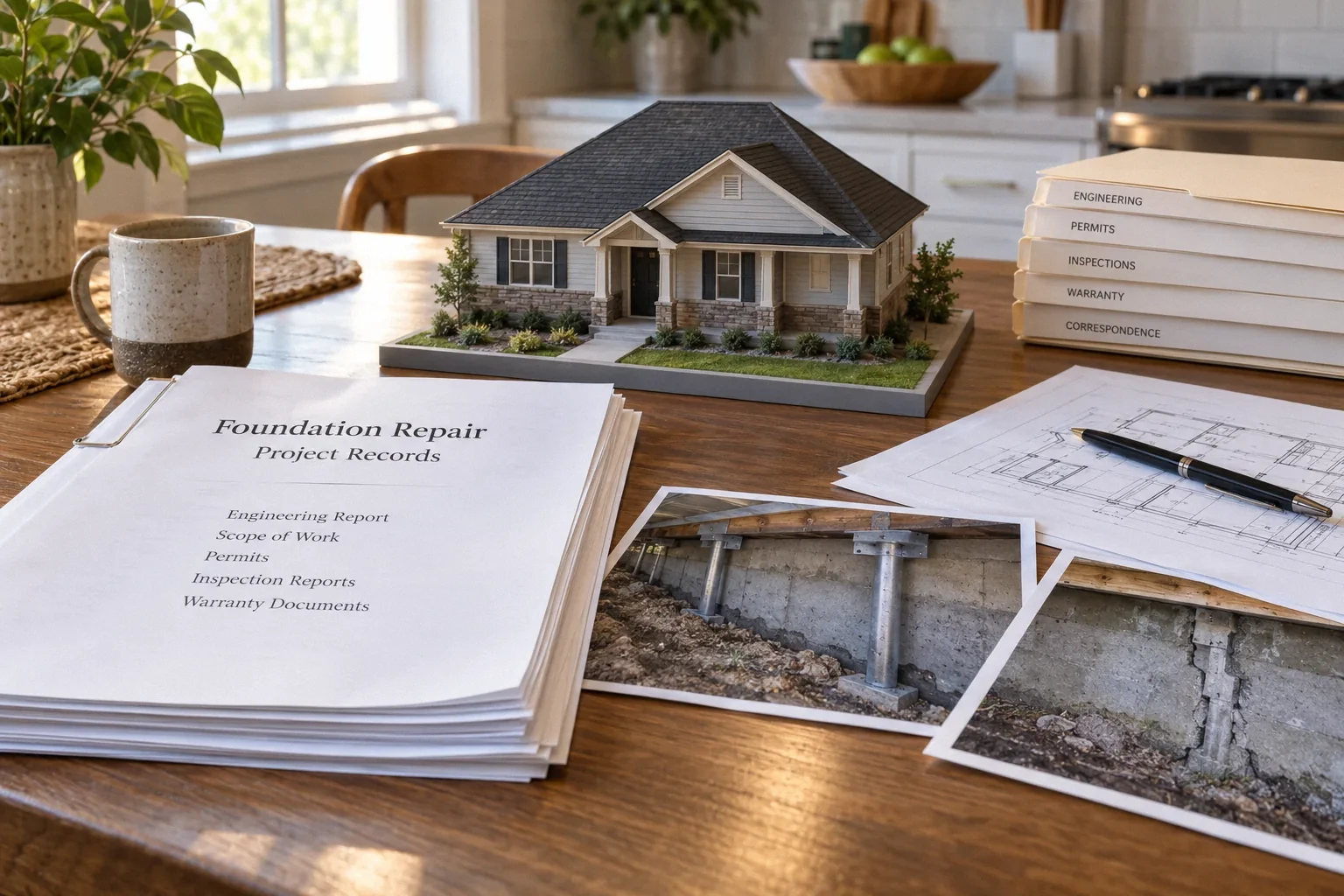
Previous foundation repairs are a reason to examine the property's history, not an automatic reason to reject or trust it. Collect the original evaluation, repair design, installed scope, inspection records and later observations. Verify any warranty and transfer requirements directly with its issuer. Ask an independent professional to address unresolved questions, and complete the review within the purchase agreement's actual investigation deadlines.
US general project planning; California requirements and named local examples labeled in the text.
Build a chronology before judging the repair
Start with the original concern: what was observed, when it was noticed and what prompted investigation? Then identify the evaluation, proposed repair, actual construction, inspections and later observations. This sequence is more useful than a statement that the house “had the foundation done.” Different projects can repair a limited area, address a specific cause or include only part of a larger recommendation.
Ask the seller for records without assuming that a missing document proves a defect. Older owners may have incomplete files, and a contractor may hold additional information. Record which documents were requested, received or unavailable. A visible repair and an organized history can support informed review, but neither should be treated as a complete technical conclusion on its own.
Separate the proposed repair from the installed work
Obtain the engineer's report, drawings, contractor agreement and change orders where available. Identify which recommendations were accepted, which were deferred and which changed during construction. Compare the final scope with the original proposal. An estimate can show what a company offered to install; it does not establish what was actually installed.
Ask for location-specific records and photographs connected to dates and stages. A photograph without a clear location may be difficult to interpret. The goal is not for the buyer to certify a repair method, but to give a qualified reviewer enough information to understand the work. Direct detailed repair-system questions to the relevant technical evaluation rather than substituting a sales brochure for project evidence.
Match permits and reports to the repair scope
Find the permit number and ask the department to confirm the scope and final status. Where special inspection, geotechnical observation or professional letters were required, request the applicable records. Do not assume that every foundation repair needed the same documents or that one final inspection covered a later alteration.
San Francisco's building records request process is one example of how to obtain records beyond a seller's folder. Use the equivalent process for the actual jurisdiction. Older archives and address variations may need separate attention. Administrative approval provides important evidence about the permitted work, but it is not a universal guarantee that every present condition was examined.
Look for what happened after the repair
Ask whether the owner reported recurring symptoms, requested service, obtained additional evaluations or performed later work. Monitoring records can be useful if their locations, dates and methods are clear. A series of undated numbers without a reference system may not establish a reliable trend. Let the reviewer assess what the records support.
Separate recurrence from a new condition. A later crack, water event or adjacent alteration may require investigation without proving that the original repair failed. Preserve both favorable and unfavorable records so the professional can assess the whole history. A clean-looking surface at the showing is only one observation at one time and cannot replace the chronology.
Read the warranty as a contract with a defined issuer
Identify who issued the warranty: installer, manufacturer, another company or a service administrator. Obtain the full terms, not just a certificate or the phrase “lifetime warranty.” Check the covered work, exclusions, conditions, claim procedure, available remedy and whether transfer is permitted. The issuer should confirm how the terms apply to the particular property and proposed new owner.
The FTC's guide to warranties on new homes illustrates why coverage, exclusions and claim procedures deserve attention. Its subject is new-home warranties, so it does not establish the duration or terms of an existing foundation-repair warranty. The actual repair agreement and applicable law control that separate question.
Verify transfer before relying on it
Scroll horizontally to read every column.
| Question | Record to request |
|---|---|
| What work and locations are covered? | Complete terms and project-specific covered scope |
| Who may request service after the sale? | Named beneficiary or transfer confirmation |
| What must happen to transfer coverage? | Current instructions, required documents and any fee or deadline |
| Are there unresolved claims or required actions? | Service history and written response from the issuer |
| What remedy is promised? | Actual contractual remedy and exclusions |
A Reddit discussion about transferring a foundation warranty captures a recurring concern: a seller's assurance is not the same as completed transfer. Ask the issuer directly, retain its response and confirm who completes each required step before closing.
Ask an independent reviewer a specific question
Provide the complete file to a qualified professional and explain the decision you need to make. Useful questions include whether the records identify the installed scope, whether current observations warrant further investigation, and which missing information materially limits an opinion. Do not ask for an unconditional guarantee about the entire house.
For California professionals, use the board's license lookup guidance to confirm the individual's identity, license type and status. Ask about relevant experience and a written engagement. The reviewer may recommend additional access or records before answering. That is a scope issue to resolve, not necessarily evidence that the property is unsuitable.
Hypothetical example: a partial repair and a broad sales phrase
Imagine a listing advertises completed foundation repairs with transferable coverage. The contract shows work at one corner, while the original evaluation discussed several areas. The warranty applies to the installed work, and the seller has no record explaining the other recommendations. This does not establish that the unaddressed areas require repair today.
The buyer asks for later engineering correspondence, current professional evaluation and direct warranty confirmation. The professional explains what can be concluded from the available evidence and what remains unresolved. The transaction discussion can then focus on documented uncertainty, access and actual scope rather than a broad claim that the whole foundation is either “fixed” or defective.
Resolve the record before making the transaction decision
The California Department of Real Estate's homebuyer guidance places investigation and disclosure within the broader purchase process. Use the actual contract to identify deadlines and available options. A records request, warranty inquiry or scheduled evaluation does not automatically extend those deadlines.
Keep a decision sheet distinguishing confirmed facts, professional opinions and unresolved questions. If negotiating a repair or credit, define what it is intended to address and obtain appropriate advice about the agreement. Save the final file after closing, including transfer confirmation. Future service requests and a later sale will be easier when the repair history remains traceable to actual documents.
If the issuer requires a post-sale confirmation, decide in advance who submits it and how the buyer verifies receipt. Save a copy in the new owner’s name where applicable. A completed closing file should identify any remaining action and deadline, rather than assuming that delivery of the old warranty certificate completed the transfer process.
Before your next decision
- Build a timeline from original concern through later service.
- Compare proposed, contracted and installed scope.
- Confirm permit status and required professional reports.
- Obtain the complete warranty and direct transfer instructions.
- Resolve material gaps before the purchase decision deadline.
- Confirm receipt of all required transfer submissions.
Related questions
Does a transferable warranty cover the entire foundation?
Not necessarily. Coverage may be limited to particular installed work, conditions and remedies. Read the full terms and obtain property-specific confirmation from the issuer.
Should I avoid every house with foundation repairs?
A past repair alone is not enough to decide. Review the cause, scope, documentation, current conditions and unresolved questions with an appropriate independent professional.
Can the seller promise that the warranty will transfer?
The issuer's terms determine the process. Obtain direct written instructions and confirm completion of the required steps instead of relying only on the seller's statement.
Sources & further reading
- California Department of Real EstateFirst Home California
California homebuyer education and disclosures
- Federal Trade CommissionWarranties for New Homes
United States new-home builder warranty education; not a universal repair warranty statute
- San Francisco Department of Building InspectionRecords Request Form
San Francisco property/building records
- California Board for Professional Engineers, Land Surveyors, and GeologistsLicense Lookup for California Professional Engineers, Land Surveyors, Geologists and Geophysicists
California individual professional licenses
Homeowner questions behind this article
These discussions informed the questions, not the technical answers. Some were available through indexed excerpts; votes and comments are not an engineering assessment.
Research method