The short answer
Choose a basement dehumidifier for both the moisture load and the temperature where it will run. Floor area alone is not enough, particularly in a cold basement. Check low-temperature operation, practical drainage, airflow and how shutdowns will be noticed. A dehumidifier removes water vapor and usually adds heat to its surroundings; it does not replace leak repair, slab moisture assessment or a cooling and ventilation plan for an occupied room.
US general planning; local code examples and manufacturer-specific requirements are identified where used.
Collect a short operating record before shopping
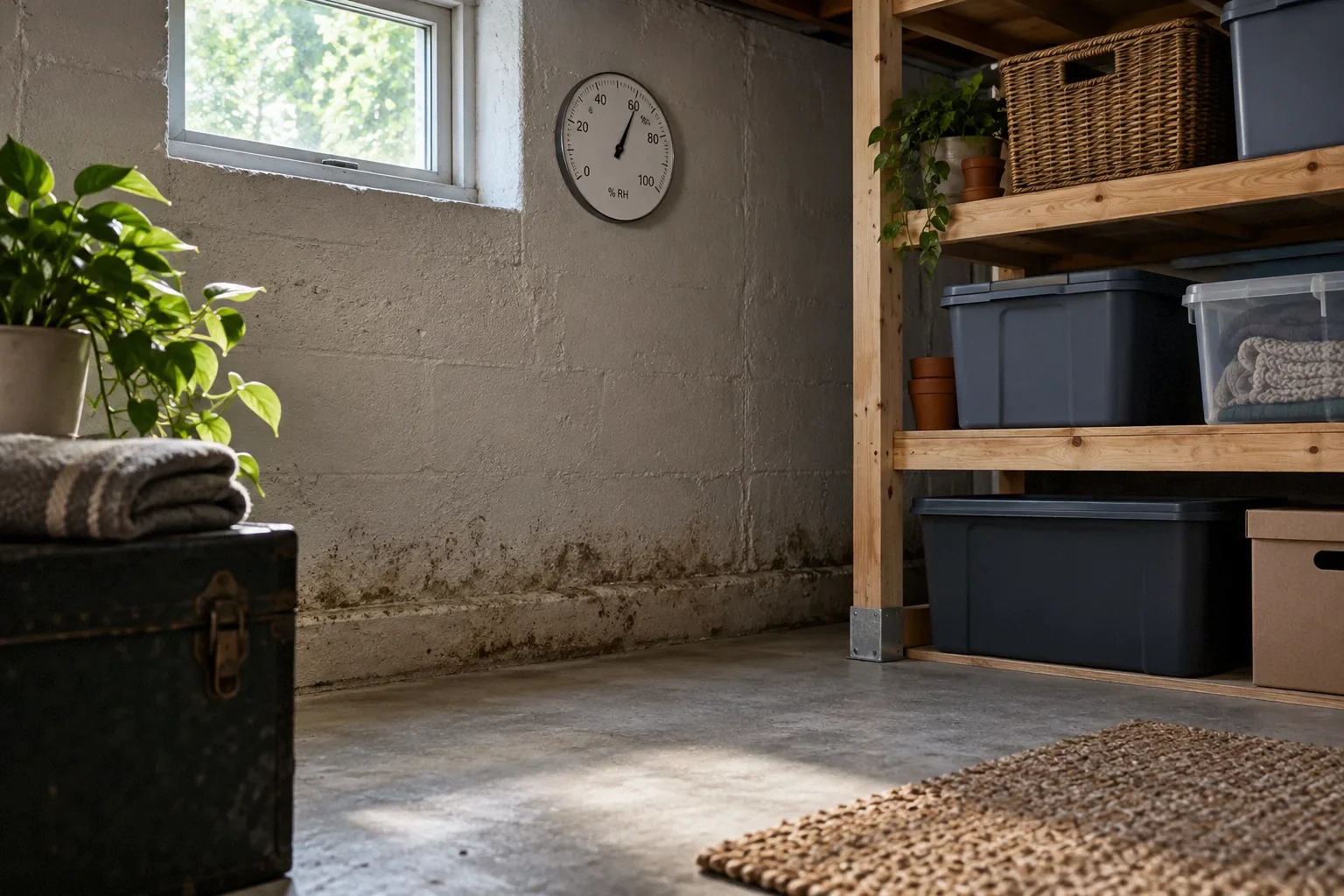
Measure basement temperature and relative humidity at a consistent location and note when the space feels or smells damp. Record whether the concern is seasonal, follows rain or persists throughout the year. If an existing machine is working, note how much water it removes and whether the bucket or drain routinely stops operation.
This record is more useful than floor area alone. Two basements with the same footprint can have very different moisture loads because of outdoor-air entry, laundry use, ground moisture and water defects. Also note whether doors separate the space into rooms. A unit that dries one open area may not circulate air effectively through closed storage rooms. The purchase decision should begin with the area that actually needs treatment and the conditions the equipment will encounter there.
Read capacity as a rating under test conditions
Dehumidifier capacity is commonly expressed as water removed over a stated period under defined test conditions. It is not a guarantee that the unit will remove the same amount in every basement. Temperature and moisture conditions affect actual performance, and older and newer rating procedures can make familiar capacity labels difficult to compare.
ENERGY STAR’s buying guidance bases capacity selection on both space size and dampness conditions. Use that guidance together with the actual product documentation. Avoid choosing solely because a retailer describes a machine as suitable for a large number of square feet. Ask what operating conditions support that claim and whether the intended installation matches them. The most useful comparison includes moisture capacity, energy performance, operating range and drainage, rather than treating one large capacity number as a complete specification.
Cold operation deserves a separate check
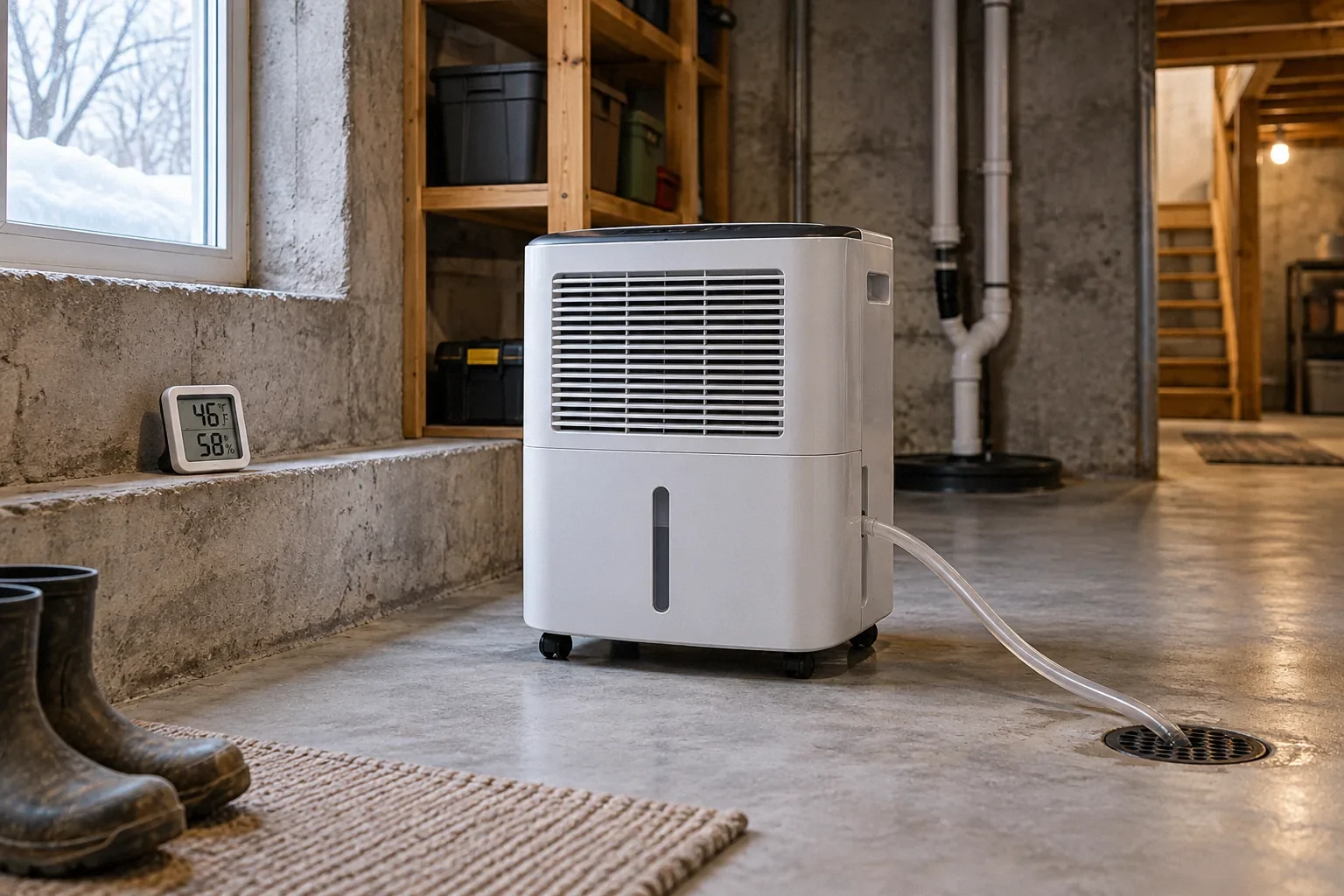
A basement can be damp while remaining relatively cool. A refrigeration-based dehumidifier must operate within its specified conditions, and low temperatures can affect moisture removal or lead to defrost interruptions. ENERGY STAR advises considering equipment specified for lower-temperature use when the space commonly falls below 65°F.
Read the model’s operating-temperature range and defrost description rather than assuming all basement units behave alike. If an existing machine freezes while conditions are within its stated range, it may need service; buying a second machine does not diagnose the first one. Keep filters and airflow conditions within the manufacturer’s requirements. The question is whether the equipment is suitable and functioning properly in that location. A cold basement should not automatically be heated merely to make an unsuitable appliance work as expected.
Drainage determines whether the unit keeps working
Scroll horizontally to read every column.
| Arrangement | Owner responsibility | Failure to anticipate |
|---|---|---|
| Removable bucket | Empty it often enough and recognize the full-bucket shutoff. | The machine stops while the basement remains damp. |
| Gravity drain | Provide a compatible continuous route to an appropriate drain. | A kink, obstruction or unsuitable route prevents normal drainage. |
| Condensate pump | Maintain the added pump and its discharge according to instructions. | Pump failure or a blocked line creates shutdown or overflow risk. |
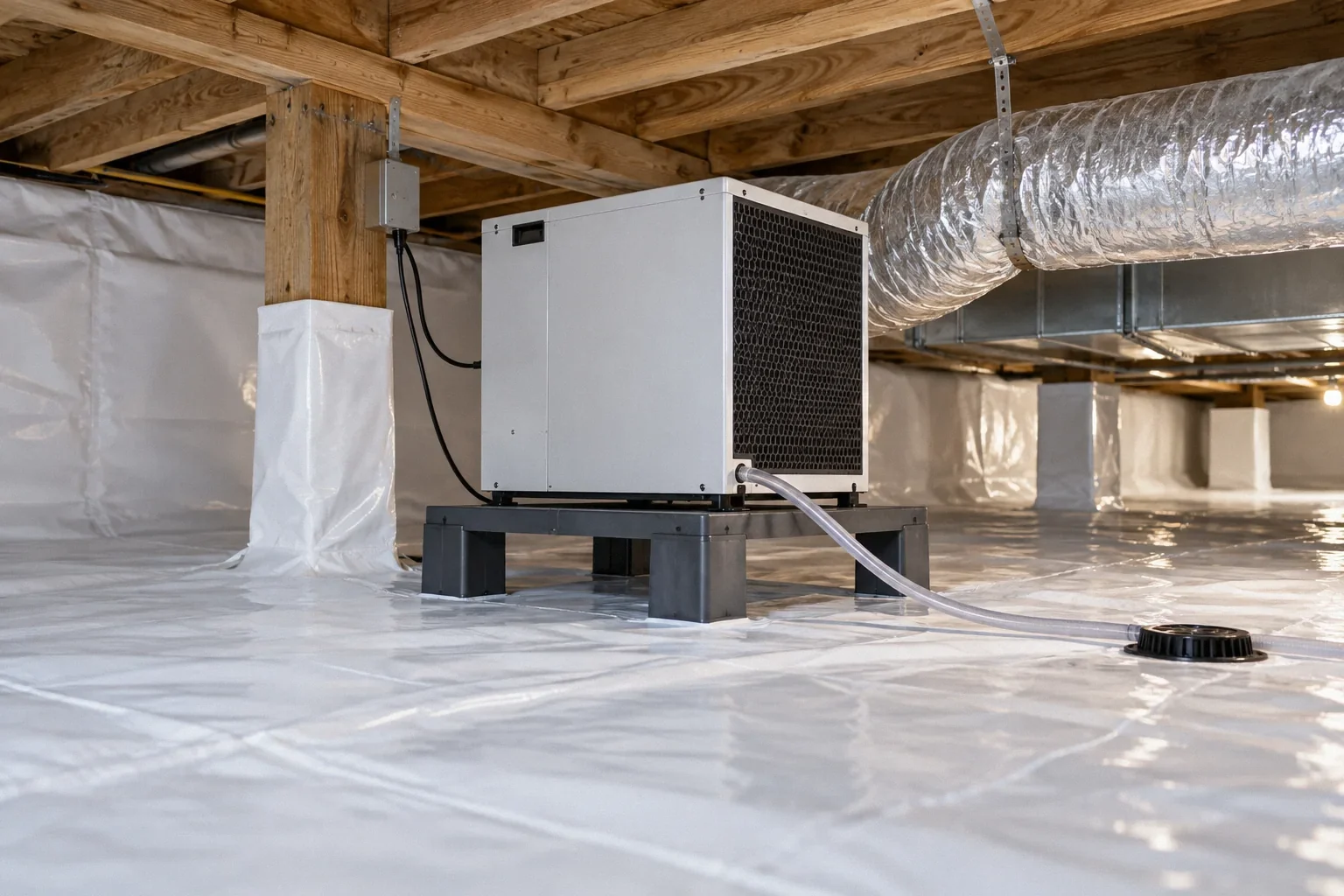
Do not treat drainage as an accessory to decide after purchase. Confirm the outlet location, access for cleaning and how a problem will be noticed when nobody routinely visits the basement. Equipment near water also needs an appropriate electrical installation.
Drying air is not the same as cooling a room
A dehumidifier can make damp air feel more comfortable while still releasing heat into the space. An owner using the basement as a bedroom or office may therefore need a separate evaluation of cooling, air distribution and ventilation. Closing the basement door can further change how the room exchanges heat and air with the rest of the house.
Avoid assuming that the solution is to add an improvised opening to a floor or close an HVAC damper based on general internet advice. Those changes can affect the building system. First identify whether the basement has an intentional supply and return arrangement and whether its temperature problem persists when moisture is controlled. The dehumidifier’s job is limited. It should be selected and located as part of the room’s actual use rather than expected to provide every aspect of indoor comfort.
A persistent load can indicate unfinished source control
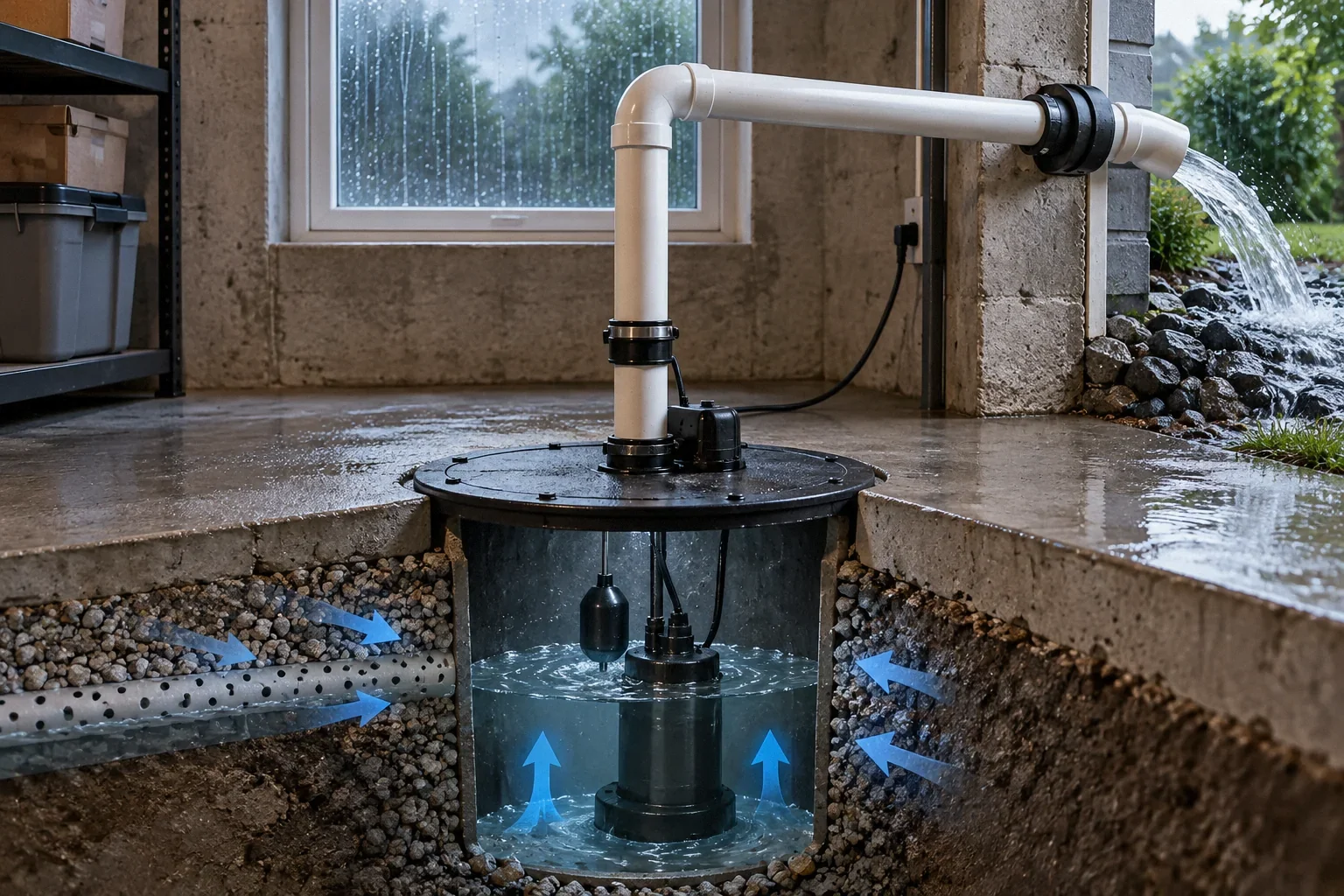
If a correctly selected machine runs heavily, investigate what keeps supplying moisture. An open window, a new leak, an unsealed ground area or damp flooring can impose a load the owner did not intend to manage indefinitely. EPA’s mold and moisture guidance emphasizes correcting the source, not only lowering humidity.
DOE’s existing-slab guidance similarly puts persistent water problems ahead of floor moisture treatments. Consider a hypothetical basement where the machine’s bucket fills repeatedly after storms and a wall base remains visibly damp. A larger unit might remove more vapor, but it would not establish that the water-entry problem was repaired. The appropriate response is to connect the operating record with the wet location and investigate the source. Capacity selection and water-source correction are related decisions, not substitutes for one another.
Plan placement, service and a meaningful check
Place the equipment according to its airflow and clearance instructions, with access to filters, controls and drains. Avoid using the display alone as a measurement of every part of the basement. A separate sensor in a representative location can help reveal whether the treated area is responding as intended, while material concerns may require different measurements.
Keep the model number, settings and maintenance instructions. After installation, compare performance during the same conditions that previously produced dampness. Note bucket shutdowns, drain interruptions and closed-room differences. If the basement remains uncomfortable, separate temperature, odor, humidity and visible water rather than describing all of them as “damp.” This creates a clearer next step for an HVAC or moisture specialist and helps prevent a series of purchases that never addresses the underlying reason for the original complaint.
Before your next decision
- Record temperature and humidity in a consistent location.
- Note moisture removal, shutdowns and rainfall timing.
- Compare operating range as well as rated capacity.
- Choose drainage before buying the unit.
- Keep filters and service points accessible.
- Investigate visible water or a persistently unexplained load.
Related questions
Why does the dehumidifier make my basement warmer?
Moisture removal and the equipment’s operation release heat into the surrounding space. A dehumidifier is not an air conditioner. If the room is occupied, assess its cooling and air-distribution needs separately.
Is the largest available unit always better?
No. Capacity matters, but so do temperature suitability, circulation, drainage, controls and service access. An unresolved water source can keep adding load regardless of appliance size.
Should it run all year?
Operation should follow actual conditions and the equipment instructions, not a universal calendar. Monitor the space through seasonal changes and ensure the unit remains suitable for the temperatures it encounters.
Sources & further reading
- ENERGY STAR / U.S. Environmental Protection AgencyDehumidifiers
Dehumidifier capacity, temperature and drainage selection; no product ranking.
- U.S. Environmental Protection AgencyA Brief Guide to Mold, Moisture and Your Home
Residential mold prevention and cleanup; health advice must remain bounded.
- U.S. Department of Energy / Pacific Northwest National LaboratoryWater Management of Existing Basement Floor
Existing slab moisture retrofit options and their limits.
Homeowner questions behind this article
These discussions informed the questions, not the technical answers. Some were available through indexed excerpts; votes and comments are not an engineering assessment.
Research method