The short answer
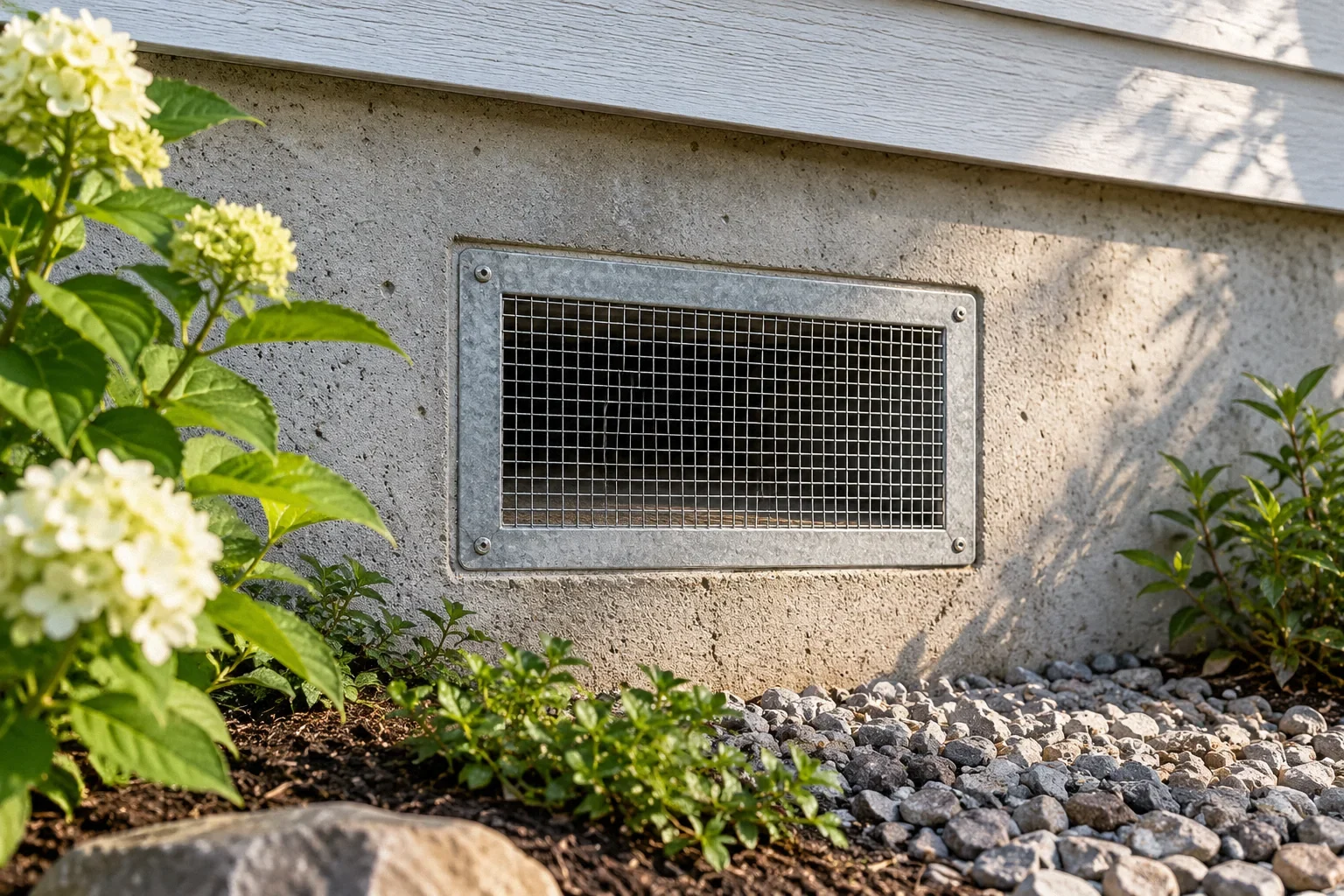
An encapsulated crawl space needs a reliable drying strategy, but that does not automatically mean the same dehumidifier in every house. Conditioned air, a dedicated dehumidifier or another designed approach may be appropriate. The choice depends on moisture sources, equipment, climate and how the space connects to the home. Sealing vents without addressing those conditions can leave an enclosure that looks finished but has no dependable way to remove moisture.
US general planning; local code examples and manufacturer-specific requirements are identified where used.
Start with the remaining moisture load
A ground liner reduces one source of moisture; it does not make the space moisture-free. Air can enter through imperfect connections, construction materials can contain moisture, and plumbing or condensate defects can add water. The first question is therefore not which machine to buy, but what moisture remains after controllable sources have been addressed.
Look at the timing of high humidity and any visible water. Conditions that worsen after rain may deserve a drainage investigation before an equipment upgrade. Conditions that follow cooling operation may involve ducts or condensate. DOE’s crawlspace retrofit guidance puts liquid-water management ahead of enclosure work and recommends follow-up monitoring. A dehumidifier can help manage vapor, but treating it as an unlimited replacement for water-source correction creates a larger operating burden and a more consequential equipment failure.
Compare complete drying arrangements
Scroll horizontally to read every column.
| Approach | What must be designed | Operating question |
|---|---|---|
| Dedicated dehumidifier | Air circulation, moisture capacity, temperature suitability, drainage and access. | Will it continue operating when the bucket, drain or pump needs attention? |
| Conditioned-air connection | The intended supply and return path and its effect on the house system. | What provides drying when the main heating or cooling system runs less? |
| Designed exhaust arrangement | Replacement-air path and pressure effects on the building and appliances. | Where does incoming air come from, and what happens during continuous operation? |
These are design categories, not interchangeable appliance settings. An improvised vent cut into a floor does not verify airflow or safe pressure relationships. Ask the designer to explain the complete path, including where removed moisture and replacement air go.
Conditioned air depends on more than a nearby duct
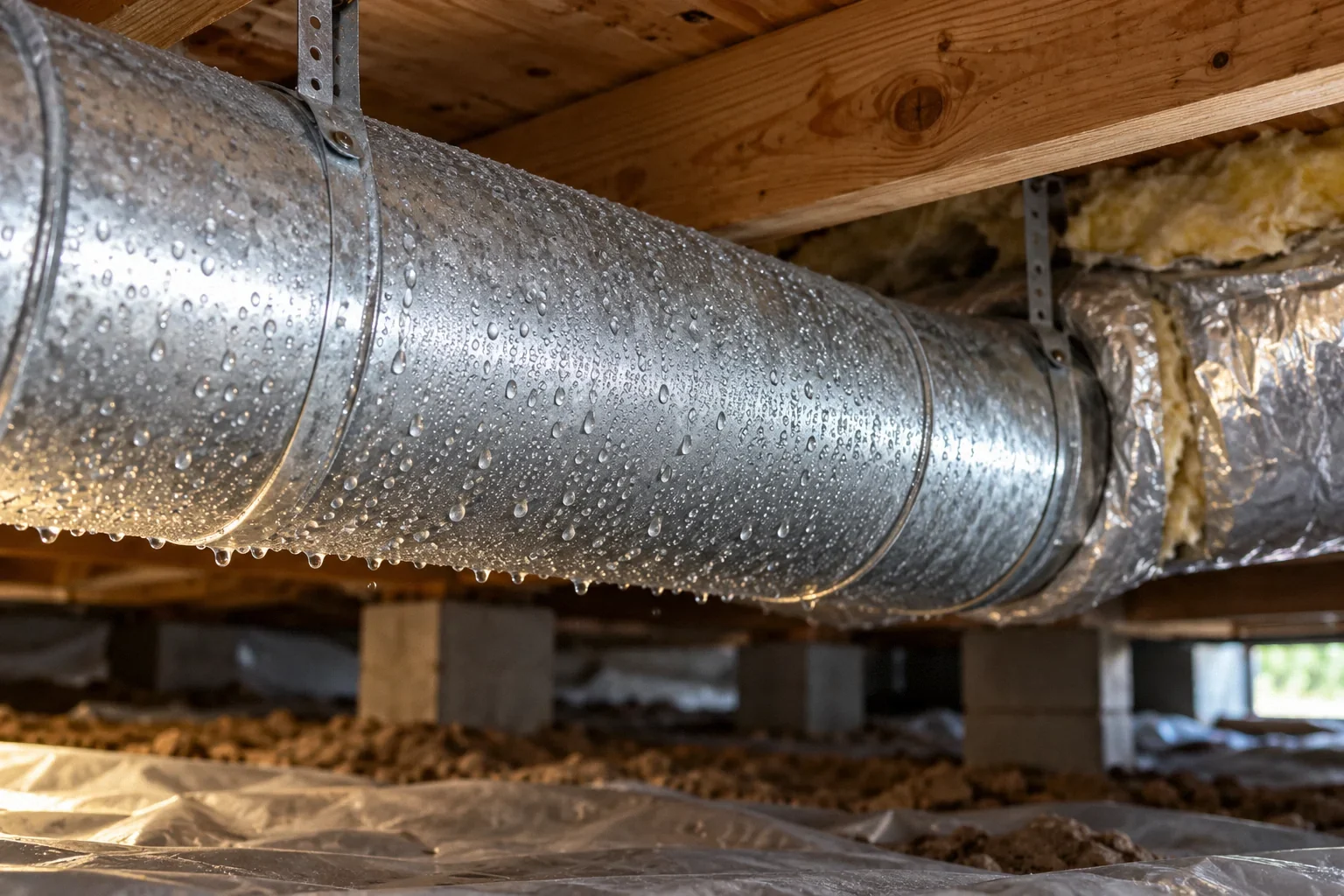
A supply duct passing through the crawl space does not mean the crawl space is intentionally conditioned. Leakage from that duct is uncontrolled and should not be counted as a designed drying method. Similarly, adding a supply connection without considering its return path can change pressures in ways the owner cannot judge from room temperature.
DOE’s unvented crawlspace guidance discusses conditioning and drying as part of enclosure design. Its code references and example airflows should not be copied as a universal field recipe. The applicable design must account for the actual equipment and local rules. Ask how the space will behave during mild weather, when cooling demand may be low but humidity remains significant. This operating season is easy to overlook if the work is accepted only during a period of strong air-conditioning use.
A dedicated unit needs a serviceable installation
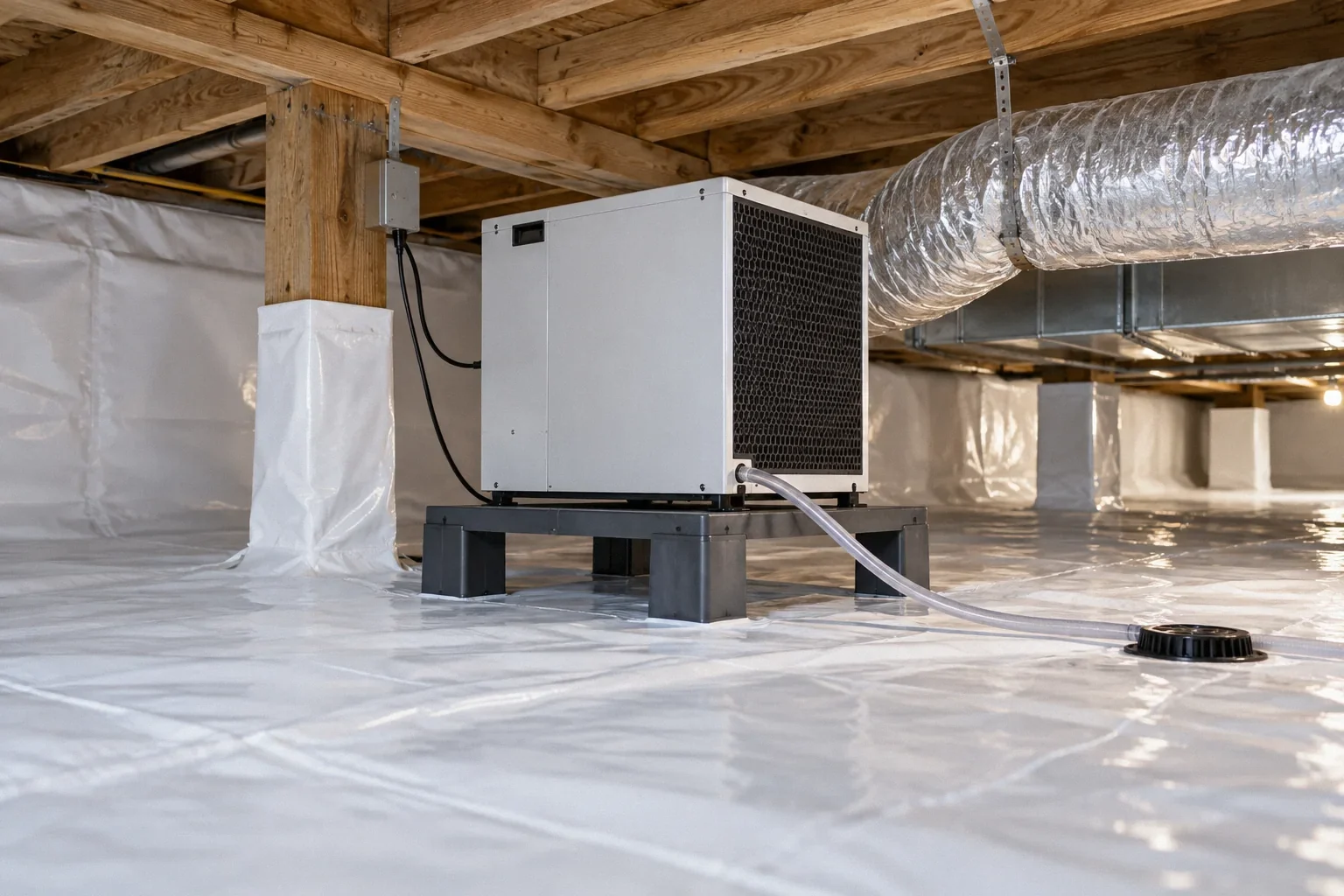
A crawlspace dehumidifier should be selected for the conditions where it will operate and placed so its airflow is not immediately obstructed. Access matters because filters, drains and controls need attention. A machine at the far end of an inaccessible space may be difficult to maintain even if its nominal capacity looks appropriate.
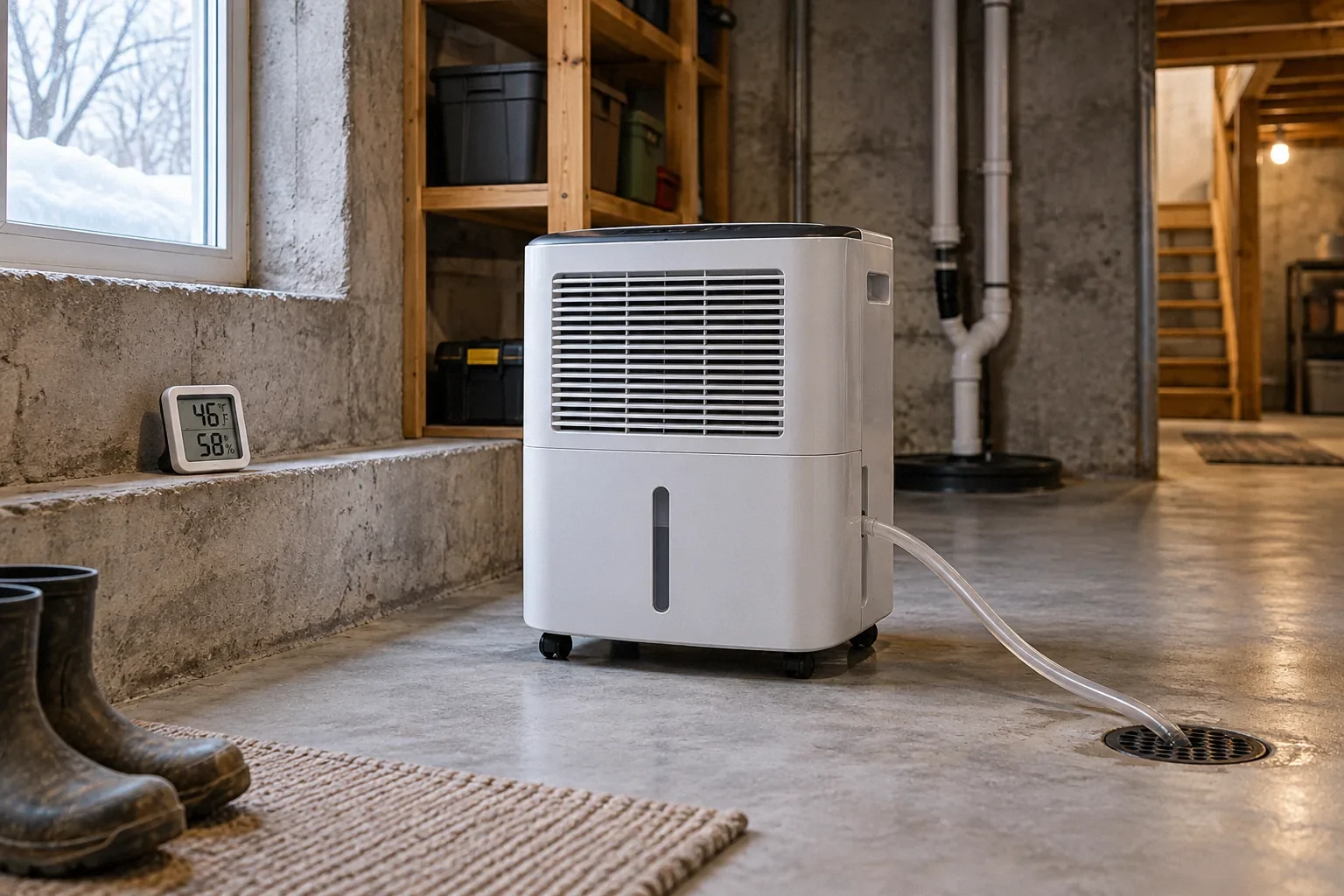
ENERGY STAR’s dehumidifier guidance distinguishes capacity, operating temperature and drainage arrangements. Gravity drainage requires an appropriate route; a condensate pump adds another component whose failure needs consideration. A bucket that stops the unit when full is particularly important to recognize in a space rarely visited. Record how shutdowns and alarms will be detected. The installation should make routine service practical without tearing the liner or disturbing the insulation each time someone needs to reach it.
Pressure changes require combustion and radon review
Exhausting crawlspace air creates a need for replacement air. That replacement does not necessarily come from the place the installer intends unless the pathways are designed. Existing fuel-burning equipment and connections to the occupied house make this more than a question of humidity.
The DOE closed-space guide calls attention to combustion safety. EPA’s radon-reduction guide also explains why drawing air directly from a crawl space differs from drawing soil gas from beneath a membrane, including additional combustion considerations. Do not use a humidity fan as a presumed radon remedy. Before introducing exhaust or changing enclosure pressures, identify appliances and obtain the relevant assessment. The resulting design should explain both the moisture function and the safety conditions under which the equipment is intended to operate.
A hypothetical shoulder-season problem
Imagine an owner who encloses a crawl space during a hot summer. Air conditioning runs frequently, and initial humidity readings improve. In early autumn the weather becomes milder, cooling cycles shorten and crawlspace humidity rises again. The liner may still be intact; the change may reveal that the drying arrangement depended more on cooling operation than anyone documented.
A useful response is to compare the original design with recorded conditions, check for new water sources and verify actual equipment operation. It is not to assume that every sealed crawl space requires another machine or that the encapsulation has failed. This hypothetical situation shows why an acceptance check should consider more than one operating season. The desired arrangement should remain understandable when outdoor conditions and the household’s heating or cooling habits change.
Set up monitoring that leads to action
Use consistent temperature and humidity observations and note equipment operating status at the same time. Readings near a discharge grille can differ from conditions in a remote corner, so sensor location should be deliberate. Where wood moisture is a concern, room-air readings alone do not establish whether the framing is dry.
Ask for a specific maintenance schedule based on the installed equipment, along with practical triggers for investigation. Recurring condensation, drain overflow, an alarm or a growing difference between parts of the space can all justify a closer look. Keep a record of what changed before the symptom appeared. A functioning drying system is one that can be checked and serviced over time, not simply one that reaches a chosen number during the installer’s final visit.
Before your next decision
- Correct identified liquid-water and condensate sources.
- Identify the intended drying and replacement-air paths.
- Check operating temperature, capacity and service clearance.
- Document where condensate drains and how failures are detected.
- Review combustion equipment and radon implications before exhaust changes.
- Compare operation in humid summer weather and milder seasons.
Related questions
Will a dehumidifier work with crawl space vents open?
It may remove water, but continuing outdoor-air exchange can create a large and changing load. Whether that is a sensible arrangement depends on the intended system. Do not close vents solely to improve the machine’s reading.
Can I use leakage from the HVAC ducts as conditioning?
Uncontrolled leakage is not a designed supply-and-return path. It can waste energy and change pressures. Have duct defects assessed and the crawlspace conditioning strategy identified separately.
Does a dehumidifier also solve radon?
No. Removing water vapor does not establish control of soil gas. Radon requires testing and, when indicated, an appropriately designed mitigation system with verification afterward.
Sources & further reading
- U.S. Department of Energy / Pacific Northwest National LaboratoryUnvented, Insulated Crawlspaces
Closed crawlspace systems; construction guidance with multiple code editions, not proof of locally adopted code.
- U.S. Department of Energy / Pacific Northwest National LaboratoryWater Management of Existing Crawlspace Floor
Existing crawlspace moisture retrofit; not excavation instructions for homeowners.
- ENERGY STAR / U.S. Environmental Protection AgencyDehumidifiers
Dehumidifier capacity, temperature and drainage selection; no product ranking.
- U.S. Environmental Protection AgencyConsumer's Guide to Radon Reduction: How to Fix Your Home
The opened PDF displays a 2025 edition; radon mitigation principles and qualified-provider guidance.
Homeowner questions behind this article
These discussions informed the questions, not the technical answers. Some were available through indexed excerpts; votes and comments are not an engineering assessment.
Research method