The short answer
A musty basement can have a moisture problem without visible puddles. Room humidity, moisture moving through concrete, condensation and previously wet materials can produce different clues. A normal dehumidifier reading does not rule out hidden dampness behind finishes. Start by mapping where and when the odor occurs, then investigate the likely materials and water paths. Fragrance, surface cleaning and additional drying equipment should not replace identifying the source.
US general planning; local code examples and manufacturer-specific requirements are identified where used.
Describe the pattern before naming the cause
Record whether the odor is strongest in one room, near a wall base, at stored items or throughout the basement. Note changes after rain, during cooling operation and after the space has been closed for a period. Ask another household member whether the location is consistent; people accustomed to an odor may notice it less over time.
These observations do not diagnose mold, but they make an inspection more focused. A smell near one carpet edge suggests a different starting point from an odor distributed through the air system. Also record recent work, a past leak or furniture moved against a wall. The objective is a useful description of the symptom, not proof that one suspected material is responsible. Avoid covering every possible surface with cleaner before documenting where the concern is most evident.
A room-air reading describes only part of the basement
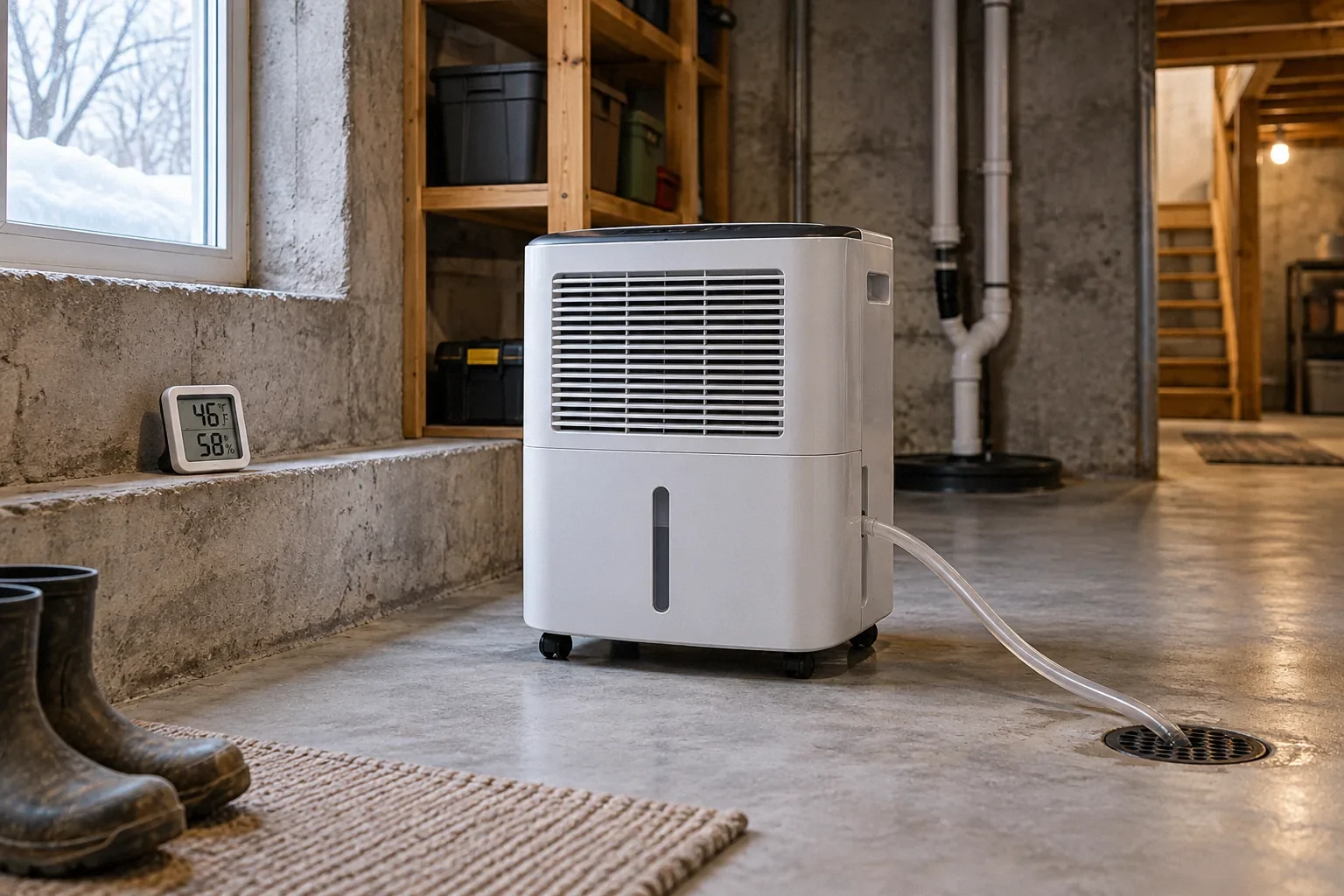
Relative humidity changes with temperature and sensor location. A dehumidifier’s display near its own airflow may not describe conditions inside a remote closet or behind a cabinet. More importantly, air humidity does not directly measure moisture held in carpet backing, insulation, wood or a concrete wall. Materials can remain damp after surrounding air becomes drier.
EPA’s guide to mold and household moisture recognizes that hidden mold may be suspected where a building smells moldy but the source is not visible. It also recommends controlling indoor humidity and correcting water problems. Those are complementary points. Lower humidity is useful, but it is not a clearance test for everything concealed by a finished wall. Keep consistent air measurements as part of the record while asking what evidence is needed for the specific material or cavity under suspicion.
Look at vulnerable locations without destructive guessing
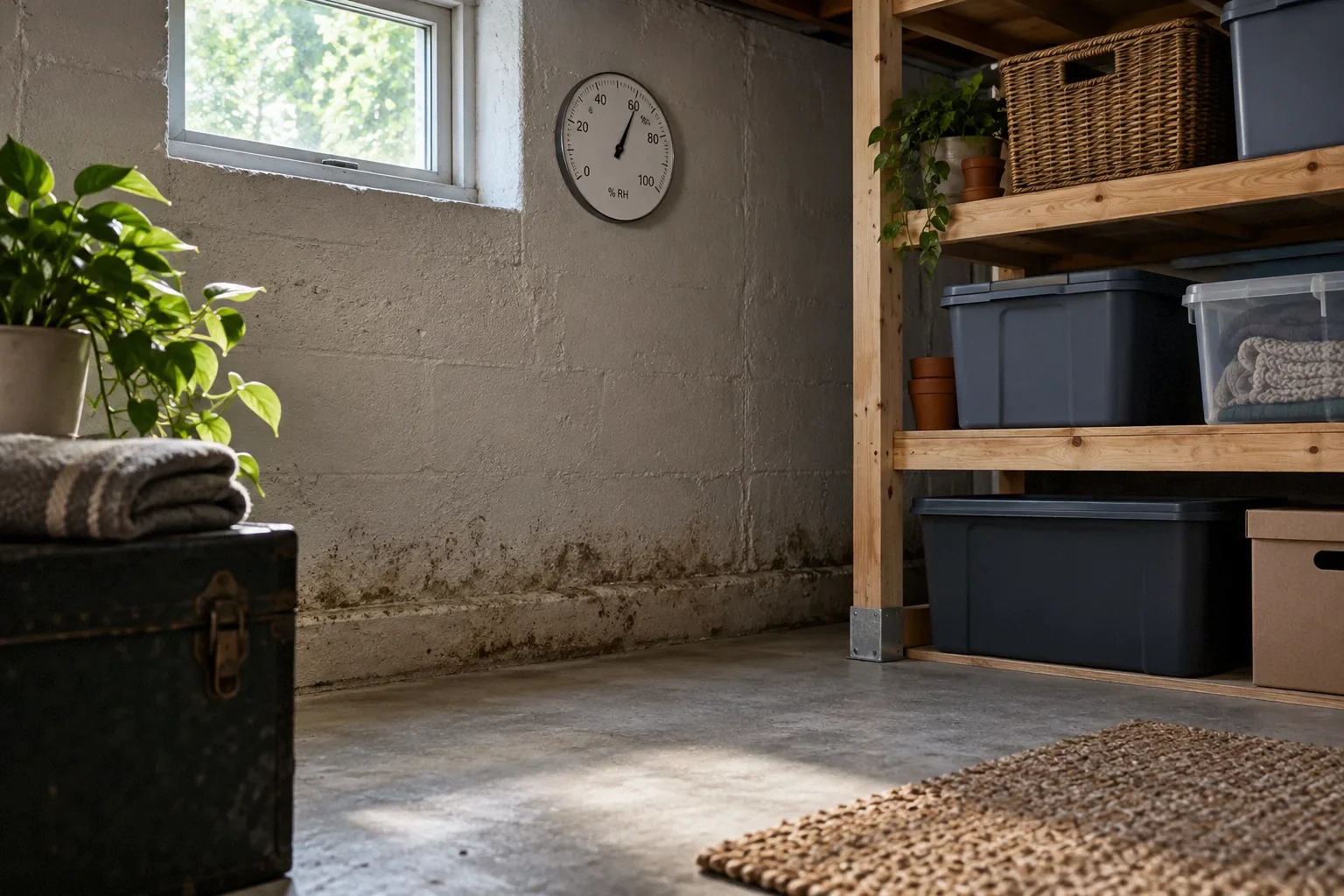
From accessible areas, examine carpet edges, the bottoms of boxes, furniture against exterior walls and the junction between finished walls and the floor. Look for staining, deterioration, changes in texture or recurring dampness. Check whether a storage area has restricted air movement or whether items rest directly on a slab with an uncertain moisture history.
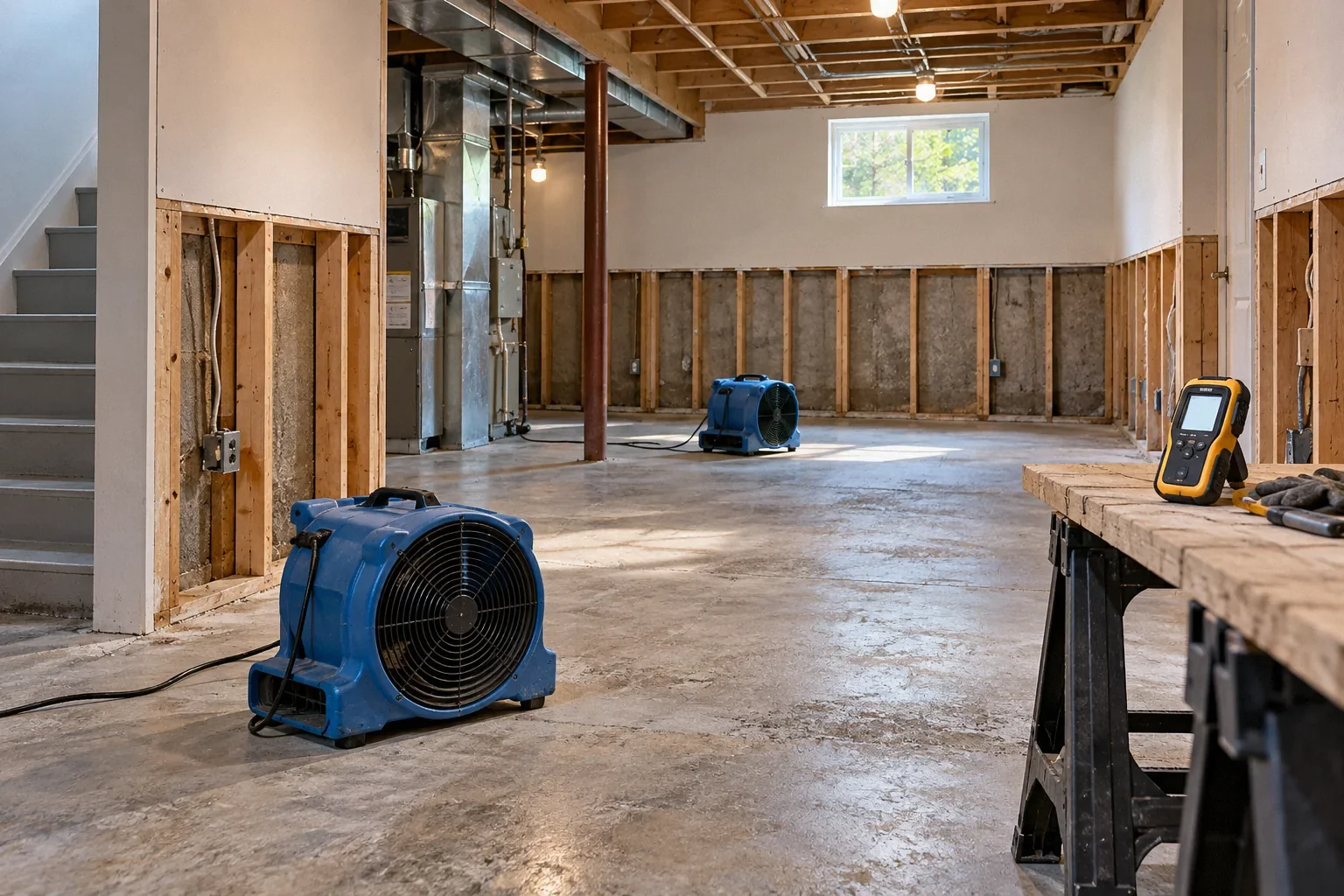
Do not begin broad demolition simply because one corner smells different. Concealed utilities and older materials can introduce hazards, and opening a cavity changes the conditions being investigated. An inspector can determine whether targeted access or material testing is appropriate. Photographs should show the location relative to the room, not just a close-up patch that cannot be found again. Preserving that context makes it easier to connect a later finding with the original odor pattern.
Understand how finishes can hide a cold damp boundary
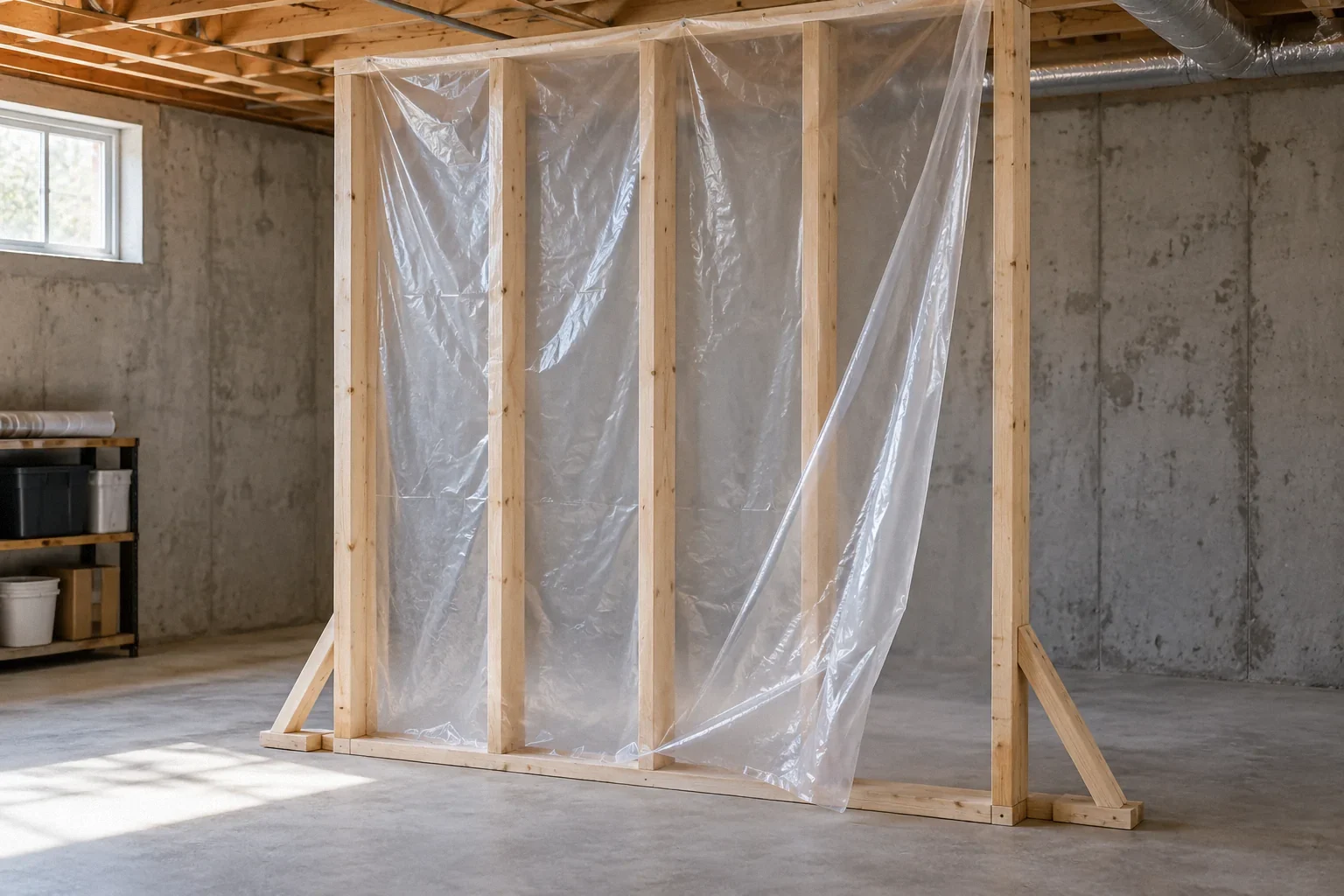
A finished basement can look dry while the concrete behind a framed wall behaves differently. Air reaching a cold surface may condense, and moisture within or through concrete can affect materials next to it. The assembly’s drying ability matters as much as whether the room has ever visibly flooded.
DOE’s basement blanket-insulation guidance describes several moisture sources and the problems that can occur when fibrous insulation and an impermeable facing are poorly arranged against concrete. This does not diagnose every finished wall as defective. It explains why an investigator may ask how the wall was built and whether there are photographs from before drywall. If the assembly is unknown, keep that uncertainty explicit. A surface humidity reading cannot establish the condition of a layer that has never been inspected.
The slab can be relevant even when the air is dry
Moisture can move through an existing concrete slab, and the flooring above it may limit drying or be sensitive to that moisture. A waterproof-looking surface does not establish the condition of the adhesive, pad or material underneath. Odors associated with old carpet or a coating need assessment of the whole floor system.
DOE’s existing-basement-floor guidance emphasizes addressing persistent water problems before a slab moisture retrofit. Ask whether there is known under-slab vapor control and whether the installed flooring had appropriate moisture testing. Do not assume that painting the floor will solve an unidentified odor; a coating can alter moisture movement and may be incompatible with the next floor system. Establish what is wet, what the manufacturer allows and what source needs correction before selecting another surface treatment.
A hypothetical room that reads 45% humidity
Suppose a homeowner runs a dehumidifier and records moderate room humidity, yet a musty odor remains strongest beside a finished exterior wall. Stored cardboard is dry, and no puddles appear after rain. A review of earlier photographs shows fibrous insulation pressed against concrete behind an impermeable interior facing.
That information supports a targeted assembly investigation rather than proving the entire basement is safe or defective. The assessor might find an old leak, localized condensation or another source. This hypothetical example illustrates the limitation of treating one air number as a diagnosis. The useful next step connects odor location, construction details and material observations. It does not automatically require a larger dehumidifier, a full-house treatment or removing every finish without first narrowing the likely source.
Choose the right investigation and define resolution
Ask the professional what hypothesis they are evaluating, what observations would support it and what remains outside the inspection. If HVAC contamination is suspected, follow appropriate professional guidance before continued operation; EPA cautions against spreading contamination through a system. If a sewage or gas odor is possible, treat that as a separate issue requiring the relevant service rather than assuming every basement odor is mold.
Resolution should include the identified source, treatment of affected materials and a follow-up under the conditions that previously produced the smell. A pleasant odor immediately after cleaning is not enough. Keep a short record of changes in the room and avoid making several unrelated alterations at once when there is no urgent hazard. A clear before-and-after comparison helps establish which correction actually addressed the problem.
Before your next decision
- Map odor locations and timing before cleaning everything.
- Record sensor location and equipment operation.
- Inspect reachable floor edges and stored materials.
- Collect photographs or records of concealed wall assemblies.
- Separate slab moisture from room-air humidity.
- Verify source correction under the conditions that caused the odor.
Related questions
Can hidden mold exist below 50% room humidity?
Yes. Local surfaces or concealed materials can have different moisture conditions, and past wetting can leave affected material behind. Room humidity is useful context but does not rule out a hidden problem.
Does a musty odor always mean mold?
No single odor identifies its source reliably. Moisture-related materials are worth investigating, but plumbing, stored contents and other conditions can also matter. Describe the pattern and obtain appropriate assessment rather than relying on smell alone.
Should I open basement windows to remove the smell?
Outdoor air may help or add moisture depending on conditions. Ventilation is not a substitute for finding an ongoing source. In humid weather, incoming air can condense on cooler basement surfaces.
Sources & further reading
- U.S. Environmental Protection AgencyA Brief Guide to Mold, Moisture and Your Home
Residential mold prevention and cleanup; health advice must remain bounded.
- U.S. Department of Energy / Pacific Northwest National LaboratoryBasement Blanket Insulation
Moisture behavior of fibrous basement wall insulation.
- U.S. Department of Energy / Pacific Northwest National LaboratoryWater Management of Existing Basement Floor
Existing slab moisture retrofit options and their limits.
Homeowner questions behind this article
These discussions informed the questions, not the technical answers. Some were available through indexed excerpts; votes and comments are not an engineering assessment.
Research method