The short answer
Frequent sump operation after rain can reflect continuing inflow, but the pattern matters. Rapid on-off cycling, a motor running without moving water and a basin that stays full are different conditions. Observe water levels, cycle length and discharge behavior from a safe location, then compare them with the installed model’s instructions. There is no universal number of cycles per hour that proves a pump is healthy or that a larger pump is needed.
US general planning; local code examples and manufacturer-specific requirements are identified where used.
Describe the behavior precisely
“The pump runs constantly” can mean several things. It may start every few minutes and stop normally, run for long intervals while removing water, or make noise without lowering the basin level. Before arranging service, describe which pattern you observe and whether it began suddenly or has occurred during previous storms.
Note the time between starts, approximate run duration and whether the level falls before the pump stops. Observe only from a safe dry location and avoid reaching into the basin. A video with sound can help a technician distinguish cycling from continuous operation. Also record alarms and any water elsewhere in the basement. These observations do not replace diagnosis, but they provide more useful information than an assumption that all frequent operation means the same thing or that the motor is necessarily about to fail.
Continuing inflow and short cycling are different
Water can continue arriving after the rain stops. The relationship between rainfall and inflow depends on the property and collection system, so a dry afternoon outside does not establish that the pump should be inactive. What matters is whether the system is collecting and discharging the water within its intended capacity and operating conditions.
Short cycling describes frequent starts and stops over brief intervals. It can involve basin geometry, control settings or returning water, among other causes. Do not adjust a float simply to make the pump quieter. A different operating range may have consequences for usable basin capacity and protection of the surrounding space. Ask the service provider to explain whether the observed pattern is expected inflow response, a control problem or a hydraulic problem. Each leads to different work and different verification.
Use the manufacturer's troubleshooting categories
The Basement Watchdog troubleshooting guide distinguishes rapid cycling from a pump that will not stop and lists different possible causes. Returning discharge water and float-control problems appear among the cycling considerations; blocked discharge or obstructed floats can be relevant when shutdown does not occur normally. The guide is specific to its model and is useful here as an example of structured diagnosis.
The practical lesson is to identify the actual installed pump and controls before taking action. Do not transfer a service procedure from one product to another or work on electrical equipment while the area is wet. A technician should determine whether the pump is being asked to do more than its system permits, whether the control is operating correctly and whether the discharge path is clear. Replacing the pump alone may leave a separate defect intact.
Check the whole collection and discharge system
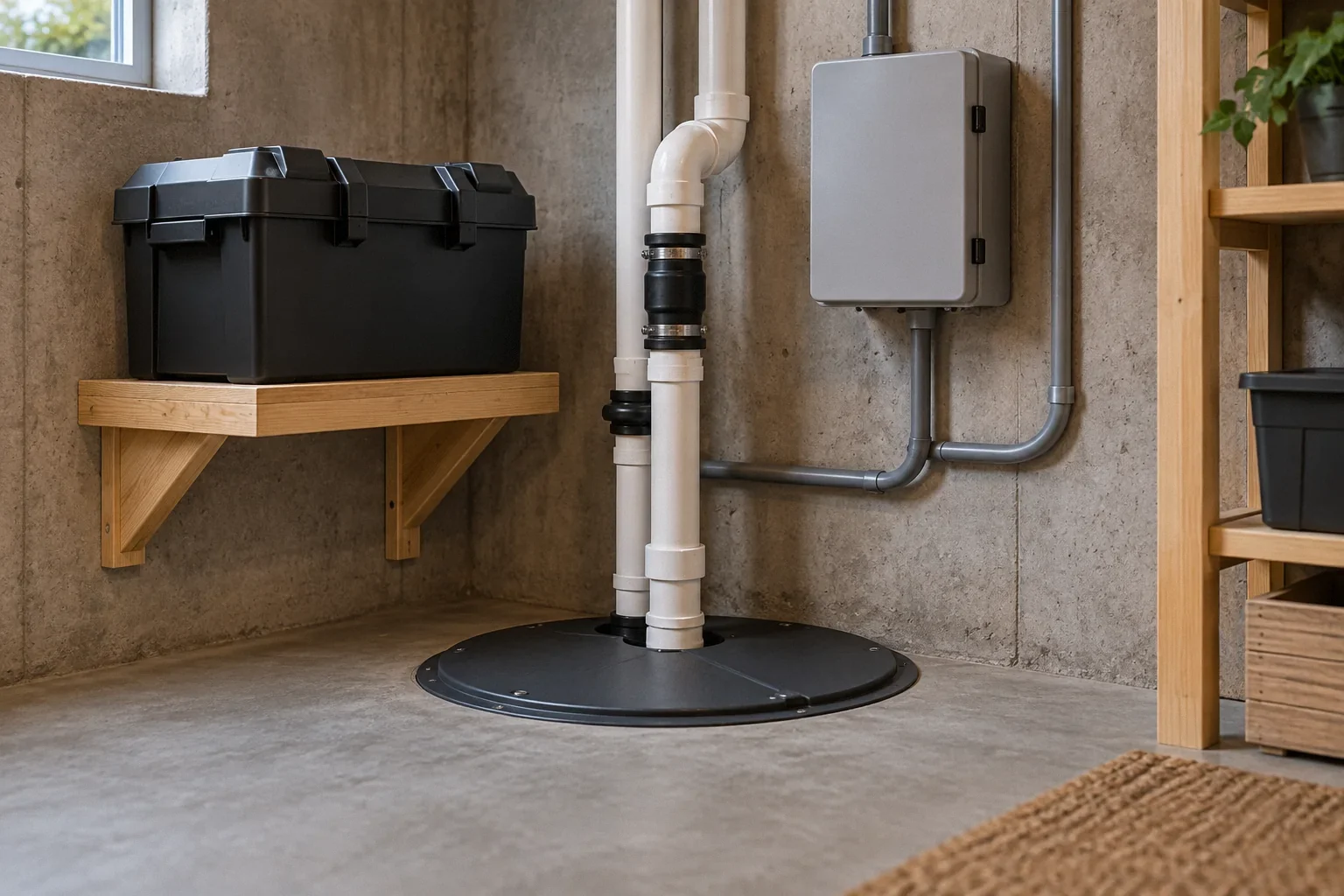
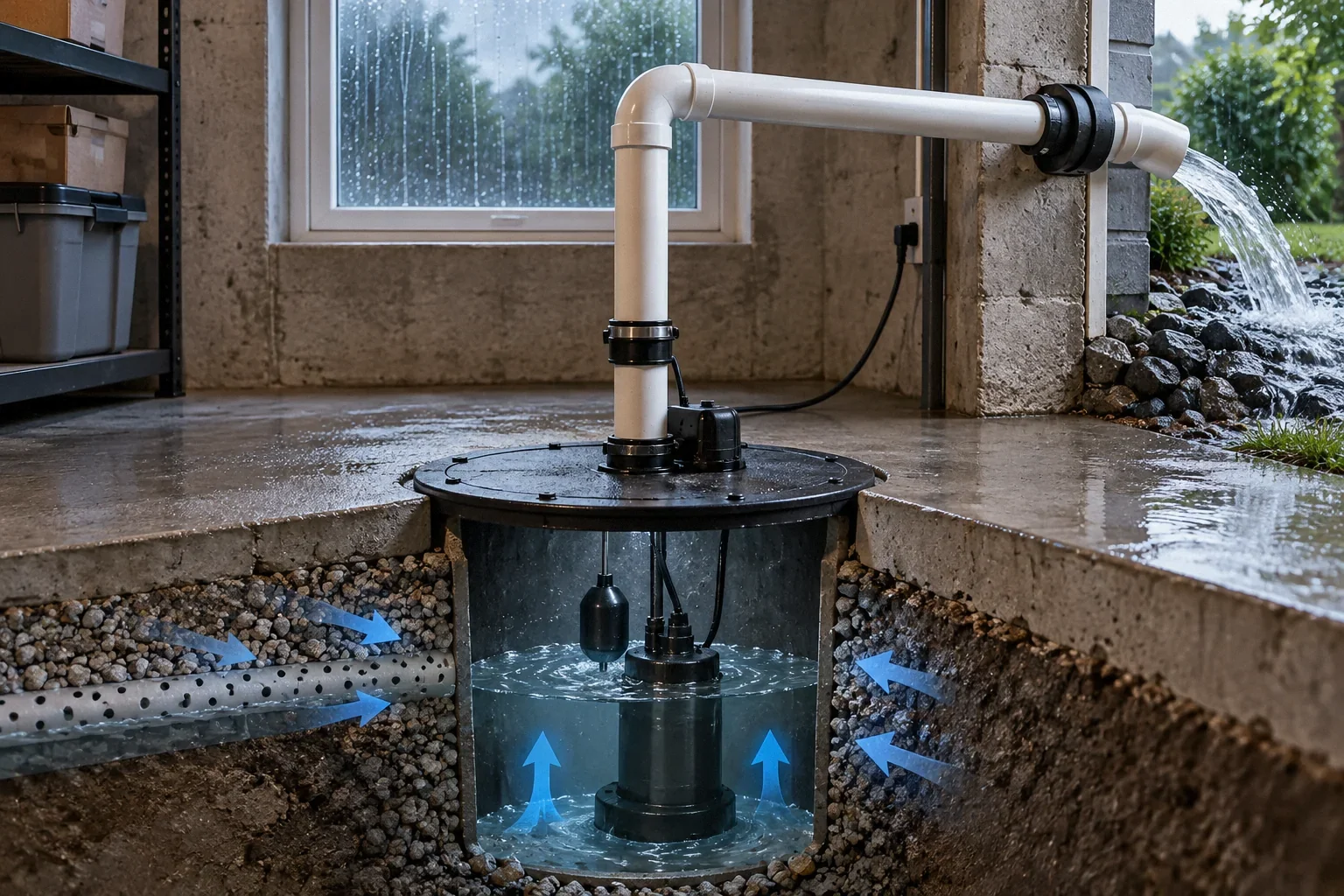
DOE’s drain and sump guidance describes a system that collects water and sends it away through an appropriate discharge arrangement. The pump is only one component. Water must reach the basin, the outlet must remain usable and the system must prevent problematic return flow according to its design.
Ask where the discharge goes and whether recent weather, landscaping or service work could have changed that route. An apparent increase in cycling may deserve a check of the check valve and piping, not simply a higher-powered pump. Conversely, water appearing far from the basin may indicate that the collection system does not serve that area effectively. Keep those observations separate. A pump can operate as designed while another part of the basement remains wet for a different reason.
Know when observation must stop
Standing water around pumps and wiring changes the safety situation. CDC’s flooded-home guidance warns against operating electrical controls or equipment while standing in water. If the disconnect cannot be reached from a dry location, obtain qualified help. Do not enter a flooded area to unplug a pump or reposition its float.
A rising basin level, an alarm or water spreading into occupied areas can require prompt service rather than an extended monitoring experiment. Tell the responder whether power is available, whether the pump is audible and whether any discharge is visible from outside. These details help direct the response without asking the homeowner to expose electrical components. Keeping an accessible record of the pump model and service contact is valuable because the equipment label may be inaccessible precisely when the system is in trouble.
A hypothetical pump that starts again immediately
Suppose a pump lowers the basin normally and stops, but water quickly returns through the discharge piping and the pump starts again. The owner assumes the property’s water table has suddenly risen and asks for a larger motor. A service assessment instead considers return flow and the check-valve arrangement along with incoming water from the collection system.
If returning water is the main contributor, a larger pump would not by itself resolve that pathway. The correct repair still depends on the actual installation. This hypothetical example shows why watching the level immediately after shutdown can be informative from a safe position. It does not authorize opening valves or removing a pump. The useful result is a description the technician can test, followed by verification that the diagnosed condition changed after service.
Turn the diagnosis into a maintenance and backup plan
At the end of service, ask what caused the observed behavior and what was changed. Keep that explanation with the model number and any replacement-part information. Request a demonstration or documented test appropriate to the equipment, including alarm operation where installed. The record should distinguish normal post-rain activity from the symptom that prompted the visit.
Then review what happens during an outage or primary-pump failure. A functioning pump today does not establish independent backup protection. Consider how the owner would learn about a high-water condition while away. Maintenance intervals should follow the installed system and site demands, rather than an invented universal replacement calendar. Future changes are easier to recognize when the household knows how the system normally behaves during ordinary rain and what departures require prompt attention.
Before your next decision
- Identify the pump and control model from existing records.
- Record cycle duration and water-level behavior from safety.
- Note rainfall timing, alarms and wet areas beyond the basin.
- Identify the discharge destination and recent changes.
- Request a cause-specific explanation after service.
- Review alarm, maintenance and independent backup arrangements.
Related questions
How often should a sump pump run after rain?
There is no universal frequency. Inflow, basin size, controls and discharge conditions all matter. Record whether the level falls normally and whether water is returning after shutdown, then compare with the system’s intended operation.
Does constant operation mean I need a larger pump?
Not necessarily. A blocked discharge, float problem, return flow or inadequate collection path can require a different correction. Capacity should be evaluated using the actual inflow and discharge conditions.
Can a sump run correctly while the basement stays damp?
Yes. The pump may handle collected liquid water while humidity, slab moisture or another entry path remains unresolved. Separate those symptoms before changing pump equipment.
Sources & further reading
- Glentronics / Basement WatchdogThe Basement Watchdog Combo (CITS-33) Combination Sump Pump System Troubleshooting Guide
Model-specific troubleshooting; reasons for observed behavior, not live repair directions.
- U.S. Department of Energy / Pacific Northwest National LaboratoryDrain or Sump Pump Installed in Basements or Crawlspaces
Bulk-water collection, sumps and discharge; professional-design overview.
- Centers for Disease Control and PreventionSafety Guidelines: Reentering Your Flooded Home
Flood response safety; opened page reviewed August 24, 2026.
Homeowner questions behind this article
These discussions informed the questions, not the technical answers. Some were available through indexed excerpts; votes and comments are not an engineering assessment.
- Is it normal for my sump pump to run several times an hour 24/7
- Comments on plan for crawlspace encapsulation - it's wet down there now!