The short answer
Crawl space encapsulation does not demonstrate that indoor radon is low. A ground liner can be part of a radon reduction system, but a dehumidifier removes water from air rather than radon gas. Test the occupied home using the applicable protocol, review the result with a qualified radon professional when needed, and verify performance after mitigation or significant changes to the enclosure.
US general planning; local code examples and manufacturer-specific requirements are identified where used.
Why a clean, dry crawl space can still need a radon test
Homeowners often interpret a sealed crawl space as a complete barrier between the house and the soil. The liner is visible, the musty smell may disappear, and the humidity monitor produces reassuring numbers. None of those observations measures radon. Radon is a radioactive gas, and the test question concerns the air people breathe in the home, not how finished the crawl space looks.
The EPA Citizen’s Guide to Radon explains that testing is the way to establish a home's radon level. Nearby houses and regional maps cannot substitute for a measurement in this house. Encapsulation may change airflow and pressure relationships, so a result obtained before the work is useful history rather than proof of current performance. Keep humidity records and radon measurements as separate records with different instruments, locations and interpretation.
Separate three jobs that are often sold together
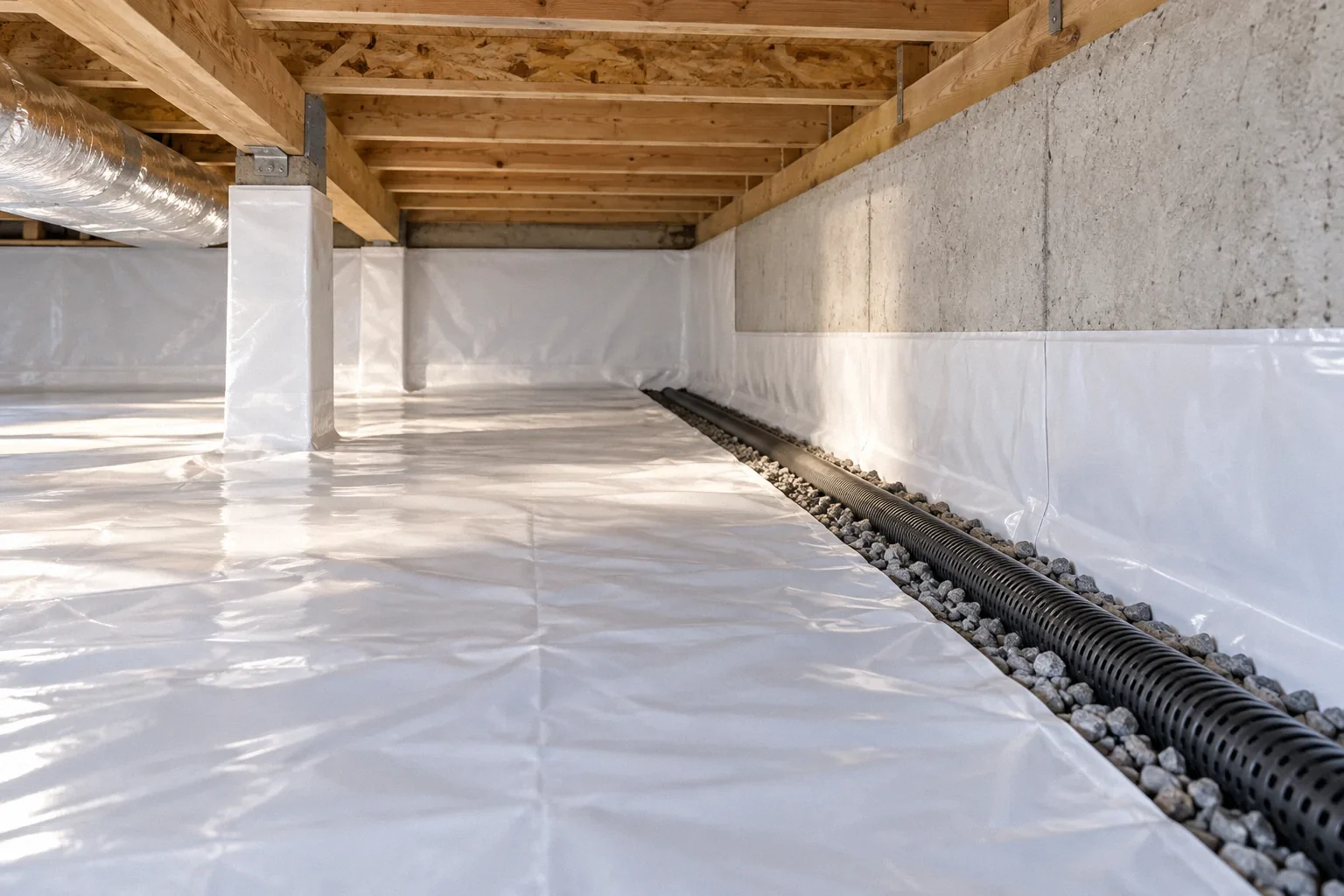
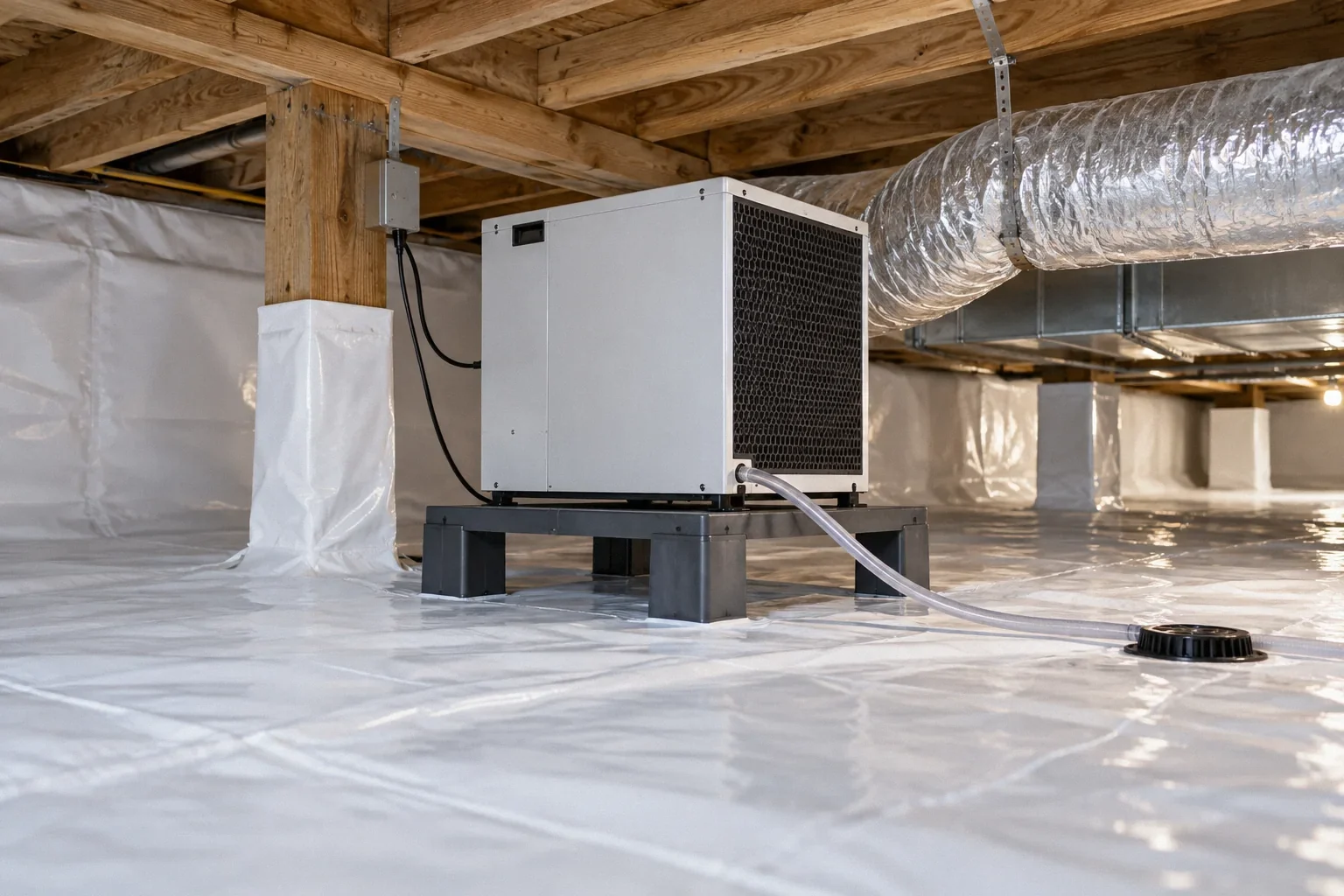
A ground vapor retarder limits water vapor moving from exposed soil into the crawl space. Air sealing reduces uncontrolled exchange through the enclosure. A dehumidifier removes moisture from the air it processes. Those functions may improve the building, but none automatically supplies the pressure field and exhaust pathway used by a radon mitigation system.
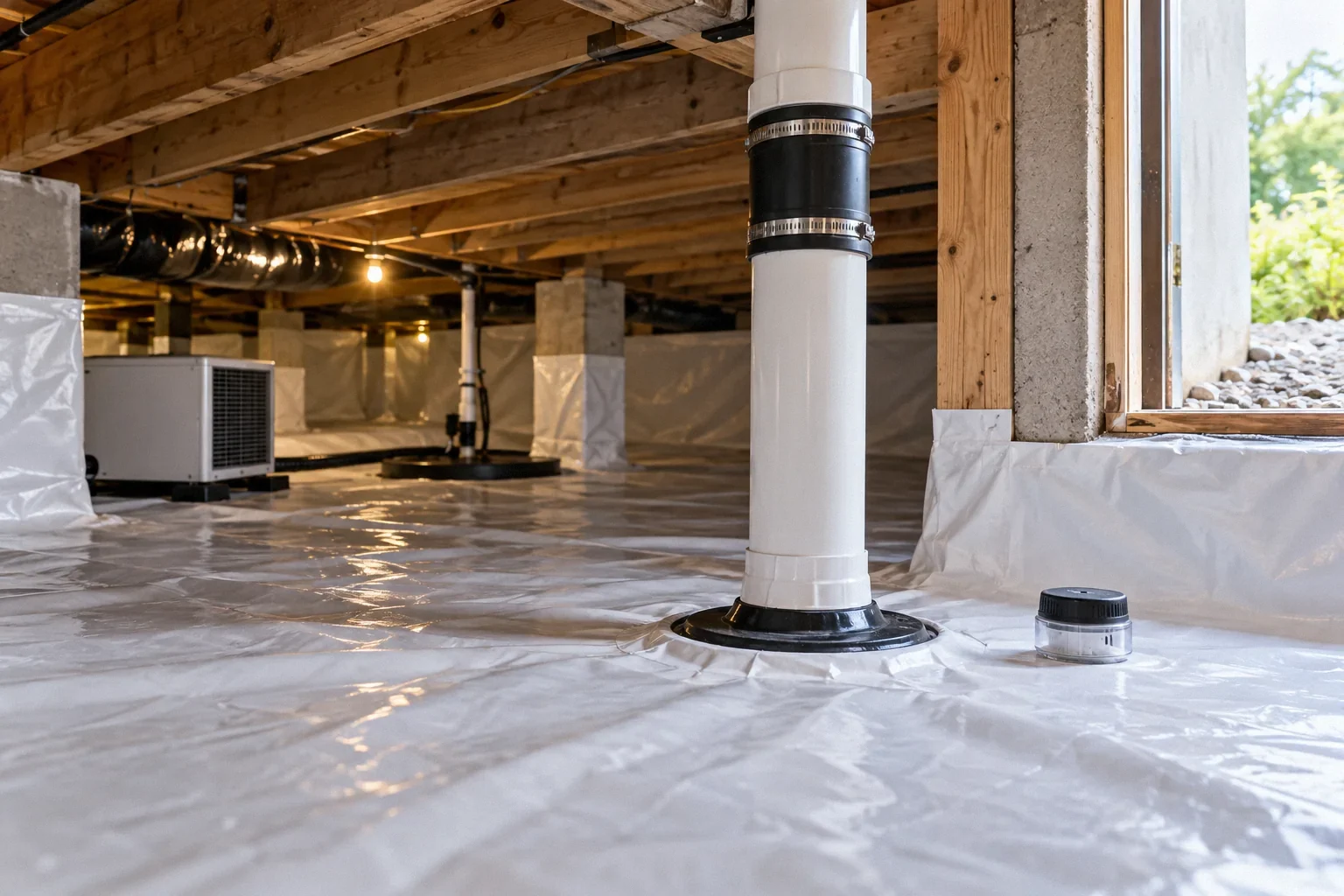
The EPA Consumer’s Guide to Radon Reduction describes submembrane suction for crawl spaces: a membrane covers the ground and a system draws soil gas from beneath it for discharge outdoors. The membrane is therefore one component, not evidence that suction exists. Ask what equipment actually performs each job, where it discharges, and how its operation is checked. A fan moving general crawl space air should not be assumed equivalent to a designed submembrane system; combustion appliances and house pressure also require consideration.
Choose the test protocol before choosing a location
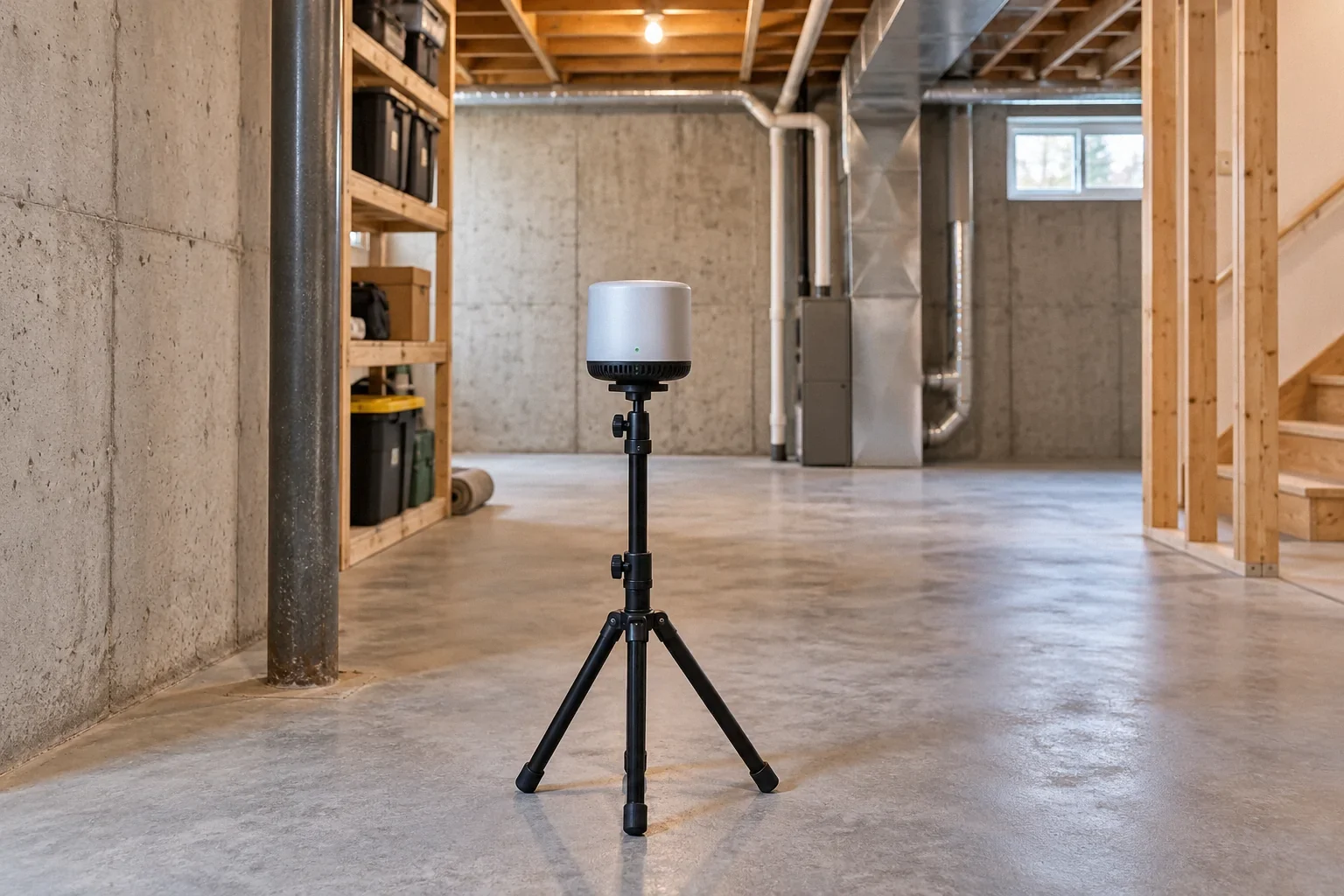
For an ordinary homeowner test, EPA guidance focuses on the lowest level of the home that is used regularly, with placement and operating conditions determined by the test instructions. A bare crawl space is not automatically the correct location just because it is closest to the soil. Real estate transactions and professional diagnostic work may use different procedures, so identify the purpose before placing a device.
Record test dates, duration, device type, room, normal occupancy and whether major enclosure or HVAC work was occurring. A short measurement and a long measurement do not answer precisely the same question. EPA describes follow-up testing and recommends action at a confirmed level of 4 pCi/L or higher; lower levels still carry some risk. Avoid treating one convenient reading from an unverified device or unusual ventilation conditions as a final decision about a long-term exposure.
Make the liner and drainage compatible with mitigation
A radon contractor needs to understand more than liner thickness. Seams, edges, penetrations, interior supports and connected crawl space compartments affect how a system can collect soil gas. Water management must also remain functional. A liner covering an unresolved puddle problem, a sump lid that cannot be accessed, or a drain connection accidentally blocked during sealing creates a second defect while addressing the first.
The DOE guidance on unvented, insulated crawlspaces treats moisture control, ground covering, air sealing and other building conditions as a coordinated assembly. Give the radon designer the encapsulation scope, drainage layout and photographs taken before concealment. Have the parties identify who seals new penetrations and how the membrane will be repaired after service work. Do not improvise suction connections, exhaust routes or combustion-air changes from an online diagram; system suitability depends on the actual building.
Account for mixed foundations and future changes
Some houses have a crawl space beneath an addition and a basement or slab beneath the original rooms. A single liner does not tell you whether soil gas beneath those other areas is being controlled. Tell the evaluator about inaccessible compartments, additions, sumps and changes in floor elevation. A professional may need diagnostic information before deciding whether one system can serve all relevant areas.
Plan for future work as well. A plumbing repair can leave an unsealed liner cut; a new bathroom fan or HVAC change can alter pressure relationships. These observations do not establish that radon will rise, but they give a reason to review testing and system performance. Save the installation description, operating indicator instructions, maintenance information and post-installation result together. If a warning indicator changes, follow the installer’s instructions rather than turning unrelated ventilation devices on and assuming the problem is resolved.
A hypothetical case: lower humidity, unanswered radon question
Suppose a family encapsulates a damp crawl space and sees its humidity become stable. Several months later they move a home office to the first floor and discover that the previous owner's radon report predates the encapsulation by years. Their first useful step is to establish an appropriate current test, not buy a larger dehumidifier.
If follow-up results warrant mitigation, the specialist reviews the liner, crawl space compartments and the adjacent slab before proposing collection points and an exhaust route. The family asks the encapsulation contractor to document membrane penetrations and drainage details. After the system is installed, they arrange the verification measurement required by the applicable protocol. This hypothetical sequence uses the existing moisture work where appropriate while giving radon its own measurable acceptance criterion. A visually impressive liner and a running fan would not have answered that question on their own.
Questions that make a radon proposal reviewable
Ask the provider to distinguish the measured problem, the proposed reduction method and the evidence that will confirm success. The proposal should identify the areas served, membrane work included, electrical and exhaust coordination, system indicator, access needs and who conducts the post-installation test. Ask which qualifications or state requirements apply to the professional in your location.
Avoid accepting a guaranteed percentage reduction as the entire performance description; the resulting concentration and appropriate verification are what inform the homeowner's decision. Establish what happens if the first post-installation result needs further work. Also ask how normal drainage inspections and equipment servicing can occur without damaging the membrane. These details allow the homeowner to maintain both systems after the installers leave. They are more useful than choosing a product solely because its marketing mentions both moisture and radon.
Before your next decision
- Keep the pre-encapsulation radon report if available.
- Identify the occupied-level test location and protocol.
- Record dates, duration and device instructions.
- Share the liner and drainage layout with the specialist.
- Keep access and membrane repair responsibilities clear.
- Obtain and retain post-mitigation verification.
Related questions
Will my crawl space dehumidifier lower radon?
It is designed to remove water vapor, not provide a verified radon reduction method. Measure radon independently and use an appropriate mitigation design if results warrant it.
Should I test inside the crawl space?
Follow the protocol for the purpose of the test. A homeowner exposure test usually concerns the occupied home; a professional may take other measurements for diagnosis.
Does a sealed liner guarantee that radon cannot enter?
No. Installation details, connected foundation areas and pressure relationships matter. A liner can form part of a reduction system, but testing establishes the result.
Sources & further reading
- U.S. Environmental Protection AgencyConsumer's Guide to Radon Reduction: How to Fix Your Home
The opened PDF displays a 2025 edition; radon mitigation principles and qualified-provider guidance.
- U.S. Environmental Protection AgencyA Citizen's Guide to Radon: The Guide to Protecting Yourself and Your Family from Radon
The opened PDF displays a 2025 edition despite its 2016 URL directory.
- U.S. Department of Energy / Pacific Northwest National LaboratoryUnvented, Insulated Crawlspaces
Closed crawlspace systems; construction guidance with multiple code editions, not proof of locally adopted code.
Homeowner questions behind this article
These discussions informed the questions, not the technical answers. Some were available through indexed excerpts; votes and comments are not an engineering assessment.
Research method