The short answer
A battery backup sump pump and a power supply for the existing pump protect against different failures. A separate backup can provide another pump and control, while a UPS or other approved power solution may only keep the original pump running during an outage. Compare required flow at the actual discharge head, battery condition, runtime assumptions and shared components. Do not assume a general-purpose computer UPS is suitable for a sump motor.
US general planning; local code examples and manufacturer-specific requirements are identified where used.
List the failures you actually need to cover
Start with the events that could leave water unremoved: loss of utility power, failure of the main pump, a stuck control, an obstructed intake or a blocked common discharge. They do not all have the same solution. Supplying electricity to a failed pump does not restore pumping, and a second pump connected to a blocked outlet may still have nowhere to send water.
Write the failure list beside a sketch of the existing system. Identify which components would remain shared if a backup were added. This makes a comparison more concrete than asking for the “best battery.” The owner needs to understand what stays functional when a particular component fails and how the problem is detected. Redundancy is useful only when its limits are understood; two devices with one unexamined failure path are not two completely independent systems.
Separate backup pumping from backup power
Scroll horizontally to read every column.
| Approach | Potential benefit | Important remaining dependency |
|---|---|---|
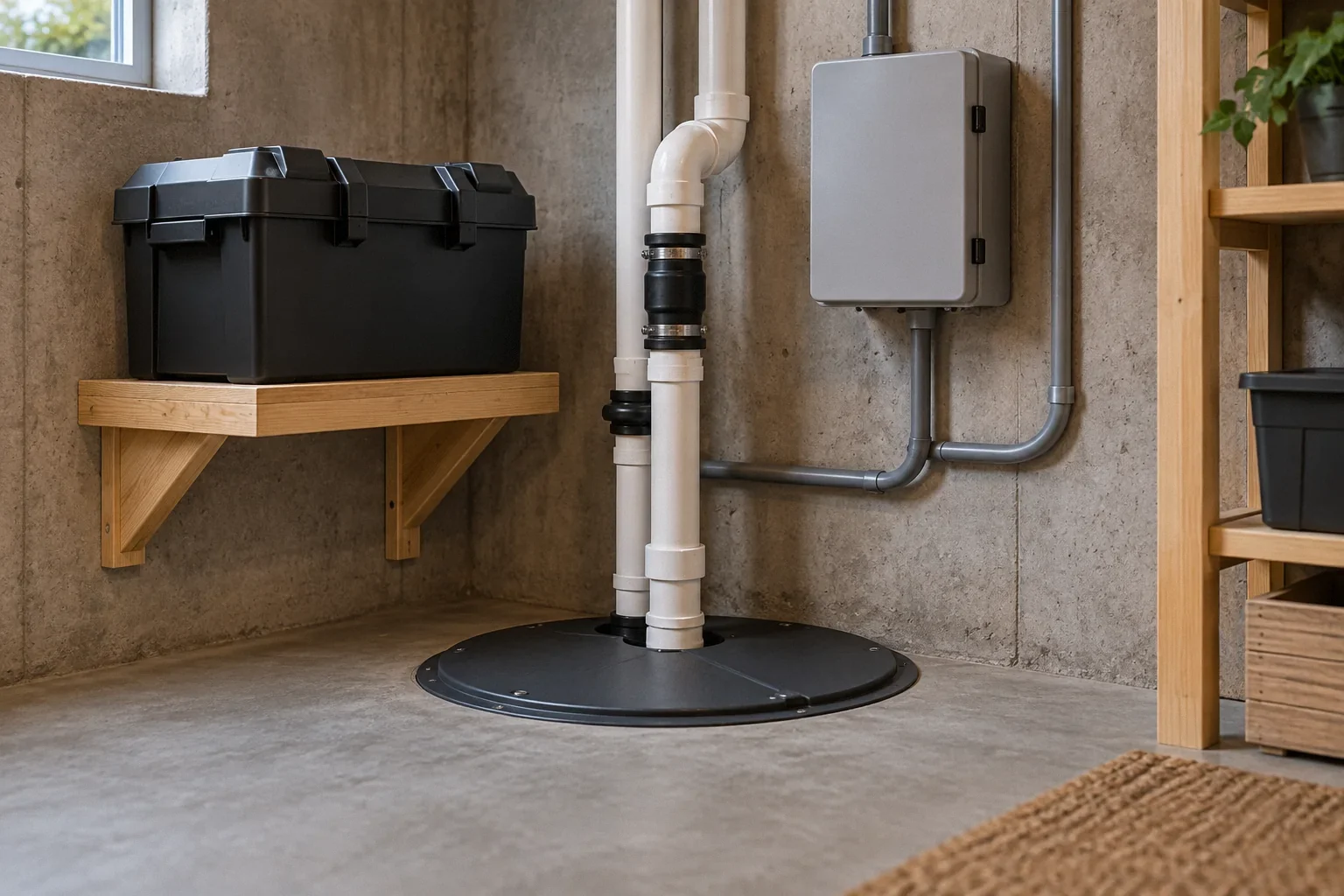
| Separate DC backup pump | Provides another pumping device and usually its own control arrangement. | Battery condition, installation clearance and any shared collection or discharge components. |
| Approved power source for the primary pump | Can operate the existing compatible pump during an outage. | The primary pump and its control must still work; the power source must support the motor. |
| Generator-based supply | May provide longer operation with appropriate capacity and fuel planning. | Safe outdoor operation, approved electrical arrangements and availability when needed. |
The table does not recommend a product. It identifies questions that should be answered before comparing price, advertised runtime or remote-monitoring features.
Match performance to the actual discharge conditions
Pump capacity changes with the resistance it works against. Discharge height and the piping arrangement therefore matter when comparing backup performance. A large flow number quoted without its corresponding conditions may not describe what the pump will deliver in the house.
Zoeller’s Aquanot Fit system manual presents model-specific performance and battery assumptions. It demonstrates why a manufacturer's stated runtime should remain tied to that pump, battery and operating condition. Ask the installer to explain the expected water load and the performance of both primary and backup at the actual installation. Do not assume that a backup’s label means it can match every primary pump. If the system only provides limited protection under heavy inflow, that limitation should be clear before a storm tests it.
Continuous runtime is not the same as outage duration
A pump that runs intermittently can provide coverage over a longer clock period than one pumping continuously from the same available energy. Advertisements may emphasize one condition while the owner imagines another. Battery age, state of charge and the actual load also affect what happens during an outage.
Ask what duty cycle supports the quoted duration and how the estimate changes during the property’s demanding conditions. For a power supply operating the main pump, confirm compatibility with both running demand and motor starting requirements using the relevant manufacturers’ documentation. Do not infer compatibility solely from a battery’s energy number or an outlet that physically accepts the plug. The useful comparison is an approved system with a documented operating basis. Avoid converting a model-specific laboratory or manual example into a promise that every basement will remain protected for the same number of hours.
Installation details can defeat a good product
A backup needs room to operate without interference from the main pump, basin walls or piping. Float movement, access for removal, battery location and alarms all matter. Shared discharge components should be identified, and the system should remain serviceable without destroying a sealed cover or nearby finished construction.
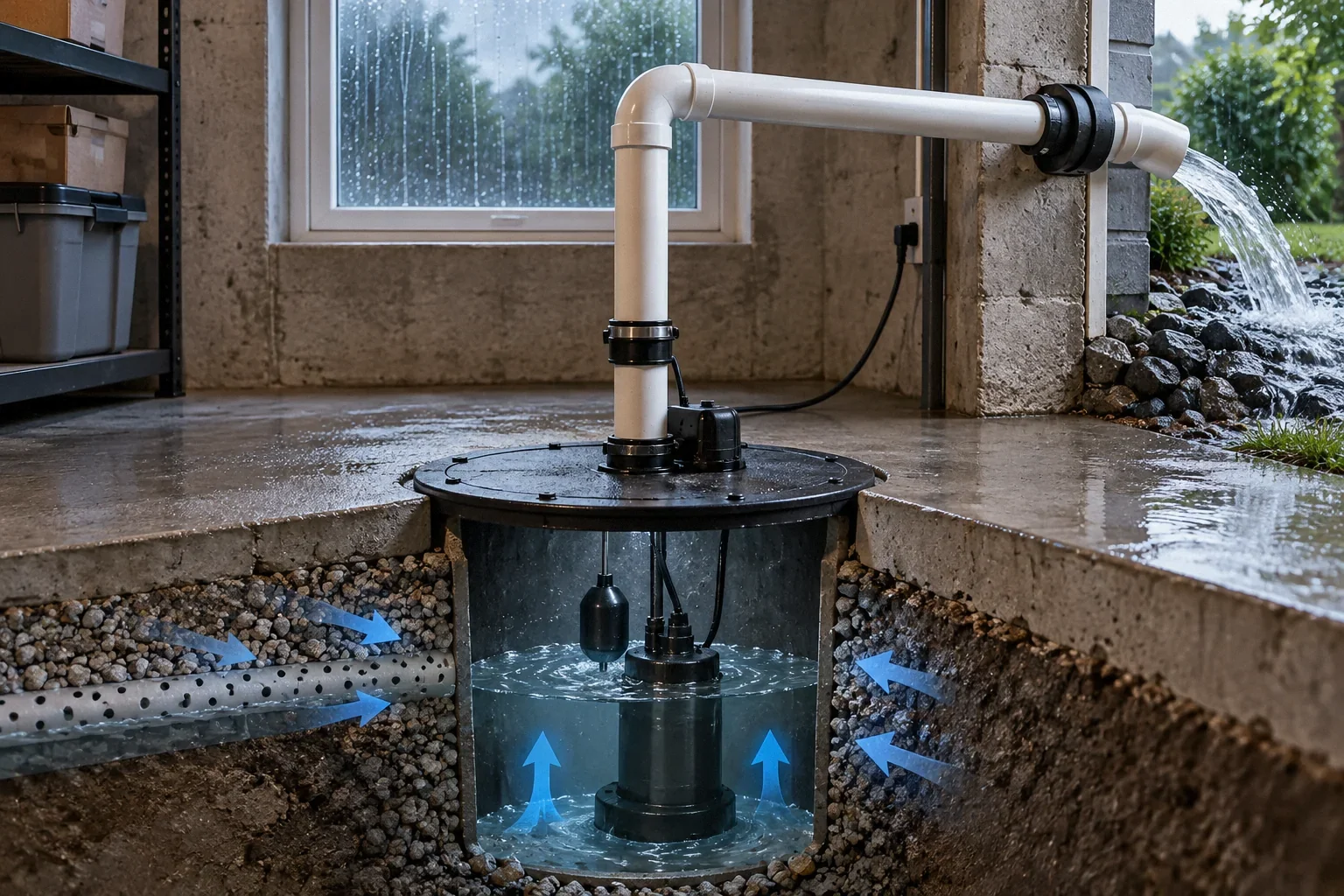
DOE’s sump-system guidance places the pump within a collection and discharge arrangement, including an appropriate basin and cover. When evaluating a retrofit, ask what must change to fit the second pump properly and whether the existing collection path serves the areas at risk. A backup does not correct water that bypasses the basin. Likewise, a sealed sump involved in radon control needs coordinated details; cutting an improvised opening for new equipment can affect a function unrelated to pumping.
A hypothetical outage with a failed primary control
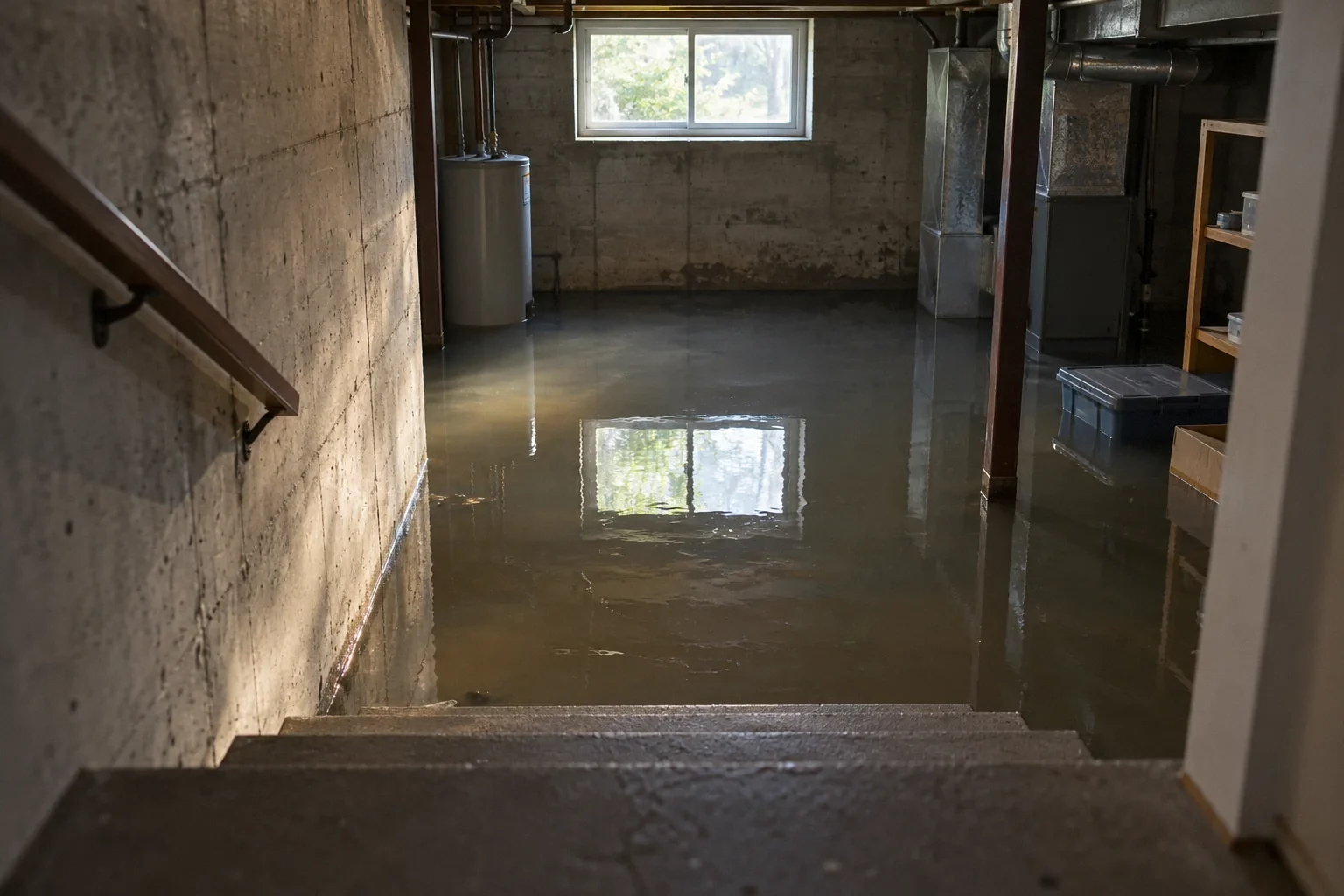
Consider a basement whose primary pump is connected to a compatible backup power source. During a storm, utility power fails, but the pump’s float also becomes stuck. The battery may have ample charge, yet the pump never receives the correct call to operate. The owner thought the power source covered all sump failures because it was sold as emergency protection.
A separate, appropriately installed backup pump with its own functioning control might address that particular failure, though it could still share a blocked outlet or inadequate collection path. This hypothetical example is why the failure list belongs at the beginning of the decision. It does not establish that one design is always superior. The chosen arrangement should match the risks the owner wants covered and clearly identify what remains outside that protection.
Test, maintain and use emergency power safely
Ask for an appropriate demonstration of normal and backup operation and keep the instructions for periodic checks. Record battery requirements, alarms and service access. Remote notifications are useful only if their communication and power dependencies are understood; they should not replace a functioning local system or maintenance routine.
CDC’s flood safety guidance warns against electrical work from standing water and requires fuel-powered equipment to remain outdoors and away from openings. Never improvise a generator connection to household wiring. If an outage coincides with rising water, follow the safe-entry and electrical response rather than descending to experiment with equipment. A backup plan should be established and tested before that moment, with clear information about who responds when an alarm occurs and the owner is away.
Before your next decision
- List power, pump, control and discharge failures separately.
- Identify shared components on a system sketch.
- Check backup flow at actual discharge conditions.
- Document battery and duty-cycle assumptions behind runtime.
- Confirm clearance, cover details, alarms and service access.
- Arrange a witnessed test and keep the maintenance instructions.
Related questions
Will powering the main pump cover motor failure?
No. Backup electricity only helps if the pump and its controls remain functional and compatible with that power source. A separate backup pump addresses a different part of the failure chain.
Can I use any UPS with enough battery capacity?
No. Motor starting, continuous demand, output compatibility and manufacturer approval matter. A general-purpose computer UPS should not be assumed suitable merely because its plug and energy rating appear adequate.
How many hours should my backup last?
The requirement depends on inflow, discharge conditions, outage duration and the equipment’s duty cycle. Ask for an installation-specific basis and maintain the battery; a universal advertised duration is not a guarantee.
Sources & further reading
- Zoeller Pump CompanyAquanot Fit 508/53, 508/63, 508/98 Battery Backup System with Primary Sump Pump: Installation Instructions, FM3148 0725
Primary manufacturer manual; model-specific backup performance and limitations.
- U.S. Department of Energy / Pacific Northwest National LaboratoryDrain or Sump Pump Installed in Basements or Crawlspaces
Bulk-water collection, sumps and discharge; professional-design overview.
- Centers for Disease Control and PreventionSafety Guidelines: Reentering Your Flooded Home
Flood response safety; opened page reviewed August 24, 2026.
Homeowner questions behind this article
These discussions informed the questions, not the technical answers. Some were available through indexed excerpts; votes and comments are not an engineering assessment.
Research method