The short answer
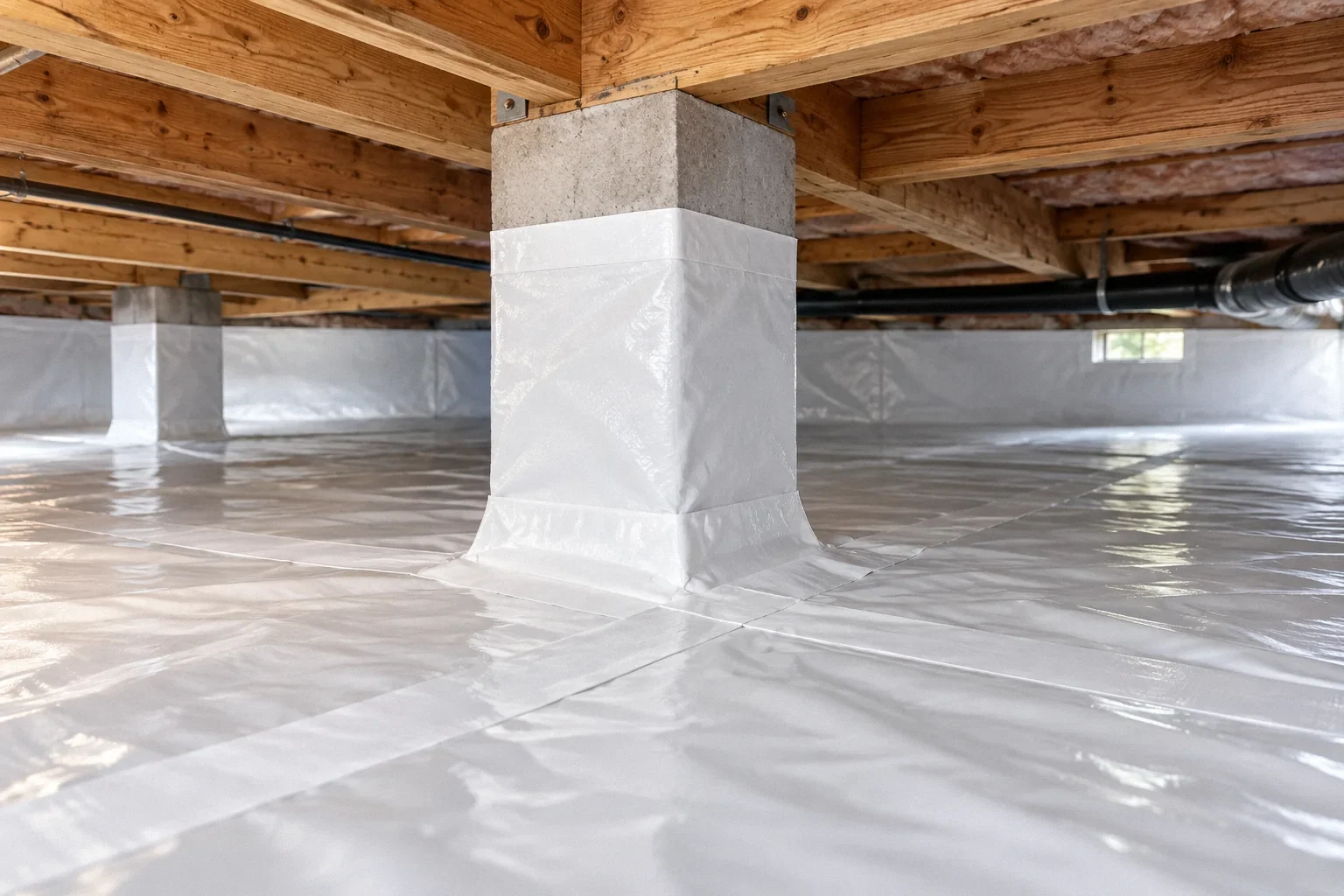
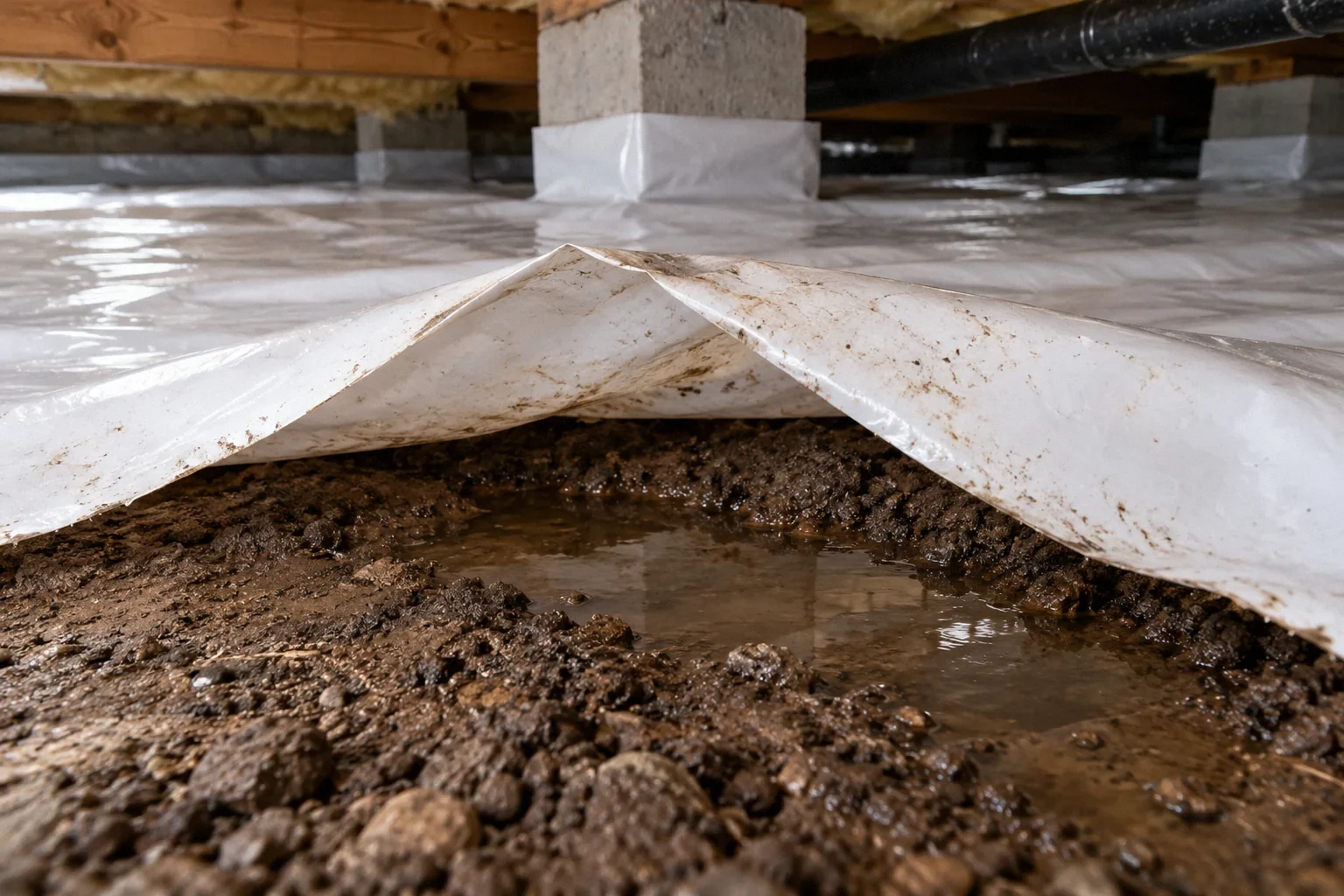
Water beneath a crawl space vapor barrier means liquid water needs investigation; it does not automatically prove that the membrane has failed. Determine whether the source is rain, groundwater, plumbing or condensate, and whether water is above or below the liner. A thicker liner cannot create a missing drainage path. Keep out when water may contact electrical equipment or contain contamination, and resolve collection and discharge before concealing the condition again.
US general planning; local code examples and manufacturer-specific requirements are identified where used.
Start with safe observation, not opening the liner
A wet crawl space may contain wiring, pumps, contaminated water and surfaces that are difficult to navigate. Do not enter standing water to check whether a cable or appliance is energized. CDC’s flooded-home safety guidance states that electrical controls must not be operated while standing in water and directs people to qualified help when a safe disconnect cannot be reached from a dry location.
From a safe accessible position, record the approximate area affected and whether the water is visible on top of the liner, through a translucent membrane or at an open seam. Note odors, alarms and continued inflow without treating smell as a reliable contamination test. This initial record helps direct the response. Pulling the liner apart before understanding the source can spread water, damage connections and destroy evidence of where it first accumulated.
Above and below the membrane tell different stories
Water on top may come from a plumbing leak, condensate problem, rain entering above the liner termination or water crossing an open seam. Water below may reflect soil or perimeter entry that the membrane was never intended to remove. Both conditions can occur together, so the location is a starting clue rather than a complete diagnosis.
Look for the first reachable wet point instead of the largest puddle, which may simply occupy the lowest area. A liner can direct water away from its entry point, making the visible pool misleading. Record how the membrane lies around supports and at walls. If water appears trapped between layers from different installations, tell the assessor what you know about the previous work. The goal is to understand the path before choosing where to repair or replace material.
Use timing to narrow the investigation
Scroll horizontally to read every column.
| Observed timing | Possible line of inquiry | Useful record |
|---|---|---|
| During or after rain | Roof discharge, surface flow, perimeter entry or changing groundwater. | Rain timing, first wet location and exterior outlet photographs. |
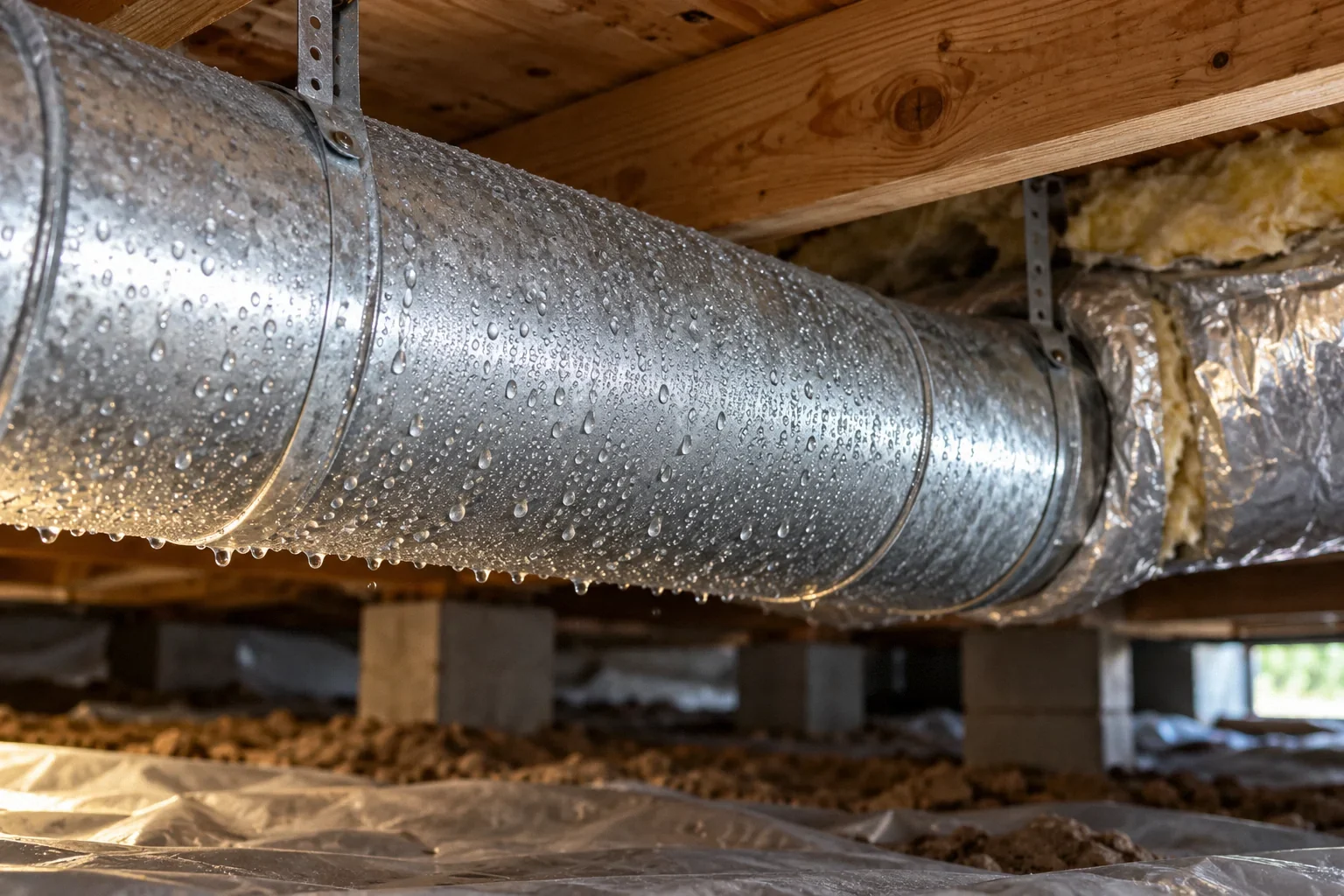
| During cooling operation | Condensate drainage or sweating ducts. | Equipment status and the first dripping or overflowing component. |
| After fixture use | A supply, drain or appliance leak. | Which fixture operated and whether the pattern repeats. |
| Persistent without an obvious event | An ongoing leak or water entering from below. | Water-level changes and pump behavior across several conditions. |
These patterns do not prove causation. Avoid making a structural or groundwater conclusion from an arbitrary waiting period. They help the professional decide what to inspect and test next.
Check the sources that discharge near the house
Roof water and condensate can be delivered to one small area even when most of the yard appears dry. From outside, inspect reachable downspout outlets, disconnected extensions and visible condensate discharge. Note whether water is directed into a contained bed or toward the access opening. Do not excavate to investigate an unknown buried pipe yourself.
DOE’s existing-crawlspace water-management guide describes managing these sources before sealing and insulation. If an exterior defect is corrected, keep observing through subsequent wet conditions rather than immediately assuming it was the only cause. A house can have both a concentrated surface-water source and a separate below-grade water problem. The evidence should show which symptom changed after the correction. This is more informative than replacing the entire liner and losing the ability to compare the original water path.
A sump needs a collection path and an outlet
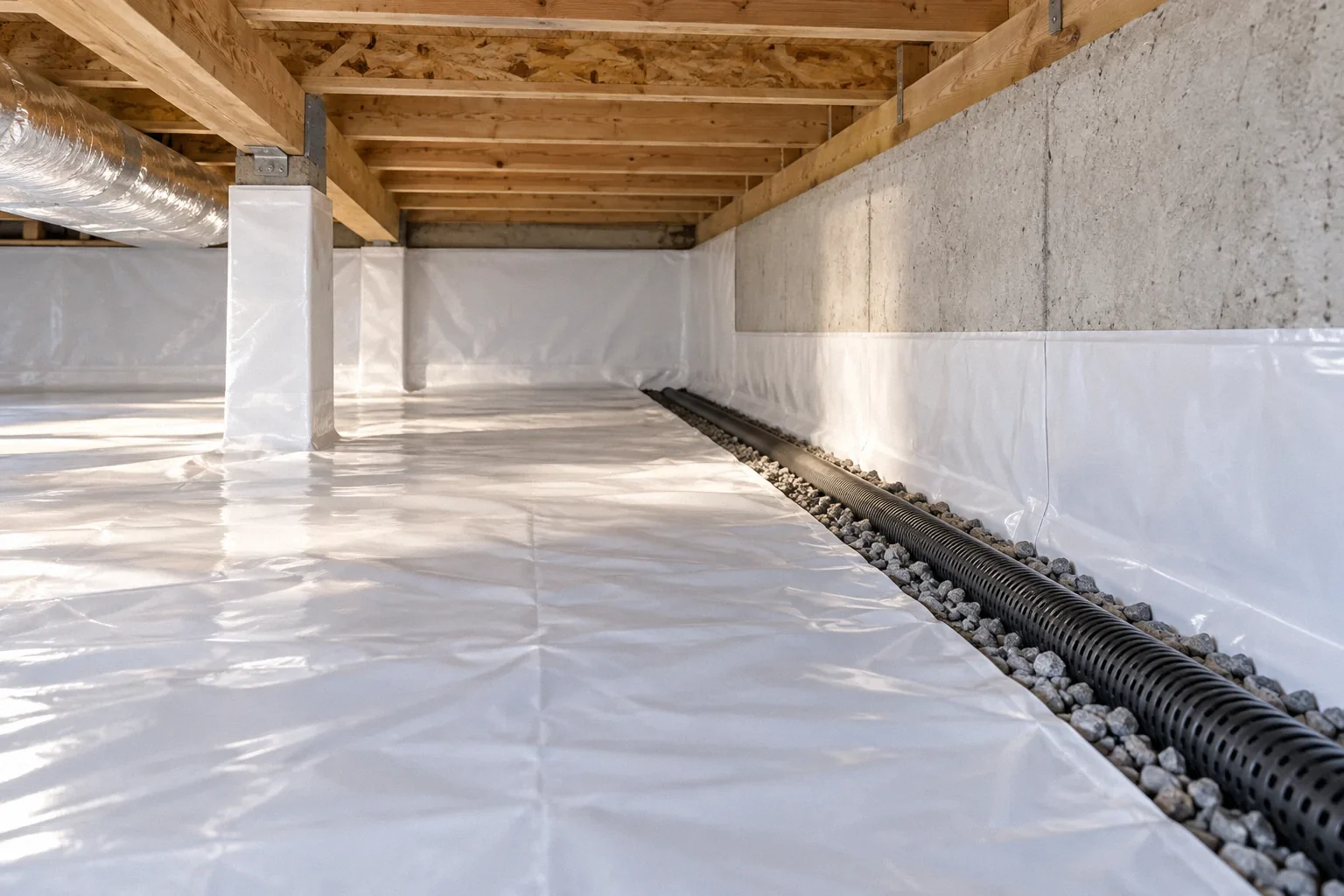
A pump in the crawl space does not guarantee that water beneath the entire liner reaches its basin. Obstructions, isolated low areas or an incomplete collection arrangement may leave water outside the system’s intended reach. The pump also needs an appropriate outlet; repeatedly returning discharged water to the same problem area can undermine the result.
DOE’s sump and drainage guidance treats the basin, piping, check valve and cover as system components. Ask what area the existing installation is intended to serve and whether the observed water is within that area. Record alarms and water levels from safety, but leave electrical, excavation and pump service work to appropriately qualified people. A larger pump is not automatically the answer if water cannot reach it or its discharge route is blocked.
A hypothetical puddle beside a new liner
Suppose an owner finds water under a recently installed membrane near a rear corner. The installer proposes adding another layer, while the owner assumes the sheet is too thin. Exterior observation shows a detached downspout extension, and records show that the pool grows after intense rain. The membrane may have revealed a liquid-water problem that existed before installation rather than causing it.
The assessment should correct and evaluate the discharge issue, inspect the collection arrangement and then determine what liner repairs are necessary. If water persists after that source is controlled, further investigation is warranted. This hypothetical sequence does not establish that every corner puddle comes from a downspout. It demonstrates why the repair should follow evidence of the water source and path, instead of equating any water beneath plastic with a membrane-product failure.
Restore the liner only after the water strategy is clear
Once the source and drainage response are understood, repair disturbed seams and attachments using compatible details. Record what was opened, what remained wet and what work was done below or around the membrane. Preserve access to the sump, cleanouts and future inspection points. A newly smooth surface should not erase the history of an unresolved low area.
Check again during relevant rain or equipment operation and compare the same locations. Ask what recurrence should trigger service and who will respond. Room-air humidity may improve even while water remains below the liner, so do not use the dehumidifier display as the only acceptance check. The completed record should show how liquid water is prevented or removed and how the vapor-control layer is restored afterward. Those are connected but distinct outcomes.
Before your next decision
- Observe only from a safe dry location.
- Identify whether water is above, below or crossing the liner.
- Record rain, cooling and plumbing timing.
- Photograph reachable exterior discharge points.
- Ask what area the sump system actually collects.
- Restore membrane details after the liquid-water response is verified.
Related questions
Is water under the liner normal after heavy rain?
It can occur, but it should not be dismissed without understanding the source, duration and intended drainage. The membrane alone does not demonstrate that persistent liquid water is harmless or controlled.
Should I puncture the liner to let the water out?
Do not improvise openings before the water path and drainage plan are understood. A puncture can compromise vapor or soil-gas control and may release water into another area. Have the condition assessed first.
Will a bigger dehumidifier dry the water underneath?
A dehumidifier removes vapor from air. It is not a substitute for collecting and discharging liquid water beneath a membrane. Address the source and drainage system before increasing drying equipment.
Sources & further reading
- U.S. Department of Energy / Pacific Northwest National LaboratoryWater Management of Existing Crawlspace Floor
Existing crawlspace moisture retrofit; not excavation instructions for homeowners.
- U.S. Department of Energy / Pacific Northwest National LaboratoryDrain or Sump Pump Installed in Basements or Crawlspaces
Bulk-water collection, sumps and discharge; professional-design overview.
- Centers for Disease Control and PreventionSafety Guidelines: Reentering Your Flooded Home
Flood response safety; opened page reviewed August 24, 2026.
Homeowner questions behind this article
These discussions informed the questions, not the technical answers. Some were available through indexed excerpts; votes and comments are not an engineering assessment.
Research method