The short answer
Choose a foundation crack repair by the result it must achieve. Epoxy may be specified to rebond suitable concrete across a crack; polyurethane products are commonly used for water sealing. Neither product name establishes that a moving foundation has been stabilized. The crack’s cause, movement history, exposure and required structural function should be assessed before a repair method is selected, especially when injection would hide useful evidence.
US general planning; California details labeled where relevant
Define the repair goal before comparing products
A proposal to “repair the crack” can describe several different jobs. It might stop water passing through the wall, restore continuity in concrete, protect embedded reinforcement, or improve appearance. Those goals overlap only sometimes. Ask the person recommending injection to name the intended result and explain how it will be checked. A dry wall alone cannot demonstrate restored load transfer across a structural crack.
The Bureau of Reclamation’s Guide to Concrete Repair, 2015 distinguishes repair materials and procedures according to the damage and required performance. It is a technical reference for professional repair planning, not a universal specification for every house. Use its distinction between structural bonding and sealing to clarify the proposed work before discussing brands, warranties or the number of injection ports.
Why epoxy and flexible sealing products do different work
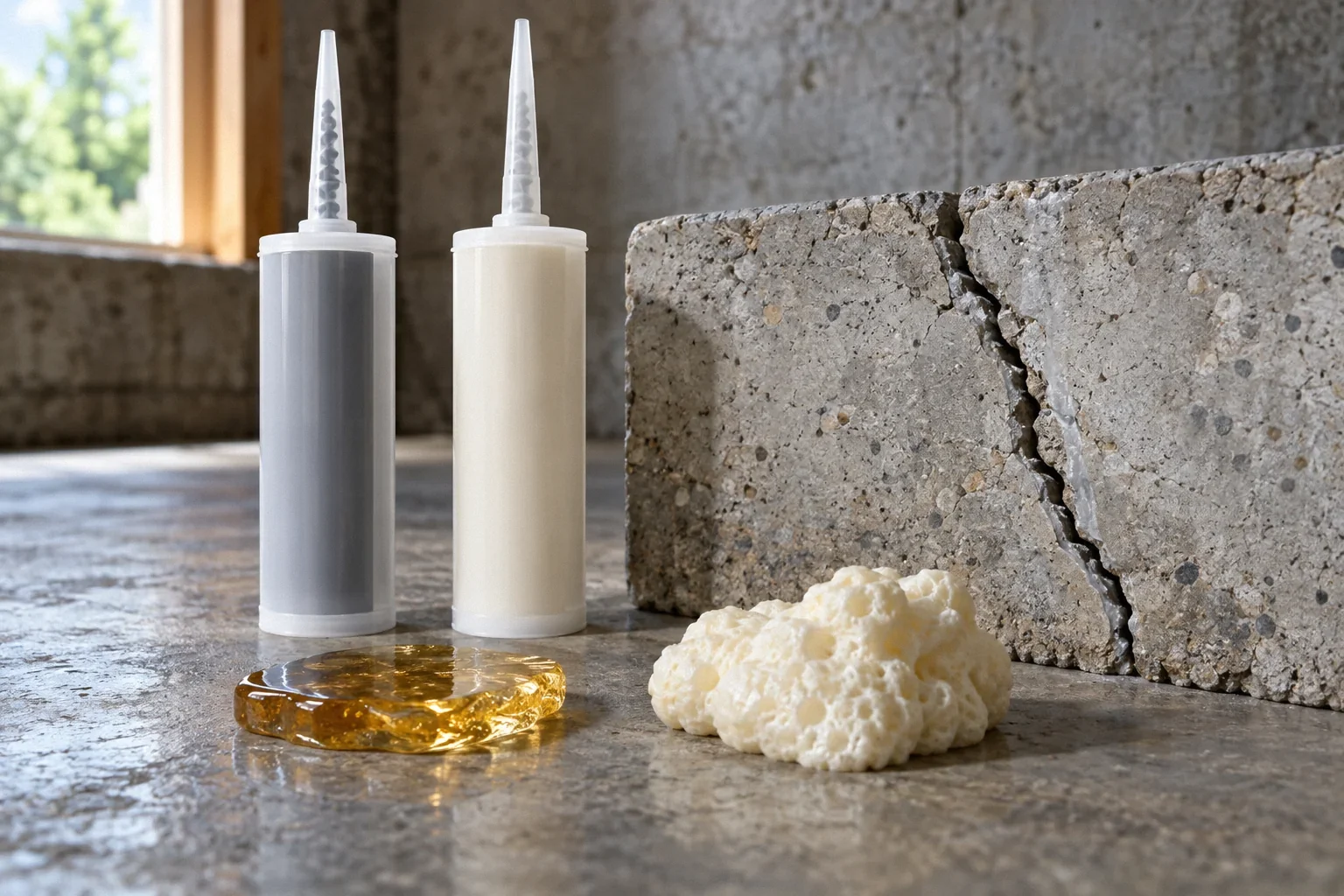
An epoxy chosen for structural rebonding is intended to create a relatively rigid connection within suitable concrete. That can be valuable when the substrate, crack condition and structural objective support it. It also means continuing movement matters: a hard repair is not a mechanism for absorbing an unresolved change in foundation geometry. Damage can recur at the repair or elsewhere.
Polyurethane formulations vary. Some are selected principally to obstruct a water path and accommodate conditions for which a rigid bond would be unsuitable. “Polyurethane” therefore does not identify one interchangeable material or prove a particular flexibility. Ask for the actual product’s stated use, substrate requirements and limitations. A general statement that an expanding product fills space is not evidence that it restores the structural function your wall needs.
Separate a water path from the reason concrete cracked
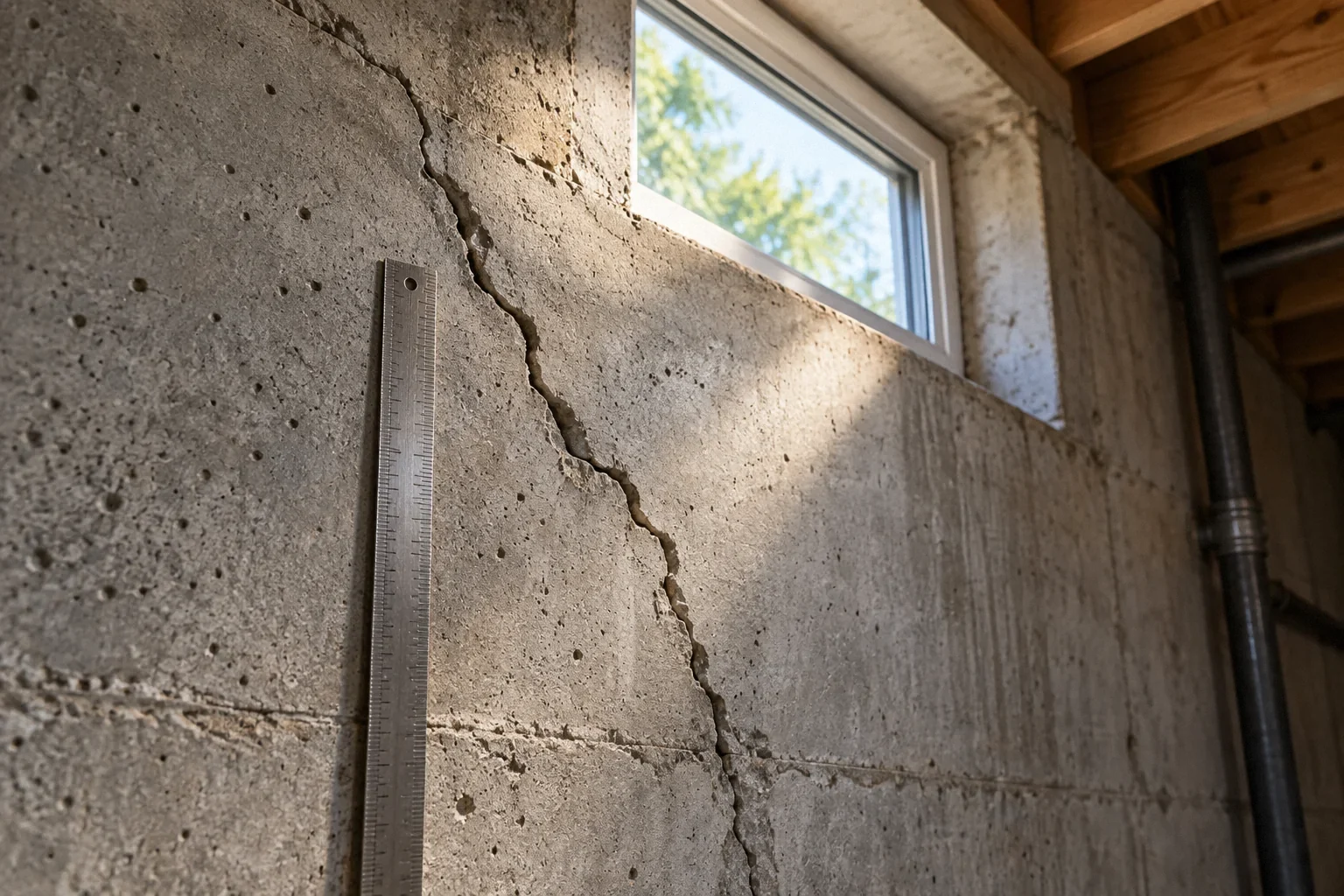
A crack may provide an opening for water without being caused by water pressure. Conversely, moisture changes in the surrounding ground may contribute to movement that also opens a crack. A repair assessment needs to distinguish those relationships. Closing the visible route can improve one symptom while leaving the underlying source of movement unchanged.
CIP 4: Cracking Concrete Surfaces describes several reasons concrete cracks, including changes in moisture and temperature, loading and support conditions. The explanation is broader than a simple “normal versus dangerous” label. For a homeowner, the practical question is which mechanism fits this location and history. A crack that appeared after a plumbing leak, nearby excavation or a pronounced change in floor level deserves more than a product comparison.
Use the movement history without pretending it is a verdict
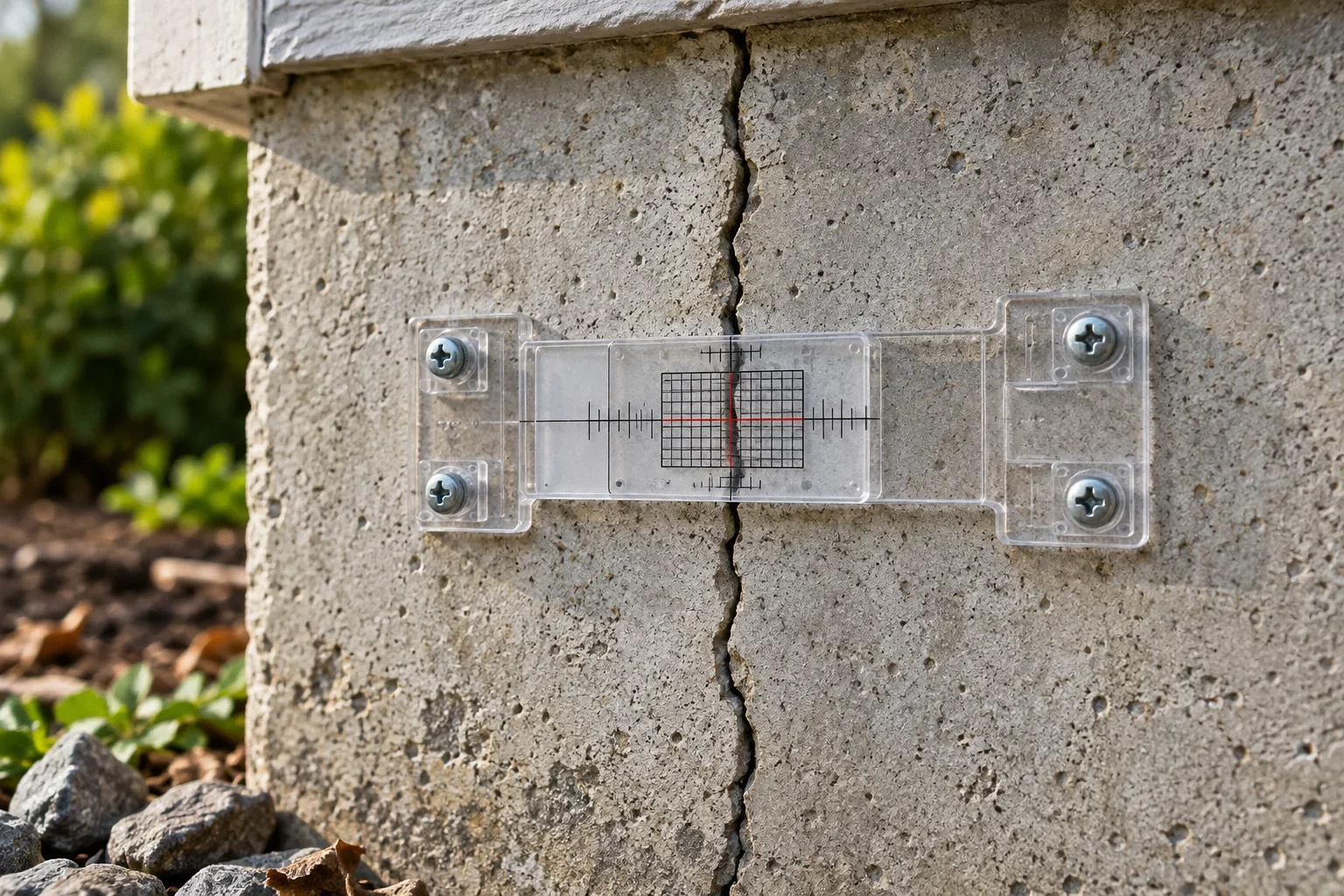
Before concealing the line, gather dated photographs, prior inspection notes and any reliable measurements. Record whether openings stick seasonally, whether the crack returns after earlier patching and whether related distress appears in adjacent materials. Include the observation period. Two unchanged photographs a week apart do not establish that a crack will remain inactive through a wet and dry season.
The historical Residential Rehabilitation Inspection Guide discusses inspection and monitoring as part of understanding foundation distress. It supports a documented assessment, not a rule that all cracks below a certain width can be injected. If a professional recommends monitoring, ask what uncertainty the monitoring addresses, who will interpret the results and what change would trigger a reassessment.
Ask what must be known about the concrete
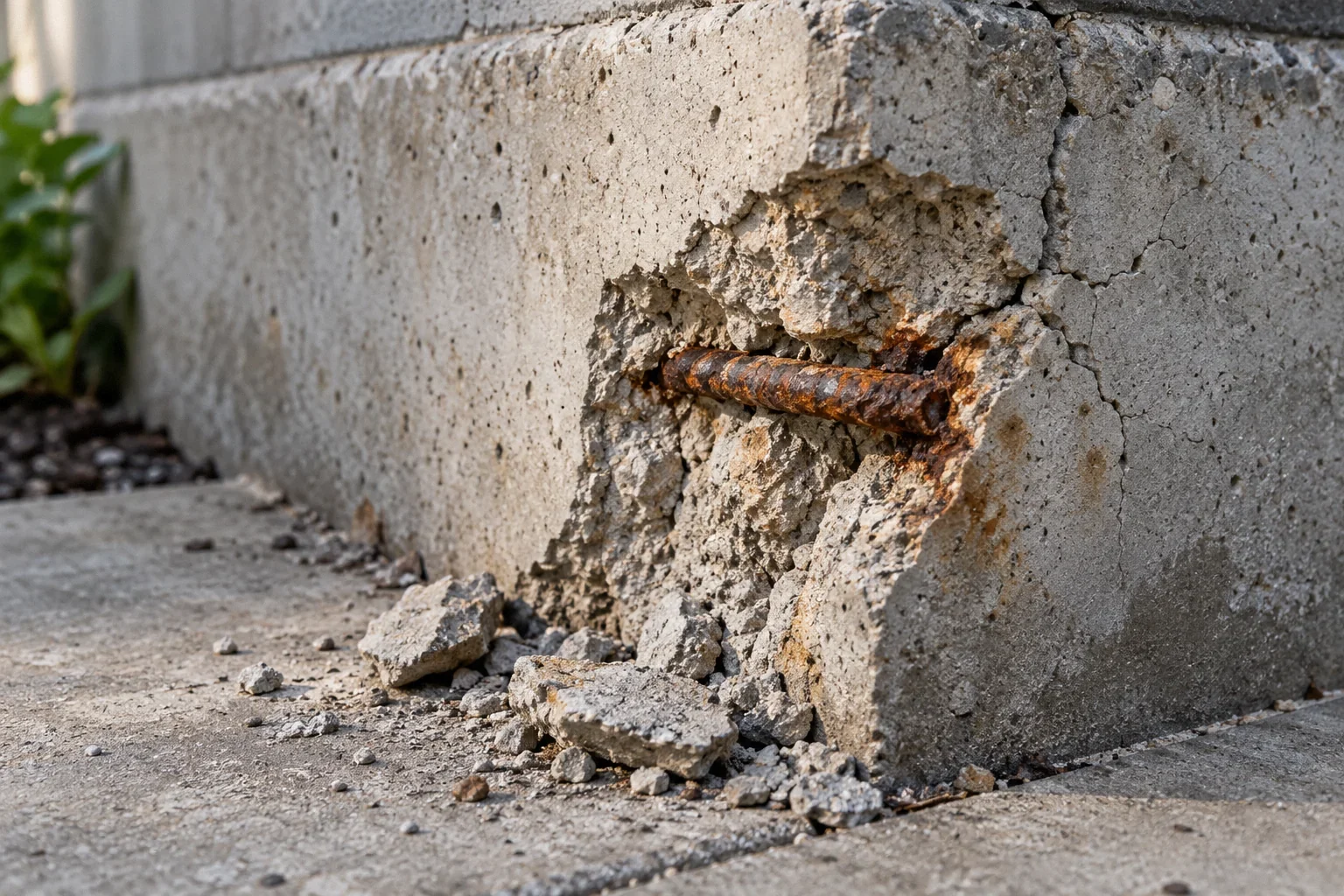
Repair material can only perform as intended when the surrounding concrete is suitable. A clean-looking line does not reveal the full condition beneath paint, coatings or previous patches. Weak or delaminated concrete, contamination, inaccessible portions of the crack and conditions at embedded steel can all change the scope of a repair assessment. The assessor should explain which conditions were observed and which remain unknown.
The homeowner’s useful role is to provide records and preserve visibility, not to probe deeply or expose reinforcement. Ask whether the proposed treatment assumes sound concrete throughout the affected area. If that assumption is central, ask what examination supports it and what happens if preparation reveals more extensive deterioration than was visible during the initial visit.
A hypothetical repair that solves only half the problem
Imagine a homeowner with a vertical wall crack that leaks during storms. An injection stops the leak, but a nearby door continues to bind and a dated floor survey shows a changing pattern. This hypothetical result is consistent with successful sealing and an unresolved movement question. It would be misleading to describe the dry wall as proof that the foundation was structurally restored.
Now consider the reverse: an engineer identifies an appropriate structural rebonding repair after establishing the relevant cause and substrate condition. That repair still may not correct the exterior water management that fed the leak. The lesson is to define separate completion criteria where separate problems exist. One line in the concrete does not necessarily correspond to one scope of work.
Make the proposal explain its assumptions
A useful repair description identifies the crack location, the intended function of the repair, the selected material and the conditions required for it to work. It should explain whether the crack is treated as active or inactive and why that classification is reasonable. Where structural performance is the objective, the basis for the repair needs an appropriate professional assessment.
Also ask how inaccessible surfaces and earlier repairs affect confidence. A statement such as “inject until filled” describes an activity without establishing the required outcome. Ask what records will document the completed treatment and what observations after repair would call its performance into question. These questions help distinguish a defined repair from a promise that every problem associated with the crack will disappear.
Keep a usable baseline after the surface is closed
Retain the original photographs, assessment, product identification and a location drawing with the final repair record. Photograph the finished area from the same broad viewpoint as the baseline. If the repair conceals the original crack, its location should remain identifiable in the records without relying on a future owner’s memory or a technician’s recollection.
Follow any project-specific observation plan provided by the responsible professional. Report renewed leakage, new cracking nearby or changes in associated symptoms in their original context. A repair can perform its intended sealing function while other conditions evolve. Good records allow the next assessment to examine that distinction instead of starting with an unexplained smooth patch and an assumption that the entire problem was solved.
Before your next decision
- State whether the goal is sealing, structural bonding or both.
- Record the crack and associated symptoms before concealment.
- Ask what supports the movement and substrate assumptions.
- Identify the exact product and its intended application.
- Keep the assessment and repair records together.
Related questions
If injection stops the leak, does that prove structural repair?
No. Stopping water confirms a sealing outcome under the conditions observed. Structural performance depends on the diagnosed problem, material, substrate and repair design; it needs its own basis and verification.
Is epoxy always stronger and therefore better?
A rigid bond is useful only when it fits the repair objective and conditions. Greater material strength does not resolve continuing movement, unsuitable concrete or a requirement for flexible sealing.
Should a crack be monitored before any injection?
Sometimes, but the decision depends on symptoms and consequences. Ask the assessor whether monitoring would change the diagnosis or repair choice; do not postpone an urgent evaluation solely to collect more photographs.
Sources & further reading
- U.S. Bureau of ReclamationGuide to Concrete Repair, 2015
Concrete repair principles from a water-infrastructure manual; no residential injection pressure, port layout or DIY procedure.
- National Ready Mixed Concrete AssociationCIP 4: Cracking Concrete Surfaces
Concrete crack mechanisms and prevention concepts; avoid universal safe-width claims.
- U.S. Department of Housing and Urban Development / National Institute of Building SciencesResidential Rehabilitation Inspection Guide
February 2000 guide; condition-assessment concepts only, not current code or a DIY repair specification.
Homeowner questions behind this article
These discussions informed the questions, not the technical answers. Some were available through indexed excerpts; votes and comments are not an engineering assessment.
- Structural Foundation Crack
- Foundation diagonal crack in a house we’re considering—would you get a structural engineer?
- Foundation and drywall cracks - need advice