The short answer
Monitoring foundation cracks is useful when it answers a defined question about movement over time. A dated baseline, repeatable observations and an agreed follow-up plan matter more than buying a gauge. Measurements can show change, but they do not by themselves explain its cause or prove that a building is safe. Use the monitoring method and escalation criteria recommended for the particular structure.
US general planning; California details labeled where relevant
Define the question before collecting numbers
Start by asking why monitoring was recommended. The question might be whether a repaired joint continues to open, whether a wall changes with the seasons, or whether movement followed recent site work. Those questions require different records. An open-ended instruction to keep an eye on it can produce months of photographs without a usable conclusion.
Ask the person recommending monitoring which locations matter, what should be measured and when the results should be reviewed. Clarify whether another investigation is needed in parallel. Monitoring can document progression while drainage or soil conditions are being studied; it should not become a reason to postpone an assessment that is already necessary. Write down who will interpret the observations.
Build a baseline that another person can repeat
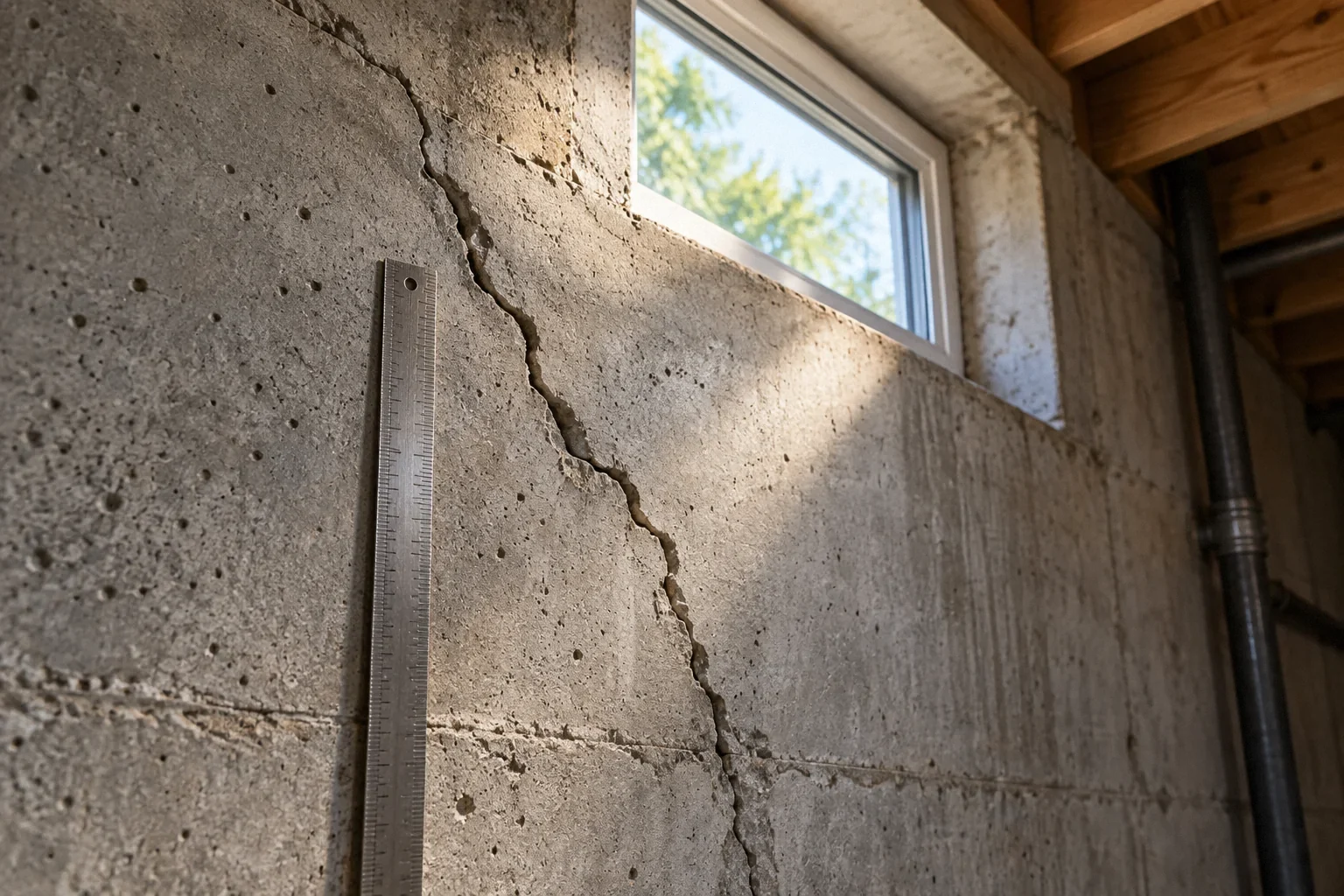
Give each monitored crack an identifier and place it on a simple plan. Take a wide photograph showing its location, a medium view showing the surrounding wall and a close-up with an appropriate scale. Include enough permanent features to repeat the position. Save the original files and dates rather than relying only on images embedded in messages.
A baseline should also describe visible displacement, the material involved and existing patches. Record areas that could not be viewed. If finishes hide the opposite side of the wall, that is a limitation rather than evidence that the crack stops. A good record lets an assessor distinguish a new observation from a newly exposed portion of an old condition.
Understand what a movement indicator measures
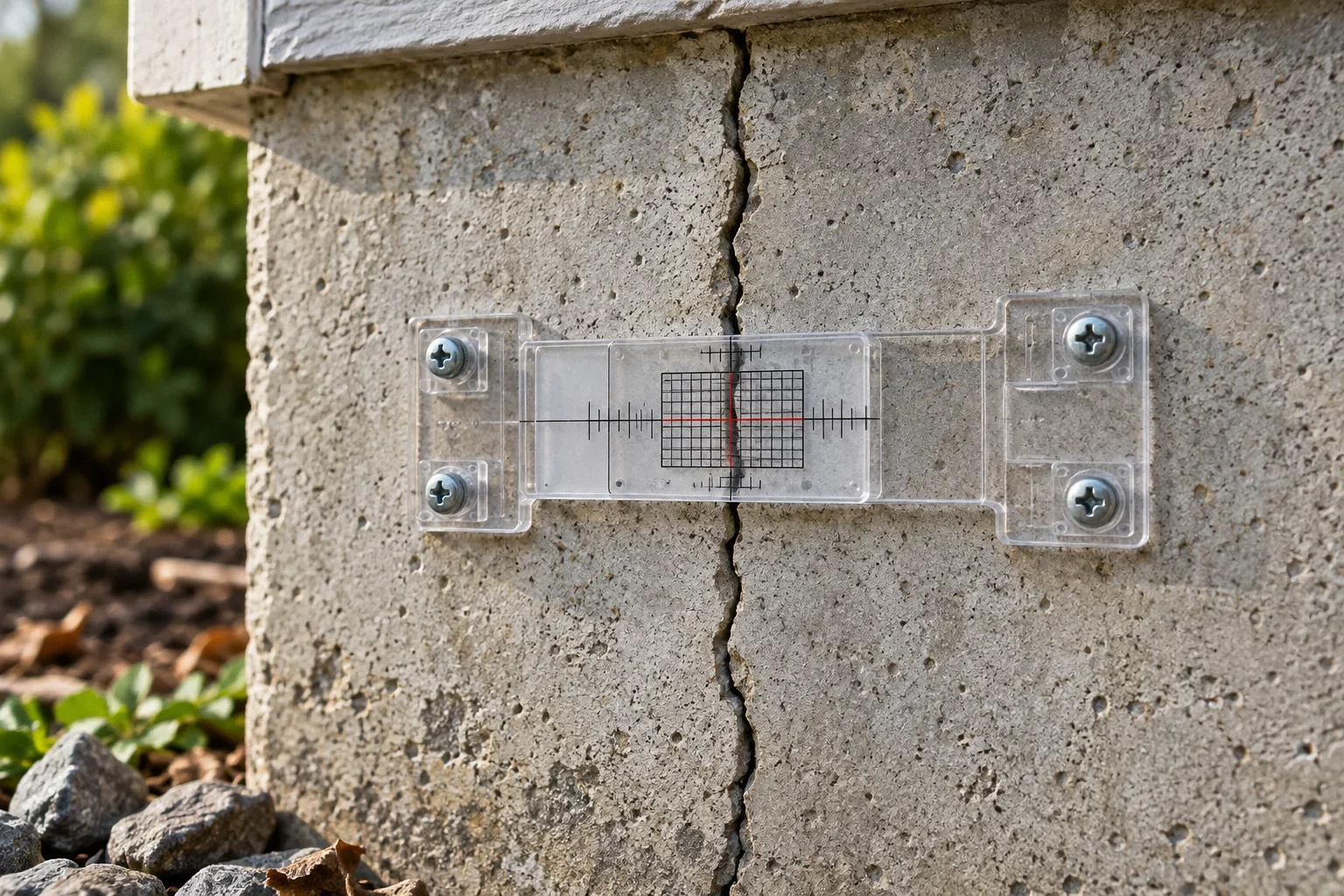
Commercial indicators can make changes across a crack easier to observe. The historical HUD assessment guide describes joint-movement indicators in Residential Rehabilitation Inspection Guide. Their purpose is to record relative movement where they are mounted, not to certify the footing or reveal every change in the building. The chosen device and its attachment need to suit the surface and the question.
Do not infer that an unchanged gauge means all nearby movement has stopped. The attachment may have loosened, the wall may have moved in a different direction, or movement may be concentrated elsewhere. Keep photographs of the device and surrounding material. If it is struck, painted over or removed, document that interruption instead of joining the before-and-after readings as one continuous series.
Keep the measurement method consistent
Choose repeatable locations, viewing angles and units. Avoid switching between a ruler at one point and a gauge somewhere else while describing the results as a single measurement. Write down a reading immediately, including uncertainty when the scale is difficult to read. Do not round a barely visible change into a confident conclusion.
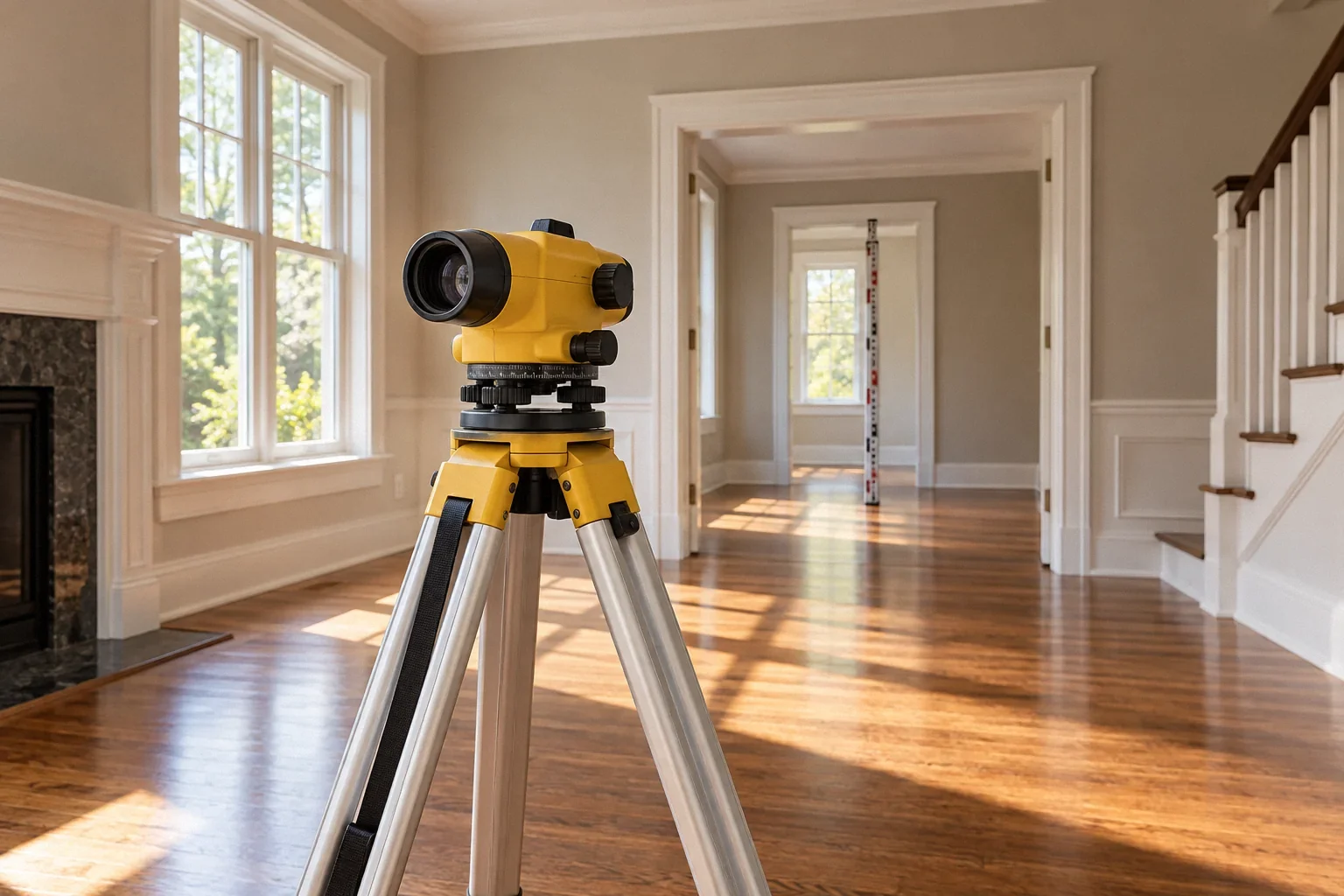
For electronic or professional surveys, retain the instrument method and reference information with the results. A new person, a changed datum or a different floor surface can produce an apparent difference. If a reading seems surprising, first check how it was taken. Consistency does not eliminate every error, but it makes the record much easier to interpret and reduces arguments based on incompatible observations.
Add weather and building context without inventing causation
Note substantial rain, dry periods, plumbing leaks and changes in irrigation or drainage. Also record new sticking doors, changed floor behavior or reopened finish cracks. These observations can help an engineer compare timing. They do not establish that the most recent storm or nearby tree caused the movement.
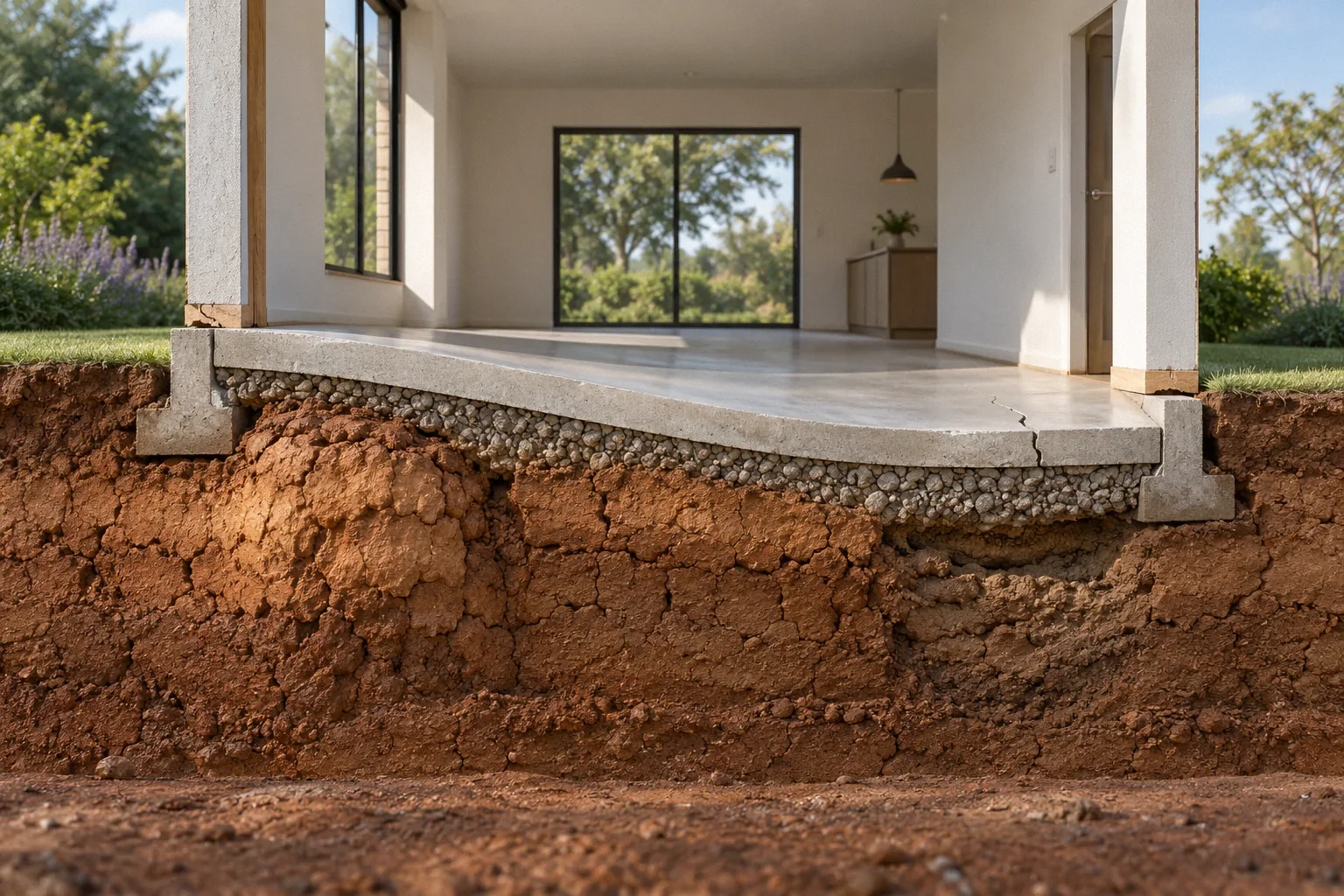
The Colorado Geological Survey explains how nonuniform moisture changes can affect expansive soils in Home Construction on Shrinking and Swelling Soils, Special Publication 11. That historical source supports a mechanism, not a watering schedule for your property. NRMCA also describes concrete movement associated with moisture, temperature, loads and support in CIP 4: Cracking Concrete Surfaces. Together these distinctions explain why a crack that opens and closes may need interpretation rather than an automatic label of harmless seasonal behavior.
A hypothetical record that changes the next step
Suppose a homeowner has four monthly photographs showing a crack that appears unchanged. A fifth image looks wider, but it was taken much closer and without a scale. That record does not yet establish acceleration. Repeating the observation consistently may resolve the apparent difference.
Now imagine the fifth reading comes from an intact indicator, a newly displaced joint is visible nearby and the owner has documented a fresh plumbing leak. The combined information is more useful and may warrant an earlier review. The value comes from corroboration and a reliable method, not simply the number of months in the spreadsheet. Neither hypothetical case supplies a universal threshold for deciding when a foundation needs repair.
Agree on what ends the monitoring period
Monitoring should lead to a decision. Ask when the record will be reviewed, what additional investigation may be needed and what conditions require an earlier call. The answer should reflect the building, suspected mechanism and consequences of movement. A generic online instruction to wait through one season is not a substitute for that plan.
If the original assessment identified a load-bearing concern, monitoring does not repair it. Likewise, a short interval with little change cannot establish permanent stability or predict an earthquake response. A useful final interpretation distinguishes what was observed from what was inferred. It may recommend continued observation, a specific repair or soil investigation, and should state the reasoning and remaining limits.
Separate measurement uncertainty from a building trend
A sequence of slightly different readings can reflect actual change, a different measuring position or the limits of the method. Before interpreting a trend, ask whether the observer can reproduce a reading under the same conditions. Record the method and its practical limitations rather than presenting every digit displayed by an instrument as equally meaningful.
A useful log separates the observation from the interpretation. One entry might state that the reading changed after the indicator was disturbed during painting. Another might note that a photograph was taken at an oblique angle and cannot be compared directly with the baseline. Keeping those entries is better than deleting them or treating them as proof of movement. They explain why some data may receive less weight.
The decision also depends on what the instrument measures. A change across one crack does not automatically establish the direction of movement of the whole house, and an unchanged indicator does not prove that every other component is stable. Ask the evaluator whether the observation points are adequate for the hypothesis being tested. The most useful monitoring program is the smallest coherent set of repeatable observations that can change the next decision, with an explicit way to handle missing or uncertain readings.
Preserve evidence when repairs or finishes are planned
Painting and filling can erase useful visual reference points. Before that work, retain the baseline and ask whether any devices or marked locations should stay exposed. If a crack is sealed for an identified reason, record the date, material and extent of treatment so later changes can be understood against the new condition.
Keep the monitoring record with the house documents. A future owner or engineer should be able to see where observations were made, which gaps exist and what professional conclusions followed. Avoid describing the house as monitored and stable if the record only covers one crack for a short period. The strongest record is precise about both its usefulness and its limits, without exaggerating either.
Before your next decision
- State the question the record is intended to answer.
- Number cracks on a location plan and retain original photographs.
- Record method changes, damaged gauges and missing observations.
- Keep weather and repair events alongside measurements.
- Arrange a defined review and an earlier-contact plan.
Related questions
If a crack closes after rain, is the foundation fixed?
No. Closing is another movement observation. It may be relevant to a soil-moisture hypothesis, but the cause and significance still need interpretation.
Is a crack gauge better than photographs?
They answer different questions. A suitable indicator can record relative movement, while photographs preserve condition and context. Combining consistent methods is usually more informative than an isolated reading.
How long should I monitor?
Use a duration and review schedule tied to the suspected mechanism and professional assessment. There is no single observation period that clears every foundation.
Sources & further reading
- U.S. Department of Housing and Urban Development / National Institute of Building SciencesResidential Rehabilitation Inspection Guide
February 2000 guide; condition-assessment concepts only, not current code or a DIY repair specification.
- Colorado Geological Survey / American Society of Civil EngineersHome Construction on Shrinking and Swelling Soils, Special Publication 11
October 1978 historical educational text. Use stable soil mechanisms only; exclude dated loss statistics, design dimensions and Colorado rules from California advice.
- National Ready Mixed Concrete AssociationCIP 4: Cracking Concrete Surfaces
Concrete crack mechanisms and prevention concepts; avoid universal safe-width claims.
Homeowner questions behind this article
These discussions informed the questions, not the technical answers. Some were available through indexed excerpts; votes and comments are not an engineering assessment.
- Foundation and drywall cracks - need advice
- Has anyone had foundation piering done?
- Foundation diagonal crack in a house we’re considering—would you get a structural engineer?