The short answer
Helical-pier installation records are useful only when they can be compared with the design assumptions and acceptance criteria. Torque, depth and configuration each describe part of the installation; none should be treated as a universal certificate of capacity. Ask how the selected system was evaluated, what testing or corroboration was required and who confirmed that the completed work met the intended support objective.
US general planning; California details labeled where relevant
Begin with the design question behind the numbers
An installation sheet may look impressive because it contains repeated measurements. Its value depends on what those measurements are intended to demonstrate. Before reading individual values, identify the required performance, the selected system and the acceptance basis used by the responsible engineer.
Ask for the relevant design and approved changes alongside the log. A record without context may show that a crew completed work without showing that the work meets the intended purpose. The owner does not need to calculate capacity, but should know which professional interprets the results and where that conclusion is documented. This turns a collection of numbers into usable evidence rather than a technical-looking souvenir.
Torque is a correlation, not a complete building assessment
Hubbell describes installation torque correlation as one method of evaluating helical capacity in 3 Methods to Determine Helical Pile Capacity (and why you should use 2). The same discussion identifies soil-based calculations and load testing as other methods. It also describes corroborating approaches within its own product guidance. Those manufacturer practices should not be generalized into a universal formula for every pile or soil.
A statement that target torque was reached therefore needs context: the system, configuration, assumptions and applicable criteria. It does not assess the condition of the old footing or prove that a bracket transfers the intended load. Ask how the torque information fits into the complete design and whether any field condition required additional review.
Configuration belongs beside the reading
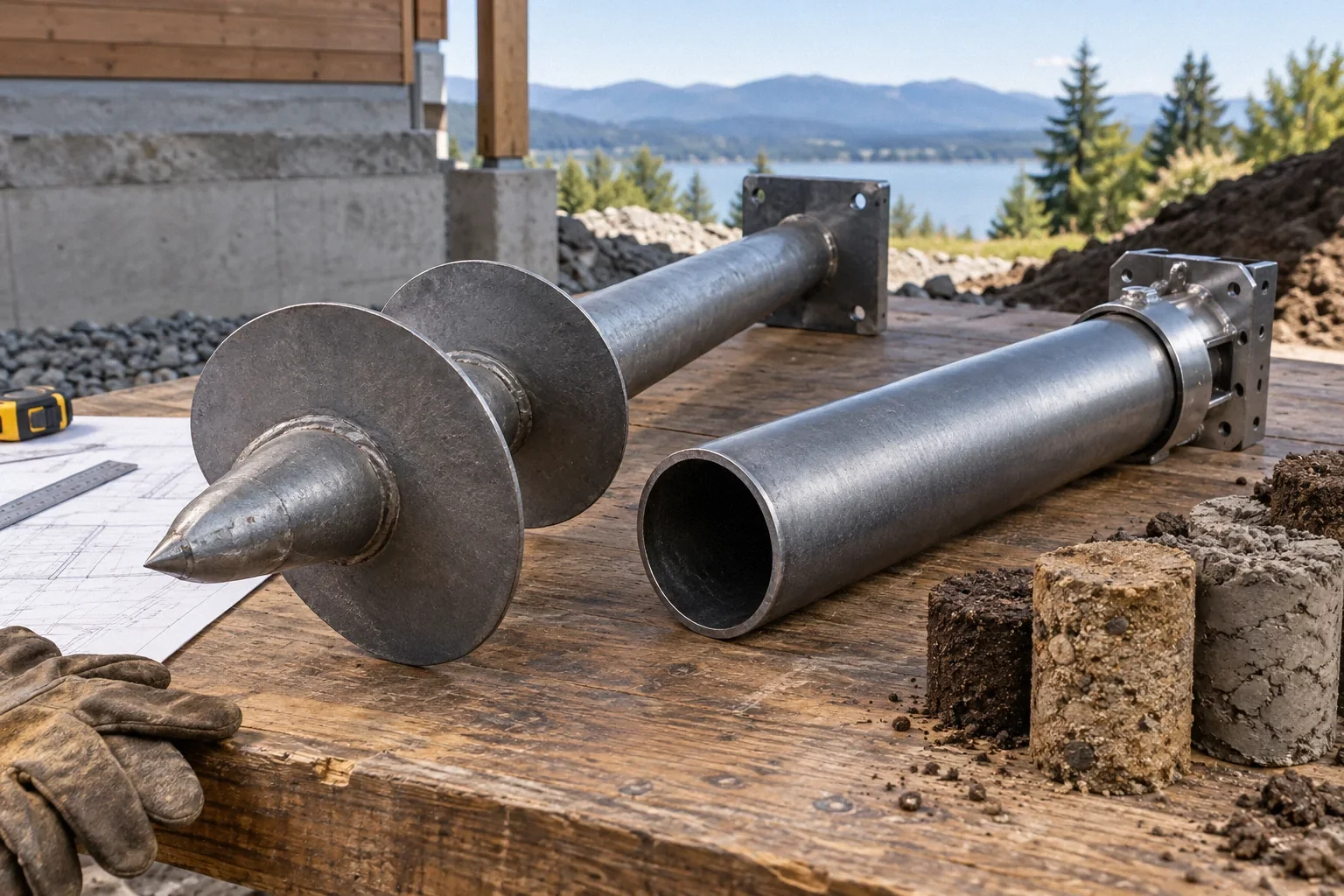
A meaningful log identifies the installed elements and their locations. Shaft and helix configuration, extensions, depth and any changes should be traceable to the relevant support. Without those details, a later reviewer may be unable to determine which design assumptions apply to a reported value.
The same applies to field substitutions. If an obstruction or unexpected condition leads to a different arrangement, preserve the reason and the approval. Do not assume that a higher-looking number makes every alteration acceptable. The question is whether the installed configuration and surrounding conditions remain consistent with the design and acceptance process. Good records let the responsible professional answer that question without reconstructing the job from memory.
Depth and refusal require interpretation
Reaching a particular depth does not, by itself, identify the material providing support. An installation that stops earlier or later than expected may reflect several conditions. The record should preserve what happened and how it was evaluated rather than convert the event into a simple statement that the pier found rock.
FHWA emphasizes site characterization and documented acceptance in Acceptance Procedures for Structural Foundations of Transportation Structures, GEC 15. Its transportation guide is not a residential helical specification, but it illustrates the importance of comparing assumptions with field evidence. Ask how unexpected resistance, obstructions or deviations were handled. A completed log is most useful when it includes the decisions made in response to those observations, not only the final depth.
Understand what a load test adds
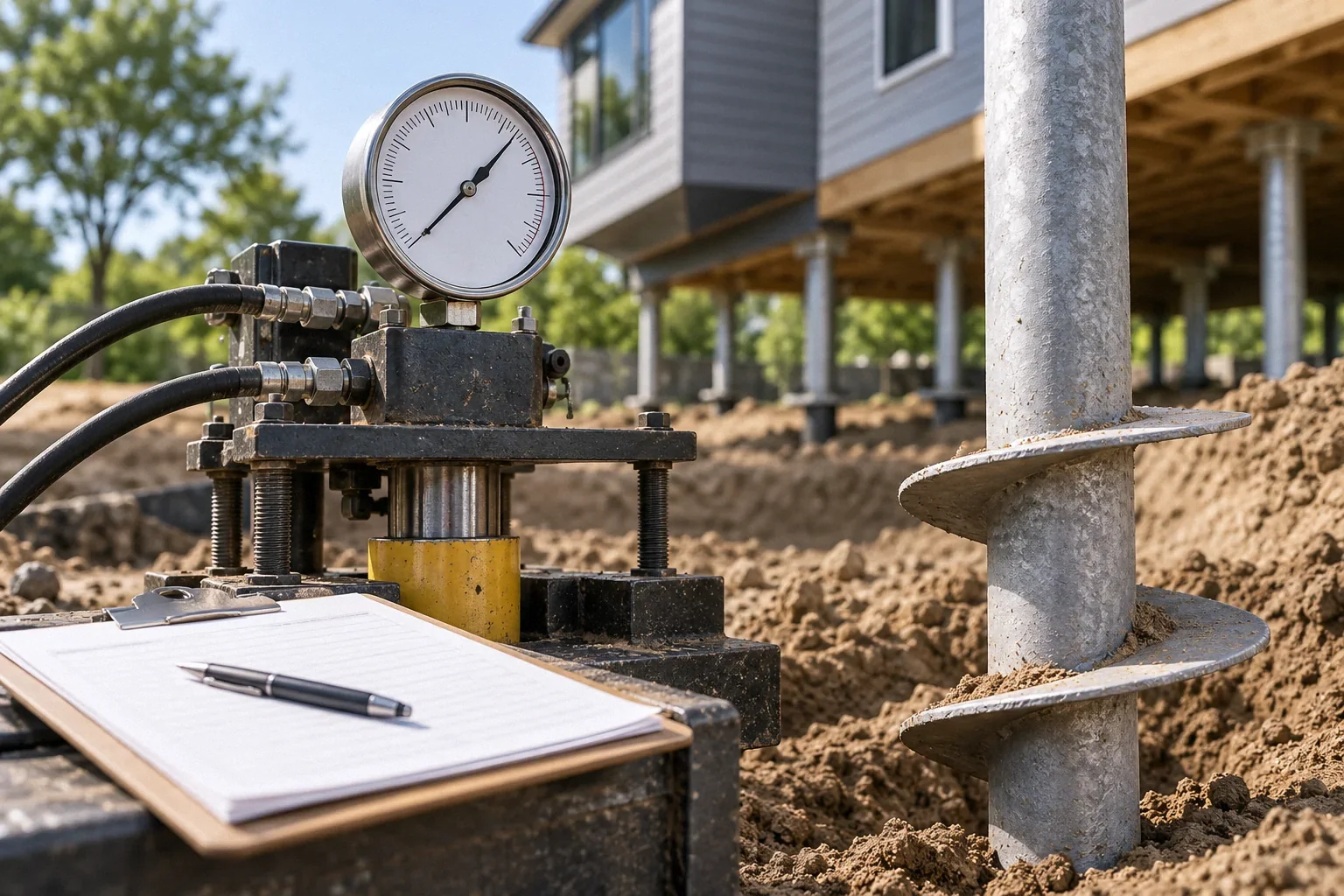
A load test observes response under a defined procedure and test conditions. Its interpretation depends on the purpose, setup, measurements and acceptance criteria. Hubbell's discussion explains that displacement is recorded as load is applied in its described approach. That is more informative than simply hearing that a pier was tested.
Ask whether the project required testing, which supports were tested and who reviewed the results. Do not invent a requirement from another system's brochure. For comparison, the ATLAS manufacturer description in ATLAS Resistance Piers discusses a different staged verification and lifting process. The point is that acceptance evidence should fit the selected system, not that one manufacturer's procedure automatically governs another installation.
A practical record review
Scroll horizontally to read every column.
| Record | Question it should answer |
|---|---|
| Location plan | Which support does each log describe, and were positions changed? |
| Installed configuration | Does the actual system match the approved design or documented revision? |
| Field observations | What differed from expected ground or access conditions? |
| Testing and review | Who interpreted the results against the intended acceptance basis? |
| Connection photographs | How does the existing foundation transfer load into the installed support? |
These are owner-level documentation questions. They do not replace engineering review or establish a numerical acceptance threshold.
A hypothetical log with one important omission
Imagine a completion sheet reports satisfactory torque at every listed location, but several piers were moved to avoid utilities. The sheet does not show the revised positions or whether the existing foundation's spanning and connections were reconsidered. The torque records may still be useful, but they do not resolve the changed layout.
In another hypothetical job, the locations match and the final package includes the design, approved field changes, testing and an acceptance conclusion. The difference is traceability, not the visual complexity of the spreadsheet. The owner can understand what was installed and how it was evaluated. That is the standard of clarity to seek when asking for a completion package.
Ask what an unusual record entry means before rejecting it
An installation log may contain a deeper-than-expected element, a changed configuration or a note about an obstruction. Such an entry is not automatically proof of failure, but it requires interpretation within the design. Ask whether the deviation was reviewed, what evidence supports acceptance and whether it changed the connection or location requirements elsewhere in the system.
The most useful record links the observation to a disposition. “Obstruction encountered” tells the owner what happened. A documented design response explains what was done about it. A final acceptance statement then identifies whether the installed condition meets the project’s requirements. Without those links, a log can be detailed yet still leave the important decision unresolved.
Also distinguish missing information from an unfavorable result. If a document omits a field required by the design, ask whether the information exists elsewhere or whether the omission needs professional review. Do not invent a value from neighboring installations or assume that a blank cell means zero. Different locations may encounter different conditions, and averaging records can obscure a problem that requires attention at one support. The owner’s goal is a traceable acceptance decision for the relevant elements and connections, not a spreadsheet that merely looks consistent.
Keep installation acceptance separate from future performance
Accepting work against a design does not mean the house is immune to every future ground or building change. Keep any monitoring or maintenance recommendations with the installation records. Record later plumbing, drainage or loading changes that may be relevant to future observations.
Also distinguish stabilization from elevation recovery. A log documenting pier installation may not show whether a planned lift achieved its stated objective, and a before-and-after floor map may not document pier acceptance. Both may belong in the file, but they answer different questions. Preserving those distinctions makes the records useful when the owner reviews the result, sells the house or seeks a later professional assessment.
Before your next decision
- Keep the design and acceptance basis with the field logs.
- Match each record to a location and installed configuration.
- Document deviations and the professional review of changes.
- Retain testing results and the acceptance conclusion.
- Store lift records separately from support-installation evidence.
Related questions
Is target torque proof that a pier can support my house?
It is one piece of system-specific evidence. The design, configuration, ground assumptions, connection and required corroboration or testing must also be considered.
Should every pier reach the same depth?
Not necessarily. Ground conditions may vary. Differences should be documented and evaluated against the design rather than accepted or rejected solely because depths differ.
Are installation photos enough?
Photos help document locations and connections, but they do not replace required measurements, testing or professional interpretation of acceptance.
Sources & further reading
- Hubbell / CHANCE, Gary L. Seider PE3 Methods to Determine Helical Pile Capacity (and why you should use 2)
Manufacturer technical discussion; product-specific practices must not be presented as universal engineering rules.
- Federal Highway AdministrationAcceptance Procedures for Structural Foundations of Transportation Structures, GEC 15
April 2022 transportation-foundation guide. Transferable concepts only; not residential prescriptive requirements.
- Hubbell / ATLASATLAS Resistance Piers
Manufacturer description of one resistance-pier system; not comparative proof or universal endorsement.
Homeowner questions behind this article
These discussions informed the questions, not the technical answers. Some were available through indexed excerpts; votes and comments are not an engineering assessment.
- Micropile cost in Colorado?
- Foundation repairs on expansive clay soil
- Has anyone had foundation piering done?