The short answer
Helical and push piers are different ways of transferring loads to deeper ground, but neither is automatically the best choice for every house. Soil conditions, the existing foundation, installation constraints and the method of verifying support all affect selection. Compare proposals against the same documented problem and performance objective, including how the new support connects to the old structure.
US general planning; California details labeled where relevant
Compare a complete system, not just a steel shaft
A foundation repair includes more than the element entering the ground. The existing footing or wall must transfer load through a suitable connection, and the ground must provide the intended resistance. Installation and verification are part of that system. Ignoring any one of these links can make a simple product comparison misleading.
Begin with the problem the engineer has identified. Is the aim to stabilize a particular support, recover some elevation or address another condition? A proposal for one objective cannot be fairly compared with a proposal for another simply by counting piers. Request a common location plan and explanation of the loads and assumptions before treating two prices as equivalent options.
How the installation concepts differ
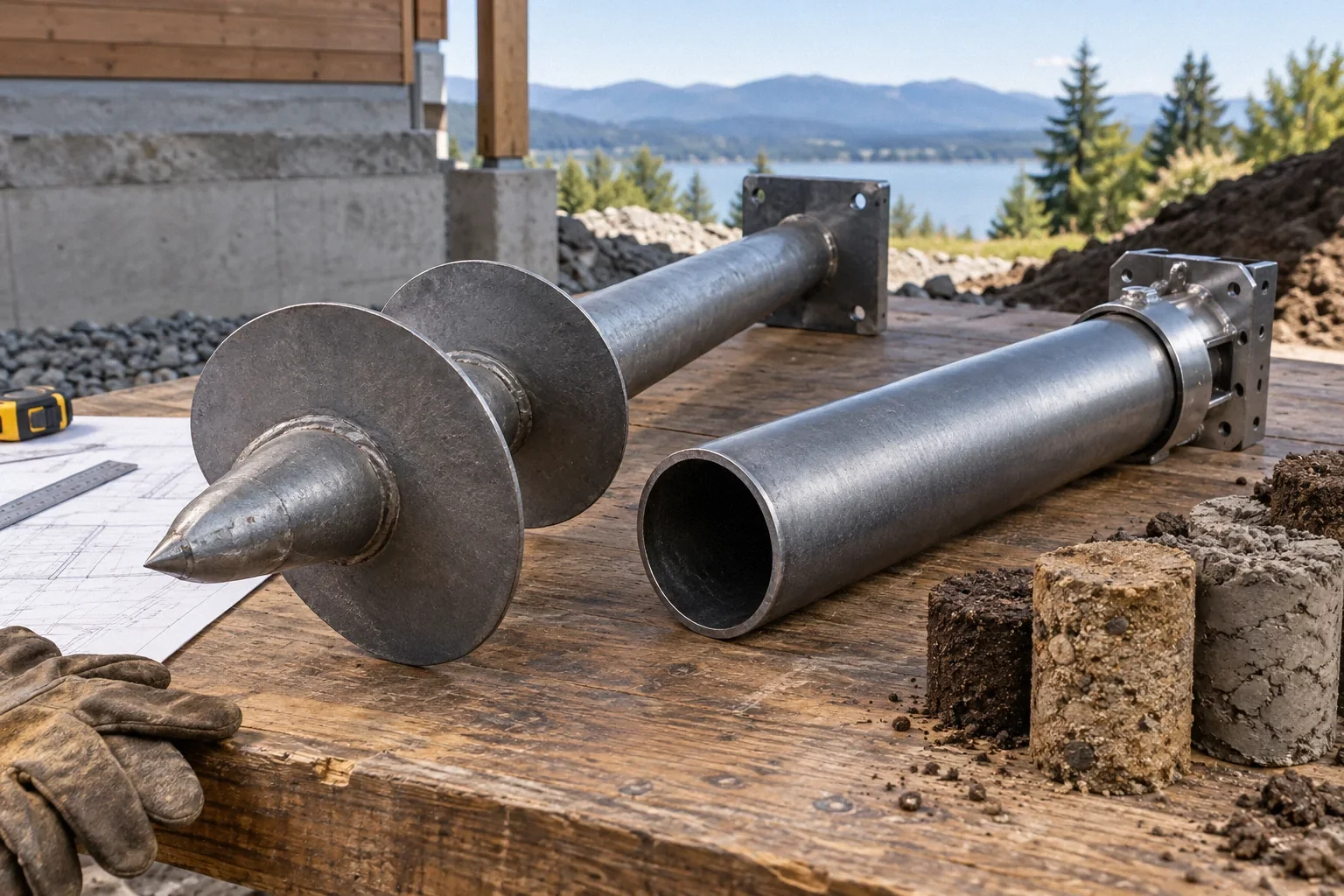
A helical pile advances through the ground by rotation of its shaft and helix arrangement. A resistance or push-pier system is advanced using a jacking process and must be evaluated with the reaction and connections available at the structure. Product details and site conditions affect how each is implemented.
Hubbell's technical discussion of helical capacity in 3 Methods to Determine Helical Pile Capacity (and why you should use 2) describes calculations, torque correlation and load testing. Its ATLAS description in ATLAS Resistance Piers describes a staged resistance-pier process with separate support verification and lifting. These are manufacturer descriptions, not proof that either system is universally superior. Use them to understand the proposed method, then ask how the design applies to the actual house and ground.
A comparison that keeps the missing evidence visible
Scroll horizontally to read every column.
| Decision | Evidence to request | What it helps resolve |
|---|---|---|
| Ground suitability | Relevant soil profile and installation assumptions | Whether the intended support conditions are plausible |
| Existing foundation | Condition and proposed connection detail | How the old structure transfers load into the new system |
| Site access | Equipment route, utility locations and working constraints | Whether the proposed layout is constructible |
| Acceptance | Required records and testing criteria | How installed performance will be evaluated |
These questions apply to both methods. They prevent a conversation about brand preference from replacing an explanation of the site's actual requirements.
The soil profile matters more than a regional label
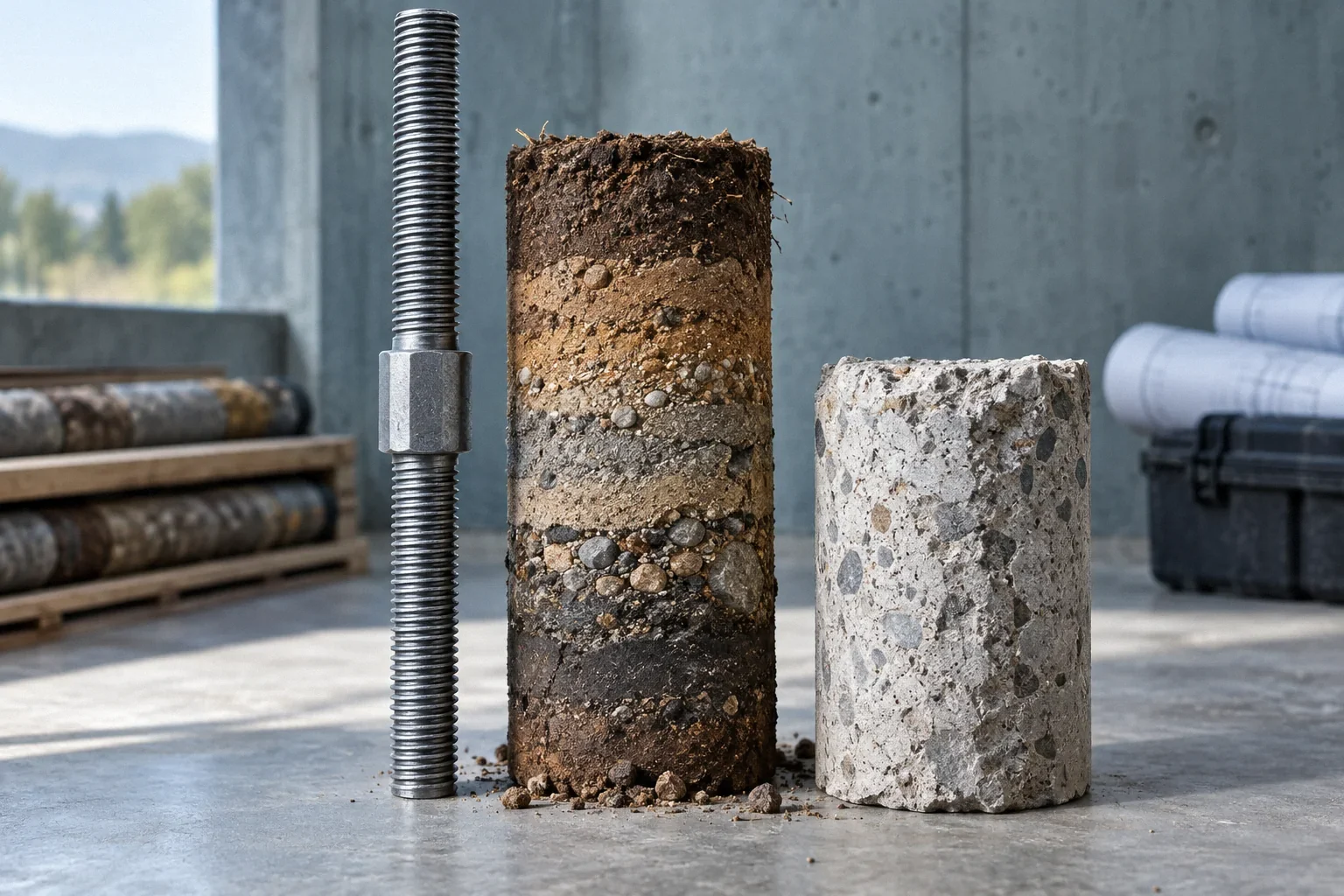
Clay, sand and rock are broad descriptions. Layering, obstructions, groundwater and the depth of suitable material may affect the proposed system. A neighboring installation can offer useful background without proving that the same conditions exist beneath this footing.
FHWA emphasizes site characterization and foundation acceptance in Acceptance Procedures for Structural Foundations of Transportation Structures, GEC 15. Its transportation scope should not be converted into a residential pier schedule, but it reinforces the need to connect design assumptions with field evidence. Ask what ground information supports the proposal and what will happen if installation encounters different conditions. A plan should explain how unexpected resistance or inadequate performance is evaluated, rather than assume that reaching some depth automatically establishes adequate support.
The old foundation must be able to receive the repair
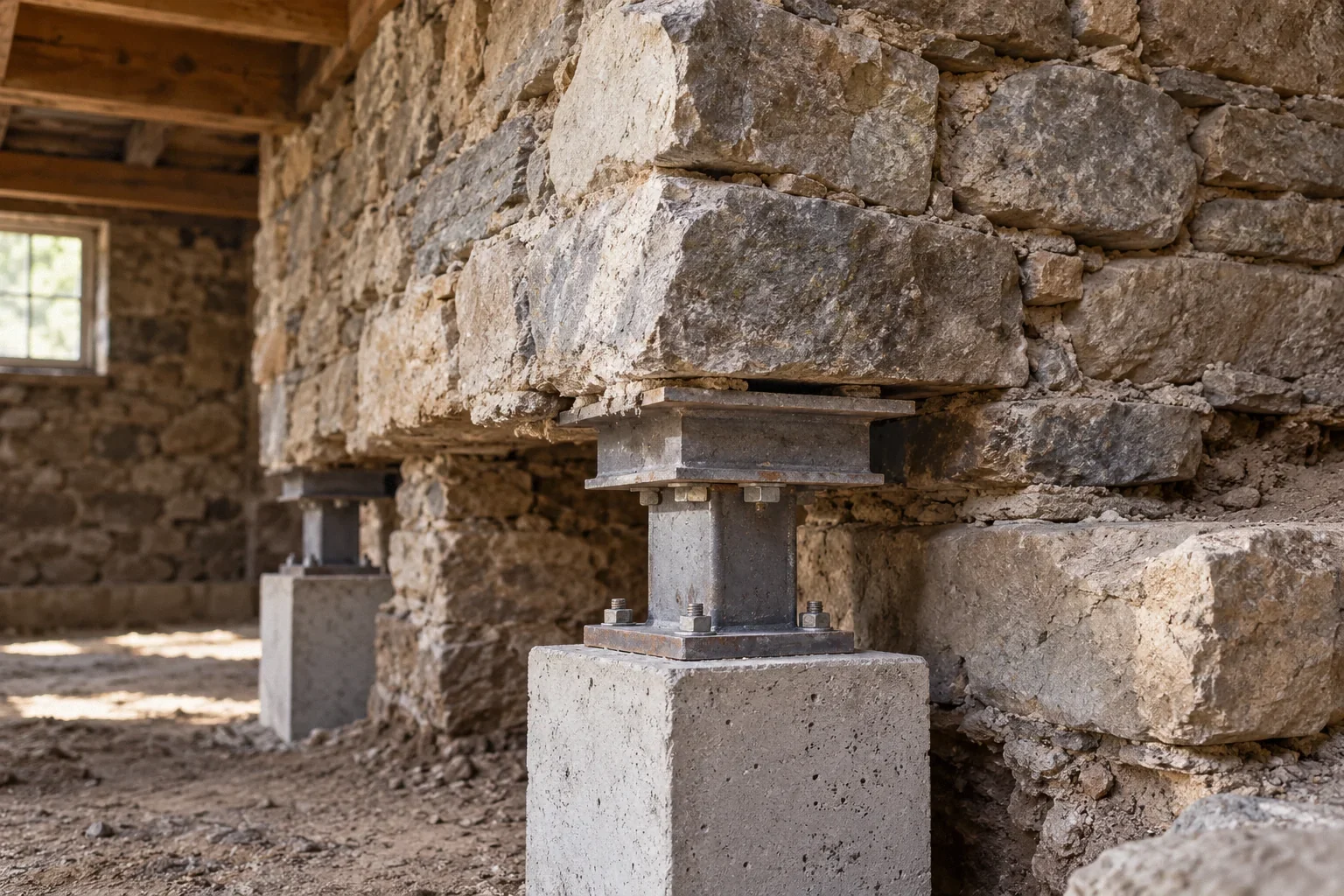
Concrete condition, geometry and reinforcement may affect the connection. Old stone or brick construction presents additional questions that should not be answered with a generic bracket sketch. The new pier's stated capacity is not the capacity of the complete repair unless every relevant link has been considered.
Ask whether the existing footing has been sufficiently identified and whether its condition is compatible with the proposed transfer of load. If a new element is needed between the old foundation and the pier, it should be part of the design and scope. This connection question can explain why a method that works well under one house is unsuitable or more complicated under another.
Access and utilities can change a workable design
Equipment must reach the installation locations, and buried services may conflict with them. A constrained side yard, low clearance or nearby structures can affect the approach. These conditions should be identified before a proposal assumes an ideal layout around the perimeter.
A utility conflict is not a reason to move a support arbitrarily. Changing the spacing or connection may change how the existing structure spans and transfers loads. Ask who reviews such changes and what information is required. The practical comparison includes investigation, access and restoration work as well as the pier itself. Otherwise, an apparently simpler alternative may rely on unexamined assumptions about where and how it can be installed.
A hypothetical disagreement between two proposals
Imagine one proposal recommends helicals based on limited site information while another recommends push piers after working on a nearby house. Neither statement alone establishes the best choice. The owner asks both to address the same affected wall, soil information, footing condition and stabilization objective.
That review may reveal a genuine technical difference, a missing investigation or simply different assumptions. A third option may also become relevant. This hypothetical does not suggest that every decision requires endless bids. It illustrates how a shared engineering question makes comparisons useful. Without that common basis, the owner may be comparing two different projects while assuming the only difference is the type of steel support.
Compare the assumptions behind the same advertised outcome
Two proposals can both promise stabilization while relying on different assumptions about the existing foundation, the installation reaction, ground conditions and how loads reach the new supports. Put those assumptions beside each other before comparing the pier names. An unexplained difference may matter more than the product category.
For each concept, ask which part of the building transfers load into the proposed connection, what site information supports the intended bearing or resistance mechanism, and what field records demonstrate acceptable installation. Ask how the design responds if the expected conditions are not encountered or a planned location cannot be used. These are questions for the responsible professionals, not field adjustments for an owner to improvise.
Pay particular attention to proposals with different footprints. One may address a short wall while the other includes several additional supports or a different stabilization objective. Comparing them as equivalent can make the less complete scope appear technically superior simply because it is shorter. A useful comparison first aligns the affected area and performance goal, then examines why the systems differ.
If the assumptions cannot be reconciled from the available evidence, the next decision may be a focused investigation rather than immediate selection of either system. That is a concrete outcome: identify the missing fact that would change the choice and assign responsibility for resolving it.
Read completion records against the design objective
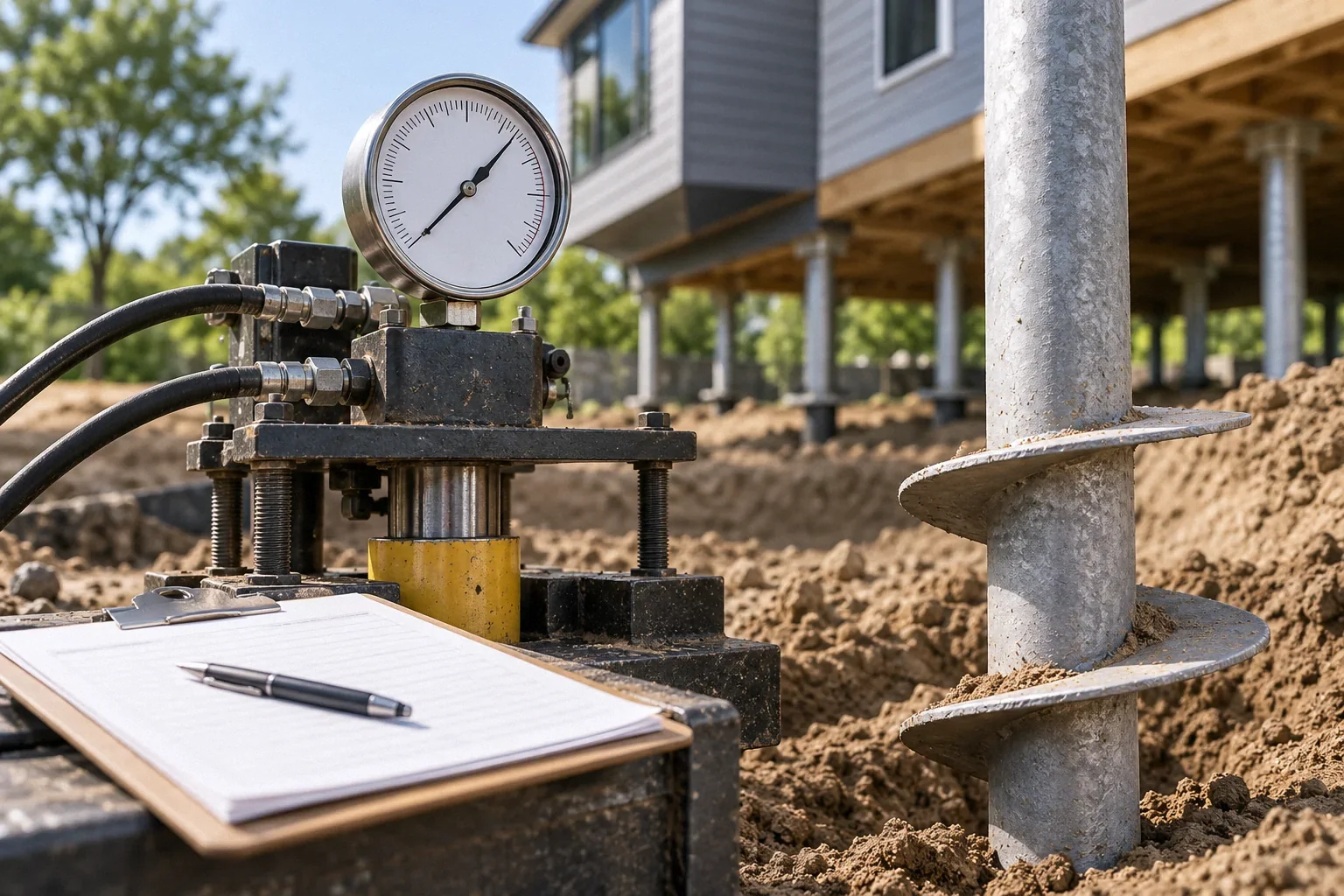
Installation depth, configuration, torque or jacking information and testing records should be interpreted in relation to the selected system and design. Ask who evaluates whether the installed work meets the required purpose. A record of installation effort is not automatically an acceptance conclusion.
Also distinguish support from lifting. A successful stabilization project may not restore every floor to level, while an intended lift requires its own evaluation of connected building elements. Keep the design, approved changes and completion records together. The useful result is evidence that a particular system was appropriate and installed for the stated objective, rather than a general claim that one kind of pier is always the strongest or safest.
Before your next decision
- Define the same affected supports and performance objective for each option.
- Identify the ground information and remaining assumptions.
- Review the connection to the existing foundation.
- Resolve access and utility constraints before installation.
- Ask how completion records will demonstrate acceptance.
Related questions
Are helicals always better in clay?
No. Clay is a broad description, and foundation condition, soil layers, installation constraints and verification all matter. A site-specific comparison is needed.
Does a deeper pier always provide better support?
Depth alone does not establish performance. The ground reached, system configuration, structural connection and acceptance evidence matter.
Can I compare proposals by price per pier?
Only after their scope and design assumptions are comparable. Different connections, investigation, access, testing and repair objectives can make a simple unit-price comparison misleading.
Sources & further reading
- Hubbell / CHANCE, Gary L. Seider PE3 Methods to Determine Helical Pile Capacity (and why you should use 2)
Manufacturer technical discussion; product-specific practices must not be presented as universal engineering rules.
- Hubbell / ATLASATLAS Resistance Piers
Manufacturer description of one resistance-pier system; not comparative proof or universal endorsement.
- Federal Highway AdministrationAcceptance Procedures for Structural Foundations of Transportation Structures, GEC 15
April 2022 transportation-foundation guide. Transferable concepts only; not residential prescriptive requirements.
Homeowner questions behind this article
These discussions informed the questions, not the technical answers. Some were available through indexed excerpts; votes and comments are not an engineering assessment.
- Sandstone foundation piers
- Micropile cost in Colorado?
- Foundation repairs on expansive clay soil
- Has anyone had foundation piering done?