The short answer
Hillside foundation cracks deserve an assessment that includes the surrounding slope, not just the concrete. Local settlement, erosion and broader ground movement can produce overlapping symptoms and may require different expertise. Record changes in ground shape, water flow, utilities and nearby structures alongside building damage. Potential landslide warning signs should be reported and evaluated promptly by professionals with relevant slope experience.
US general planning; California details labeled where relevant
Expand the view beyond the foundation wall
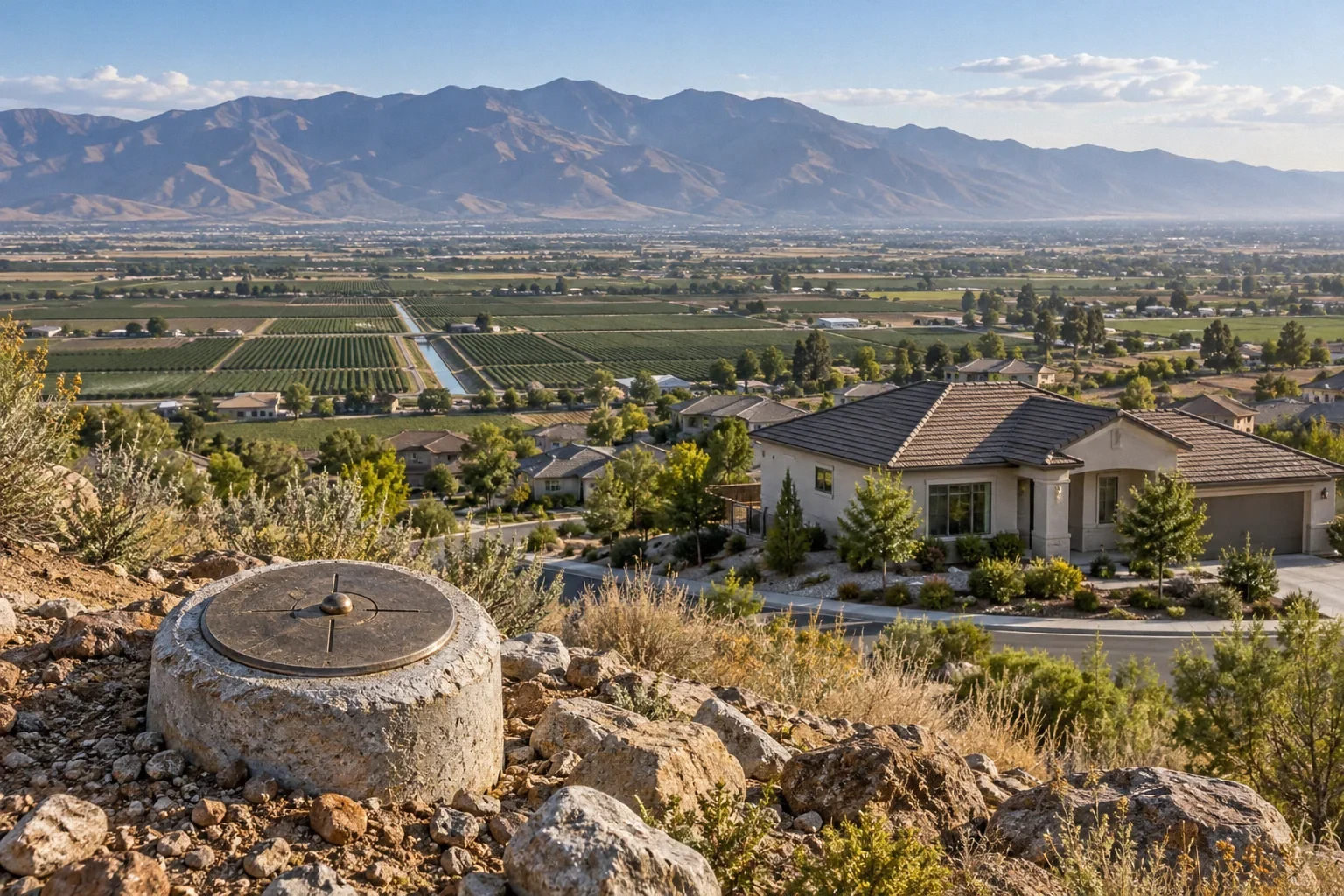
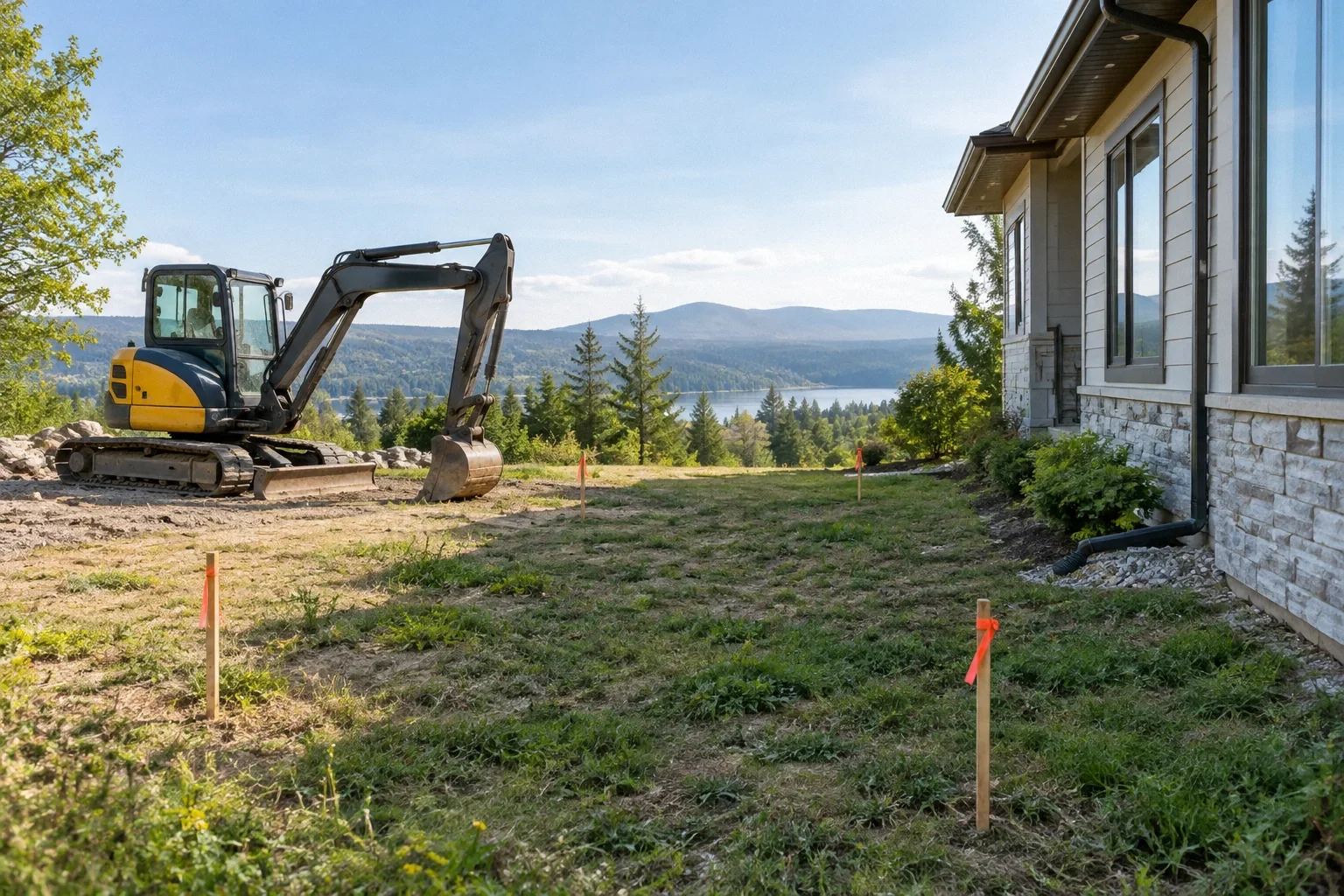
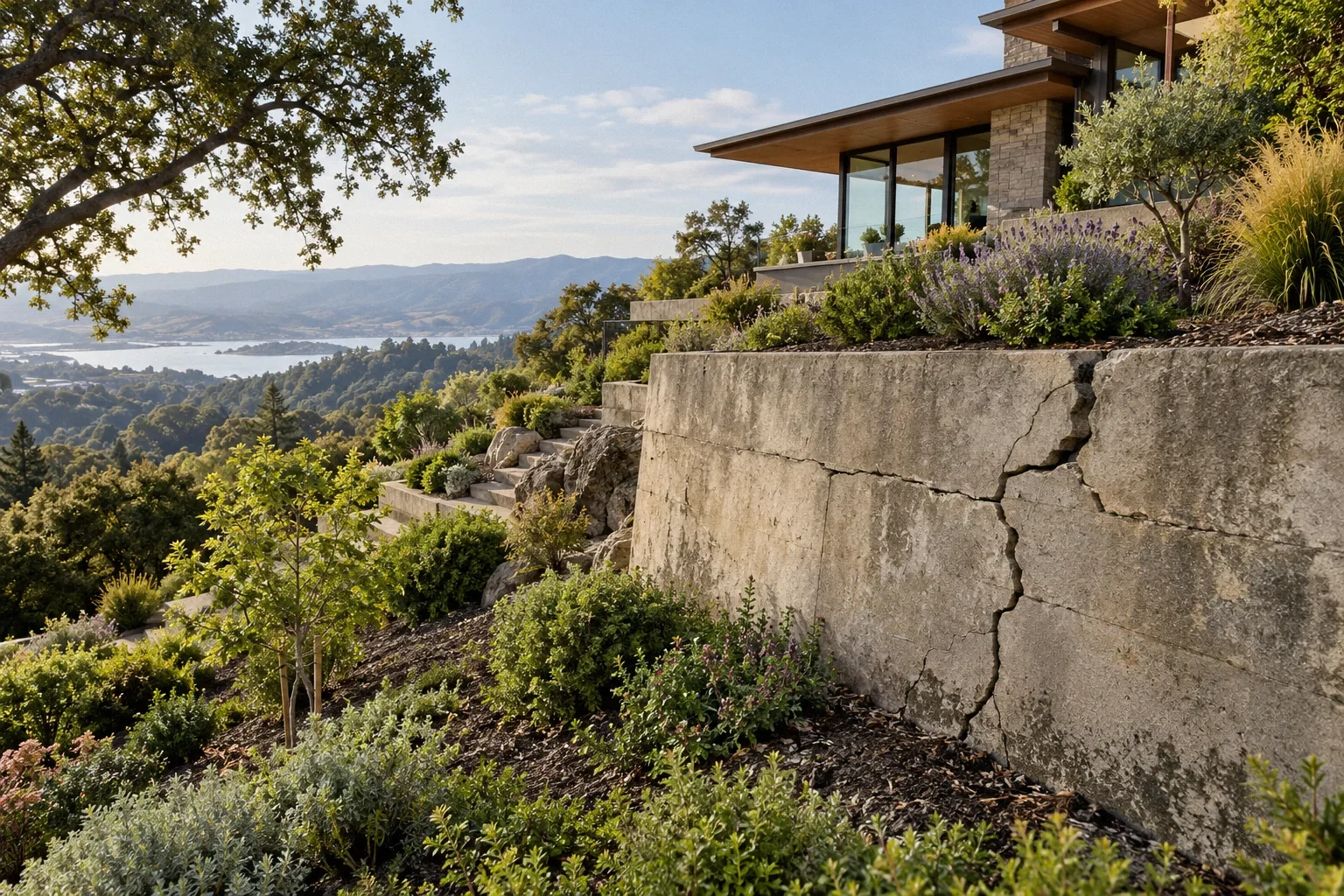
A close-up of cracked concrete omits much of the evidence that matters on a hillside. The slope above and below the house, retaining structures, drainage routes and nearby utilities may be part of the same problem. Begin with a site sketch that shows the building's position and the direction of the slope.
Note recent work and visible changes without walking onto unstable ground for a better view. Photographs from safe, accessible locations can still establish useful context. Ask an assessor whether the investigation covers the whole relevant slope or only the building. A sound-looking portion of foundation does not, by itself, establish the stability of the ground supporting the property.
Different ground processes require different questions
A small eroded area below a patio, gradual movement of hillside soils and an active landslide are not interchangeable descriptions. They can affect a house differently and may coexist. The historical HUD guide includes slope-related soil movement and erosion among possible foundation concerns in Residential Rehabilitation Inspection Guide. It is a condition-assessment reference, not a modern hillside design manual.
Use neutral descriptions initially: soil has washed away, a fence has changed alignment, or a crack has widened. Let the investigation establish the mechanism. Calling every hillside defect settlement can understate the geographic extent of the issue. Calling every crack a landslide can also be misleading. The evidence must connect the observed changes to the ground and structure.
Recognize signs that need a broader response
USGS lists potential landslide indicators in What are the signs of landslide development? What do I do if a landslide occurs?, including new ground deformation, changed water conditions, leaning utilities or trees, sticking openings and separation at foundations. These are reasons to seek an appropriate evaluation. They are not a checklist that can certify safety when unchecked.
The same USGS resource emphasizes that some landslides occur suddenly and that warning signs should be reported to local authorities. If movement is occurring or conditions appear rapidly changing, follow current local emergency direction rather than continuing a household monitoring exercise. Avoid entering an affected area to measure a crack. The immediate question may be personal safety and professional evaluation, not which foundation contractor should provide a repair estimate.
Water observations belong on the same site plan
Record where runoff enters the property, where it leaves and where new wet areas appear. A new spring, persistent ponding or a broken line may be significant in a slope assessment. Note whether the change followed rain, irrigation work or excavation, but do not assume the timing proves causation.
Buried drainage deserves particular attention because the visible inlet may not reveal the actual outlet or leakage location. Provide available plans and repair history to the professional evaluating the slope. Do not attempt to redirect large flows, dig intercepting trenches or discharge water downhill based on a generic article. The intended drainage change needs to be considered with stability, neighboring land and the existing support system.
Earthquake vulnerability is a separate layer
California Earthquake Authority identifies hillside houses as a distinct category with potentially specific retrofit needs in Strengthen Your House. That seismic question is related to, but different from, whether the slope is presently moving. A foundation may require assessment for both ground behavior and the way the building resists earthquake forces.
Ask the report to distinguish these issues. A recommendation for anchorage or bracing does not necessarily resolve a slope-stability concern. Likewise, a finding about current slope conditions does not establish that the house has an adequate earthquake load path. Keeping the questions separate helps prevent one useful repair from being presented as a complete answer to every hillside risk.
A hypothetical hillside repair that misses the scope
Imagine a homeowner sees a crack at a downhill corner and receives a proposal for several piers. Later, a wider inspection documents new pavement deformation, a leaning fence and altered water flow farther uphill. Those observations do not prove a single cause, but they expand the questions beyond the corner footing.
The proposal may need reconsideration with a professional experienced in landslides and hillside foundations. A different hypothetical house might have a localized leak and isolated support loss with no established broader movement. The point is not that piers are always wrong on slopes. It is that the repair scope must follow the investigation's geographic and technical scope, rather than define it in advance.
Ask who will integrate the slope and building findings
Slope evaluation may involve geological and geotechnical expertise, while the building response and repair connections require structural input. Ask who will coordinate those findings and identify the limits of each assessment. A report should explain the observations, available subsurface information and assumptions relevant to the proposed work.
If monitoring is recommended, clarify what is monitored and who interprets it. Building crack gauges alone may not describe a larger ground process. The appropriate program is site-specific and should not be improvised from an online diagram. Also ask what changes require earlier contact and which uncertainties must be resolved before permanent repair work begins.
Organize observations by the area they affect
A hillside record becomes more useful when it distinguishes building, immediate-yard and broader-slope observations. A crack in a foundation, separation in a patio and a changed wet area farther uphill may be related, but the relationship needs evaluation. Mark their locations on one simple plan without drawing causal arrows that have not been established.
For each observation, record when it was first noticed and whether the area was visible earlier. A newly discovered ground feature beneath removed vegetation is not necessarily newly formed. Include recent grading, utility repairs and drainage changes as dated events. This helps a specialist distinguish a possible slope-wide pattern from unrelated maintenance conditions that happen to be nearby.
Ask the assessor what area needs to be considered and whether information beyond the property boundary is relevant. An owner cannot resolve all off-site questions alone, but can make clear when the available assessment covers only the building footprint. The eventual recommendation should explain how the chosen investigation boundary fits the suspected mechanism. If the conclusion is limited to accessible parts of the foundation, it should not be presented as a determination that the entire hillside is stable. That clarity is especially important when an apparently local repair is proposed on a site with broader warning signs.
Keep a coherent record of the whole property
Retain dated site photographs, surveys, soil and geological reports, drainage drawings and repair records. Mark the locations of observations so a future professional can compare them. Include gaps: areas that were inaccessible or records that were unavailable should remain visible limitations, not disappear from the narrative.
When a conclusion is reached, preserve its scope. A statement that one accessible wall appears intact is narrower than an assessment of the slope and entire house. A successful localized repair does not automatically establish long-term stability of surrounding land. Clear records let later decisions build on verified information and make it easier to recognize when a changed condition warrants a fresh evaluation.
Before your next decision
- Map the house, slope direction, retaining structures and drainage.
- Photograph ground and utility changes from safe locations.
- Keep seismic and current slope-stability questions distinct.
- Ask who coordinates geological, geotechnical and structural findings.
- Record the scope and limits of any conclusion.
Related questions
Can the slope be a concern if the concrete is intact?
Yes. Ground behavior and the condition of a visible concrete surface are different questions. The broader site may need evaluation even without obvious foundation cracking.
Will underpinning stop a hillside from moving?
That cannot be assumed. The design must consider the actual ground mechanism and support conditions; a building repair is not automatically a slope-stabilization project.
Who should assess new ground cracks on a hillside?
USGS recommends reporting warning signs and obtaining appropriate evaluation, which may require a geologist or engineer with landslide experience. Rapid changes can require emergency action rather than routine scheduling.
Sources & further reading
- U.S. Geological SurveyWhat are the signs of landslide development? What do I do if a landslide occurs?
Slope movement warning signs and escalation; no promise that an absence of symptoms proves safety.
- U.S. Department of Housing and Urban Development / National Institute of Building SciencesResidential Rehabilitation Inspection Guide
February 2000 guide; condition-assessment concepts only, not current code or a DIY repair specification.
- California Earthquake AuthorityStrengthen Your House
California house-type seismic vulnerabilities, without promising grant eligibility or prescribing details.
Homeowner questions behind this article
These discussions informed the questions, not the technical answers. Some were available through indexed excerpts; votes and comments are not an engineering assessment.
- How concerned should I be about these cracks?
- Looking for advice evaluating 35yo hillside foundation
- Before I Screw This Up…