The short answer
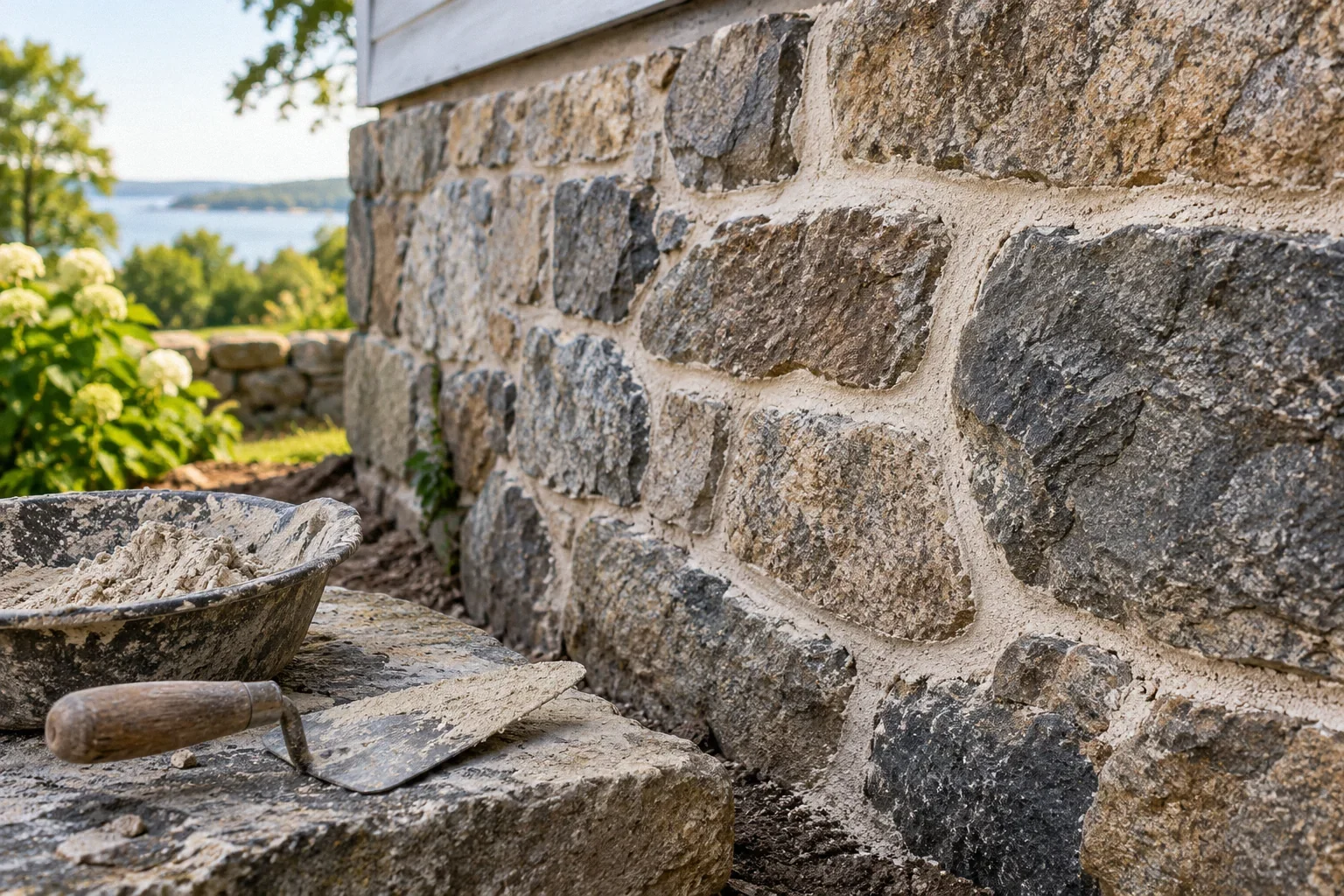
Repointing replaces deteriorated mortar in masonry joints; it does not automatically correct movement, bulging or inadequate support. For a stone foundation, the replacement mortar must be compatible with the existing masonry and exposure. A harder mix is not necessarily a better one. Establish why joints deteriorated, assess the wall’s condition and use informed material selection before approving a broad surface treatment.
US general planning; California details labeled where relevant
First decide whether repointing matches the problem
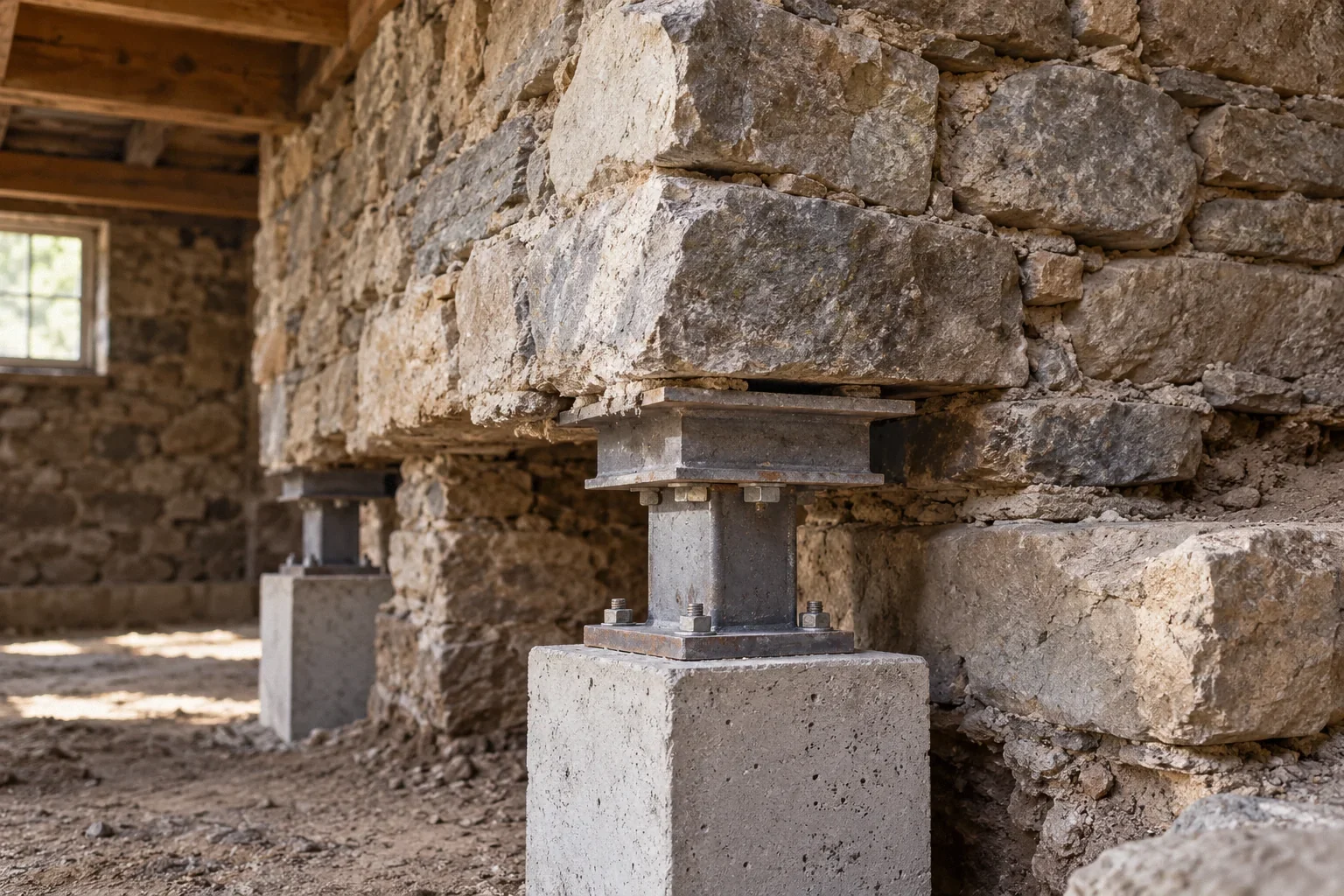
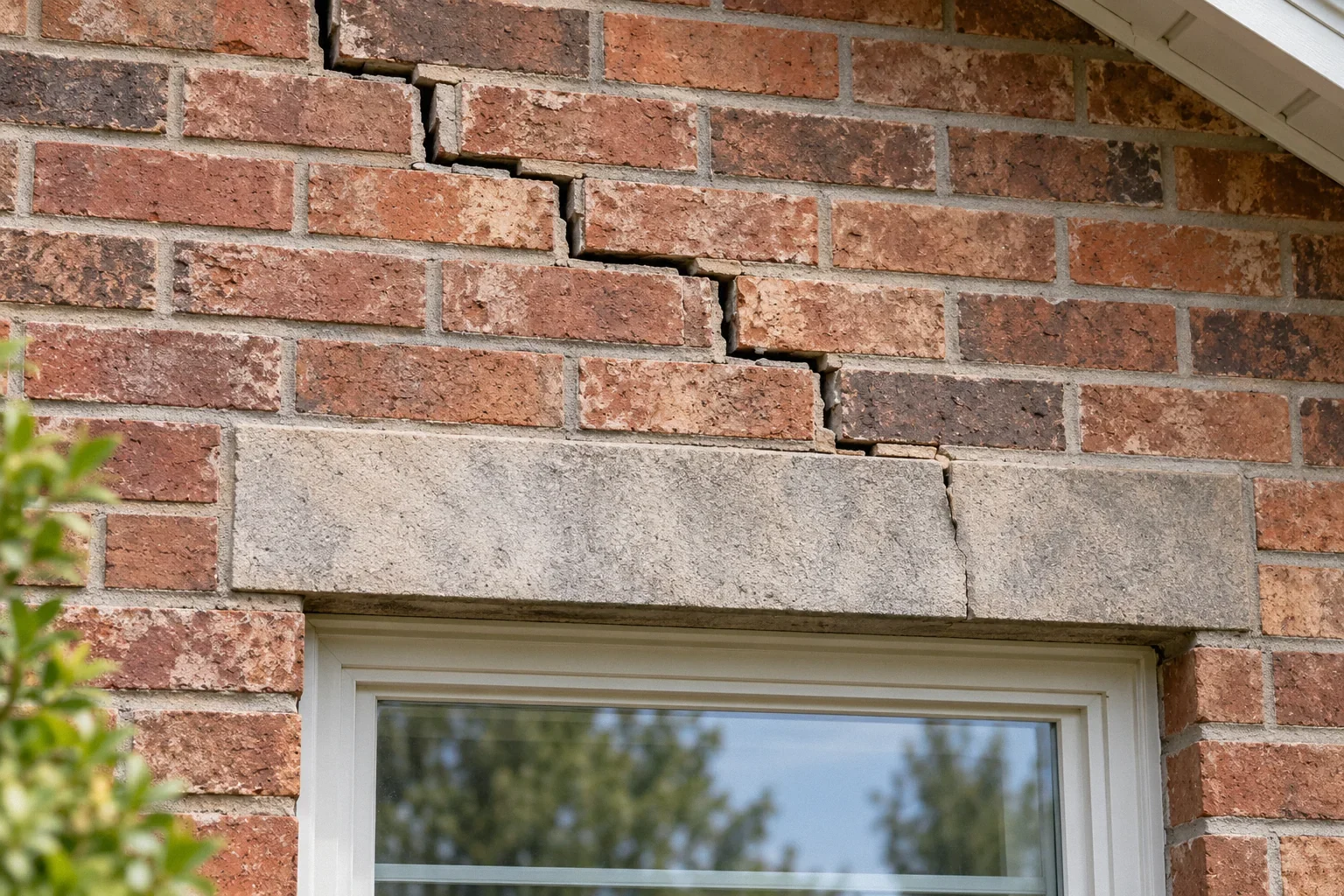
Open joints can make repointing seem like an obvious next step. Before choosing mortar, distinguish deteriorated joint material from displacement of the wall or its individual stones. Bulging, separation, changing cracks and movement of supported framing may raise structural questions that pointing cannot resolve. An attractive surface should not become a substitute for understanding the assembly.
The Preservation Brief 2: Repointing Mortar Joints in Historic Masonry Buildings defines repointing and emphasizes identifying the causes of deterioration before treatment. Although written for historic masonry broadly, its conservation principles are directly relevant to material compatibility. It is not a structural repair design for a particular foundation. Use it to frame the material discussion while keeping support and stability questions with the appropriate assessor.
Treat the mortar and stone as an interacting system
A masonry wall is not simply strong stone held together by the strongest available binder. Mortar joints have their own mechanical and moisture behavior. A replacement that is too hard or otherwise incompatible with the existing units can concentrate damage in the masonry rather than provide a suitable joint. Permeability and exposure also matter.
This does not make every modern product unsuitable or every traditional-looking mix appropriate. The question is whether the proposed mortar fits the actual stones, existing materials and service conditions. Ask the specifier to explain the compatibility basis, not merely the product category. “Historic mix” is a label; the reasoning should identify the characteristics that make it suitable for this wall.
Age is useful context but not a mix specification
A construction date can suggest which materials deserve investigation, but walls are often repaired in stages. One elevation may contain original mortar, another a later cement-rich repair, and another a coating that conceals several generations of work. Treating the most visible patch as the original reference can reproduce the very incompatibility that contributed to deterioration.
The NPS brief discusses examining existing mortar and interpreting analyses with care. Sampling does not remove the need for professional judgment. Ask where proposed samples will come from, what they are expected to establish and how altered or weathered material will be handled. The useful output is a reasoned specification, not a laboratory number presented without context.
Look outside the joint for the deterioration source
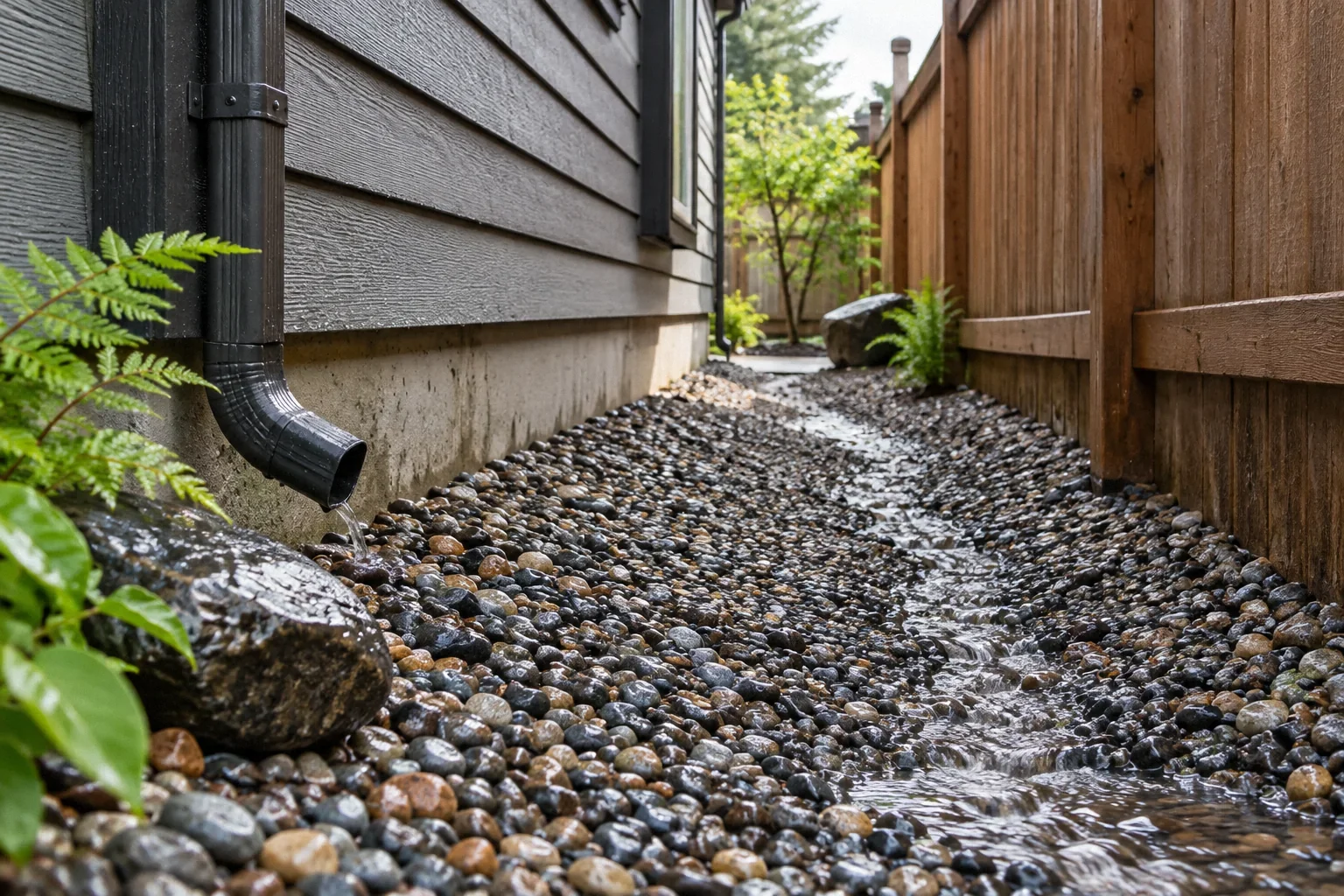
Repeated saturation, concentrated roof runoff and changed ground conditions can affect an old foundation’s exposure. If one section deteriorates repeatedly while sheltered masonry remains sound, that pattern deserves attention. A repointing scope that ignores the difference may renew the appearance while preserving the condition that damaged the earlier work.
The Department of Energy’s Foundation Drain Gutters Downspouts explains the role of gutters and downspouts in keeping roof water from saturating soil near foundations. For an old stone wall, review exterior water paths alongside the masonry assessment. That does not imply excavating blindly beside the wall or selecting an interior moisture system. It means understanding whether a preventable concentration of water is part of the repair context.
Use a mockup to answer appearance and workmanship questions
A small, agreed mockup can help establish the intended joint appearance and show how the proposed treatment relates to the stones. Color alone is not the whole decision. Joint profile, texture and the treatment of existing edges affect the result, while material compatibility remains a separate technical requirement. Approve the appropriate specification before using the mockup to judge its execution.
Ask what the mockup will represent and when it should be reviewed. Fresh mortar may not resemble its later appearance, and one protected corner may not represent the entire wall. Retain a written record of the agreed example. That creates a reference for the work without turning a visual preference into an unsupported claim about long-term performance.
A hypothetical wall with two generations of repair
Imagine a stone foundation with crumbly joints in one area and hard, cracked patches elsewhere. In this hypothetical case, the owner wants the entire wall to match the hard patches because they look more solid. An informed examination instead asks whether the hard repairs are compatible and whether they have redirected deterioration into the adjacent stones.
The appropriate response might involve different treatment of sound historic joints, failed later repairs and areas affected by water. It need not be one blanket removal-and-replacement scope. A consistent finished appearance is understandable, but preserving serviceable material and addressing actual deterioration can be more important than making every joint look newly constructed.
Keep structural observations distinct from mortar selection
The historical Residential Rehabilitation Inspection Guide discusses masonry and foundation inspection in the broader context of building condition. Its value here is the reminder to relate visible masonry distress to support, movement and the rest of the structure. It does not establish a current mortar recipe or certify that a wall is stable because its joints can be renewed.
Ask the assessor to distinguish observations supporting repointing from observations requiring structural evaluation. An old wall may be uneven without active movement, or it may be changing in ways that need investigation. Neither age nor a fresh mortar surface answers that question. Record any limits on visibility so that concealed portions are not silently included in a claim of complete assessment.
Specify completion evidence that fits a preservation repair
The final file should identify the areas treated, the selected mortar, the basis for compatibility and the approved appearance reference. It should also note significant conditions discovered during the work and how they were addressed. Where existing sound mortar was retained, record that deliberately rather than describing the entire foundation as newly repointed.
Keep exterior water-management changes in the same project history, with their dates. If deterioration returns, those records help determine whether the same exposure persists, a different material was encountered or movement has developed. This is more useful than saving only a product bag photograph and a wide view of a newly uniform wall.
Before your next decision
- Map deteriorated joints and areas with later repairs.
- Assess movement and support concerns before broad pointing.
- Request the compatibility basis for the proposed mortar.
- Review the water conditions affecting the damaged area.
- Save the approved mockup and final repair record.
Related questions
Is stronger mortar always better for a stone foundation?
No. The mortar must be compatible with the masonry and exposure. Excessive hardness or unsuitable moisture behavior can contribute to damage in adjacent units; strength alone is not a selection method.
Can I identify the original mortar from the house’s age?
Age is background information, not proof of composition. Later repairs may be mixed with original work. A knowledgeable examination and, where useful, carefully interpreted analysis provide a better basis.
Will repointing straighten a bulging wall?
Repointing renews joints; it does not establish a safe method for correcting wall displacement. Bulging or changing geometry needs a separate structural assessment before cosmetic work conceals the evidence.
Sources & further reading
- National Park ServicePreservation Brief 2: Repointing Mortar Joints in Historic Masonry Buildings
Historic masonry conservation; assessment and material compatibility, not a universal mortar recipe.
- U.S. Department of Housing and Urban Development / National Institute of Building SciencesResidential Rehabilitation Inspection Guide
February 2000 guide; condition-assessment concepts only, not current code or a DIY repair specification.
- U.S. Department of Energy, Building Science EducationFoundation Drain Gutters Downspouts
Roof-water management, separate from interior waterproofing systems.
Homeowner questions behind this article
These discussions informed the questions, not the technical answers. Some were available through indexed excerpts; votes and comments are not an engineering assessment.
Research method